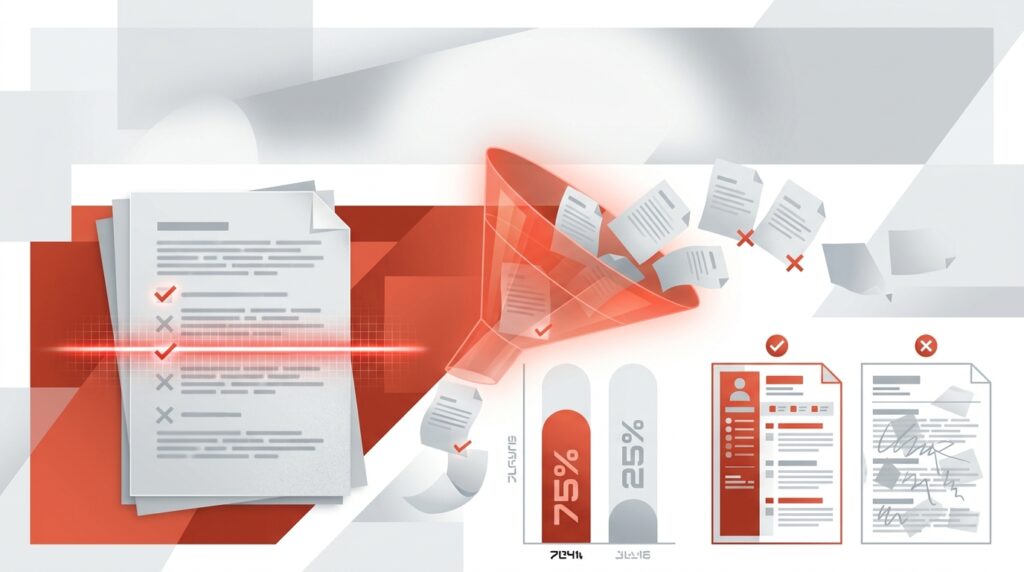

Hiring decisions based on data outperform gut instincts. Companies using skills assessment analytics experience faster hires, lower costs, and better outcomes. With 44% of workers’ core skills expected to shift by 2027, real-time analytics ensures recruiters can keep up with rapid changes and make evidence-based decisions.
Key Takeaways:
- Set clear benchmarks: Define measurable skill levels for objective hiring.
- Use real-time dashboards: Spot bottlenecks and adjust strategies instantly.
- Leverage data visualization: Identify trends like skill gaps and improve decision-making.
- Segment data: Analyze team-specific metrics for targeted improvements.
- Automate bias detection: Reduce hiring biases with data-driven tools.
- Predict hiring success: Use analytics to forecast candidate performance.
- Set SMART goals: Establish specific, measurable hiring objectives.
- Track improvements: Continuously refine recruitment strategies with analytics.
- Ensure data security: Protect candidate data and comply with regulations.
- Measure ROI: Demonstrate the value of skills assessments with metrics like reduced turnover and faster hiring.
Real-world examples, like Chipotle cutting hiring time by 67% with AI, prove the power of these practices. Tools like Skillfuel simplify implementation, combining assessments, analytics, and tracking into a single platform. Start small, pilot high-impact roles, and scale as results show success.
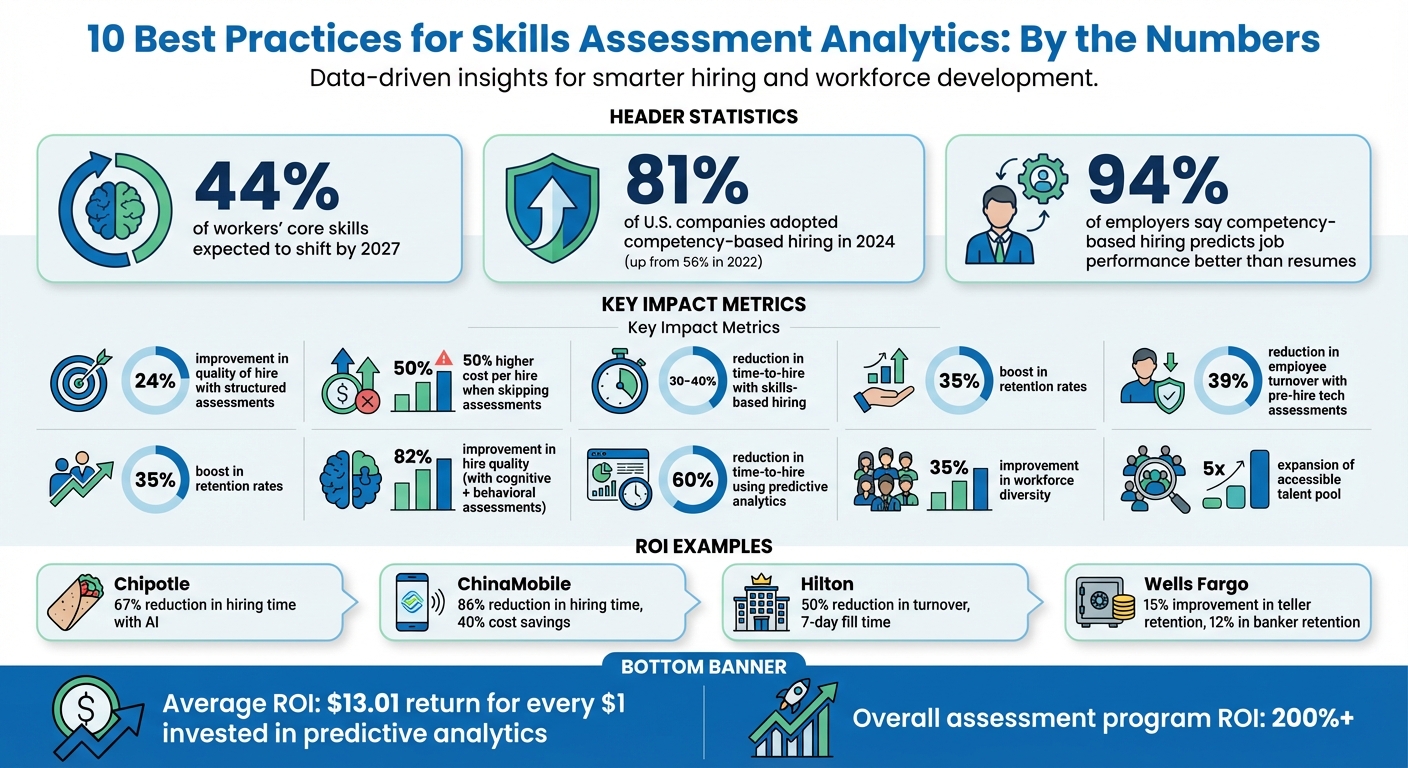
Skills Assessment Analytics: Key Statistics and ROI Metrics for Data-Driven Hiring
Startup: Selection Lab skills-based hiring with AI assessments, psychometrics for fair recruitment
sbb-itb-e5b9d13
1. Set Clear Skills Benchmarks and Proficiency Levels
Defining clear skills benchmarks is a game-changer for improving recruitment outcomes through real-time analytics. By setting measurable and specific benchmarks for each role, you create a foundation for objective hiring decisions. Avoid vague terms like "strong communicator" or "team player." Instead, focus on observable actions and measurable abilities. For instance, rather than listing "project management", specify whether the role requires expertise in Agile methodology, budget tracking, or stakeholder communication.
In 2024, 81% of U.S. companies adopted competency-based hiring, a notable jump from 56% in 2022. Additionally, 94% of employers agree that this approach predicts job performance more effectively than traditional resumes. Companies using structured talent assessments report a 24% improvement in quality of hire, while those skipping assessments face a 50% higher cost per hire due to turnover and reduced productivity.
This level of clarity not only enhances recruitment processes but also ensures analytics drive measurable results.
Impact on Recruitment Outcomes
When proficiency levels are clearly defined, subjective resume reviews are replaced with validated, skills-based standards. This "skills-first" methodology shifts the focus to what candidates can actually do rather than their educational background or years of experience. The benefits are striking: skills-based hiring can cut time-to-hire by 30% to 40% and boost retention rates by up to 35%. Companies that integrate cognitive and behavioral assessments with structured interviews see an 82% improvement in hire quality.
"Skills are observable and measurable extensions of an individual’s knowledge, are often based upon preexisting or naturally occurring strengths, and can be acquired and refined." – Wowledge
These results highlight the effectiveness of moving toward a structured, skills-based hiring process.
Scalability for Team-Wide Use
To implement benchmarks consistently across your organization, adopt a standard hierarchy – such as Apprentice, Journeyman, and Master levels. Use a 4- or 5-level proficiency scale, ensuring each level is tied to specific, measurable behaviors. For example, a "proficient" rating should mean the same across all teams. Rely on established professional standards from fields like HR, project management, or accounting to maintain consistency. Start with roles that have the greatest impact to gather data and build momentum for broader adoption.
2. Connect Assessments with Real-Time Analytics Dashboards
Real-time dashboards take skills assessment data from static reports and turn it into dynamic, actionable insights. Instead of waiting weeks for post-cycle analysis, recruiters can now adjust their strategies on the fly based on live applicant engagement and changing market conditions. This shift moves hiring decisions from being based on instinct to being guided by data.
Actionable Insights in Real Time
These dashboards are game-changers when it comes to spotting issues in the hiring process. For example, they can pinpoint exactly where candidates disengage. If a bottleneck appears, you can address it immediately instead of losing potential hires before the problem is even identified. In fact, companies using recruitment analytics are twice as likely to see better hiring outcomes.
"Real-time analytics allow recruitment professionals to adjust strategies on the fly based on current data trends, applicant engagement, and market conditions." – Recruitics
When integrated with Applicant Tracking Systems (ATS), these dashboards centralize all candidate data. This means you can connect metrics like time-to-hire and quality-of-hire directly with assessment scores. Tools like Skillfuel make this process seamless by combining assessment data with applicant tracking, simplifying decision-making and improving efficiency.
Boosting Recruitment Outcomes
With real-time monitoring, you can prevent candidate drop-offs before they become a problem. If engagement dips at a specific stage, recruiters can step in immediately – whether by offering support or clarification – to keep qualified candidates in the pipeline. This proactive approach ensures that talent isn’t lost due to avoidable missteps.
Designed for Teams of All Sizes
The best analytics platforms are easy to use, eliminating technical hurdles and cutting down on training time. User-friendly tools like Tableau and Power BI turn complex data into clear, visual insights that anyone on the team can understand. For teams spread across different locations, mobile-responsive dashboards are a must, allowing hiring managers to access candidate data anytime, anywhere. Regular audits are also crucial to ensure your data remains accurate and consistent. These scalable solutions not only improve current recruitment processes but also lay the groundwork for more advanced analytics down the line.
3. Use Data Visualization to Identify Patterns
Real-time dashboards provide live updates, but data visualizations take it a step further by turning raw numbers into clear, actionable patterns.
By converting assessment data into charts, graphs, or heat maps, recruiters can quickly spot trends like skill gaps, soft skill deficiencies, or departmental challenges. Instead of sifting through endless spreadsheets, these visual tools make it easier to understand the data at a glance and take meaningful action.
Actionability of Insights
For visualizations to truly make an impact, they need to tell a story. Showing numbers alone isn’t enough – it’s about connecting those numbers to your goals. For instance, if a chart highlights a significant gap in a key technical skill, that insight only matters if it’s tied to your team’s specific needs. Interactive dashboards make this process even smoother, allowing hiring managers to drill down into data points or filter by department to make quick, informed decisions.
Tailoring dashboards to each team is key. When candidates complete assessments that simulate real-world tasks using the same tools they’d use on the job, the data becomes a much stronger predictor of how they’ll perform day-to-day.
Impact on Recruitment Outcomes
Organizations leveraging predictive analytics can reduce their time-to-hire by 60% through streamlined processes. This efficiency comes from identifying potential issues – like skills gaps or flight risks – well before they disrupt your hiring pipeline. Combining proficiency charts with simulations gives recruiters a comprehensive view of both a candidate’s abilities and how well they’ll fit within the team.
Scalability for Team-Wide Use
For data visualizations to work across large teams, they must be intuitive enough for all hiring managers to use. Tools like Skillfuel’s integrated dashboards adapt seamlessly to various devices, making insights accessible anywhere. Before rolling these tools out company-wide, consider starting with a pilot program. Testing with 200 to 500 employees in a critical area can help refine your approach. Setting clear data quality standards from the beginning ensures the patterns you uncover are accurate and actionable, not distorted by incomplete or inconsistent data.
4. Segment and Compare Assessment Data Across Teams
Segmenting assessment data by team takes real-time data visualization to the next level, offering sharper insights into hiring trends. By breaking down data by department, organizations can uncover details that company-wide averages might hide. This approach highlights which teams are thriving and which are grappling with specific skill gaps. For instance, companies that use predictive analytics to segment and monitor exit risks see twice the improvement in talent retention. These precise insights set the stage for targeted interventions and smarter hiring strategies.
Actionability of Insights
When data is segmented, hiring managers can uncover trends that would otherwise be buried in aggregated numbers. Predictive models, for example, can identify at-risk engineers 60–90 days before they leave. This early warning allows time to address issues like workload or compensation. Moreover, this level of detail ensures that departments assess skills tailored to their specific needs rather than relying on generic benchmarks. Beyond identifying risks, segmentation can also highlight hidden talent within the organization, enabling internal transfers that save on the costs of external hiring.
Impact on Recruitment Outcomes
The benefits of these insights extend directly to recruitment results. Predictive analytics, for example, can yield an average return of $13.01 for every dollar invested. Companies leveraging advanced analytics report a 60% reduction in time-to-hire through AI-driven recruitment processes. Additionally, pre-hire assessments grounded in technology can lower employee turnover rates by 39%. Skills-based hiring also plays a role in improving workforce diversity by 35% and increasing the accessible talent pool by as much as five times.
Scalability for Team-Wide Use
Before rolling out segmentation strategies across the entire company, it’s essential to audit at least two years of historical data from HRIS, performance, and payroll systems. Start small with a pilot program targeting two or three high-impact or high-volume roles to prove the return on investment. Train hiring managers to combine segmented assessment scores with their interview impressions, rather than relying solely on scores. Real-time OLAP databases make it possible to run simultaneous queries across teams without slowing performance, ensuring every department can access actionable insights without delay.
5. Automate Bias Detection and Reduction in Analytics
Automated bias detection takes the guesswork out of hiring decisions, replacing subjective judgments with data-driven evaluations. Instead of relying on proxies like prestigious school names or GPA cutoffs, these systems focus on verifying job-specific skills. For instance, rather than dismissing candidates because of unexplained resume gaps, analytics tools can prioritize practical competencies like Python data cleaning or problem-solving in real-world scenarios. It’s no surprise that nearly 60% of HR leaders credit AI tools with improving talent acquisition, citing faster hiring processes and reduced bias.
Actionable Insights for Bias Monitoring
Automated tools like "bias heatmaps" provide ongoing monitoring of key recruitment metrics, such as pass-through rates and interview scores, broken down by demographic groups. These insights allow hiring teams to take immediate corrective action when disparities are detected. A common benchmark is the four-fifths rule: if a protected group’s selection rate drops below 80% of the highest-performing group’s rate, the system flags it as a potential issue.
For even greater precision, methods like the Contextualized Embedding Association Test (CEAT) have proven highly effective. CEAT demonstrates a Pearson correlation coefficient of r=0.993 when compared to human-audited word sets, showcasing its near-perfect alignment with manual reviews. This allows teams to fine-tune evaluation criteria at every stage of the hiring process.
Improving Recruitment Outcomes
Bias-free analytics don’t just streamline hiring; they also enhance the accuracy of candidate evaluations. Instead of relying on resumes – which, as Philip Arkcoll from Worklytics points out, can be “biased and rapidly outdated” – automated systems analyze actual work outputs from cloud-based tools. This shift toward task-focused assessments ensures that hiring decisions are based on what truly matters for success in a role. By emphasizing job-specific skills, companies can broaden their talent pool and promote skills-based hiring practices.
Scaling Bias Reduction Across Teams
To ensure bias reduction strategies work at scale, organizations should start with independent audits to verify that their software supports fair and consistent decision-making. Standardized question banks and anchored rating scales can help ensure every candidate is evaluated using the same criteria. Weekly automated reports can track metrics like selection rate parity, source mix, and calibration errors across groups. Additionally, AI can assist in drafting inclusive job descriptions, avoiding language that might unintentionally discourage certain demographics.
For seamless implementation, tools like Skillfuel (https://skillfuel.com) integrate real-time analytics into the broader hiring workflow. This allows companies to connect bias detection systems with their overall analytics platforms, enabling continuous improvement while maintaining equitable hiring practices. Making assessments mobile-friendly and accessible ensures that these tools are practical for all candidates.
6. Connect Analytics to Predictive Hiring Insights
Predictive analytics transforms assessment data into forecasts that help predict candidate success and identify potential skills gaps. Companies using predictive workforce analytics report an impressive average return of $13.01 for every dollar spent.
Actionability of Insights
When candidates complete a skills test, the system generates a fit score ranging from 0 to 100. This score combines technical competencies with assessment results. High-scoring candidates – those in the "A-band" – trigger automated next steps, such as "schedule a debrief within 24 hours" or "arrange an onsite interview within 48 hours". This approach shifts recruitment from simply analyzing past performance to prescribing actionable steps for immediate follow-up.
"Predictive analytics breaks the logjam by turning your recruiting exhaust – applications, interviews, offers, performance, and attrition – into forward-looking guidance." – Ameya Deshmukh, Everworker
If the talent pipeline for a specific skill drops below a set threshold, the system can automatically initiate sourcing campaigns or personalized outreach. It can even flag employees at risk of leaving 60 to 90 days in advance, allowing proactive measures to retain talent.
These real-time insights lead to measurable improvements in hiring efficiency and outcomes.
Impact on Recruitment Outcomes
Consider these examples of predictive analytics in action:
- ChinaMobile: By implementing an AI-driven model evaluating both technical skills and organizational fit, the company achieved an 86% reduction in hiring time and saved 40% in costs across 3,000 roles.
- Hilton: By screening for alignment with company values, Hilton reduced employee turnover by 50% and filled positions within just seven days.
- Wells Fargo & Co.: After acquiring Wachovia, Wells Fargo used predictive analytics to assess over two million candidates, improving teller retention by 15% and personal banker retention by 12%.
Overall, predictive analytics can cut hiring cycles by up to 85% and reduce time-to-fill by 25%. Companies leveraging these tools are twice as likely to achieve better hiring outcomes compared to those using traditional methods.
Scalability for Team-Wide Use
Once predictive insights are actionable, scaling them across your organization becomes key. By integrating fit scores and recommendations into your Applicant Tracking System (ATS) – whether it’s Workday, Greenhouse, or Lever – you can streamline the process across all hiring stages. Tools like Skillfuel make this even easier by combining real-time analytics dashboards with applicant tracking, interview scheduling, and candidate communication.
Start small with a pilot program focused on high-impact roles, such as software engineers or sales representatives, for 60 to 90 days. Use this period to gather ROI data before expanding the program. Standardize data collection across job types, levels, and locations, and define a composite Quality of Hire (QoH) index (e.g., 40% retention, 30% ramp time, 30% manager rating). This ensures models align with actual business outcomes.
Data Security and Compliance
To ensure fairness and compliance, regularly audit predictive models for potential biases. Exclude protected attributes – such as race, gender, or age – and comply with regulations like EEOC, GDPR, CCPA, and New York City’s AEDT regulation. AI-driven tools with fairness algorithms can reduce recruitment bias by up to 50%.
Transparency is also essential. Both candidates and hiring teams should understand how predictive scores are calculated and what factors influence them. Regularly monitor outcomes by demographic group to identify and address unintended biases before they impact hiring decisions.
"Predictive analytics can enhance workforce planning by forecasting future talent needs based on various factors. It uses both internal and external data to make accurate predictions." – Dr. Marna van der Merwe, AIHR Subject Matter Expert
While predictive analytics provides valuable insights, it should complement – not replace – human judgment, especially for assessing soft skills and cultural fit. By tying hires back to their initial assessment scores and tracking 90-day performance metrics, organizations can refine their predictive models over time. This feedback loop ensures continuous improvement and alignment with hiring goals, creating a fair and efficient process that evolves with the data.
7. Set SMART Goals Based on Assessment Trends
Building on predictive insights, setting SMART goals can take your recruitment strategy to the next level.
Making Insights Actionable
Assessment trends transform recruitment from a guessing game into a forecasting powerhouse. Instead of just knowing that last quarter’s turnover rate was 12%, predictive analytics can pinpoint which employees are likely to leave within the next 60 to 90 days. That’s a game-changer.
Start by auditing two years of baseline data, focusing on roles that have the biggest impact on your business. Then, set SMART goals – specific, measurable, achievable, relevant, and time-bound. For example, a pilot study can show measurable ROI in just 60 to 90 days.
Use tools like probability scores and predictive models to shift from reacting to hiring needs to proactively upskilling your team. This ensures your goals are laser-focused (specific), trackable (measurable), realistic within a 12- to 18-month window (achievable), aligned with business needs (relevant), and tied to clear timelines (time-bound). This forward-thinking approach isn’t just about setting goals – it’s about making them count.
Boosting Recruitment Outcomes
Aligning SMART goals with predictive analytics can dramatically improve recruitment results. For instance, when predictive models are used in the hiring process, offer acceptance rates can jump by 15% to 25%.
Retention also sees a significant boost. Companies using advanced analytics report a 23% increase in retention and a 41% drop in turnover costs during their first year. Predictive retention models can further improve retention outcomes by 31% and cut turnover rates by nearly 15%. These results don’t just stabilize teams – they also save money by lowering overall hiring costs.
Scaling Insights Across Teams
Once you’ve established clear, data-driven goals, the next step is scaling these insights throughout your organization.
Assessment trends allow you to create "success profiles" based on your top performers. These profiles can then serve as benchmarks for hiring across the board. This method shifts the focus from subjective resume reviews to measurable capabilities, ensuring consistency in recruitment. A pilot study can help validate these success profiles and pave the way for organization-wide adoption.
To scale effectively, integrate assessment tools into your existing tech stack. Platforms like Skillfuel combine real-time analytics with applicant tracking and interview scheduling, eliminating data silos and streamlining processes. Additionally, train your HR teams to understand key statistical concepts, so they can turn data into actionable recruitment strategies.
8. Track Continuous Improvement with Iterative Analytics
Once you’ve set SMART goals, the next step is to monitor progress using iterative analytics. This approach ensures your recruitment process is constantly evolving and improving.
Turning Insights Into Action
With iterative analytics, recruitment transforms from a static process into a dynamic cycle of improvement. Real-time monitoring helps you identify issues – like candidate drop-offs or delays in feedback – as they happen.
To make analytics actionable, start by setting clear objectives. Regularly review your data and refine predictive models to ensure you’re not just collecting numbers but using them to drive meaningful changes. For example, are you trying to shorten your time-to-hire or boost your quality-of-hire metrics? Without clear goals, analytics can become overwhelming noise instead of a tool for improvement. When used effectively, these insights can enhance every stage of your hiring process.
How It Impacts Recruitment Success
The results of data-driven recruitment are hard to ignore. Companies leveraging these strategies often see hiring efficiency double and cost-per-hire drop by up to three times compared to traditional methods. Predictive analytics can also dramatically speed up hiring cycles – cutting them by as much as 85% – and reduce the time it takes to fill positions by 25%.
Case studies back this up. Businesses that use iterative analytics have reported better retention rates and significant reductions in both hiring times and recruitment costs. By continuously monitoring performance data and adjusting their strategies, these companies achieve measurable improvements.
Scaling Analytics Across Teams
To scale iterative analytics effectively, you’ll need the right tools and infrastructure. Modern platforms that integrate seamlessly with your Applicant Tracking System (ATS) can eliminate manual data entry and streamline the process. For example, tools like Skillfuel combine real-time analytics with applicant tracking and scheduling features, giving you a clear view of the entire hiring funnel – from sourcing to offer acceptance.
Start small by piloting your analytics models on a limited scale. Focus on specific stages – like sourcing, screening, or interviewing – to identify where candidates are dropping off. Share these insights with hiring managers and leadership to gain support and integrate data-driven decisions into your overall strategy. This collaborative approach ensures that analytics complement the expertise of your recruiters, enhancing their judgment rather than replacing it.
9. Maintain Data Security and Regular Updates
Data Security and Compliance
Safeguarding candidate data isn’t just a legal requirement – it’s crucial for successful recruitment. When working with skills assessment analytics, it’s essential to use role-based access control (RBAC) to ensure only authorized HR personnel can access sensitive data. Encrypt all data, both at rest and in transit, using AES-256 encryption, and anonymize candidate information before analysis. Following NIST guidelines for handling sensitive HR data ensures compliance and keeps your analytics secure.
For US recruiters, adhering to regulations like CCPA (for California residents), GDPR (for international candidates), and EEOC guidelines (to promote fair hiring) is non-negotiable. To strengthen your defenses, adopt a zero-trust security model alongside encryption protocols. Remember, non-compliance can be costly – violating CCPA, for example, can result in fines of up to $7,500 per incident. Additionally, you’ll need to maintain audit logs for at least 12 months and obtain explicit consent when collecting data. These steps not only protect your systems but also ensure the reliability of real-time analytics in recruitment.
Impact on Recruitment Outcomes
Strong data security doesn’t just mitigate risks – it builds trust. When candidates feel their information is safe, drop-off rates decrease by 20–30%, and time-to-hire improves by 15% due to uninterrupted analytics. On the other hand, breaches can be devastating. In 2023, a major US company faced a $2.5 million settlement after 1.5 million candidate records were exposed due to an unsecured assessment platform.
Keeping your systems secure also means you can rely on the data driving your decisions. Accurate and trustworthy insights are the backbone of effective hiring processes. Without them, your recruitment strategy risks becoming unreliable.
Actionability of Insights
Regular software updates are essential to patch vulnerabilities. In fact, updating software can reduce the risk of breaches by up to 65%. Automate patch management on a monthly basis, and always test updates in staging environments before applying them to live systems.
Beyond updates, implement quarterly data audits, enable multi-factor authentication (MFA), use secure APIs, and schedule annual penetration tests. Platforms like Skillfuel make this easier by offering built-in encryption and compliance dashboards. Tamper-proof logs ensure that your analytics – such as proficiency trends and skill gap data – remain dependable for making targeted hiring decisions. By prioritizing proactive security measures, you ensure that the insights guiding your recruitment process remain both reliable and actionable.
10. Measure ROI of Skills Assessments on Recruitment Results
Using data to guide recruitment decisions is essential, and measuring the ROI of skills assessments helps confirm their value in improving hiring outcomes.
Impact on Recruitment Outcomes
To measure ROI effectively, focus on key recruitment metrics. Research shows that structured talent assessments can improve the quality of hire by up to 24%. On the flip side, skipping assessments can lead to a 50% higher average cost per hire due to increased turnover and lower productivity. Pre-hire assessments powered by technology deliver tangible benefits, such as reducing turnover by 39% and cutting time-to-hire by 30–40%. When cognitive and behavioral measures are included, the quality of hire can improve by as much as 82%. Given the steep costs associated with replacing employees, organizations that implement strong assessment programs often report ROIs exceeding 200%.
These measurable gains make tracking ROI not just possible but essential for refining your recruitment strategy.
Actionability of Insights
To start, consider piloting skills assessments with two or three high-volume roles. This approach provides clear ROI data that can guide a broader implementation. Focus on metrics like reduced time-to-hire, improved quality of hire (measured through performance reviews and hiring manager feedback), and retention rates at 6-month and 12-month checkpoints. Choose tools that integrate smoothly with your Applicant Tracking System to ensure data remains centralized and accessible. It’s also important to train your team – recruiters and hiring managers alike – to interpret analytics effectively. This ensures the data informs decisions rather than overwhelming the process.
Platforms like Skillfuel simplify this by connecting assessment analytics to a central recruitment dashboard. This setup enables real-time monitoring of key metrics, giving you a clear view of how these assessments are shaping your hiring outcomes. By using these insights, you can fully close the loop on a data-driven recruitment approach.
Conclusion
Skills assessment analytics have shifted from being an optional tool to a critical component of modern recruitment strategies. The 10 best practices discussed here can transform hiring from a subjective process into one driven by data, delivering measurable improvements and actionable insights.
Using structured assessments paired with real-time analytics not only accelerates recruitment but also ensures teams are built with the right skills. Organizations that implement these practices have seen up to a 39% reduction in employee turnover and an 82% improvement in hiring quality by combining cognitive and behavioral assessments with structured interviews. Additionally, with 67% of companies planning to increase AI usage in talent acquisition by 2026, these strategies can expand talent pools by as much as five times and improve workforce diversity by 35%, all while delivering a return on investment (ROI) of 200% or more.
To make these practices actionable, platforms like Skillfuel provide the tools needed to integrate assessment analytics directly into recruitment workflows. Skillfuel eliminates data silos, offering real-time insights into candidate skills, hiring trends, and ROI metrics. Its automation features lighten administrative tasks while maintaining the data security and compliance standards required in today’s hiring landscape.
The next step is implementation. Start by piloting these analytics with high-volume roles to establish proof of concept. Train hiring teams to interpret the data effectively, focusing on enhancing decision-making rather than relying solely on scores. The ultimate goal is to combine objective data with human judgment, creating a hiring process that’s both efficient and equitable. When executed well, assessment programs often yield substantial benefits, from better hires to reduced turnover costs.
FAQs
What metrics should I track to prove skills assessment ROI?
Tracking key metrics is essential to showcase the return on investment (ROI) of skills assessments. Focus on metrics such as quality of hire, time-to-fill, cost-per-hire, candidate experience, and diversity metrics. These indicators not only offer clear insights into how well your recruitment process is performing but also highlight how skills assessments directly influence hiring success.
How do I set fair skill benchmarks without over-filtering candidates?
Establishing fair skill benchmarks is all about setting standards that reflect the real needs of the job while ensuring they don’t unfairly filter out potential talent. To achieve this, compare both individual and team performance to create benchmarks grounded in actual performance data. Align these standards with the specific requirements of the role.
When evaluating candidates, consider both technical expertise and soft skills. This balanced approach helps identify the most important competencies without imposing overly rigid criteria that might exclude capable individuals. By doing so, you create a fairer process that highlights well-rounded candidates who can truly excel in the role.
How can I use predictive scores safely without introducing bias?
To ensure predictive scores are used responsibly and without bias, it’s crucial to focus on data-driven decision-making and outcomes that can be measured. Start with high-quality, transparent data and conduct regular audits of predictive models to check for fairness. Algorithms should be used to identify patterns – not reinforce stereotypes – helping to promote diversity and minimize bias. Keep metrics like quality of hire and diversity at the forefront, while tackling challenges such as data accuracy and compliance to achieve fair and balanced hiring outcomes.