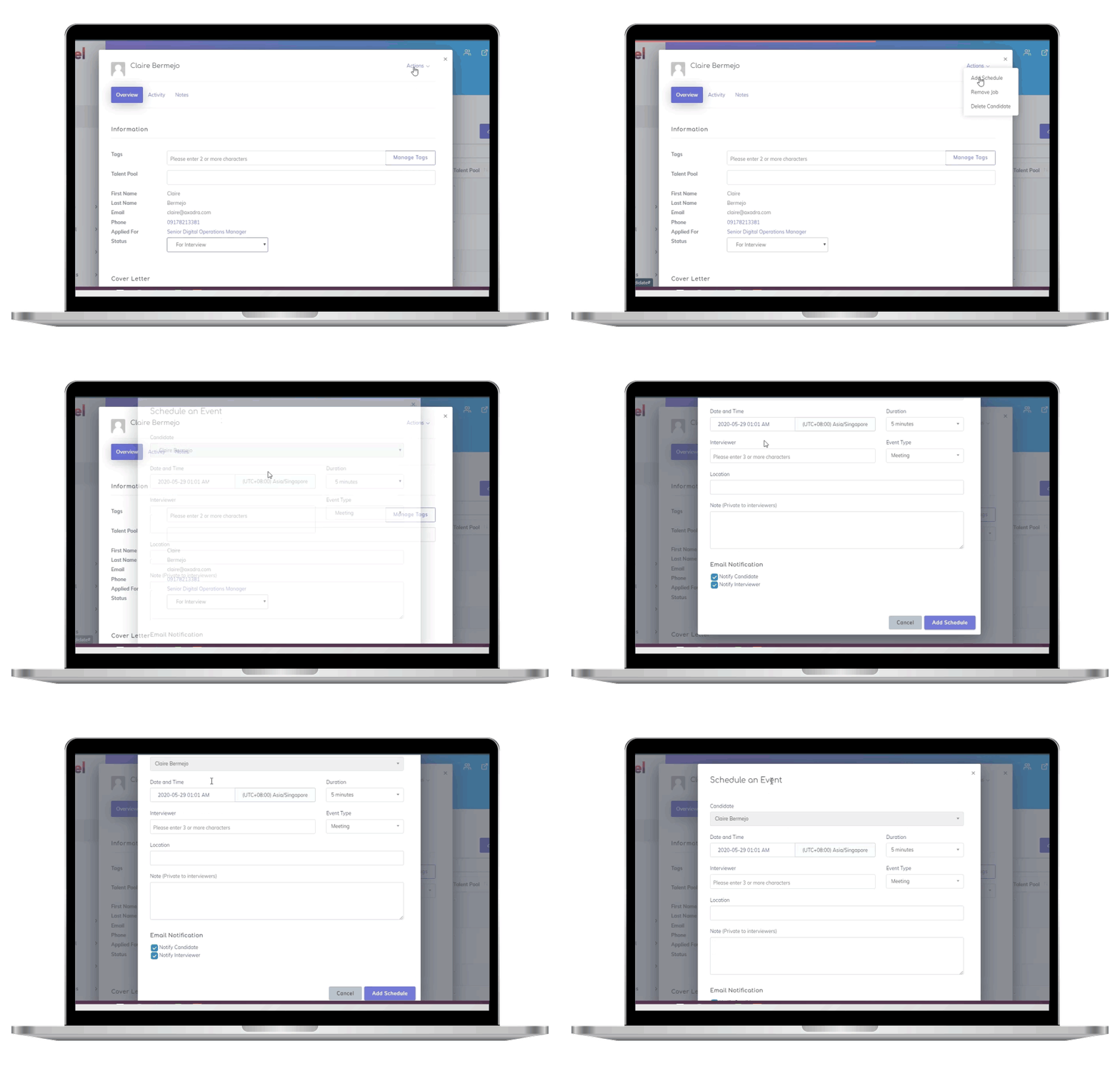

Your career page is more than just a job board – it’s where candidates decide if your company aligns with their values and goals. Companies like LinkedIn, Airbnb, Salesforce, Netflix, and Spotify excel at this by combining storytelling, transparency, and tailored features to attract top talent.
Here’s a quick rundown of what makes their career pages stand out:
- LinkedIn: Personalization through profile-based job suggestions and clear hiring steps.
- Airbnb: Emphasis on belonging with flexible work policies and diverse employee groups.
- Salesforce: Transparent hiring process and a focus on roles contributing to social impact.
- Netflix: Bold cultural values, transparent pay scales, and simplicity in hiring.
- Spotify: Music-themed branding, real-life remote work examples, and employee growth programs.
These pages succeed by being clear, authentic, and aligned with company values. Below, we’ll break down how they do it and what you can learn to improve your own career page.
How to Design a Careers Page in Webflow (Real Client Examples)
sbb-itb-e5b9d13
LinkedIn Careers Page
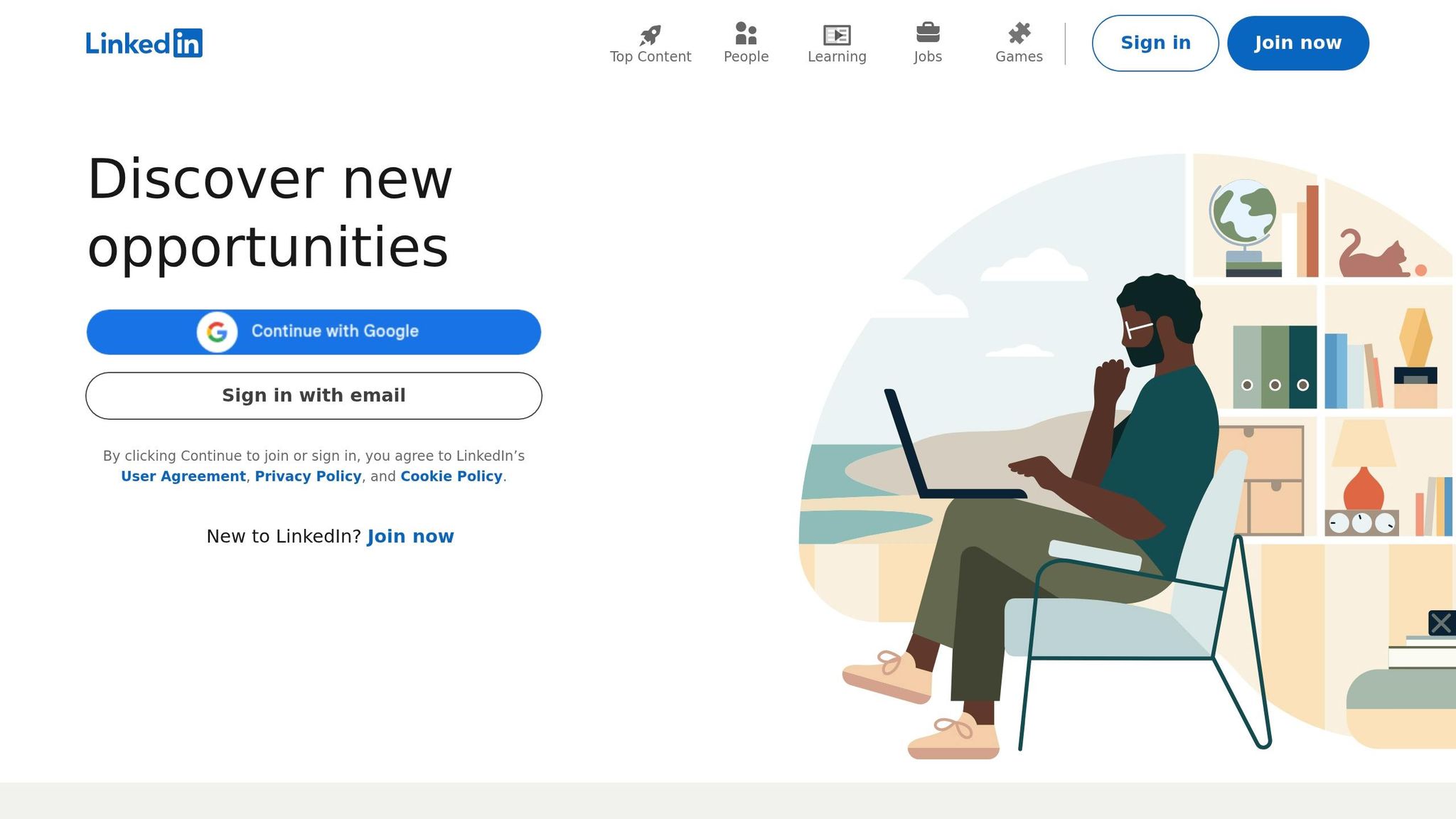
LinkedIn’s careers page is a standout example for professional companies aiming to attract top talent. With over 19,000 employees worldwide, LinkedIn has created a recruitment experience that blends openness, personalization, and storytelling in a way that feels engaging and approachable.
What Makes LinkedIn’s Career Page Work
The page grabs attention right away with background videos that visitors can play or pause, offering a dynamic and interactive first impression. It also uses personalization effectively. For instance, the "Jobs" tab automatically curates roles based on the viewer’s LinkedIn profile, skills, and experience. This tailored approach makes job searching feel intuitive and relevant.
A dedicated "How We Hire" section outlines LinkedIn’s four-step hiring process, from the application stage to the final decision. This section also includes an "I’m interested" feature, which allows candidates to join a talent pipeline easily. Resources like video interview tips and case study guides are provided to help candidates prepare, making the process more accessible and less daunting.
LinkedIn’s culture is woven throughout the page. The company’s motto, "Dream Big, Get Sh*t Done, and Know How to Have Fun", reflects its mix of ambition and supportiveness. The page also highlights the work of 12 Employee Resource Groups, connecting over 85,000 team members globally. Personal stories from employees, like Jennison Asuncion, Head of Accessibility Engineering Evangelism, bring this culture to life. Asuncion shared:
"When I attended my onboarding at LinkedIn, to my surprise, there was another new hire who had a disability. I’m blind myself… It certainly sent a signal to me that LinkedIn was and would be a welcoming place for everyone".
These thoughtful elements not only enhance the candidate experience but also provide actionable ideas for companies looking to improve their own career pages.
What You Can Learn from LinkedIn
LinkedIn’s career page offers valuable takeaways for creating a better candidate experience.
Prioritize transparency in hiring. Clearly outlining the steps in your hiring process can make candidates feel more informed and prepared. Providing additional resources, like interview tips, can also streamline the process. As ezCater‘s Paige Durgin explains:
"We’re bringing people into the recruiting funnel who are more informed about how we work as a company, what our culture is, and what our values are. It’s led to a more streamlined interview process".
Let your employees tell the story. Genuine employee testimonials and features like LinkedIn’s "Person Behind the Profile" add authenticity that resonates with potential hires. Companies using LinkedIn Career Pages see 8x more job applications and a 2.6x higher InMail response rate from candidates. Arthur Wan from Shangri-La Group captures this sentiment:
"It’s not just putting a corporate image on the Career Page and describing who we are – we want our colleagues to tell their stories and be the face of our brand".
Showcase diversity from the start. With 75% of job seekers researching an employer’s brand before applying, it’s essential to highlight inclusion early. LinkedIn does this by featuring Employee Resource Groups and diversity awards, such as the Human Rights Campaign Equality 100 Award for 2023-2024. This approach reassures candidates that your company values and welcomes everyone.
Airbnb Careers Page
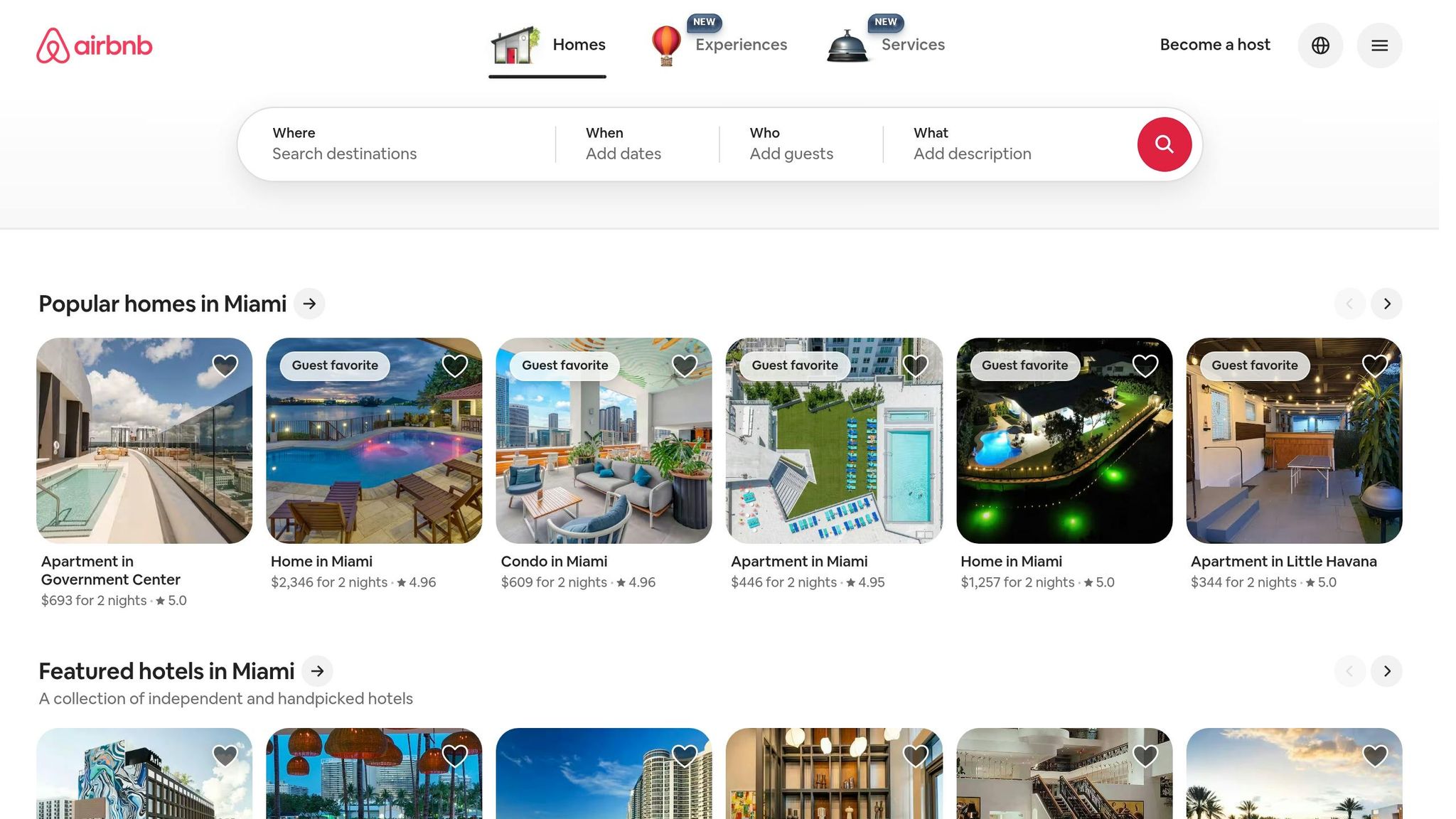
Airbnb’s careers page perfectly mirrors its core values of belonging and adventure. Since its founding in 2007, the platform has facilitated 1.5 billion arrivals and now boasts an impressive network of 5 million hosts worldwide. These numbers underline a recruitment philosophy rooted in genuine human connection.
What Makes Airbnb’s Career Page Work
The page starts with a warm, direct tone, inviting potential employees into a workplace built on authenticity and community. But it doesn’t stop at words – Airbnb backs its messaging with real initiatives. For instance, the company features 17 Employee Resource Groups (ERGs), such as AirPride@, Black@, Trans@, Able@, and Muslims@, offering employees meaningful spaces for support and connection.
Flexibility is another cornerstone of Airbnb’s culture. The Live and Work Anywhere policy outlines five clear principles, giving employees the freedom to work from home or the office, live anywhere within their country of employment without a pay cut, and even work abroad in over 170 countries for up to 90 days per location each year. Airbnb explains its approach this way:
"We’re driven by open curiosity, hopeful resilience, and the belief that every person can grow."
The perks align seamlessly with Airbnb’s mission. Employees receive quarterly travel credits to book stays and experiences, allowing them to engage with the platform as users. Comprehensive benefits like fertility support, adoption and surrogacy assistance, and parental coaching further demonstrate Airbnb’s dedication to employee well-being.
These initiatives create a careers page that feels both aspirational and actionable.
What You Can Learn from Airbnb
Airbnb’s careers page is a masterclass in combining authentic storytelling with concrete benefits, offering valuable lessons for companies looking to refine their own.
- Turn flexibility into something tangible. Airbnb doesn’t just claim to offer flexibility; it spells out the specifics with its five guiding principles. This clarity helps candidates understand exactly what they’re signing up for.
- Align employee perks with your brand. The travel credits are a brilliant touch, allowing employees to experience Airbnb as customers, fostering empathy and a deeper connection to the product.
- Back diversity statements with structure. Highlighting 17 ERGs shows that Airbnb is serious about diversity and inclusion. Considering that 75% of job seekers research an employer’s brand before applying, these details can make a lasting impression. As Airbnb puts it:
"Creating connection and belonging in the world begins with a workplace where you’re both welcomed and empowered to be your authentic self."
Salesforce Careers Page
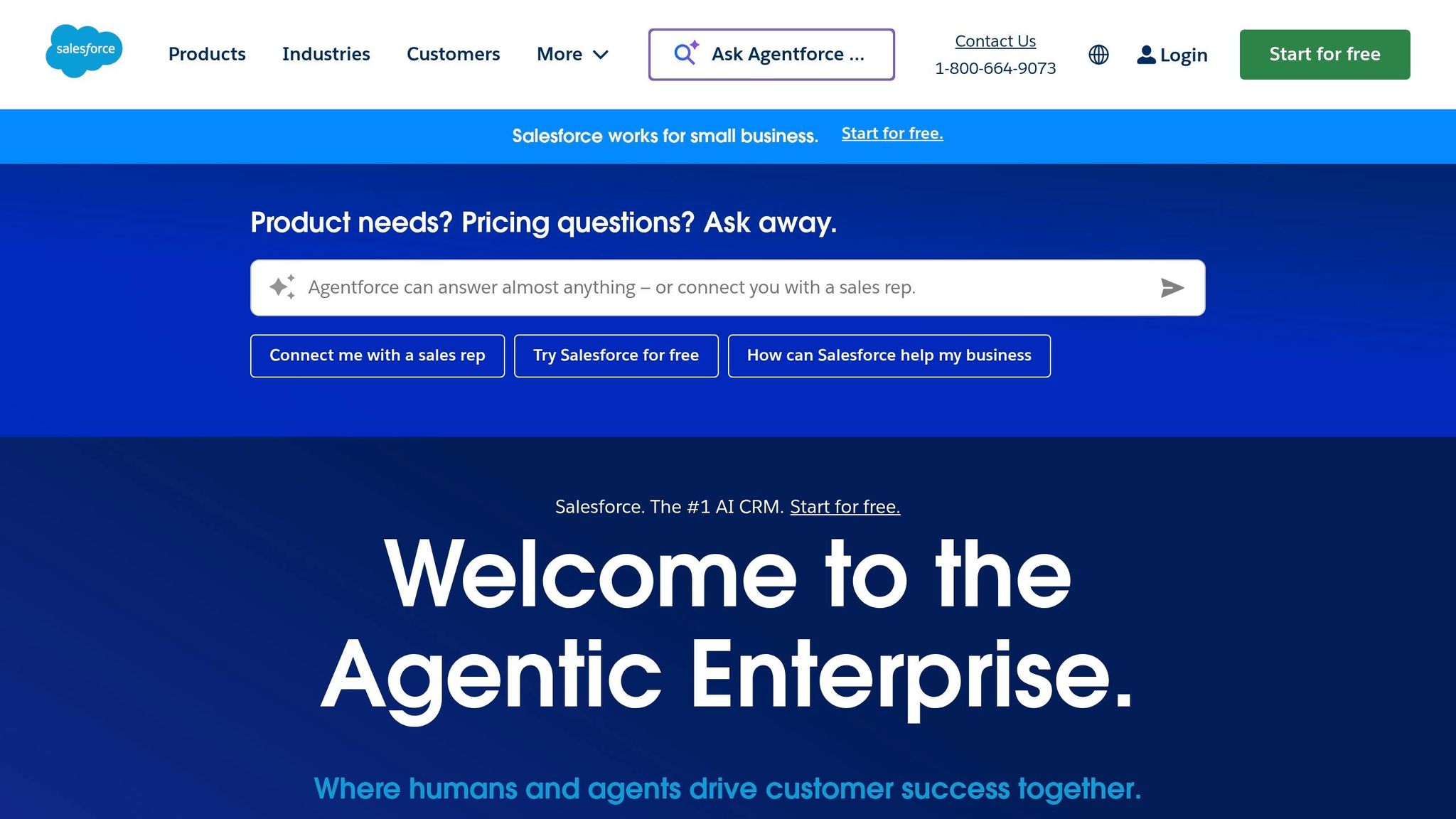
Salesforce’s careers page stands out by blending its mission with a clear and transparent hiring process, aiming to inspire potential candidates. Recognized as one of the "World’s Most Innovative Companies for 2025" by Fast Company, Salesforce uses its platform to show that its values are more than just words – they influence every hiring decision and employee interaction. The page emphasizes the company’s belief in business as a "platform for change", with equality as a cornerstone and a focus on how each role contributes to the ongoing transformation driven by AI.
What Makes Salesforce’s Career Page Work
The page organizes job opportunities into four distinct categories: Sales, Tech & Product, Customer Success, and Corporate Roles. A hallmark of Salesforce’s approach is its commitment to transparency. The "How We Hire" section lays out the hiring process step-by-step and advises candidates to apply for no more than three roles within a 12-month period to ensure a more personalized experience.
Employee stories add a personal touch, offering real-life examples of career journeys within the company. For example:
- Hayal, a MuleSoft Leader, shares how she transitioned from banking to becoming a Regional Vice President of Sales.
- Jenny, an AI leader, explains how her team uses "Agentforce" to enhance seller productivity.
- Garima, a Technical Architect, describes her work on building intelligent systems.
These testimonials are complemented by quotes like this one from Alexander Matarazzo, an ECS Account Executive:
"What energizes me most at Salesforce is being surrounded by people who turn big challenges into even bigger opportunities. It’s innovative, supportive, and you can feel the impact of your work."
The page also highlights employee wellbeing, showcasing benefits that support performance and satisfaction. Potential candidates can explore global benefits upfront, and those requiring assistance can easily access an Accommodation Request Form, ensuring fairness in the hiring process. Additionally, Salesforce encourages candidates to engage with Trailhead, its gamified learning platform, to better understand the company before interviews.
What You Can Learn from Salesforce
Salesforce shows that transparency fosters trust. By clearly outlining details like application limits, interview formats, and preparation resources, the company removes much of the uncertainty from the hiring process. While the three-role application limit might seem restrictive, it reflects a focus on quality over quantity.
Your career page can reflect your strategic priorities too. Salesforce integrates its AI-driven vision into its messaging, using employee stories to illustrate opportunities for growth and impact. This clarity allows candidates to align their interests with the company’s goals.
As Salesforce puts it:
"Business is the greatest platform for change, where every interaction and solution can drive positive impact. With equality as a core value, we’re on a journey to bring everyone along in the agentic era."
Netflix Careers Page
Netflix takes an upfront and candid approach to hiring, making it clear that their workplace is not suited for everyone. Their careers page uses straightforward language to attract candidates who thrive under high pressure and value autonomy. This transparency starts with the Culture Memo, a detailed document developed over a year with input from more than 13,000 employees and 1,500 comments. It outlines four key principles: The Dream Team, People Over Process, Uncomfortably Exciting, and Great and Always Better. Let’s look at how these principles and other features shape Netflix’s unique candidate experience.
What Makes Netflix’s Career Page Work
At the heart of Netflix’s careers page is the "Dream Team" philosophy, which rejects the typical corporate "family" metaphor. Instead, as the Culture Memo explains:
"We model ourselves on a professional sports team, not a family. Families are about unconditional love… Professional sports teams, on the other hand, focus on performance and picking the right person for every position."
This mindset is reinforced by the "Keeper Test", where managers ask themselves: "If this employee wanted to leave, would I fight to keep them?" If the answer is no, the employee receives a supportive severance package to help them transition.
Netflix also simplifies the application process with an AI-powered resume-matching tool. Candidates can upload their resume and be automatically matched with relevant roles. For example, a Machine Learning Scientist 5 position lists compensation between $466,000 and $750,000, reflecting Netflix’s transparent pay philosophy. They follow a "Personal Top of Market" approach, meaning employees are paid what they could earn at any other company for the same role and location. Employees also get to decide annually how much of their compensation is allocated as salary versus stock options.
The page design is clean and intuitive, with a high-contrast color scheme and clear navigation. Categories like "Culture Memo", "Inclusion", "Work Life Philosophy", and "Locations" are easy to find. Job cards display key details upfront, including team, location, and whether the role is remote or onsite.
What You Can Learn from Netflix
Netflix’s approach offers valuable lessons for creating an effective careers page. Transparency is key to helping candidates determine if they align with your company’s culture. Netflix’s clear communication and emphasis on values resonate with candidates, making the process more efficient for both parties. Their famously simple policies, like the five-word expense policy ("Act in Netflix’s best interest") and the two-word vacation policy ("Take vacation"), highlight their trust in employees’ judgment.
This trust-based approach works. Netflix operates with a lean workforce of around 14,000 employees while serving over 300 million paid memberships across more than 190 countries. Employees enjoy 35 days of paid time off annually, which includes vacation, holidays, and sick leave.
To replicate this strategy, use direct language on your careers page to clearly outline your company culture and values. Make your culture document easily accessible so candidates can understand your expectations before applying. As Netflix puts it:
"Netflix works best if you value experimentation, enjoy the uncomfortable excitement of a new or challenging project and have the resilience to thrive in this environment."
Spotify Careers Page
Spotify has crafted a recruitment experience that mirrors its identity as a music-focused brand. With headers like "Join the Band", "Meet the Band," and "Our Rhythm," the careers page speaks directly to both creative and technical talent, all while staying true to its unique branding. The page isn’t just about static text – it’s interactive. Features like real-time job tickers and category counts give candidates an instant snapshot of available roles and growth areas in departments like Engineering, Content, and Sales. This blend of creativity and practicality ensures the candidate journey is both engaging and efficient.
What Makes Spotify’s Career Page Work
Spotify’s "Work From Anywhere" program takes flexibility to the next level by showing real-life examples of employees working in diverse settings, like a garden in Mumbai or a skyscraper in Tokyo. Multimedia content, such as the "NerdOut@Spotify" podcast, offers a peek into the company’s technical teams, where they discuss engineering challenges. These elements provide candidates with an authentic look at life inside Spotify.
Instead of grouping roles into traditional departments, Spotify organizes them into creative categories that align with its musical theme. The "Band Manifesto" highlights five core values – Innovative, Sincere, Passionate, Collaborative, and Playful. These values are woven into Spotify’s identity:
"One band, no solo artists. It’s our culture. It’s our values. It’s who we are and what we’re not".
Backing up this ethos, Spotify offers tangible perks, such as six months of global parental leave for all new parents, regardless of location or seniority.
The hiring process is refreshingly simple, broken into three steps: Apply, Interview, and Decision. The language used is approachable, emphasizing that no over-the-top gestures like "cupcakes" or "rap CVs" are required. Spotify also invests heavily in employee development through its "GreenHouse" initiative, a dedicated team focused on skill-building and growth for employees at all levels. As Spotify puts it:
"We believe in uplifting and investing in our homegrown talent, so we encourage everyone to expand their skills, no matter their seniority".
What You Can Learn from Spotify
Spotify’s approach offers valuable lessons for creating a career page that connects. By using dynamic visuals and straightforward messaging, the company brings its culture to life in a way that resonates with potential candidates.
Interactive features like live job counts make the job search process more engaging, letting candidates quickly see where opportunities are growing without endless navigation. Multimedia elements, such as podcasts, provide an inside look at company culture, making it easier for candidates to envision themselves as part of the team. Spotify’s "Work From Anywhere" program is a standout example of how to make benefits feel real – showing employees working from a "roof terrace in Singapore" or a "quiet spot in Paris" is far more compelling than a generic "remote work available" line.
Spotify’s preference for simplicity is evident throughout:
"We’re not big on bureaucracy. To us, complicated processes and guidelines can kill innovation. Instead, we embrace that little bit of chaos that comes with being process-light".
What These Examples Have in Common
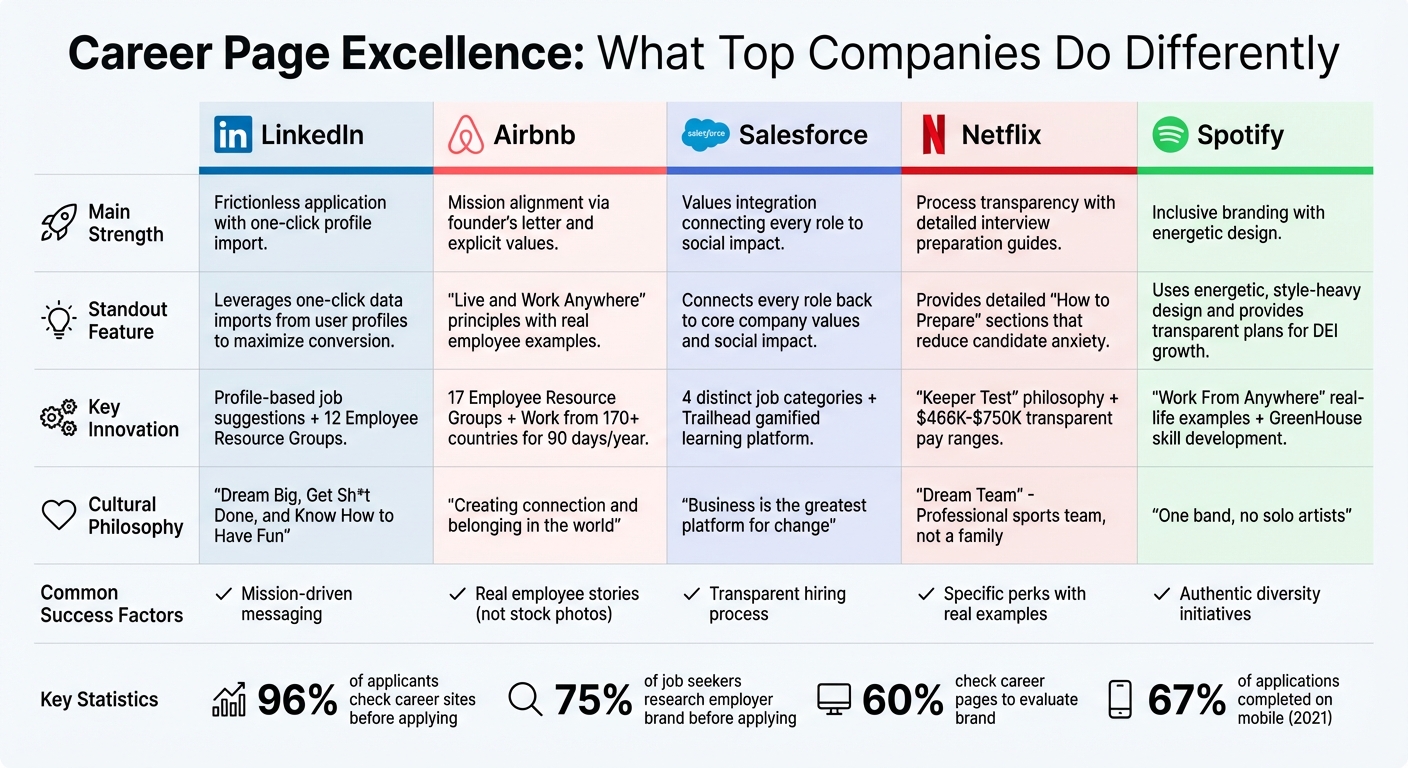
Top 5 Career Page Examples: Feature Comparison Chart
Shared Approaches That Work
Looking at the examples above, it’s clear that successful career pages share some key strategies. Despite their differences in industry or company size, these organizations all center their pages around a strong mission. Whether it’s Airbnb’s focus on belonging or Salesforce’s dedication to social impact, this mission-driven approach helps potential candidates connect with the company’s purpose and understand why their work would matter.
Another common thread is the use of real stories. Instead of relying on generic stock images or vague claims, these companies highlight genuine employee experiences. This makes their culture feel relatable and credible, not just like a marketing pitch. Transparency is another standout feature – clear timelines and expectations during the hiring process build trust and help candidates feel more confident.
All five examples also emphasize specific perks and benefits. They don’t just talk about diversity and inclusion; they back it up with real programs and initiatives. Considering that 96% of applicants check a company’s career site before applying, providing this level of detail is crucial for showcasing an authentic workplace culture.
Here’s a quick comparison of how these companies shine.
Feature Comparison
| Company | Main Strength | Potential Weakness | Standout Feature |
|---|---|---|---|
| Frictionless application with one-click profile import | N/A | Leverages one-click data imports from user profiles to maximize conversion. | |
| Airbnb | Mission alignment via founder’s letter and explicit values | N/A | Features "Live and Work Anywhere" principles with real employee examples. |
| Salesforce | Values integration connecting every role to social impact | N/A | Connects every role back to core company values and social impact. |
| Netflix | Process transparency with detailed interview preparation guides | N/A | Provides detailed "How to Prepare" sections that reduce candidate anxiety. |
| Spotify | Inclusive branding | N/A | Uses energetic, style-heavy design and provides transparent plans for DEI growth. |
The best career pages strike a balance between being inclusive and staying authentic. They avoid overused terms like "ninjas" or "rockstars" and instead focus on explaining the why behind their culture. Some pages lean on multimedia content, while others keep it simple – but they all make candidates feel like they can picture themselves working there. And that’s the ultimate goal of any career page.
How to Build Your Own Career Page
Take inspiration from companies like LinkedIn, Airbnb, Salesforce, Netflix, and Spotify to create a career page that reflects your brand and attracts top talent. Start by aligning the design with your brand identity – use your company’s colors, fonts, and logos. Make sure open roles are easy to find with user-friendly filters for department and location. This is crucial since 60% of candidates check a company’s career page to evaluate the brand before applying.
Bring a personal touch to your page by showcasing real team photos instead of relying on stock images. Be transparent about your mission and values, using straightforward language. For example, HubSpot’s "Culture Code" presentation has been viewed over 5 million times and serves as a great way to communicate company values. Add employee testimonials and videos to make your page more engaging – job postings with videos attract 34% more applicants.
Clearly outline what your company offers and what you expect from candidates. Highlight perks like work-from-anywhere policies, which have become a priority for many – 50% of workers in 2024 said they’d take a pay cut to work remotely. To reduce anxiety for applicants, explain your hiring process step by step. Also, avoid buzzwords like "rockstar" or "ninja", which might discourage a diverse range of candidates from applying.
For a streamlined approach, consider using tools like Skillfuel‘s career page builder. It allows you to customize your page design without needing technical expertise. Features like video galleries, employee testimonials, and team pages can all be managed through an easy-to-use dashboard. With 67% of job applications completed on mobile devices in 2021, Skillfuel ensures your page looks great on any screen and integrates smoothly with your Applicant Tracking System.
Your career page isn’t just a job board – it’s your chance to tell a story that resonates with potential candidates and inspires them to join your team.
FAQs
What makes a career page feel authentic?
A career page that feels genuine does more than just list job openings – it showcases the heart of a company. By highlighting real employee stories, using authentic visuals, and sharing transparent messaging, it helps candidates connect on a deeper level. Including elements like honest quotes, behind-the-scenes glimpses, and a clear commitment to diversity helps build trust. When a company prioritizes honesty and relatable storytelling, it creates a space where potential candidates feel welcomed and assured.
What should a ‘How we hire’ section include?
The "How We Hire" section should give candidates a clear roadmap of what to expect during the hiring process – from the moment they apply to their first day on the job. Here’s a breakdown of the key steps:
- Application Submission: Candidates start by submitting their application, typically through an online portal or email.
- Screenings: Initial screenings may include a review of resumes, cover letters, or even a quick phone call to assess basic qualifications.
- Interviews: This stage often involves multiple rounds, such as one-on-one interviews, panel discussions, or technical assessments, depending on the role.
- Final Decision: After all evaluations, the hiring team makes a decision and extends an offer to the selected candidate.
To help candidates succeed, provide practical tips like preparing thoroughly for interviews, aligning their skills with the job description, and demonstrating how they embody the company’s values. Mentioning any required assessments or tests, as well as emphasizing the importance of inclusivity and shared company values, ensures transparency and prepares candidates for each step of the process.
How can I improve mobile job applications?
To make mobile job applications more effective, focus on creating a smooth experience for users on smartphones and tablets. Start by ensuring your career page is mobile-friendly and adapts well to smaller screens. Simplify application forms by reducing unnecessary steps, making the process faster and easier to complete.
Why is this so important? Nearly 90% of job seekers now rely on mobile devices for their job searches. By streamlining the process, you not only keep their attention but also increase the likelihood of receiving more applications. A little effort here can go a long way in connecting with top talent.