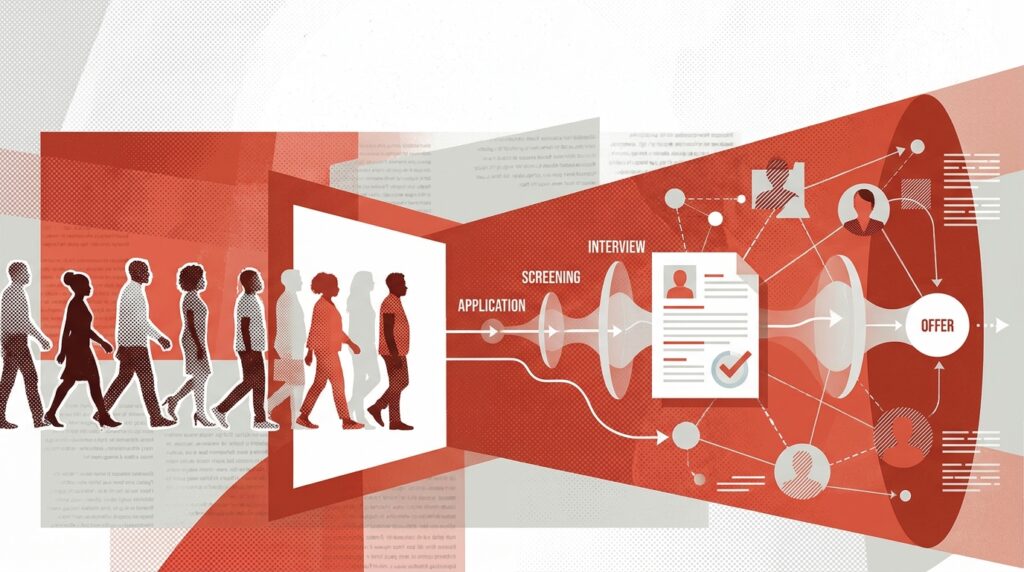

Notification systems can transform hiring by automating updates, improving communication, and reducing delays. Here’s how they help:
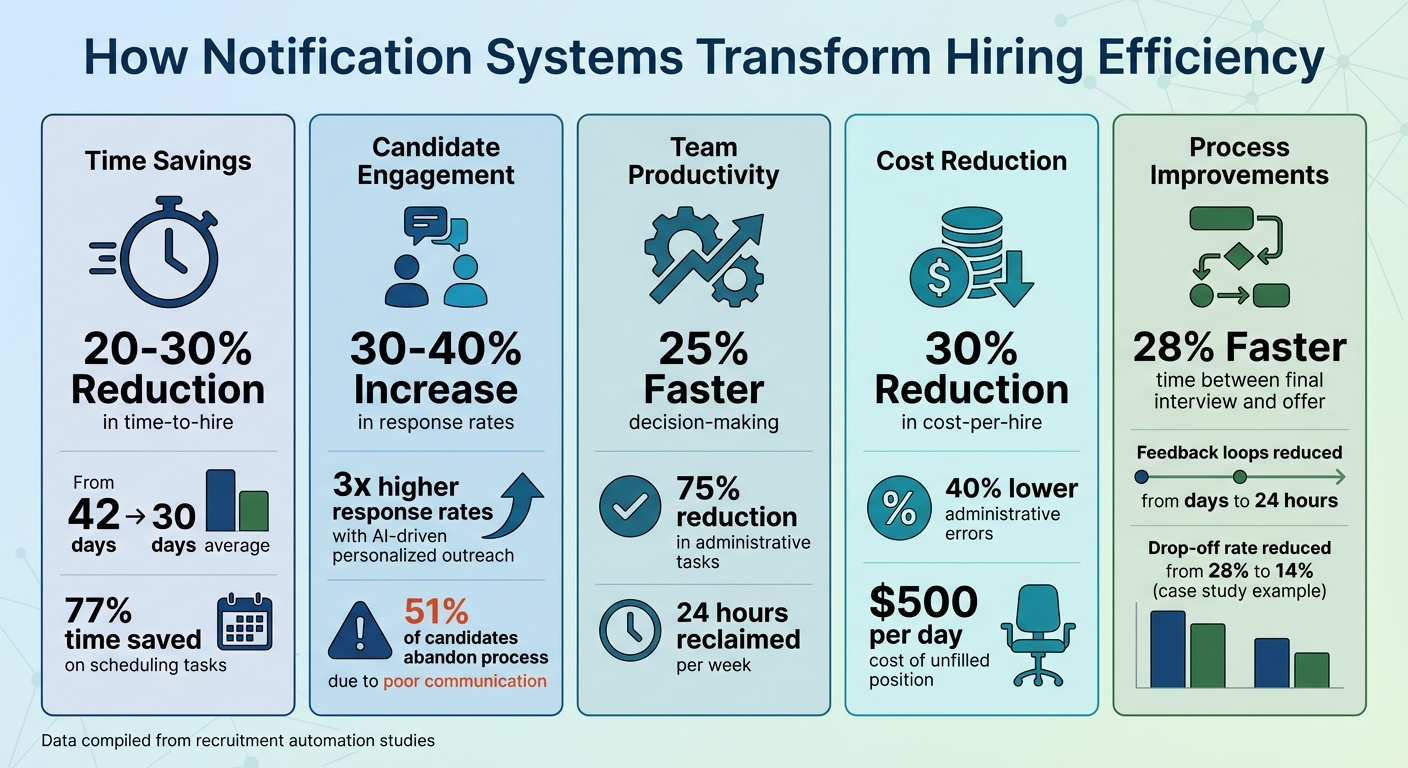
- Faster Hiring: Automation cuts time-to-hire by 20-30%, reducing the average from 42 days to 30 days.
- Improved Candidate Engagement: Instant updates and reminders increase response rates by 30-40% and lower drop-off rates.
- Streamlined Team Collaboration: Real-time alerts replace endless email threads, speeding up decision-making by 25%.
- Efficient Scheduling: Automated tools sync calendars, send reminders, and reduce scheduling time by up to 77%.
- Cost Savings: Lower administrative tasks by 40% and reduce cost-per-hire by 30%.
Tools like Skillfuel centralize notifications, integrate with calendars, and provide analytics to track progress. This makes hiring faster, smoother, and more efficient while keeping candidates engaged and teams aligned.
Key Benefits of Notification Systems in Recruitment: Statistics and Impact
The 5 HR Tech Must-Haves for Smarter, Faster Hiring in 2025
How Notification Systems Streamline Recruitment
Notification systems have reshaped recruitment, turning it into a proactive process by automating critical touchpoints. These systems rely on trigger-based messaging, sending notifications at key moments in the hiring process. This removes the need for recruiters to manually track applications or craft individual follow-up emails, saving significant time and effort.
Automating Candidate Communications
Automated notifications ensure candidates stay engaged by providing timely and personalized updates throughout their hiring journey. From instant application confirmations to status updates, these systems keep candidates informed. Modern platforms take it a step further by using multi-channel outreach – email, SMS, and conversational AI chatbots – to connect with candidates on their preferred communication platforms. This ensures round-the-clock responsiveness.
For candidates who haven’t replied, multi-step email sequences provide gentle follow-ups. Research even shows that AI-driven, personalized outreach can triple response rates compared to generic messages. Additionally, self-service scheduling tools let candidates pick interview times that align with recruiter availability, eliminating the hassle of back-and-forth coordination.
"Automation is not about replacing recruiters, it is about reducing friction so your team gets more time for real conversations and strong placements." – Danny Rosenthal, Enginehire
But notifications don’t just improve candidate engagement – they also help streamline internal team workflows.
Enabling Real-Time Team Collaboration
Notification systems also serve as a centralized tool for team collaboration, keeping hiring teams aligned without the chaos of endless email threads. For example, when a hiring manager reviews a candidate’s profile or an interviewer tags a colleague in feedback notes, notifications deliver the relevant details instantly. This allows team members to respond quickly without extra effort.
Automated reminders play a key role too, ensuring interviewers submit scorecards on time. This prevents delays in feedback that could stall decision-making. To avoid overwhelming users, intelligent grouping consolidates related updates while highlighting urgent tasks.
"Collaborative notifications are more than just simple alerts – they’re powerful tools for driving engagement, productivity, and connection." – Liveblocks
Accelerating Interview Scheduling
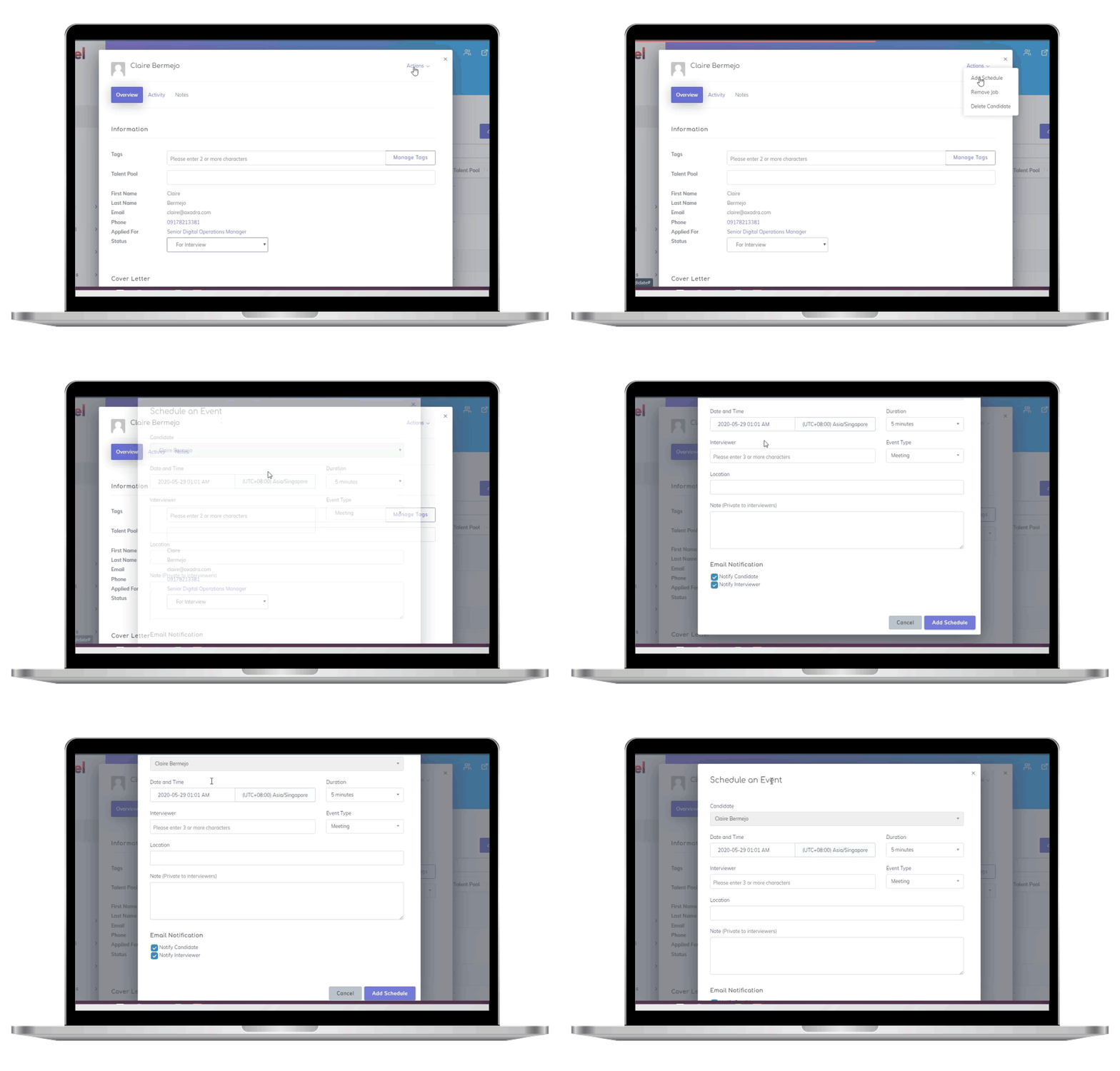
Interview scheduling, often a major bottleneck, also benefits from automation. Instead of recruiters manually juggling calendars, notification systems send instant calendar sync alerts as soon as interview slots open up. Candidates receive automated confirmations along with calendar invites, and both parties get timely reminders before the interview. This minimizes no-shows and can save organizations up to 77% of their time on scheduling tasks.
Key Benefits of Notification Systems for Hiring Efficiency
Notification systems can significantly improve hiring processes, offering tangible benefits that directly impact organizational performance. Companies using recruitment workflow automation report cutting administrative tasks by 75%, reclaiming around 24 hours each week – time that can be better spent on strategic hiring efforts. Additionally, organizations with advanced automated systems see a 30% drop in cost-per-hire within the first year. Considering that an unfilled position costs a mid-market company about $500 per day, the financial advantages are clear. On top of that, poor communication from employers drives 51% of candidates to abandon the hiring process, while a bad hire could cost up to 30% of the individual’s first-year salary. These systems not only enhance productivity but also address specific challenges in managing candidate pipelines and reducing administrative burdens.
Reducing Pipeline Bottlenecks
Real-time notifications act as a safeguard against delays in the hiring process. If candidates linger too long in a specific stage, alerts prompt immediate action, helping teams maintain momentum. Analytics tools track how long candidates spend in each stage, making it easier to identify and resolve bottlenecks. For example, a mid-sized staffing firm introduced a 48-hour feedback policy enforced by automated alerts, cutting its candidate drop-off rate from 28% to 14% and turning three consecutive offer rejections into acceptances. Automated reminders also speed up feedback loops, reducing them from several days to just 24 hours. Tools like structured scorecards and automated alerts further decrease the time between final interviews and offer letters by 28%.
Minimizing Administrative Errors
Integrating notification systems with workflow tools creates a streamlined process that reduces manual mistakes. Automated triggers ensure candidates move through the pipeline seamlessly, eliminating the risk of misplaced resumes or overlooked applications. Calendar synchronization simplifies scheduling, cutting the process from days to minutes, while compliance safeguards automatically handle GDPR consent and data retention requirements. Centralized communication tools consolidate feedback, scorecards, and interview notes into a single, real-time updated system. This eliminates scattered email chains and ensures hiring managers receive timely reminders to provide input.
sbb-itb-e5b9d13
Implementing Notification Systems in Skillfuel
Skillfuel’s notification system is designed to fit seamlessly into your recruitment workflows. With its centralized dashboard, the platform brings all recruitment tasks together, enabling teams to manage communications and track progress in one place. This ensures everyone stays on the same page throughout the hiring process. Let’s break down how customization, calendar integration, and analytics enhance this system.
Enabling and Customizing Notifications
Skillfuel lets you tailor notifications to your specific recruitment needs. By connecting your employee referral tool with your ATS, you can merge candidate profiles and notification histories in one system. Proactive alerts notify employees when candidate matches are found within their networks, while weekly reminders help the hiring team focus on top-priority referrals.
You can set up triggers for different stages of the hiring process. For instance, you might configure automatic alerts to notify payroll when a candidate completes their probationary period. The platform’s Kanban-style workflow offers real-time visual cues, making it easier to spot and address productivity bottlenecks. Plus, its machine-learning algorithms fine-tune the timing and content of messages to maximize engagement.
Integrating with Calendars and Collaboration Tools
Skillfuel goes beyond notifications by integrating with calendars and collaboration tools to simplify scheduling. The built-in Interview Scheduler organizes interview logistics, providing questions, prep notes, and a space for centralized candidate feedback. The mobile-friendly version ensures teams can manage notifications and schedules anytime, anywhere. Additionally, social media integration allows users to schedule and target job postings across multiple platforms.
For teams using external tools, Skillfuel supports integrations with services like Google Calendar for event syncing and Pushbullet for instant alerts. These integrations ensure that your team stays organized and informed without needing to switch between multiple platforms.
Using Analytics for Continuous Improvement
Skillfuel doesn’t just streamline communication and scheduling – it also provides analytics to refine your hiring process. Its analytics suite includes leaderboards, ROI tracking, and detailed progress reports, offering insights to continually improve recruitment efforts. Use the dashboard’s conversion charts to see which notification settings are most effective, and monitor how long candidates spend in each pipeline stage to adjust notification timing if needed.
Measuring the Impact of Notification Systems on Hiring Efficiency
To gauge how Skillfuel’s notification system influences recruitment outcomes, it’s essential to establish a clear baseline before implementation and then compare results after rollout.
Tracking Key Metrics
Several metrics are critical for assessing hiring efficiency. One of the most telling is time-to-hire, which measures the duration from application submission to offer acceptance. Industry data shows that around 50% of talent acquisition professionals complete hires within one to two weeks, while processes extending beyond three weeks are often seen as inefficient.
Another important metric is the candidate drop-off rate, which highlights inefficiencies in the hiring process. Automated updates via Skillfuel can keep candidates informed and engaged, reducing the likelihood of abandonment early in the process.
Cost-per-hire is equally revealing. Estimates place the average cost per hire at $4,129 according to SHRM, with other data suggesting it can reach $4,700. Notably, soft costs – representing 60% to 70% of hiring expenses – can be trimmed through automation, as Skillfuel reduces manual effort.
Additional metrics to monitor include the offer acceptance rate, which can decline when slow communication allows competitors to swoop in, and source of hire, which identifies the most effective recruitment channels. Skillfuel’s analytics dashboard consolidates all these data points into one place, making it easier to track and analyze performance.
These metrics provide a solid foundation for comparing pre- and post-implementation results.
Comparing Pre- and Post-Implementation Performance
Start by collecting baseline data for key metrics like time-to-hire, drop-off rates, and cost-per-hire before activating Skillfuel’s notification system. This establishes benchmarks for comparison.
Once the system is live, use Skillfuel’s analytics tools to generate detailed reports on how these metrics evolve. Many teams experience a 20-50% reduction in time-to-hire as automated notifications streamline scheduling and feedback processes, ensuring timely resume reviews and responses.
A comparison table can help track month-over-month changes in key metrics. For instance, are fewer candidates abandoning the process between application and interview stages? Has your team reduced the time spent on repetitive administrative tasks? These measurable improvements not only validate the investment in Skillfuel but also provide insights for fine-tuning the system to achieve even better results.
It’s worth noting that 71% of companies recognize the value of HR data, but only 15% trust the accuracy of their reports. Skillfuel’s automated data collection eliminates human error, giving you reliable, actionable insights to guide your decisions with confidence.
Conclusion
Notification systems have revolutionized hiring, turning what was once a slow and manual process into a faster, more collaborative effort. By automating candidate communications, speeding up interview scheduling, and enabling real-time teamwork, tools like Skillfuel tackle workflow bottlenecks, reduce administrative mistakes, and prevent delays in communication.
Organizations that adopt automated notifications often report impressive results: hiring cycles become 20–30% faster, up to 70% of routine administrative tasks are automated, and hiring errors drop by about 40%. These changes not only reduce cost-per-hire but also improve the overall experience for candidates.
Skillfuel stands out with its integrated features, including automated alerts, calendar syncing, customizable workflows, and detailed analytics dashboards. These tools keep everyone in the loop without the need for constant manual follow-ups. Plus, automated data collection and reporting provide reliable insights to help refine recruitment strategies and showcase ROI.
The next step is clear: take action. By implementing Skillfuel’s notification system, you can eliminate hiring delays, improve efficiency, and track key metrics like time-to-hire, candidate drop-off rates, and cost-per-hire. Start transforming your recruitment process today.
FAQs
Which hiring steps benefit most from automated notifications?
Automated notifications play a key role in recruitment, particularly during resume screening, interview scheduling, and candidate follow-ups. They simplify communication, minimize delays, and keep everyone informed, making these essential stages of the hiring process more efficient.
How do you prevent notification overload for recruiters and hiring managers?
To keep notifications manageable, adjust your settings to receive alerts that truly matter – like updates on major milestones or specific applicant activities. Tailor notifications to align with your priorities, such as particular job roles or team objectives. By fine-tuning these preferences, you’ll maintain clear and actionable communication without overloading recruiters or hiring managers.
What metrics should you track to prove notifications improved hiring?
Tracking metrics such as candidate response rates, time-to-fill positions, and team engagement levels can provide valuable insights into your recruitment process. These numbers highlight how notifications improve communication efficiency and help cut down delays, ensuring a smoother hiring experience.