
Nearly 90% of companies are prioritizing employee retention in 2026 as AI-driven workforce reductions place heavier performance demands on smaller teams, making the cost of losing top talent significantly more expensive, according to a new report from Wellhub released June 3, 2026. The research shows organizations tracking wellbeing program ROI report a 95% positive return rate, with three-quarters seeing returns exceeding 50% on their employee wellness investments.
TL;DR: Wellhub data shows 90% of companies are prioritizing retention in 2026 as AI shrinks teams and increases the financial impact of losing top performers, with 95% of tracked wellbeing programs delivering positive ROI.
The findings arrive as companies enter what Wellhub describes as a transformation phase where fewer employees must deliver more output, according to HR Executive. Of the 61% of companies that track return on investment for wellbeing programs, nearly a quarter report returns exceeding 100%.
“As companies get leaner, more pressure is falling on fewer people,” said Cesar Carvalho, founder and CEO of Wellhub. “The organizations that recognize that shift and support those employees are the ones that will sustain performance over time.”
Wellbeing Programs Show Clear Financial Returns Amid Cost Scrutiny
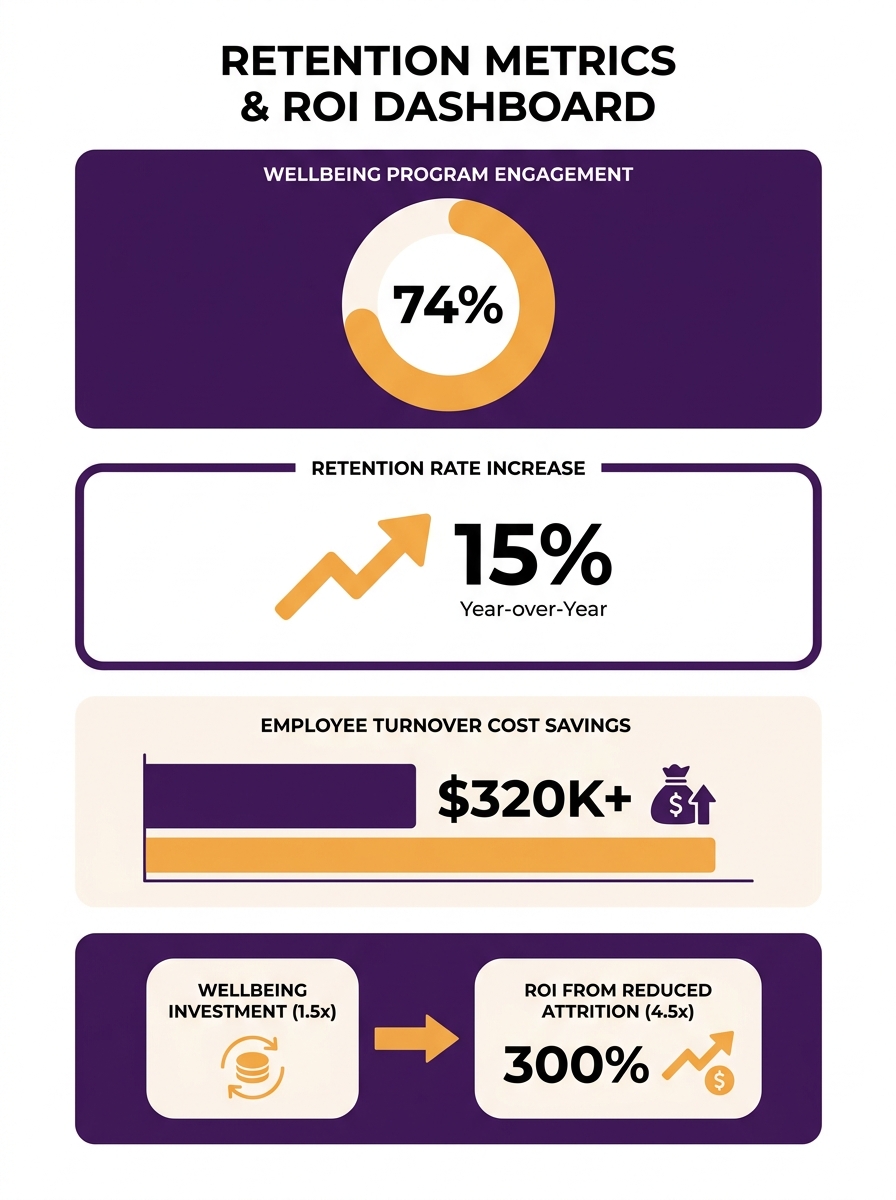
Finance leaders are taking a closer look at workforce investments, including wellbeing programs, as cost pressures mount across organizations. Among the 61% of companies tracking ROI on these programs, 95% report positive returns, the Wellhub data shows. Seventy-five percent of organizations see more than a 50% return on their wellbeing investments, highlighting a measurable financial upside that extends beyond cultural benefits.
The research indicates wellbeing has shifted from a cultural initiative to a financial imperative as performance expectations climb. Companies investing in employee onboarding and retention infrastructure face pressure to demonstrate concrete returns as budgets tighten.
Mental Health Decline Directly Impacts Productivity and Attendance
Chronic stress and burnout rank as the most common negative impacts on employee health, cited by 23% of organizations surveyed, followed by excessive workload and unrealistic expectations at 21%. The majority of HR leaders say degraded employee mental wellness contributes to higher organizational costs.
Fifty-one percent of organizations link declining employee mental health to reduced productivity or performance, the report found. Thirty-seven percent report increased absenteeism or presenteeism as a direct result of declining employee mental health. These impacts carry immediate financial consequences for companies operating with smaller teams under AI-driven productivity expectations.
Retention Strategies Face Higher Stakes in Leaner Organizations
The data underscores a structural shift in workforce planning. As AI tools enable companies to operate with fewer employees, the departure of any top performer creates a larger performance gap and higher replacement costs. Traditional retention approaches designed for larger teams may not scale to environments where individual contributors carry more organizational weight.
Carvalho noted that companies raising performance expectations must also raise support levels. “If companies keep raising the bar, they also need to support the people expected to clear it,” he said in the report.
The research suggests companies that fail to invest in protecting employee wellbeing may struggle to sustain productivity and retain critical talent as AI reshapes workforce composition. Organizations prioritizing retention in 2026 face the dual challenge of managing higher per-employee performance demands while maintaining competitive employee referral tracking and wellness benefits that attract and keep top performers.
The Takeaway
Recruitment and talent acquisition teams operating in leaner environments now face a retention calculus where losing a single top performer carries outsized impact. The Wellhub data makes clear that wellbeing investments are no longer optional cultural add-ons but financially justified retention tools—95% positive ROI among tracked programs proves the business case. For hiring leaders, this creates a two-front challenge: not only must recruitment processes identify candidates who can handle elevated performance demands, but onboarding and retention strategies must actively buffer against the stress and burnout that 23% of organizations cite as their most common employee health problem. The companies sustaining productivity in 2026 will be those that treat wellbeing infrastructure as seriously as they treat hiring infrastructure, because in a world where AI has eliminated the buffer of extra headcount, there’s no margin left to absorb talent loss.