
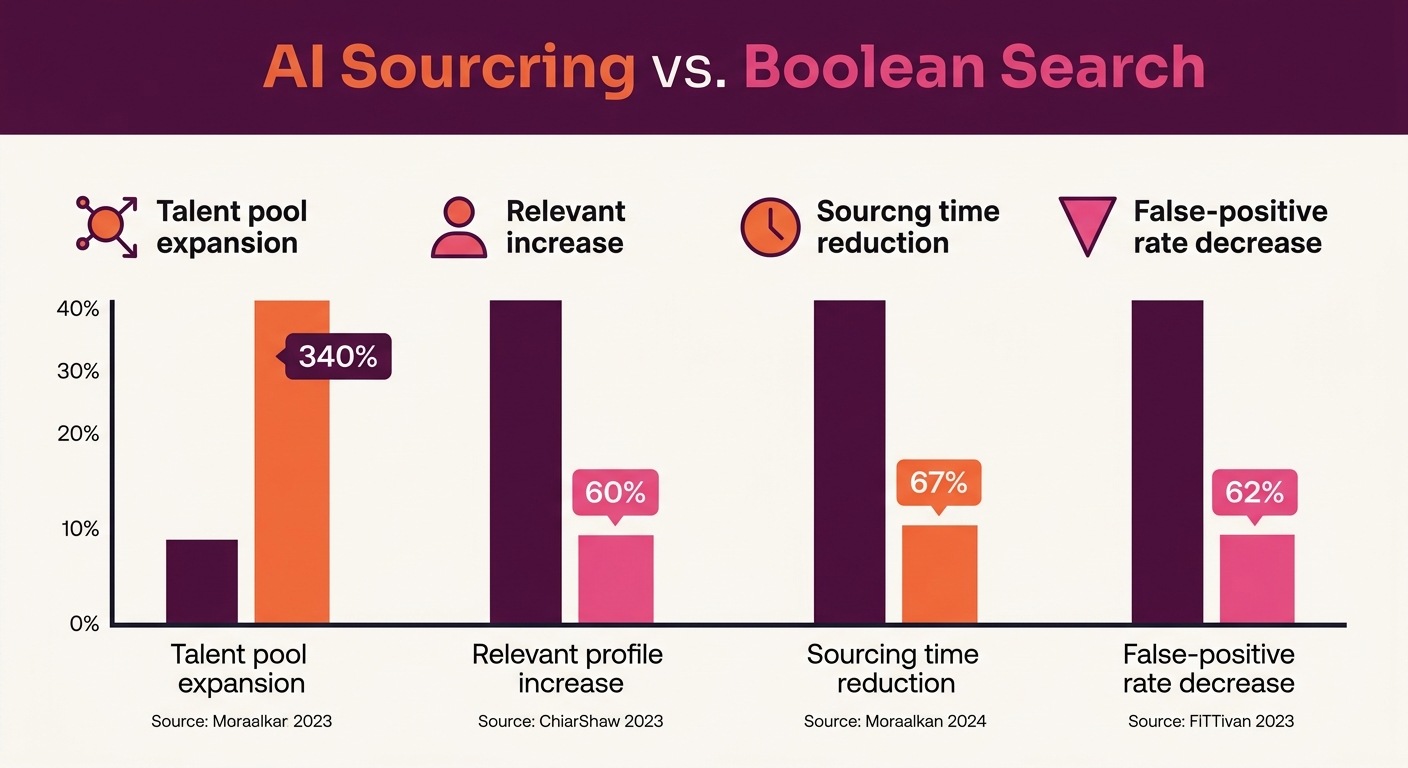
Semantic AI sourcing tools now expand candidate pools by an average of 340% over traditional Boolean strings and surface 60% more relevant profiles per query, according to 2026 Gartner benchmarks. Boolean search retains an edge for hyper-specific niche roles, but for the majority of hiring workflows, AI has pulled decisively ahead on volume, relevance, and speed.
Boolean Search Earned Its Place for Good Reasons
Boolean search recruiting worked because it gave recruiters direct control over exactly which keywords, titles, and modifiers defined a search. A skilled sourcer could chain AND, OR, and NOT operators across LinkedIn, job boards, and internal databases to build queries that returned precisely the profiles they specified. For highly technical or credentialed roles where the target population is small and the terminology is standardized, that precision still matters. If you need a board-certified pediatric cardiologist in Houston who also holds a specific research grant, Boolean operators will do the job.
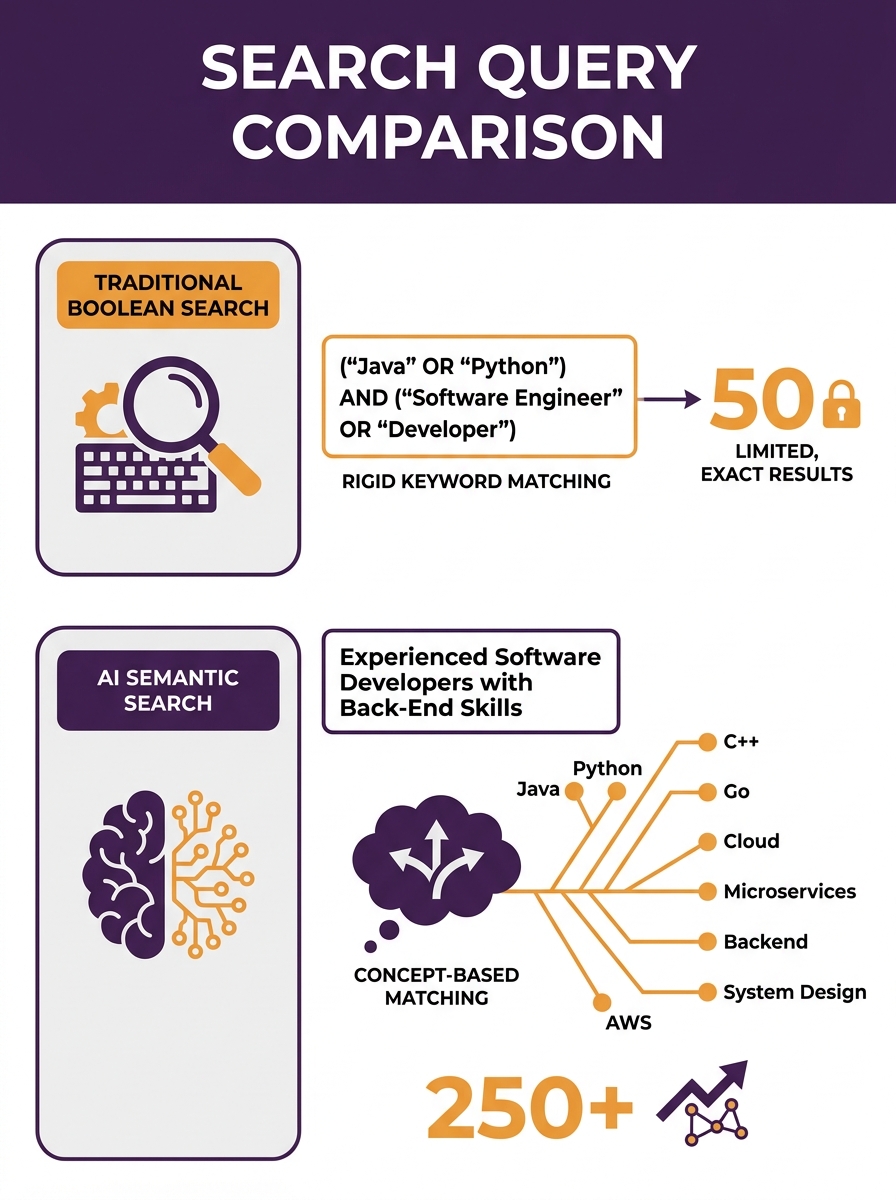
The problem is that Boolean search scales terribly and fails silently. As Pin’s 2026 analysis of AI sourcing tools documented, writing effective Boolean queries takes training, the syntax is unforgiving, and results are only as good as the keywords you choose. Miss a synonym or misspell a modifier and you lose entire candidate pools without ever knowing they existed. A recruiter searching for “data scientist” AND “Python” will never see the machine learning engineer whose resume says “ML engineer” and “pandas” instead. The search doesn’t understand that these candidates do the same work.
That brittleness compounds at volume. A recruiting team filling 40 open roles per quarter can’t hand-tune Boolean strings for every requisition and every platform. The time cost alone makes it impractical. According to SHRM’s 2025 Talent Trends report (surveying 2,040 HR professionals), 69% of HR professionals now use AI for recruiting, up from 51% just one year earlier. That adoption curve didn’t happen because of hype. It happened because Boolean-only workflows hit a ceiling that most teams couldn’t afford to keep bumping against.
How Semantic AI Changed the Sourcing Math
AI sourcing tools replaced literal keyword matching with semantic understanding. Instead of searching for the exact string a recruiter types, these platforms analyze skills, career trajectories, and contextual fit using natural language processing and deep neural networks. The shift is often described as moving from “title contains” to “competencies include,” and the practical difference is enormous. A semantic search for a front-end developer with accessibility experience will surface candidates whose profiles mention WCAG compliance, screen reader optimization, or ARIA attributes, even if the phrase “accessibility” never appears.
This matters because 40% of viable mid- and junior-level candidates come from sources that traditional keyword tools miss entirely, according to 2026 industry data. Non-linear career paths, adjacent skill sets, and candidates who describe their work in different terminology all fall through Boolean filters. AI sourcing tools catch them. Platforms like Curately, which automates sourcing through screening and engagement, represent the current generation of talent sourcing automation that integrates directly with existing ATS infrastructure to keep data flowing without manual re-entry. Semantic search simultaneously reduces false-positive rates by 62%, meaning recruiters spend less time reviewing profiles that looked promising on paper but had nothing to do with the role.
The speed gains deserve their own attention. AI reduces sourcing time by 67%, with 90% of users reporting significantly less time spent on manual candidate discovery. Companies implementing agentic AI workflows report 30–50% faster time-to-hire, and some high-volume teams have seen efficiency improvements reaching 70%. Those numbers align with what MiHCM’s research on machine learning in recruitment found: organizations tracking time-to-fill, quality-of-hire, recruiter efficiency, and candidate satisfaction saw up to 40% reduction in time-to-hire and 20% improvement in retention. For recruiting teams already struggling with the hidden mechanics of candidate ranking in their ATS, AI sourcing addresses a bottleneck that Boolean search created and then couldn’t solve.
AI sourcing tools predict job performance with 78% accuracy by evaluating demonstrated competencies rather than matching job titles or degrees.
The Diversity and Quality Arguments Carry More Weight Than the Speed Ones
Speed is easy to measure. Candidate quality and diversity impact take longer to observe but carry more weight for organizations that care about hiring outcomes beyond filling seats quickly. AI sourcing tools predict job performance with 78% accuracy by evaluating demonstrated competencies, and skills-based AI matching has improved workforce diversity by an average of 16% in early adopting organizations. That diversity gain happens because semantic matching bypasses the prestige signals and narrow keyword filters that Boolean search enforces by default. When you search for “Harvard” AND “McKinsey” AND “Python,” you’re building a demographic profile whether you intended to or not.
Mercer’s strategic AI adoption research found that 38% of talent acquisition respondents identified sourcing and engaging talent for pipeline purposes as the most popular use of AI in their function. That figure reflects where teams see the highest return on AI investment and why this candidate sourcing comparison keeps tilting in one direction. Meanwhile, Second Talent’s compilation of recruitment statistics reported that 41% of recruiters use AI daily for candidate sourcing and screening, while 42% of companies have implemented AI-powered applicant tracking systems and 38% use AI for salary benchmarking and offer optimization. The pattern across every survey is the same: AI recruiter tools in 2026 have moved from experimental pilots to default workflows.
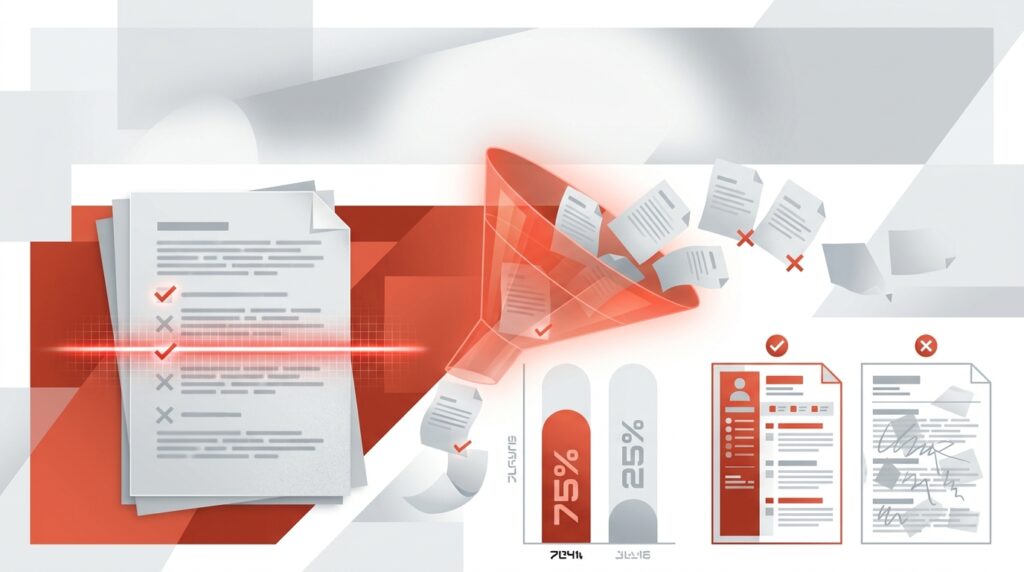
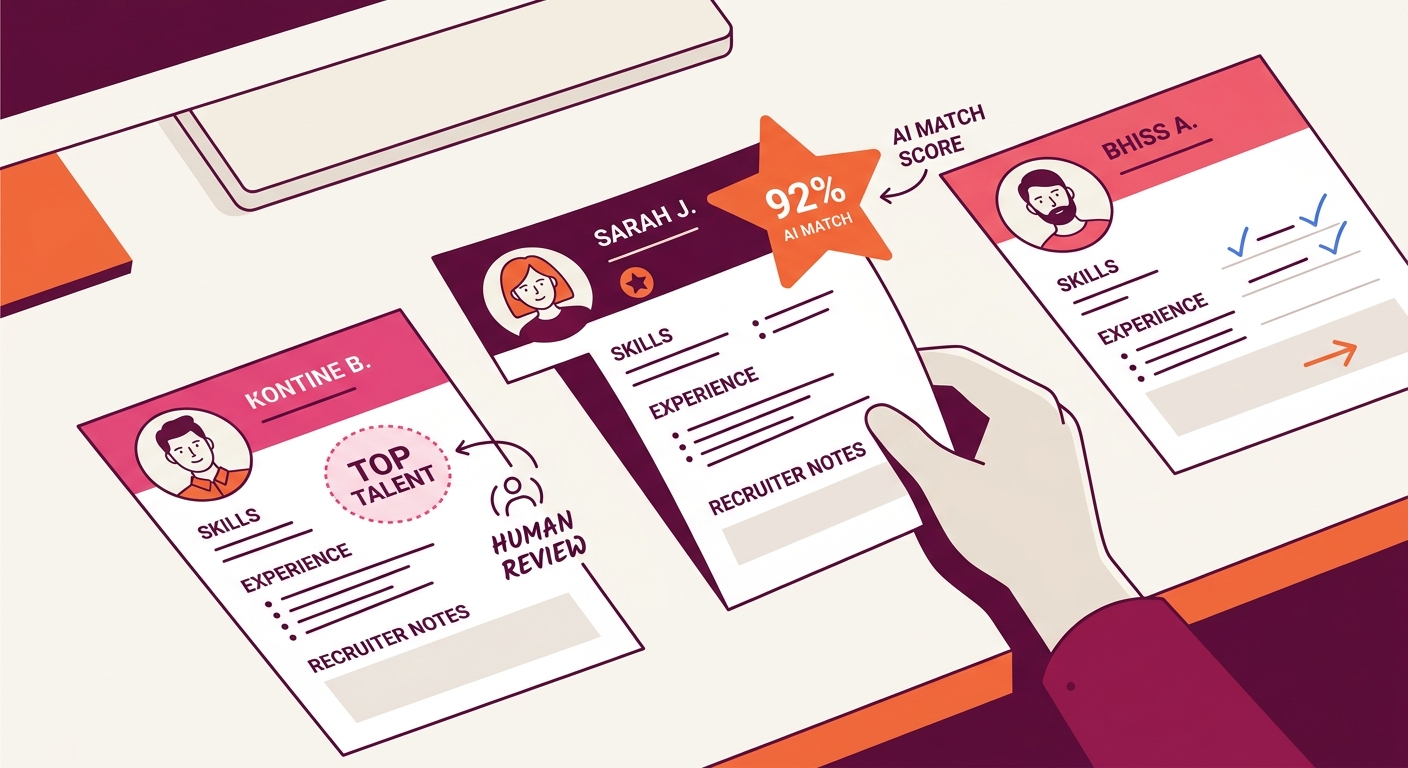
But the quality argument has a caveat that AI vendors rarely emphasize. A 62% reduction in false positives still means more than one in three candidates surfaced by AI won’t be a good fit. The tool narrows the funnel dramatically compared to Boolean search, and the performance data supports that claim clearly. It does not, however, eliminate the need for human evaluation. This is where the 93% figure matters: 93% of recruiters believe human involvement remains essential for culture fit and final judgment. Teams that understand how to build structured interview scorecards get more from AI sourcing because they have a consistent framework for evaluating the candidates the tool surfaces, rather than letting a better filter feed into the same unstructured interview process that produced mediocre hires before.
What This Comparison Leaves Unresolved
The candidate sourcing comparison between AI and Boolean search has a clear winner on the metrics that matter to most recruiting teams. The 340% pool expansion, the 60% relevance improvement, the 67% time savings, the 16% diversity gain: these numbers make the case without much ambiguity. And yet the conversation isn’t as settled as the data suggests.
One unresolved tension is candidate trust. With 66% of candidates hesitant to apply for AI-screened roles, the efficiency gains on the recruiter side may come at the cost of application volume on the candidate side. If your best prospects opt out because they don’t trust the process, a bigger talent pool means less than it should. Building a social media recruitment process that’s transparent about how AI fits into your hiring workflow matters for exactly this reason, because candidates who understand what the technology does and doesn’t decide are more likely to engage with it.
Another gap sits in the compliance landscape. The EU AI Act now prohibits emotion recognition in hiring and requires audit trails for fairness. AI sourcing tools must provide those trails, and many do. But the regulatory environment is still evolving, and organizations that deploy AI recruiter tools in 2026 without clear governance policies are accumulating risk they can’t yet quantify. The rise of AI-generated fake resumes appearing in recruiter application pools adds another complication, because AI sourcing tools are operating in an environment where the signal-to-noise ratio on incoming applications is deteriorating at the same time these tools are getting better at finding real candidates.
Boolean search won’t come back as the primary sourcing method for most teams. The performance gap is too wide and growing wider as AI models improve. But the assumption that better sourcing technology automatically produces better hiring outcomes deserves scrutiny. The tool surfaces candidates. The recruiter, the hiring manager, the interview process, and the organizational culture around hiring decisions determine whether those candidates actually succeed in the role. The best AI sourcing tool connected to a broken interview process will still produce mediocre hires, and that’s the part of this equation that no vendor comparison or candidate sourcing comparison will resolve for you.