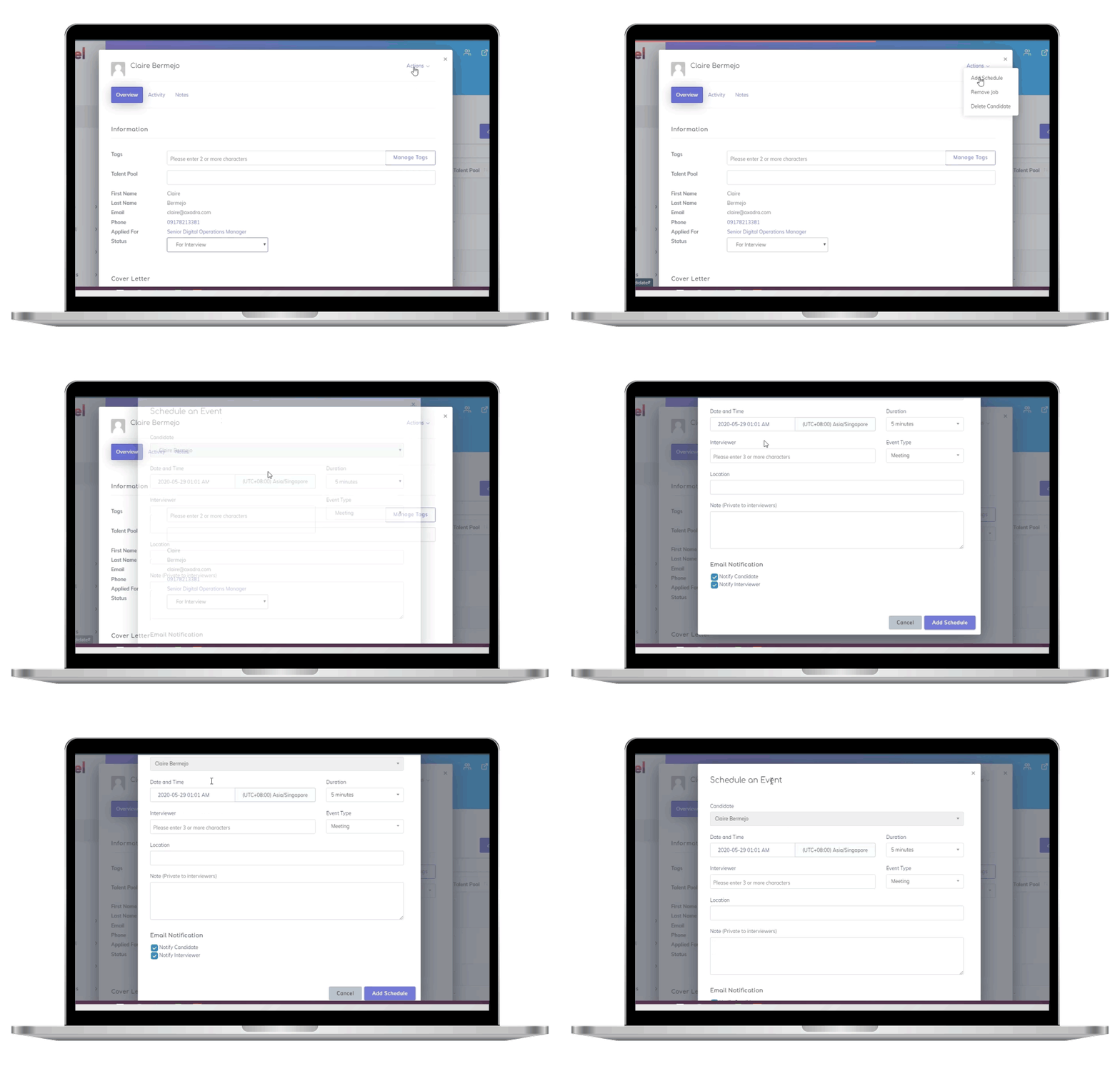

Companies are using AI chatbots to conduct screening-stage job interviews through phone calls, text messages, and video avatars as hiring teams struggle to process surging volumes of AI-generated applications, according to a June 1 report from the Associated Press. The tools mark an escalation in recruitment automation, with candidates now interacting with algorithmic systems before any human contact occurs.
TL;DR: Hiring platforms report increased candidate encounters with AI interview tools, while research from Glasshouse shows a subset of applicants abandon the hiring process after facing automated interviews.
The shift addresses a specific workflow bottleneck: recruiters overwhelmed by easy-apply job boards that generate massive application volumes. AI-powered hiring tools have been assessing applicants for years, but chatbot interviews represent a newer front-line deployment that removes human presence from initial candidate conversations entirely.
How AI Interview Tools Operate in Hiring Workflows
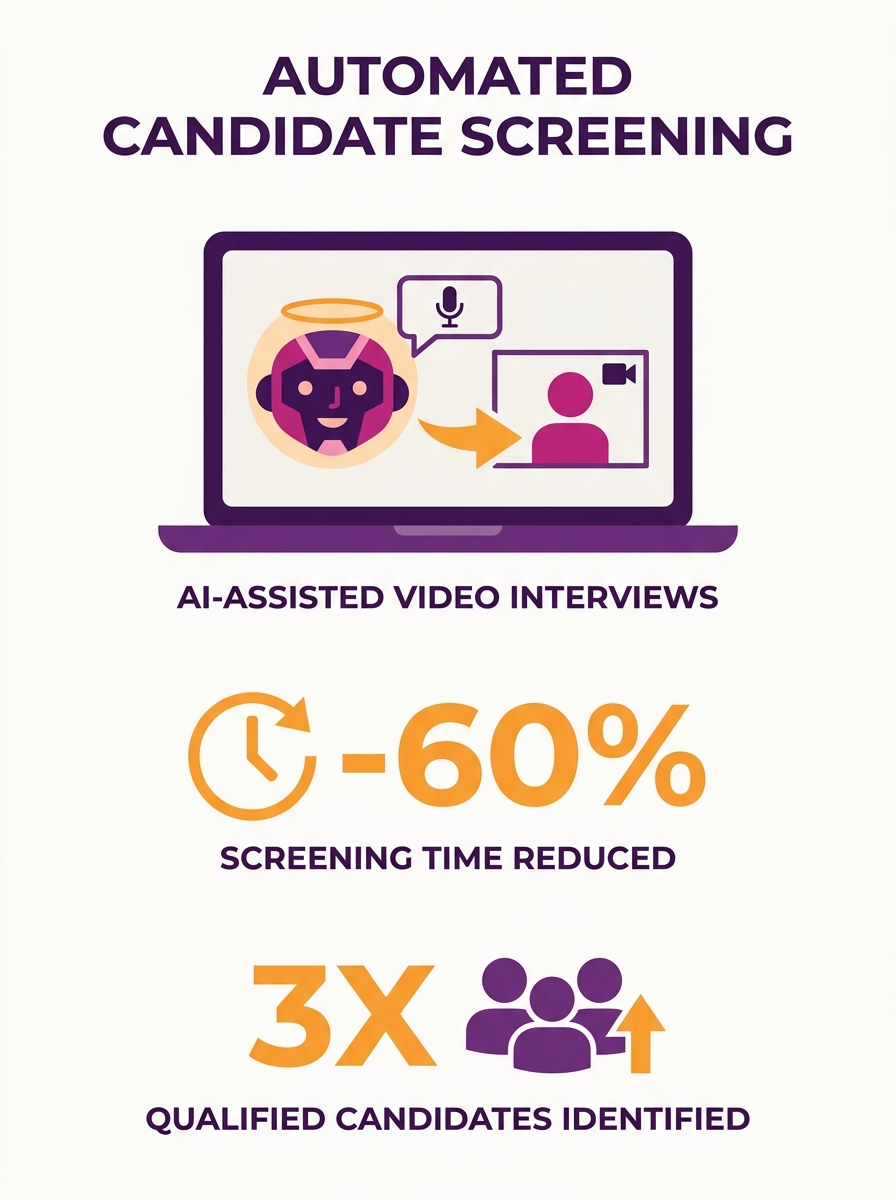
AI interview platforms conduct structured conversations at the screening phase, replacing recruiter phone screens or preliminary video calls. TestGorilla, a Netherlands-based recruitment software provider, demonstrated a typical format: two sets of written assessment questions testing problem-solving and work experience, followed by a video interface with an AI-generated avatar.
“My goal is to learn more about you and the experiences, skills and competencies that you might bring to this role,” the avatar stated, allocating two minutes per question with no conversational preamble.
The format eliminates rapport-building phases. “There was no warm-up chit-chat, no chance to build a rapport. There was no point in smiling or trying to break the ice,” the reporter noted during the demo interview.
Amanda Augustine, a career coach at Careerminds, said fundamental interview preparation still applies regardless of format. “The more prepared you are, the easier it will be to tailor your responses, even when you’re interacting with AI instead of a person,” Augustine stated.
Hiring teams implementing these tools cite two drivers: managing application volume and responding to AI-generated fake resumes that have proliferated across applicant pools. The chatbot interviews function as a scalability mechanism when human recruiters cannot manually screen hundreds of applications per open role.
Behavioral Question Analysis and Candidate Drop-Off
AI interviewers prioritize behavioral questions that require metric-driven answers. TestGorilla’s assessment scored one candidate response as “below average” because the answer provided “no concrete metric” when describing time saved using an AI transcription tool. “The improvement claim is therefore vague,” the system reported.
Priya Rathod, workplace trends editor at Indeed, said candidates fall into a common trap with automated interviews. “Those are the kinds of questions that AI relies heavily on. And the trap that we see a lot of people falling into is giving really vague answers,” Rathod explained.
The systems scan for structured responses following frameworks like STAR (situation, task, action, result) with quantifiable outcomes. “You want to use numbers as much as possible. Even if you’re not in a revenue driving role, there are ways in which you can say (how) you influenced something or impacted something within a group,” Rathod said.
Research from hiring platform Glasshouse shows more job seekers reporting encounters with AI interviews, but a significant subset walk away from the hiring process after facing the automated format. Augustine and Rathod offered divergent interpretations: candidates may be unsettled by the technology, or the drop-off filters out fraudulent applications and unserious applicants.
Rathod emphasized that AI interviewers process verbal content differently than human recruiters. “You have to be particularly descriptive and a very clear communicator in your language so that they can pick up on things that a regular interviewer might pick up through your facial expressions and tone,” she said. An AI interviewer “cares less about my tone and more about what it is that I’m saying.”
Technical Setup Requirements for Automated Video Screening
Video-based AI interviews carry the same technical hygiene requirements as human video calls. Augustine recommended testing audio and video in advance, ensuring facial lighting, and raising laptop cameras to eye level. “Small adjustments, such as using a stack of books or a ring light, can make a noticeable difference in how polished and professional you present,” Augustine stated.
Career coaches recommend using online interview simulators to practice before facing actual AI screening tools. These platforms record candidate answers and provide feedback on content, delivery, pacing, and time management within the constraints of one-way communication.
The automation creates a new candidate experience dynamic: applicants speak into cameras providing information to a recording system rather than engaging in conversation. Preparation tactics shift toward rehearsing answers aloud, using descriptive language, and structuring responses with explicit metrics rather than relying on interpersonal cues that human interviewers interpret.
What Happens Next
The deployment of AI interview chatbots ties directly to how AI improves pre-employment assessments across hiring workflows—screening conversations are now another automated touchpoint alongside resume parsing and knockout questions. For HR teams evaluating whether to implement these tools, the candidate drop-off data from Glasshouse creates a decision point: whether abandonment filters out low-quality applicants or drives away strong candidates uncomfortable with algorithmic interviews.
Hiring teams already using structured interview processes may find these systems easier to integrate, since behavioral question frameworks and scorecard rubrics translate directly into chatbot logic. The workflow shift is clearest at high-volume employers where human recruiters physically cannot conduct hundreds of phone screens per week—the chatbot absorbs that capacity constraint and pushes human interaction further down the funnel.
For candidates, the practical advice centers on practice volume and answer structure. If automated interviews become standard at screening stages across industries, job seekers will need to rehearse metric-driven responses the same way they currently prep for human behavior-based questions—except without the conversational flexibility that lets skilled interviewees adjust based on recruiter reactions.