Greenhouse wins on structured hiring, DEI compliance, and integration depth. Lever wins on built-in CRM, sourcing workflows, and speed of deployment. For mid-size teams (100–999 employees), the right pick depends on whether your bottleneck is process discipline or candidate pipeline, and how much you’re willing to spend on add-ons to close the gaps.
TL;DR: Greenhouse is the stronger mid-market applicant tracking system for teams that need defensible, scorecard-driven hiring and deep HRIS integrations. Lever is better for lean recruiting teams (2–8 recruiters) that rely on outbound sourcing and want ATS and CRM in a single contract. Both platforms obscure true costs, so price the full annual commitment before signing.
The Greenhouse vs Lever debate has dominated ATS comparison 2026 discussions across recruiting forums and vendor shortlists alike. But most comparison guides line up feature checklists without telling you which features actually matter for your situation. These six rules will sharpen your ATS platform evaluation and save you from a costly 12-month contract with the wrong tool.
Match your hiring volume to the platform’s sweet spot
Greenhouse was originally built for high-growth engineering teams, and its architecture still reflects that DNA. According to SpotSaaS’s 2026 analysis, Greenhouse functions as an enterprise ATS with workflows designed for multi-stakeholder approval chains and complex requisition structures. That power comes at a cost: recruiters and hiring managers at smaller companies frequently report that Greenhouse’s setup process overwhelms teams without a dedicated recruiting ops person, according to a Juicebox.ai review of top Greenhouse alternatives.
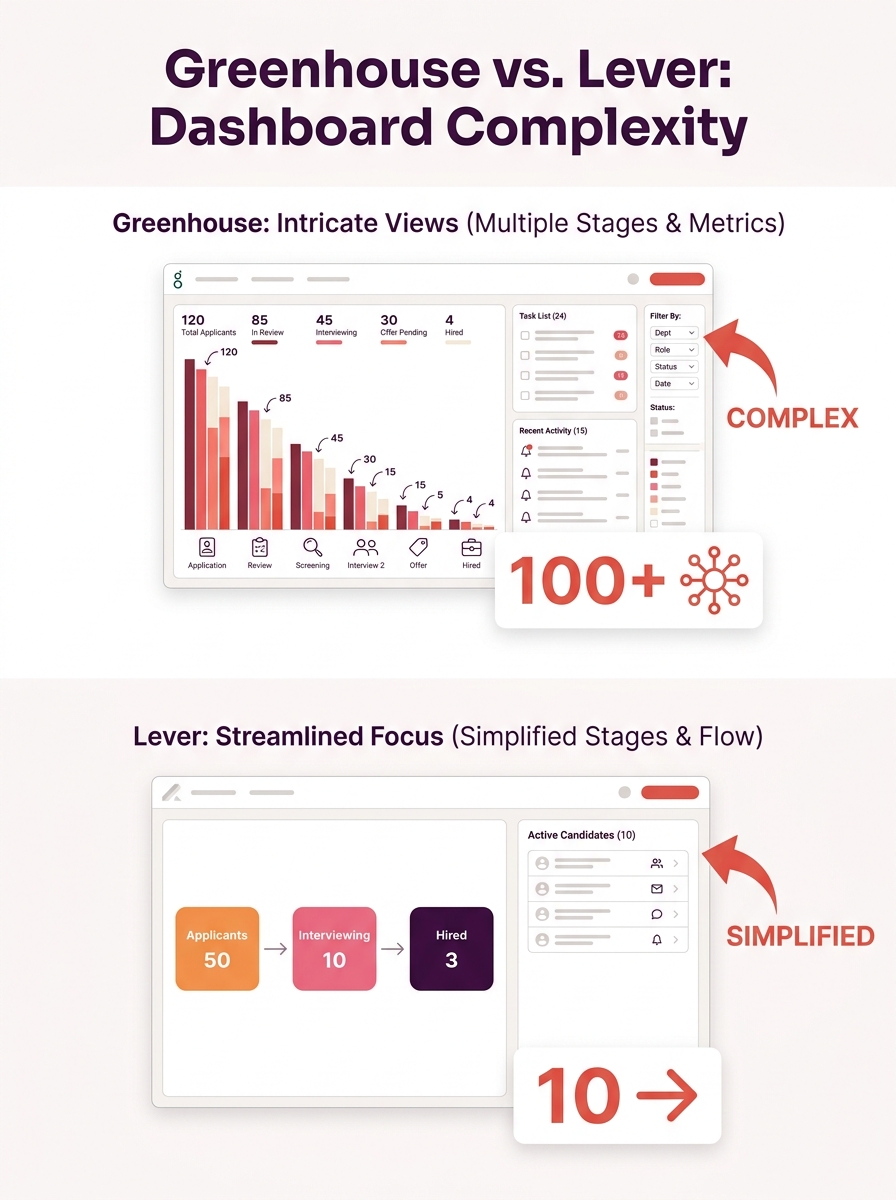
Lever’s LeverTRM platform takes a different approach. Its visual pipeline interface reduces manual data entry and gets recruiters working inside the system faster. Implementation typically runs 2–4 weeks compared to Greenhouse’s 60–90 day enterprise deployments. If you’re filling 5–15 roles per quarter with a small team, Lever’s lighter structure removes friction. If you’re filling 30+ roles per quarter across multiple departments with structured interview panels, Greenhouse’s workflow engine earns its complexity.
The rule breaks when your volume is seasonal or project-based. Neither platform handles dramatic swings in requisition count gracefully without manual reconfiguration.
Price the total annual contract, not the per-seat teaser
Neither Greenhouse nor Lever publishes transparent pricing on their website. Both require sales calls, and both frame their initial quotes to look competitive. The real numbers tell a different story once you add the features mid-size teams actually need.
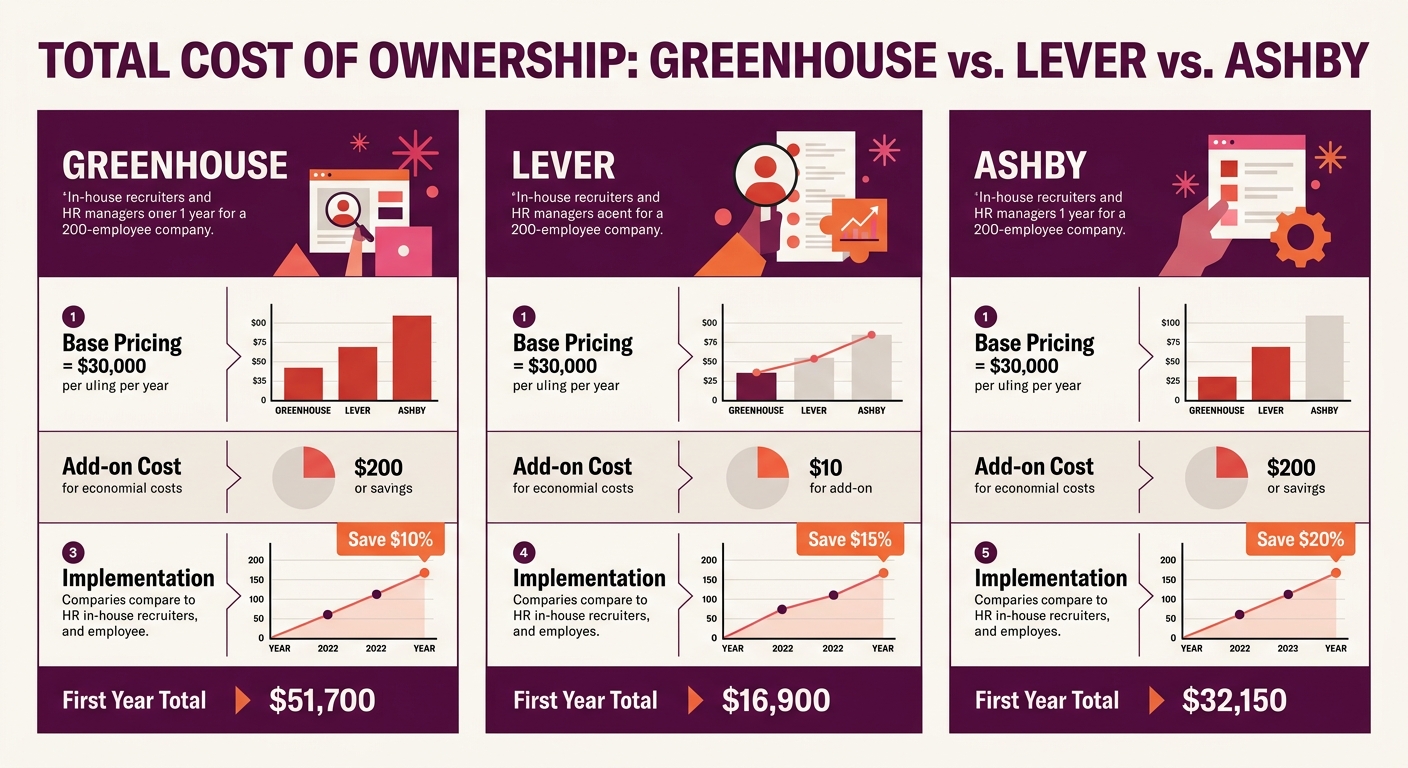
According to Vendr’s 2025 contract data, the median negotiated LeverTRM contract for a 200-employee company runs about $12,240 per year. That sounds reasonable until you factor in add-ons. A detailed review from The Daily Hire found that Lever’s base price of roughly $12,000 balloons to $18,000–$25,000 once you add advanced analytics, nurture campaigns, and premium integrations. Third-party sites commonly report Lever’s baseline at $6–$8 per employee monthly, but that figure rarely includes the modules recruiters depend on daily.
Greenhouse pricing runs higher at the outset. Annual contracts for companies under 500 employees typically range from $8,000 to $20,000+, scaling significantly for advanced tiers. Greenhouse’s partner ecosystem is larger, which means more implementation support options but also more vendor fees stacking on top.
Warning: Both platforms offer annual contracts by default. Negotiate hard before signing. Ask for quarterly payment terms, usage-based pricing, or a 90-day exit clause if the platform doesn’t hit agreed adoption benchmarks.
| Feature | Greenhouse | Lever | Ashby (emerging alternative) |
|---|---|---|---|
| Base annual cost (200 employees) | $8,000–$20,000+ | ~$12,240 median | ~$7,200–$14,400 |
| Total cost with add-ons | $15,000–$30,000+ | $18,000–$25,000 | Included in base tier |
| Built-in CRM | No (requires integration) | Yes (native) | Yes (native) |
| Implementation timeline | 60–90 days | 2–4 weeks | 2–3 weeks |
| DEI/structured interview tools | Advanced (scorecards, anonymization) | Basic | Moderate |
| Integration partners | 500+ | 200+ | 100+ |
Test the CRM layer before you commit to the ATS
Lever’s biggest structural advantage is its native CRM. Sourcing, nurture sequences, and candidate relationship tracking live inside the same platform as the applicant tracking workflow. Aptitude Research’s 2026 survey found that 68% of talent acquisition leaders rank reporting and analytics as the top factor in recruiting software selection, but CRM capability is rising fast, especially among teams that fill more than 40% of roles through outbound sourcing.
Greenhouse doesn’t have a built-in CRM. You’ll need a third-party tool (Gem, Fetcher, or similar) bolted onto the system, which adds cost and creates data sync issues. If your team spends significant time nurturing passive candidates, that integration tax compounds every month.
The rule breaks when your team fills most roles through inbound applications. If 80%+ of your hires come from job boards and career pages, you’ll rarely touch the CRM, and paying for Lever’s native one doesn’t deliver value. Teams focused on inbound volume benefit more from understanding how ATS candidate ranking actually works than from sourcing features they won’t use.
Run your DEI requirements through both platforms before demos
Greenhouse has more configurable diversity data collection and structured interviewing features than Lever, according to SpotSaaS’s head-to-head comparison. Consistent scorecards, anonymized candidate review, and inclusion dashboards come standard. Teams using structured scorecards report 40% faster hiring decisions when analyzing funnel data, and Greenhouse’s scorecard builder is one of the most detailed in the mid-market ATS category.
Lever offers basic DEI reporting, but its tools lack the granularity that regulated industries or companies with EEOC/OFCCP obligations need. If your compliance team requires audit-ready documentation of every stage in the hiring funnel, Greenhouse is the safer pick.
The ATS comparison that matters for DEI isn’t which platform has a diversity dashboard. It’s which platform enforces structured evaluation at the point where bias actually enters: the interviewer’s scorecard.
This connects to a broader pattern. ATS platforms can introduce their own bias through hidden filtering mechanisms that screen candidates before a human ever reviews them. Any ATS platform evaluation should include an audit of automated filters, knockout questions, and resume parsing logic alongside the headline DEI features.
Check integrations against your real stack, not the partner page count
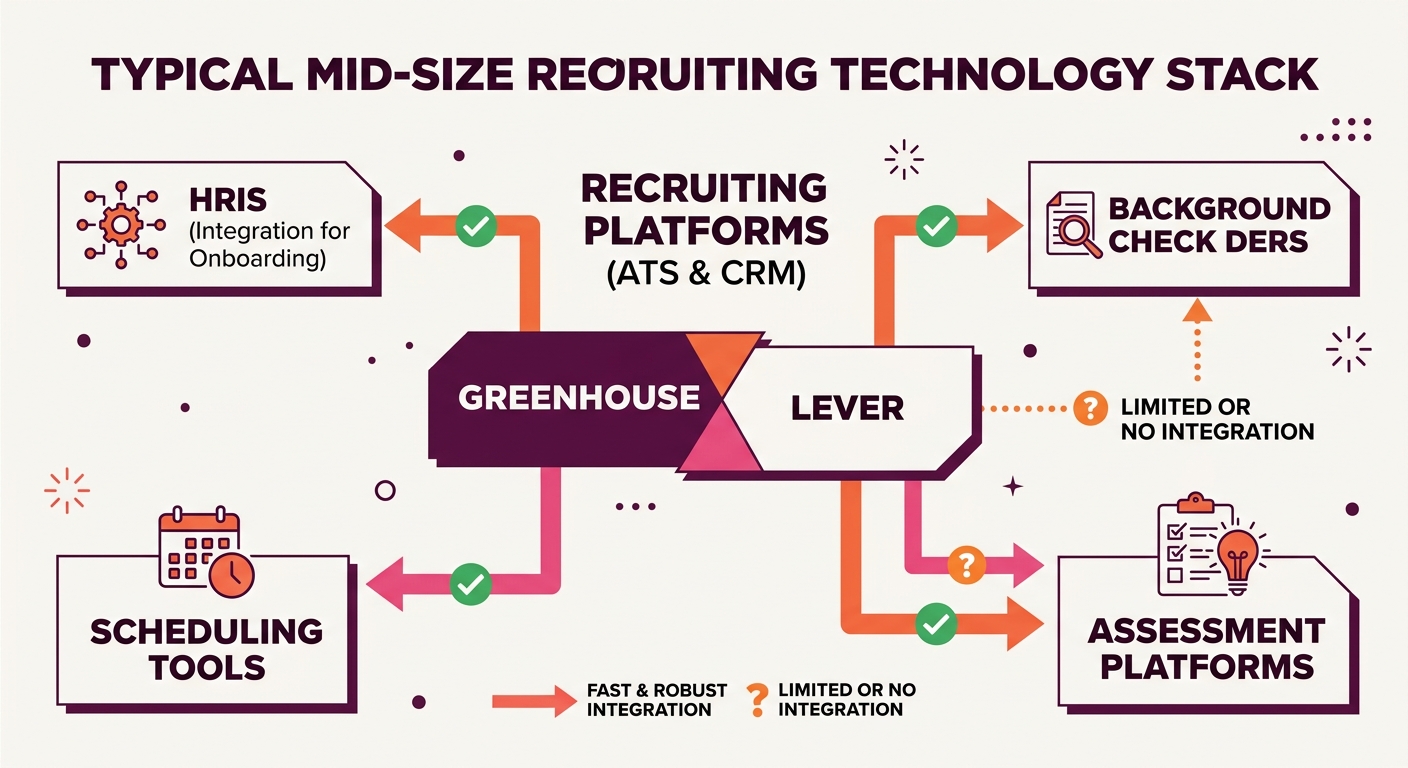
Greenhouse lists 500+ integration partners. Lever lists 200+. Those numbers are misleading. A 2026 SpotSaaS analysis confirmed that Greenhouse’s partner ecosystem is larger, but Lever’s customer success model is more hands-on for mid-market accounts, meaning you’ll get more help configuring the integrations you actually use.
Before demos, list every tool in your recruiting stack: your HRIS, background check provider, scheduling tool, video interview platform, and assessment vendor. Then verify that each integration works bidirectionally (data flows both ways), is actively maintained (not a legacy connector from 2021), and doesn’t require a paid middleware layer. Many teams discover post-purchase that their critical integration is a one-way sync or requires Zapier as a bridge, adding $50–$200/month and introducing data lag.
If your team is exploring AI-powered screening tools or AI recruiting tool integrations, verify compatibility early. Both Greenhouse and Lever support major AI vendors, but connector quality varies widely.
Demand implementation timelines in weeks, not marketing promises
Lever’s 2–4 week implementation window fits teams that need to be operational quickly. Greenhouse’s 60–90 day enterprise deployment timeline reflects the platform’s configurability, but it also means your team is paying for a tool they can’t fully use for two to three months.
Ask every vendor three specific questions during your evaluation: How many hours of your team’s time will implementation require? What percentage of your customers are fully adopted (not just technically live) within 60 days? And what does your onboarding support look like after the initial setup period?
Greenhouse’s larger partner ecosystem means you can hire external implementation consultants. Lever’s approach tends to rely on internal customer success managers. Neither model is inherently better, but they demand different things from your team. If you don’t have a dedicated recruiting operations person, Lever’s guided approach reduces the burden. If you have an ops team ready to customize workflows, Greenhouse’s flexibility pays off.
An employee referral program can run on either platform, but the setup complexity varies. Greenhouse offers deeper customization of referral workflows and tracking. Lever keeps it simpler, which works for teams that want a basic referral pipeline without configuring ten custom fields.
When These Rules Break
These rules assume a mid-size company with 100–999 employees, 2–10 recruiters, and a mix of inbound and outbound hiring. They break in a few specific situations.
If you’re scaling past 1,000 employees and hiring across multiple countries, both platforms show strain. SmartRecruiters and iCIMS handle global compliance and multi-entity structures better than either Greenhouse or Lever at that tier. If you’re a data-driven startup under 100 employees, Ashby is worth evaluating. It bundles ATS, CRM, and analytics in a single platform with AI-driven reporting and a modern interface, though it lacks Greenhouse’s compliance depth and Lever’s CRM maturity.
And if your real problem is candidate quality rather than process efficiency, no mid-market applicant tracking system will fix that. Start with your knockout question configuration and resume parsing logic before spending $15,000+ on a platform switch. The ATS comparison 2026 conversation keeps growing, but the highest-ROI move for many teams is fixing the system they already have, then switching only when those fixes hit their ceiling.
Compare pricing plans for alternatives that bundle automation features Greenhouse and Lever charge extra for. The mid-market ATS landscape has more viable options than it did even 18 months ago, and the recruiting software selection process benefits from casting a wider net before narrowing to the two biggest names.