
Hiring today isn’t just HR’s job anymore. Companies are facing talent shortages (76% of employers) and faster hiring cycles (top candidates are gone in just 10 days). A fragmented process risks losing the best talent while increasing bias and turnover. That’s where cross-department recruitment comes in.
Key Takeaways:
- Collaborative Hiring Works: Involving HR, hiring managers, team members, and leadership builds a more complete view of candidates and reduces hiring errors.
- Improves Outcomes: Teams using this approach report up to 12% lower labor costs and 50% more innovation.
- Faster Hiring: Parallel evaluations and clear communication cut delays, so decisions are quicker without sacrificing quality.
- Clear Roles Are Critical: Assign responsibilities upfront to avoid confusion, duplicate interviews, and missed deadlines.
- Data Drives Results: Use metrics like time to hire, quality of hire, and bottlenecks to refine your process.
Why It Matters: Collaborative hiring reduces bias, improves retention, and ensures candidates meet both technical and organizational needs. With tools like Skillfuel, teams can centralize tasks, track referrals, and improve coordination for better results.
Read on for actionable strategies to make your hiring process more efficient and effective.
Cross-Department Recruitment: Key Statistics and Benefits
Building High-Performing Teams: Transparency, Onboarding & Cross-Department Collaboration
sbb-itb-e5b9d13
Why Cross-Department Collaboration Improves Recruitment
Bringing together HR, hiring managers, team members, and leadership ensures candidates are evaluated from all angles. This approach helps tackle challenges like bias, poor retention, and slow decision-making by building a fuller picture of each candidate.
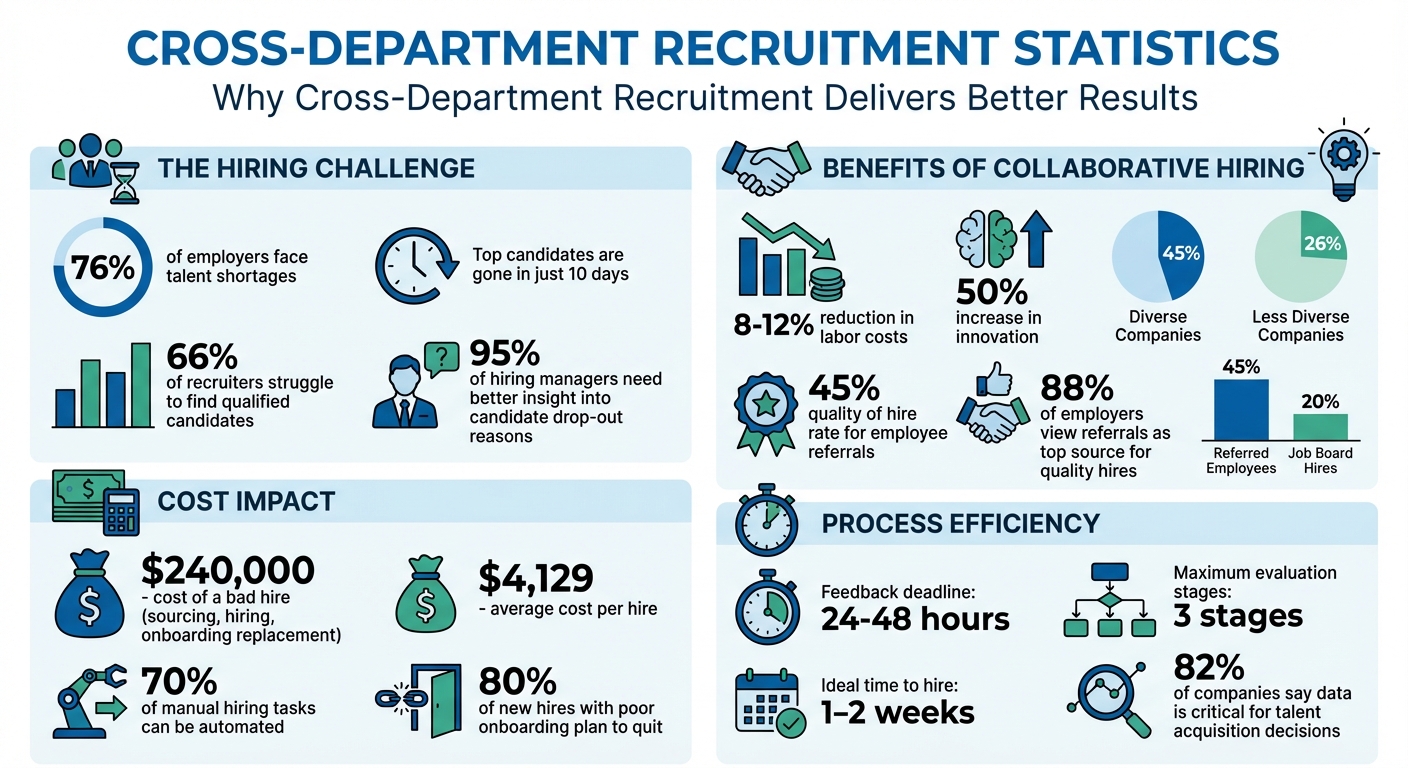
Companies that emphasize teamwork across departments report an 8–12% reduction in labor costs and a 50% increase in innovation. For example, firms with higher-than-average diversity generate 45% of their revenue from innovation, compared to just 26% for less diverse companies. Each department plays a key role: HR evaluates cultural fit, hiring managers set performance expectations, technical peers assess skill levels, and leadership ensures alignment with long-term goals.
These combined efforts demonstrate how a collaborative recruitment strategy leads to faster, more impactful hiring decisions.
Finding Candidates Who Fit Multiple Teams
When multiple departments contribute to the recruitment process, it becomes easier to identify candidates who can thrive in various roles. Teammates evaluate technical skills, while leadership focuses on strategic alignment. This holistic approach uncovers both strengths and potential issues that a single interview might miss.
Employee referrals, which often involve input from a broad range of team members, have a quality of hire rate of around 45%. Additionally, when candidates meet with people across departments, they get a genuine sense of your company culture while showcasing their skills to the right audience.
Making Faster Hiring Decisions
Collaboration across HR, technical teams, and hiring managers also speeds up hiring timelines. For example, while HR reviews qualifications, technical teams can assess work samples, and hiring managers can prepare targeted questions – all happening at the same time.
To avoid delays, implement a structured process where feedback is due within 24–48 hours, and limit the process to three evaluation stages. Assign a single person to make the final hiring decision after gathering input, avoiding the pitfalls of decision-making by committee.
This system reduces redundancy by ensuring each stakeholder evaluates specific skills only once, eliminating repetitive interviews. The result? Faster decisions without compromising quality, giving your company a better chance of securing top talent. Plus, this streamlined process lays a strong foundation for clearly defined roles and responsibilities in recruitment.
Setting Clear Roles and Responsibilities
Undefined roles can create chaos in cross-department recruitment. Without clear ownership, you risk duplicated interviews, conflicting feedback, and delayed decisions. The fix? Assign specific responsibilities to each stakeholder before posting the job.
Start by designating HR as the central coordinator. They’ll manage logistics, ensure accountability, and maintain a professional candidate experience. The hiring manager should define the necessary skills and make the final decision. Future teammates? They’re perfect for assessing technical skills and day-to-day compatibility. Cross-functional partners can weigh in on collaboration styles, while leadership typically steps in for strategic or high-impact positions.
Before posting the job, hold a kickoff meeting with HR and the hiring manager. Use this time to define what success looks like for the role and clarify each evaluator’s responsibilities. Assign distinct competencies to each evaluator – this avoids repetitive questions and helps streamline the decision-making process.
Draft clear guidelines for communication, deadlines, and feedback. All stakeholders should submit their interview feedback within 24 to 48 hours. Why is this important? A disorganized process with unclear roles often drives candidates away, and 95% of hiring managers report needing better insight into why candidates drop out.
Finally, focus on involving the right people at the right time.
Finding the Right People to Involve
To keep the process efficient, include only those who bring unique value to the recruitment process. Choose participants based on their direct interaction with the role. For example, technical experts are essential for coding positions, design leads for marketing roles, and cross-functional partners for roles requiring daily collaboration.
Adjust involvement based on the position’s seniority and impact. Senior leadership should only participate in strategic or client-facing roles – or in smaller organizations where their perspective is crucial. For most other positions, future teammates are often the best judges of technical skills and team dynamics. During the kickoff meeting, HR and the hiring manager can decide who should be involved at each stage.
Keep the number of interviewers manageable to avoid delays. Collaboratively create an “ideal candidate persona” with the cross-department team so everyone evaluates candidates against the same criteria. Provide non-HR participants with brief training or guidelines to ensure interviews are structured, consistent, and legally compliant. Early alignment with stakeholders is key – remember, 80% of new hires experiencing poor onboarding plan to quit.
Dividing Tasks Among Teams
Once roles are assigned, distribute tasks based on expertise to keep things running smoothly. HR can handle initial screenings and cultural fit assessments, technical teams can evaluate skills, and hiring managers can focus on performance expectations. Parallel evaluations – where different team members assess candidates simultaneously rather than one after another – can significantly cut down on hiring timelines.
To avoid confusion, provide written guidelines that clearly define each team member’s responsibilities. Assign specific competencies or skills to each interviewer to prevent overlap. Meanwhile, a recruitment coordinator can take care of administrative tasks like scheduling and job postings.
Standardized scorecards ensure everyone uses the same assessment criteria. This not only improves consistency but also creates a better candidate experience by speeding up responses and maintaining fairness. Plus, modern applicant tracking systems can automate up to 70% of manual hiring tasks. This helps reduce recruiter burnout, ensures shared accountability, and leads to better decisions by incorporating diverse perspectives.
Creating Clear Communication Channels
Without a structured approach, cross-department recruitment can quickly spiral into chaos – missed emails, repeated questions, and confused team members. The fix? Establish communication channels that keep everyone up-to-date without overwhelming them with unnecessary details.
Start by assigning your recruiter as the go-to person between hiring managers and candidates. Having a single point of contact avoids mixed messages and ensures candidates receive consistent updates. Internally, all stakeholders should have access to the same candidate information – resumes, interview notes, and progress updates – stored in a central location instead of scattered across inboxes.
"In a collaborative hiring process, clear and constant communication between HR and relevant departments becomes a necessity." – Skillfuel
Timely feedback is critical. It keeps the process moving and reduces the risk of losing top candidates to competitors. Considering that 76% of employers report talent shortages, speed is a major factor in securing the best talent.
Equip interviewers with candidate details beforehand to avoid unnecessary delays and keep discussions on track. Automated notifications can help streamline scheduling and ensure alignment across the team.
Clear communication depends on well-defined roles. When everyone knows their responsibilities, the recruitment process becomes more seamless and efficient.
Using Skillfuel‘s Centralized Dashboards
Once you’ve established communication protocols, modern tools can take them to the next level by centralizing and simplifying interactions.
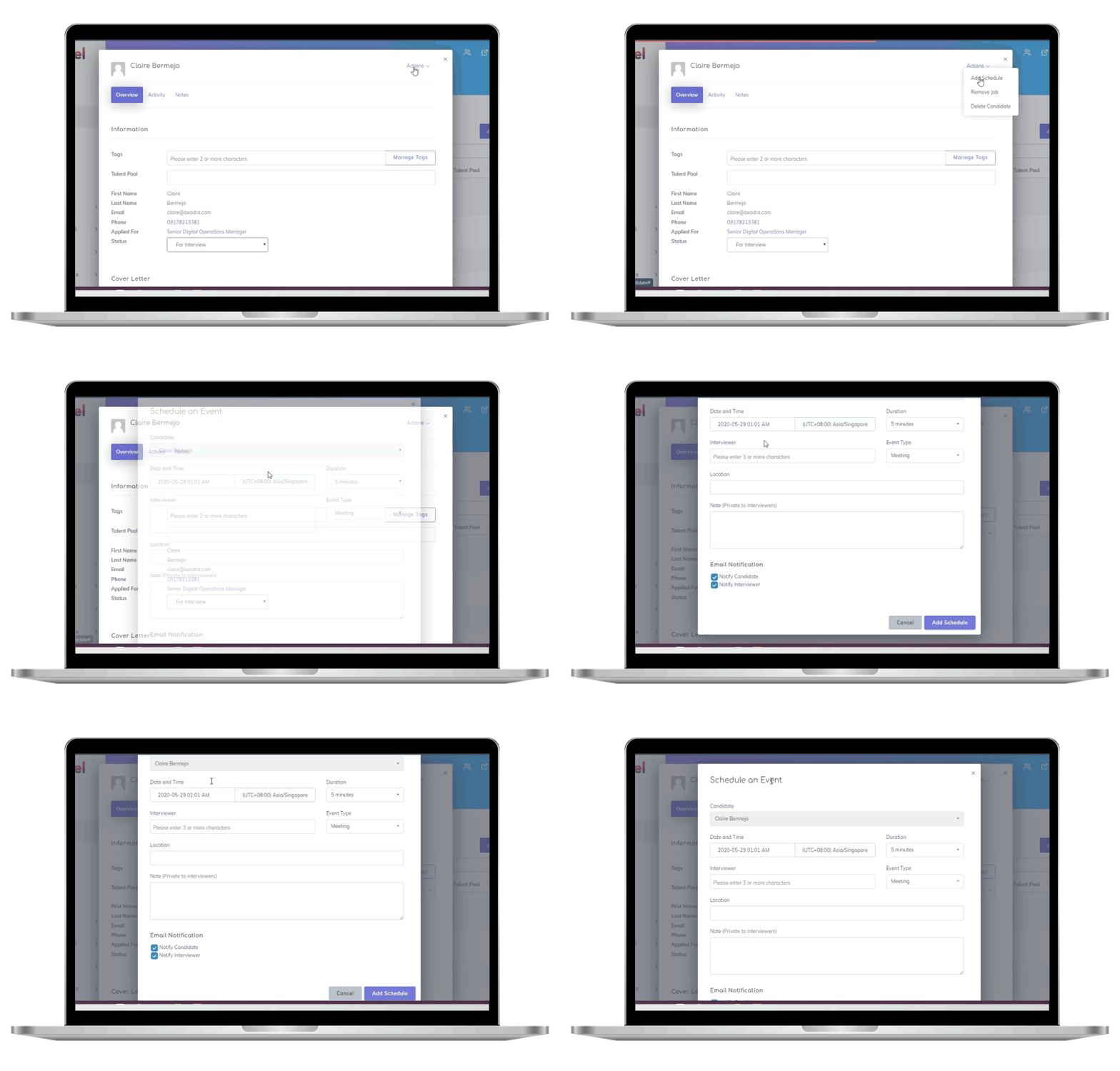
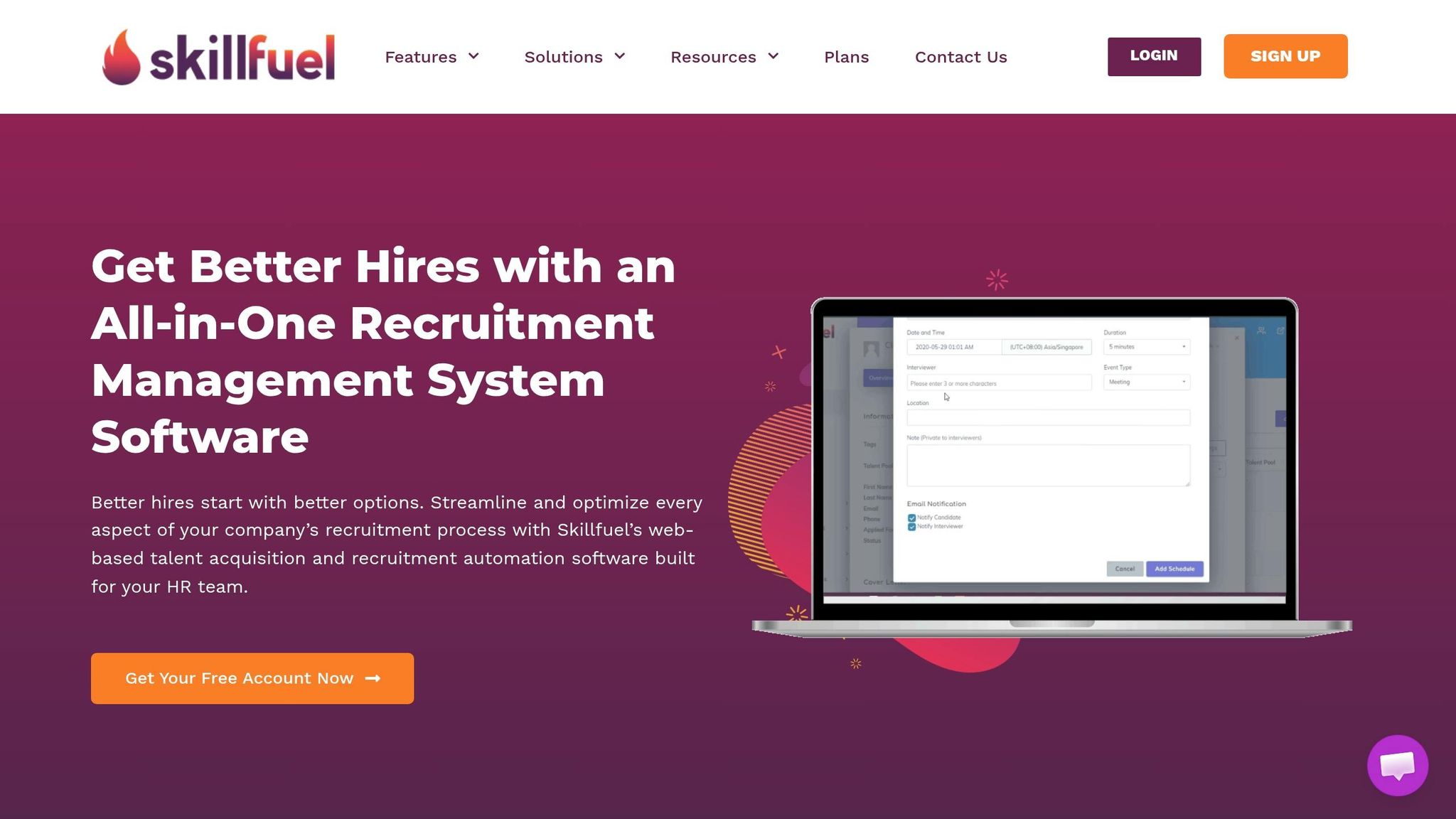
Skillfuel’s centralized dashboard eliminates the confusion caused by fragmented communication. It provides all stakeholders with real-time access to candidate profiles, interview feedback, and hiring progress. Instead of juggling multiple emails or tools, team members can log in and instantly see where each candidate stands.
The platform’s Applicant Tracking System acts as a one-stop hub where teams can upload evaluations, discuss candidates, and track hiring activities. For example, technical leads can review coding assessments while hiring managers focus on other evaluation criteria – all without needing additional meetings. This transparency ensures everyone works with the same information, not secondhand summaries.
The dashboard also monitors workflows in real-time, highlighting pending tasks and the individuals responsible. If feedback from a department head is overdue, the system makes it visible to the entire team. This transparency ensures accountability and keeps the process moving forward.
Skillfuel’s referral tracking feature syncs across departments, automatically notifying relevant teams when an employee refers a candidate. Given that referred candidates often achieve a 45% quality-of-hire rate, this feature ensures no strong candidates slip through the cracks.
Holding Regular Team Meetings
While tools like dashboards handle data, regular meetings are essential for addressing context and nuances. These meetings complement digital tools by fostering collaboration and alignment.
Kick things off with a meeting before posting any role. Use this time to define success metrics and clarify what "qualified" looks like for the position. During active searches, schedule short weekly check-ins – 15 minutes is often enough – to review pipelines, address roadblocks, and adjust strategies as needed.
These meetings are also a great opportunity to share recruitment trends impacting your organization. For instance, if multiple teams are struggling to find qualified candidates (a challenge 66% of recruiters have faced in the past year), discuss whether job requirements need tweaking or if sourcing strategies should shift.
Keep meetings concise and action-oriented. Use the dashboard to identify bottlenecks, assign next steps, and document decisions. Sharing meeting notes with absent team members ensures everyone stays on the same page and maintains accountability across departments.
Evaluating Candidates with Input from Multiple Departments
When multiple departments contribute to evaluating a candidate, it provides a well-rounded perspective rather than a narrow, one-sided view. For instance, a marketing manager might shine during a general interview but struggle to convey strategic ideas when speaking with senior leadership. Cross-departmental evaluations help identify such gaps early in the process. To ensure fairness and consistency, use standardized scorecards for assessment.
Structured evaluation methods also make it easier for every stakeholder to provide meaningful input without wasting time.
A poor hiring decision can cost your organization up to $240,000 to source, hire, and onboard a replacement.
Using Standardized Candidate Scorecards
Scorecards simplify the evaluation process by aligning everyone on predefined, job-specific criteria. This approach ensures consistency across departments and helps reduce bias in hiring.
To get started, gather recruiters and hiring managers from the relevant departments to define five to eight key competencies for the role before interviews begin. For example, a product manager’s scorecard might include categories like strategic thinking, stakeholder management, technical fluency, and alignment with company values. Use a numerical scale – such as 1 to 5 – and make sure everyone understands what each score represents. For instance, a "3" in strategic thinking should mean the same thing to all evaluators.
Take it a step further by defining behavioral indicators for each criterion. Instead of vaguely listing "communication skills", describe what good, average, and poor communication looks like. For example, strong communication might mean clearly explaining technical concepts to non-technical stakeholders, while weak communication might involve failing to convey project outcomes effectively.
Include a section for qualitative notes where interviewers can explain their ratings with specific examples. This evidence-based approach reduces the risk of arbitrary scoring. To avoid groupthink, have evaluators submit their ratings independently before seeing others’ feedback. Tailor these scorecards to each role to ensure they reflect the unique demands of the position.
Collecting and Using Team Feedback
Centralize all candidate data in one place using tools like Skillfuel’s dashboard, which provides real-time updates and ensures feedback is consistent. This eliminates the need to rely on scattered emails or outdated notes.
Assign specific competencies to interviewers based on their expertise. For example, a technical lead might assess coding skills, the hiring manager could evaluate project management abilities, and the team lead might focus on collaboration style. This mapping avoids redundant questions and ensures a thorough evaluation.
After interviews, debrief as a group to address any discrepancies in scores. Replace gut feelings with evidence-based discussions to ensure a fair assessment.
Even with input from various departments, appoint a single decision-maker – usually the hiring manager – to make the final call. This avoids the risk of decision-by-committee paralysis, where delays could lead to losing top candidates to other offers.
To prevent misalignment, schedule quick check-ins or "mini-gates" after initial interviews. For example, if one team prioritizes aggressive growth while another values measured improvements, address these differences early rather than waiting until final deliberations.
This collaborative yet structured process lays the foundation for smarter, data-driven hiring decisions going forward.
Using Data to Improve Recruitment Results
Cross-department recruitment generates a wealth of data that can highlight what’s working and what needs adjustment. This data is crucial for focusing on metrics that lead to better hiring decisions. With 76% of employers facing talent shortages and 66% of recruiters struggling to find qualified candidates, tracking the right metrics is essential to remain competitive.
Monitoring Metrics with Skillfuel
To start, focus on metrics that directly measure how efficiently your teams collaborate. For example, time to hire is a critical metric, with an ideal target of one to two weeks. Additionally, ensure candidate evaluations are completed within 24–48 hours to avoid unnecessary delays.
Another essential metric is quality of hire, which measures the value new employees bring to your organization. This can be assessed by averaging manager scores on factors like culture fit, productivity, and performance using a 1–100 scale. Tracking the source of hire is also important. It helps identify which channels – such as employee referrals, social media, or job boards – yield the best candidates. Employee referrals, for instance, consistently produce a quality of hire rate of about 45%. Lastly, cost per hire is a key metric, factoring in internal costs like team salaries and referral bonuses, along with external expenses. The average cost per hire is around $4,129.
Skillfuel’s centralized dashboard offers real-time insights into your recruitment workflow. It pinpoints where candidates are stuck in the hiring process and identifies which departments may be causing delays. This visibility allows you to detect shifts in recruitment trends early, addressing potential issues before they escalate.
With these metrics in hand, you can use the insights to refine and optimize your recruitment strategies.
Refining Your Approach Based on Results
Metrics are only valuable if they lead to action. Use them to identify bottlenecks and work with your team to develop targeted solutions. For instance, if your job acceptance rate declines, bring together hiring managers and department leads to evaluate whether your salary offers are competitive or if interviewers are effectively communicating role expectations. Similarly, a low qualified applicants per hire rate might signal that your job descriptions are off-target. In this case, revising the descriptions with input from multiple departments can help.
Schedule structured data review meetings with HR, hiring managers, and other stakeholders to analyze metrics collaboratively. This approach helps uncover root causes instead of just addressing surface-level symptoms. To keep the process efficient, set strict feedback timelines – such as a 24-to-48-hour window for candidate evaluations – to ensure momentum is maintained. Recruitment software can also help track metrics over time, allowing you to establish benchmarks for normal collaboration speeds and quickly spot any deviations.
These metrics not only improve operational efficiency but also foster better alignment across departments. For example, reviewing new hire time to productivity can reveal how quickly employees are contributing to your organization. Pair this data with online surveys to understand why candidates may drop out of the process – an area where 95% of hiring managers admit they need better insights. By addressing these challenges, you can refine your recruitment strategies and improve overall results.
How Skillfuel Supports Cross-Department Recruitment
Skillfuel tackles challenges like sluggish communication and scattered data head-on with tools designed to streamline cross-department recruitment. By centralizing candidate information, job postings, and hiring decisions into one system, the platform enables teams – from marketing to engineering – to work together effortlessly. This eliminates the need to jump between platforms or sift through endless email threads.
Centralized Applicant Tracking System
Skillfuel’s drag-and-drop Kanban board provides a clear, visual snapshot of where each candidate stands in the hiring process. This makes spotting delays and sharing feedback simple and efficient. With 82% of companies stating that data is a critical driver for talent acquisition decisions, features like customizable dashboards allow recruiters and managers to zero in on the metrics that matter most. For example, finance teams can assess salary alignment, while IT teams can focus on technical qualifications.
In addition to tracking candidates, Skillfuel includes a referral system that actively engages employees in the hiring process.
Employee Referral Tracking for Team Participation
With Skillfuel’s referral tracking module, employees across all departments can easily submit, monitor, and manage referrals through a single portal. The system automates tasks like distributing candidate profiles, tracking incentives, and managing talent network rewards. It also alerts employees when a referred candidate matches an open role. This is especially impactful since 88% of employers view referrals as their top source for high-quality hires, and referred employees boast a 45% retention rate – more than double the 20% retention rate for job board hires.
To keep employees motivated, the platform includes features like customizable leaderboards, tailored rewards, and social media integrations. These tools not only make the referral process engaging but also strengthen team involvement in recruitment.
Conclusion
Cross-department recruitment goes beyond just filling roles quickly – it’s about building teams that perform well and stick around. When HR, hiring managers, and future colleagues collaborate, they can uncover blind spots that a single decision-maker might overlook. This teamwork helps reduce bias, ensures a better fit for company culture, and creates a sense of ownership for those involved in the hiring process. Research even shows that poor onboarding is a major factor in high turnover rates.
The success of cross-department recruitment depends on a few critical elements: clearly defined roles, standardized evaluations, and centralized tools. From the outset, everyone’s responsibilities should be clear – recruiters handle the process, hiring managers define success criteria, and interviewers use structured scorecards to assess candidates consistently. Tools like Skillfuel can help centralize communication and streamline evaluations, reducing the risk of miscommunication.
Industry experts emphasize the value of this approach:
"Collaborative hiring brings together HR, hiring managers, team members, and leaders for a more holistic, bias-resistant process, leading to better hires and a stronger culture." – Spark Hire
When departments work in silos, hiring can overwhelm HR while frustrating candidates. But when teams share feedback using centralized dashboards, track referrals transparently, and coordinate interviews efficiently, the process becomes smoother for everyone. Shifting from a "company-centric" to a "candidate-centric" recruitment model doesn’t just lead to better hiring outcomes – it also enhances your employer brand and keeps top talent engaged throughout the journey.
FAQs
How do we choose which departments to involve in a role?
To determine which departments should be involved in the hiring process, think about aligning the process with the specific role’s requirements and your company’s objectives. Bring in teams that can provide meaningful input on the necessary skills, the candidate’s compatibility with the workplace environment, and the job’s responsibilities. For technical positions, it’s smart to include subject matter experts, while for leadership roles, senior management should have a say. Getting the right teams involved early helps create a collaborative and efficient hiring process that’s tailored to the position.
What’s the simplest way to prevent duplicate interviews and slow approvals?
To prevent duplicate interviews and speed up approvals, it’s crucial to establish a structured recruitment process. Centralized communication and automation tools can make a big difference here. For instance, recruitment software like Skillfuel simplifies managing candidate data, automates scheduling, and enhances team collaboration. Additionally, holding regular check-ins and using shared evaluation criteria can ensure timely feedback, minimize delays, and avoid repetitive efforts during the hiring process.
Which hiring metrics should we track first to improve cross-team recruiting?
Tracking essential recruitment metrics is a smart way to measure how well your hiring strategies are working. Start with time to fill, cost per hire, and quality of hire – these give you a clear picture of your process’s efficiency and effectiveness.
It’s also important to keep an eye on applicants per opening and source of hire to pinpoint which channels are bringing in the best candidates. For a deeper understanding, metrics like candidate satisfaction and time to hire can shed light on the candidate experience and how quickly your team moves. These insights can help streamline collaboration between departments and ensure your recruitment efforts are on the same page.