
DoorLoop, a property management software company, deployed AI tools for sourcing, scheduling, and first-pass screening while mandating human review at every decision point, according to Anat Keidar, the company’s Chief People Officer, in a June 29 article on People Managing People. The company classifies recruiting tasks as “AI-augmented” or “human-owned” and places early-funnel automation in the augmented category, where AI narrows pools but humans make advancement decisions.
TL;DR: DoorLoop deployed AI for early-stage recruiting tasks while keeping human review at every decision point and classifying roles by whether AI or humans own final decisions.
Implementation Targets High-Volume Intake Work
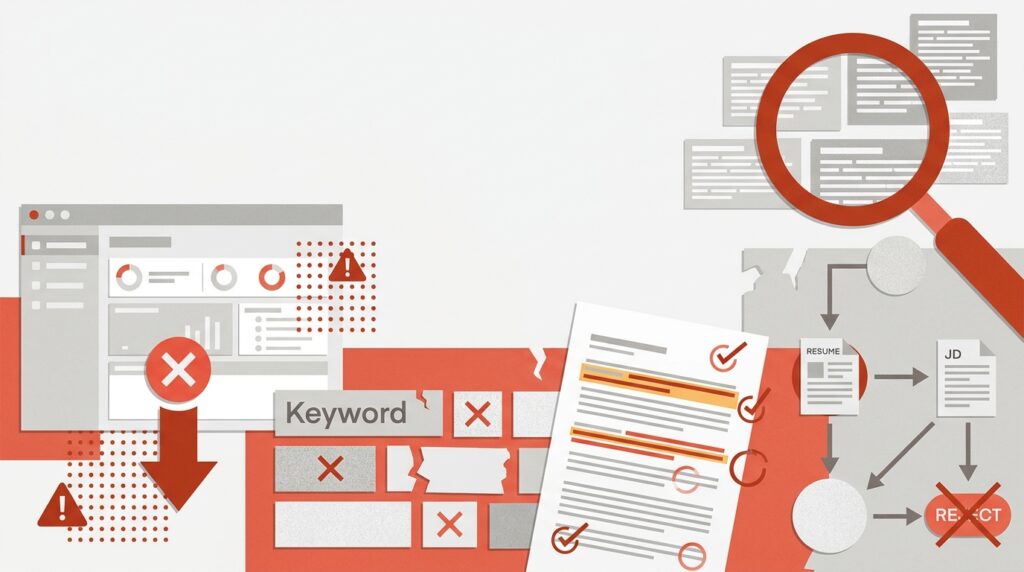
Keidar reported the recruiting team was spending most work hours on scheduling, inbox management, and sorting applications that lacked basic qualifications before the AI deployment. The company applied AI to four early-funnel functions: sourcing candidates across multiple channels, running first-pass screening against baseline requirements, automating interview scheduling, and analyzing responses to structured screening questions against defined criteria, according to the article.
The consistency argument drove part of the adoption decision. “Human screeners drift,” Keidar wrote. “They’re influenced by the time of day, how many applications they’ve already read, and whether the last candidate reminded them of someone.” AI applies the same rubric to the hundredth application as the first, she noted.
Human Gates Address Documented Bias Risk
The company defined hiring criteria explicitly before configuring automated screening, anticipating the risk that AI tools reproduce biases encoded in historical hiring data. “What does ‘qualified’ actually mean for this role? What signals predict performance, and which ones are just proxies for familiarity?” Keidar wrote. “When you have to write that down, you catch things you wouldn’t have noticed otherwise.”
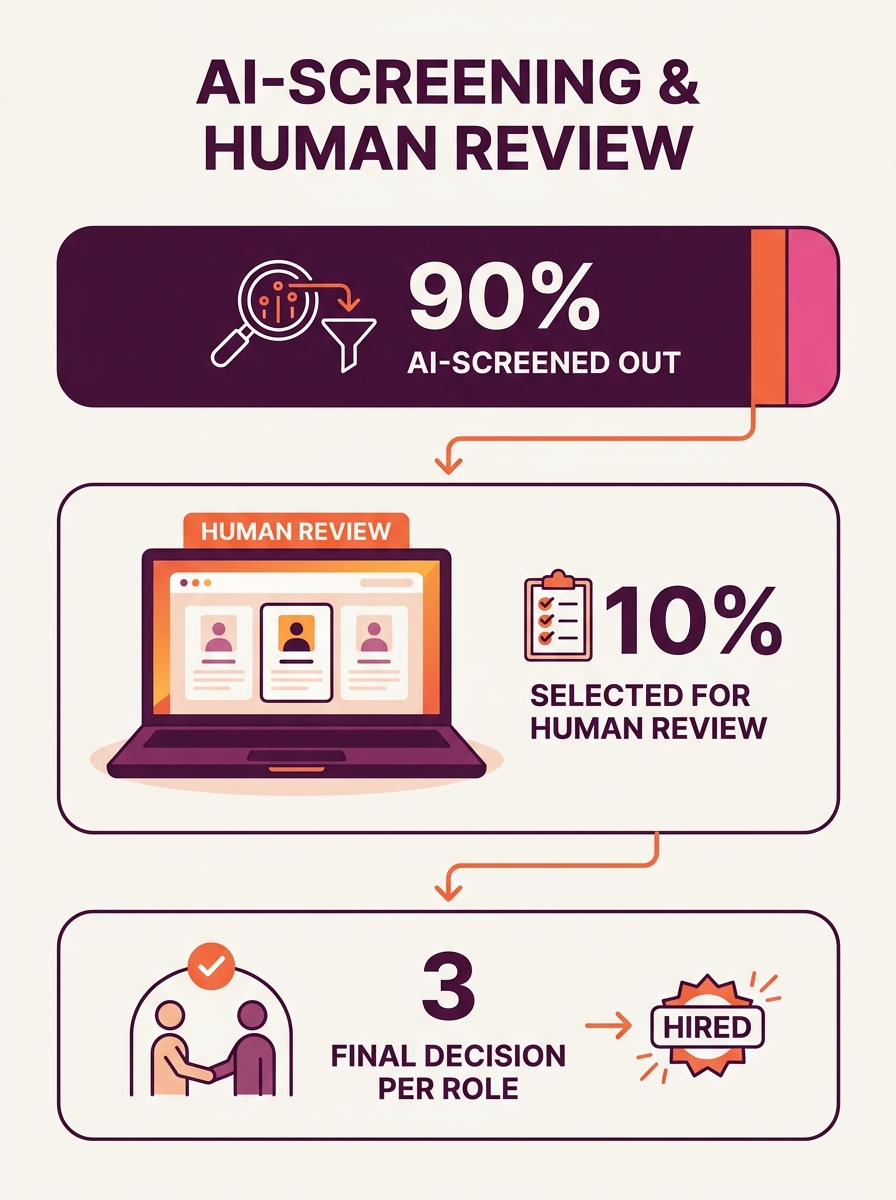
No candidate advances without a human reviewing their application, even after AI recommendation, according to Keidar. “AI may narrow the pool, but humans always make the call,” she stated. The approach reflects awareness of documented cases where hiring tools disadvantaged certain groups when trained on biased historical data.
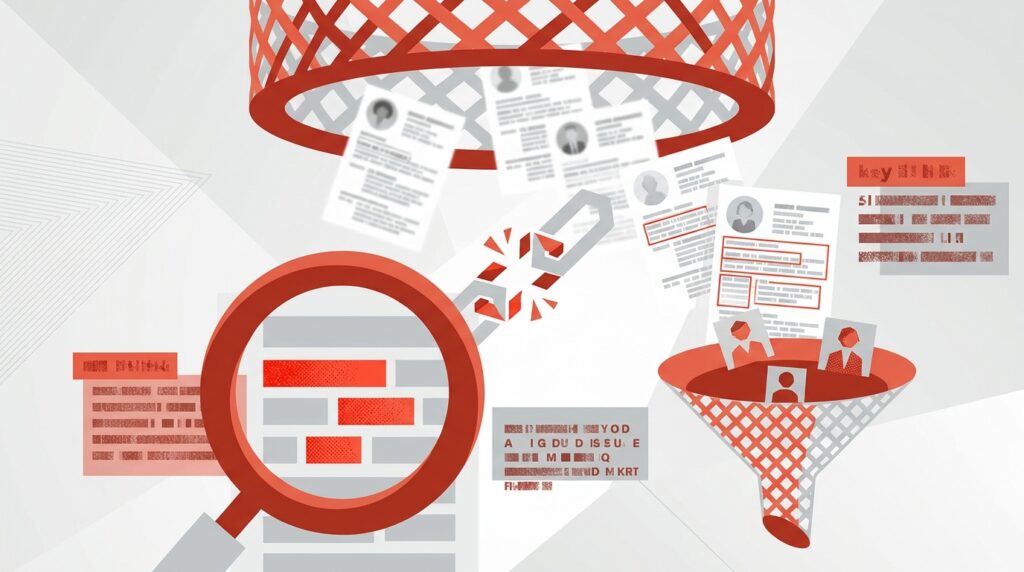
The filtering effect created by early-funnel AI is non-random, Keidar cautioned. If criteria are narrow or historical data reflects unrepresentative hiring patterns, the AI reproduces those patterns.
Role Classification Defines Automation Boundaries
DoorLoop categorizes recruiting work into “AI-augmented” and “human-owned” roles. The early funnel sits in AI-augmented territory, where AI handles volume work but a person owns the outcome, according to Keidar. Final-stage hiring and anything involving cultural fit remains human-owned.
The classification is not permanent. “As the tools improve and as we gather more data on what early-funnel signals actually predict downstream performance, the line may shift,” Keidar wrote. The company revisits the boundaries as conditions change.
Freed from logistics and first-pass filtering work, recruiters redirect time to candidate experience improvements, deeper finalist conversations, and executive-level hires where AI tools do not serve as primary filters, Keidar reported.
Candidate Transparency Remains Open Question
Keidar acknowledged candidate concerns about AI-screened processes. “Candidates know these tools exist and some are skeptical,” she wrote. The article did not detail whether DoorLoop discloses AI use to applicants or how the company communicates screening methods.
The implementation reflects a broader shift among recruiting teams deploying applicant tracking system automation while attempting to preserve human judgment at decision gates. Organizations navigating similar deployments face the same trade-off between volume efficiency and the filtering risks Keidar described.
What This Means for In-House Recruiters
The DoorLoop case offers a working model for teams under pressure to automate intake without surrendering decision control. The requirement that humans review every advancement decision, even after AI narrows the pool, creates an audit layer that catches filtering errors before they compound downstream. That gate matters more than most implementations acknowledge, particularly for teams still relying on historical data that may encode biases from prior hiring practices.
The “AI-augmented” versus “human-owned” classification gives recruiting leads a framework for deciding where automation belongs and where it doesn’t. Early-funnel tasks that involve high volume and repeatable criteria fit the augmented model; final-stage decisions and cultural-fit assessments remain human territory. That boundary is defensible in compliance reviews and aligns with evolving legal liability standards for AI hiring tools.
The harder part is the upfront work Keidar described: defining “qualified” explicitly before turning on any automation. Most teams skip that step and configure screening rules reactively, which is how ATS intake filtering ends up rejecting qualified candidates at scale. Writing down what each criterion actually predicts, and distinguishing performance signals from familiarity proxies, forces the clarity that prevents filtering disasters later.