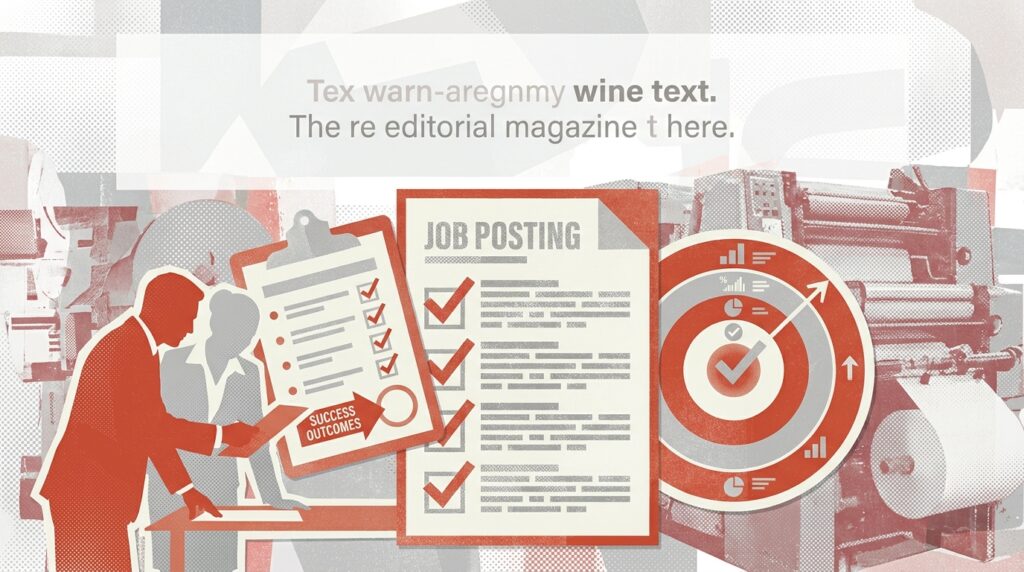
Printing industry consultant Mike Philie published new guidance June 24 arguing that hiring managers should define 12-month success outcomes before writing job descriptions, citing the cost of misaligned hires in disruption, lost productivity, and restart searches, according to the post on PI World. Philie, founder of PhilieGroup, distinguished between a job description—which lists role requirements—and a success profile that specifies measurable outcomes the hire must achieve within the first year.
TL;DR: Consultant Mike Philie argues companies should articulate what a new hire will accomplish in 12 months before drafting job descriptions, using SMART goal frameworks to avoid misaligned hires that cost companies in lost productivity and failed searches.
The guidance addresses a common sequencing mistake in hiring workflows: teams draft job descriptions, post openings, and begin screening candidates before clarifying what success actually looks like in the role. Philie wrote that skipping the success-profile step is “like laying flooring down before the subfloor is in,” creating surface-level alignment that fails under operational weight. The distinction matters for recruitment teams using applicant tracking systems because success criteria drive downstream screening logic and how to interview candidates effectively.
The Job Description vs. Success Profile Gap
A job description catalogs inputs—responsibilities, required skills, and daily activities—while a success profile defines outputs, Philie wrote. The profile answers a single question: “When you look out 12 months from now, what has this person accomplished that makes you feel good about making the right hire?” Most leaders find that question harder to answer than expected, Philie noted, but the difficulty reveals the problem. “If you can’t answer this question clearly before you begin the search, how will you properly evaluate the candidates during the interview process?” he wrote.
Philie advised hiring managers to avoid vague language and build profiles using SMART goal principles. Two examples from the guidance: “closes six new accounts in the first year with an average order size above a certain $X threshold” or “rebuild the estimating workflow so turnaround time drops by 30% within nine months.” Specificity serves both the company and the candidate by establishing shared expectations before the offer stage.
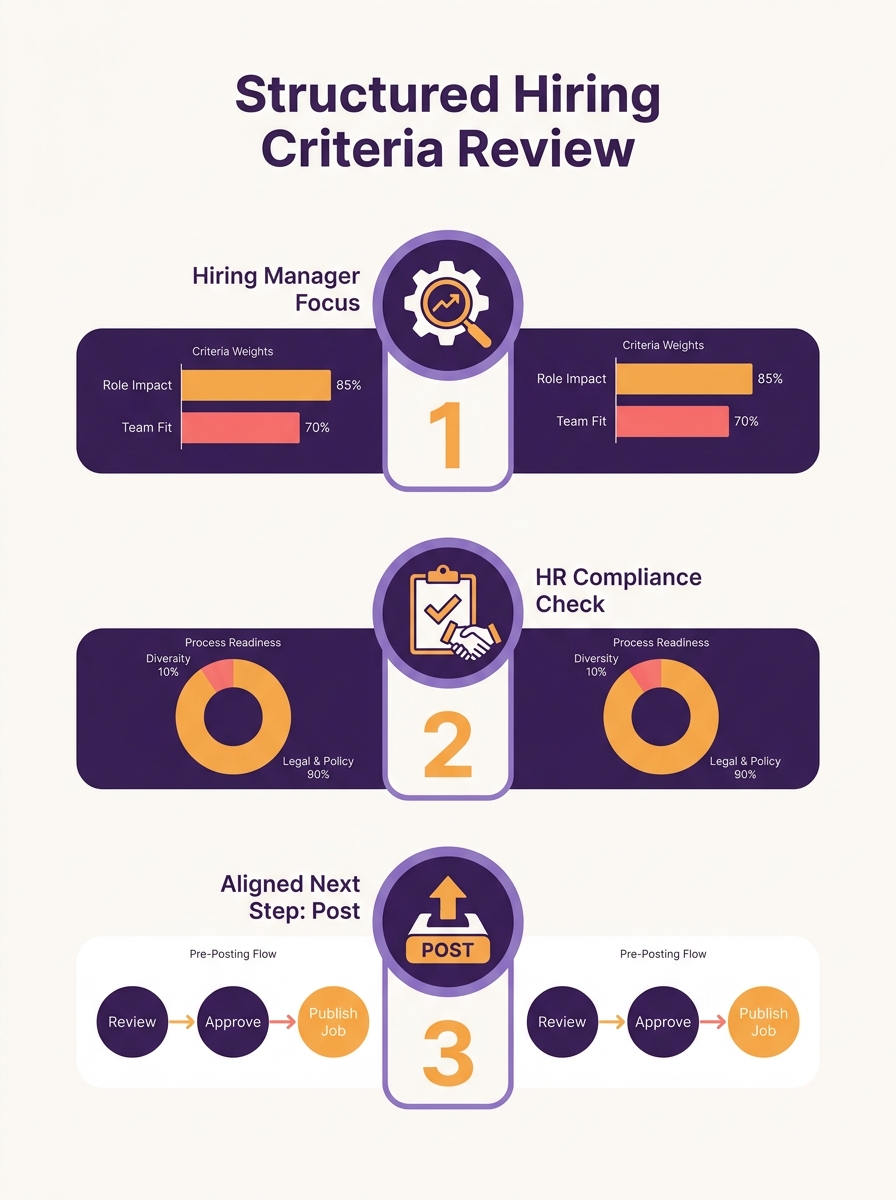
What a Success Profile Actually Looks Like
Success profiles must stay realistic and account for the environment the hire will enter, according to the guidance. A candidate who thrives in structured, process-driven organizations may struggle in environments requiring process-building from scratch. “That’s not a flaw or a problem with the candidate,” Philie wrote, “as much as it’s a job match flaw.” A clear success profile surfaces these mismatches before the offer stage, reducing the likelihood of early-stage turnover.
The profile should exclude activity metrics—meetings attended, tasks completed, time at desk—in favor of business impact. Philie emphasized measurable contributions: revenue thresholds, workflow efficiency gains, account volume, or operational improvements tied to deadlines. This framing aligns with ATS implementation as process design, where configuration choices should reflect hiring outcomes rather than input checklists.
Keeping Everyone Aligned
Once developed, the success profile must be shared with every stakeholder who has meaningful input into the hiring decision, Philie wrote. This includes the hiring manager and all interview-panel members. Without shared success criteria, evaluation becomes subjective, driven by instinct, internal politics, or personal preference rather than alignment to business goals. “Without that shared success profile, there’s no common ground to evaluate the candidates,” he wrote.
The profile should remain active after the offer is accepted. Philie recommended using it as the foundation for onboarding plans, 90-day check-ins, and ongoing performance conversations. When performance questions arise later—and Philie noted they will—the success profile grounds the discussion in agreed-upon outcomes rather than subjective assessments. “The success profile is what makes that conversation grounded rather than personal,” he wrote.
Articulating success criteria early can also reveal mismatches between the job as currently defined and what the business actually needs. Philie noted this discovery is valuable before the offer stage, when role scope can still be adjusted without derailing an active hire.
Reading Between the Lines
Philie’s framing positions the success profile as a forcing function—a way to surface gaps in hiring strategy before ATS workflows, screening criteria, and interview rubrics lock teams into evaluating the wrong things. For recruitment teams building or refining ATS configurations, the implication is clear: screening logic can only deliver candidates aligned to success criteria if those criteria exist before the requisition opens. A job description optimized for keyword matching on required skills won’t surface candidates who can deliver a 30% workflow turnaround improvement if the hiring manager never specified that outcome.
The guidance also highlights a tension most HR teams recognize: the cost of a bad hire extends well beyond salary. Philie cited lost productivity, team disruption, client impact, and the time cost of restarting searches. But he argued most hiring failures don’t stem from selecting the wrong candidate from a qualified pool—they result from never defining what “qualified” means in outcome terms. That framing shifts responsibility upstream, to the moment before the job post goes live, when success is still negotiable rather than implicit.