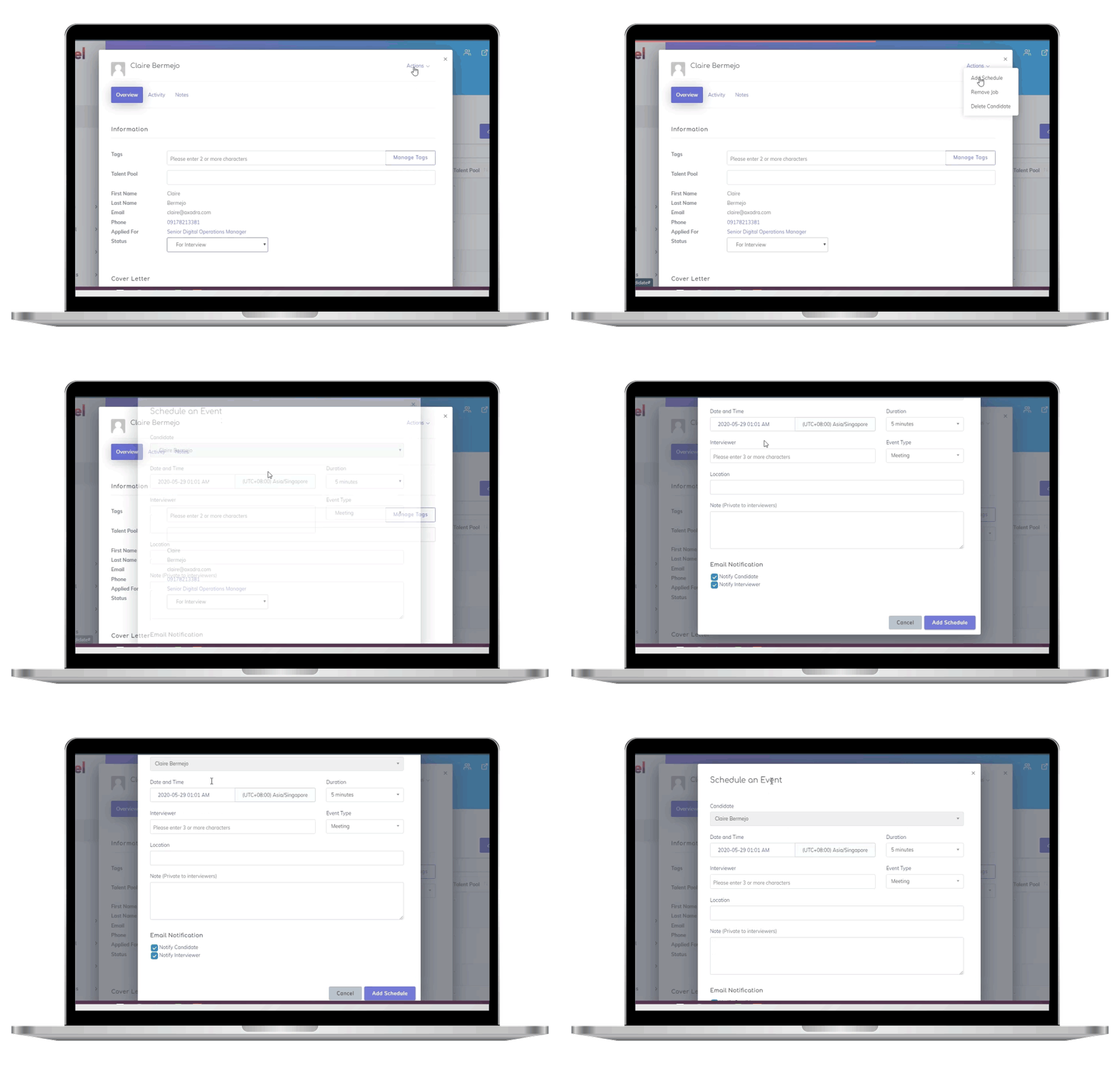

Fragmented data, inconsistent processes, and weak governance structures now present larger barriers to enterprise-wide HR technology adoption than technological capability gaps, according to three chief human resources officers interviewed by Economic Times on June 28, 2026. The shift marks a departure from earlier adoption phases, when platform selection and pilot program success dominated the HR tech conversation.
TL;DR: Organizations deploying AI for hiring, learning, and workforce planning discover that scaling beyond pilots requires data integrity, process standardization, and governance frameworks—challenges that remain hidden during controlled tests but derail enterprise rollouts.
The findings reflect a pattern emerging across industries: promising pilot programs fail at scale not because the technology underperforms, but because organizations deploy AI before establishing the foundational data models, ownership structures, and process discipline those tools require. A Fosway Group report cited in the interviews found that 64 percent of HR leaders seek scalable, integrated HR technology ecosystems, yet many continue managing fragmented platforms that increase complexity rather than efficiency.
Pilot Success Doesn’t Guarantee Enterprise Adoption
Successful pilot programs in controlled environments frequently collapse when exposed to legacy systems, disconnected datasets, and varying business practices across geographies and business units, according to Shashi Tiwari, CHRO at API Holdings. “Scaling AI is ultimately an organizational challenge, not a technology challenge,” Tiwari said in the June 28 report.
The most successful implementations embed automation directly into daily employee and manager workflows rather than operating as standalone HR applications. Recruitment automation, employee self-service, onboarding, internal mobility tracking, attendance management, and personalized learning platforms generate stronger adoption because they address recurring business needs while improving employee experience.
Advanced use cases including predictive workforce analytics, compensation intelligence, and skill gap identification show promise for proactive workforce planning, but only when supported by reliable data and standardized processes. Data quality issues, process inconsistencies, and weak change management often remain hidden during pilots but become impossible to ignore at enterprise scale.
The Missing Foundation Layer
Organizations typically invest in AI capabilities before fixing the data infrastructure and governance frameworks those tools depend on, HR leaders reported. Mukesh Tiwari, CHRO and COO at The Akshaya Patra Foundation, outlined a required implementation sequence the organization followed: data integrity first, then process discipline, followed by governance structures, and only then technology deployment.
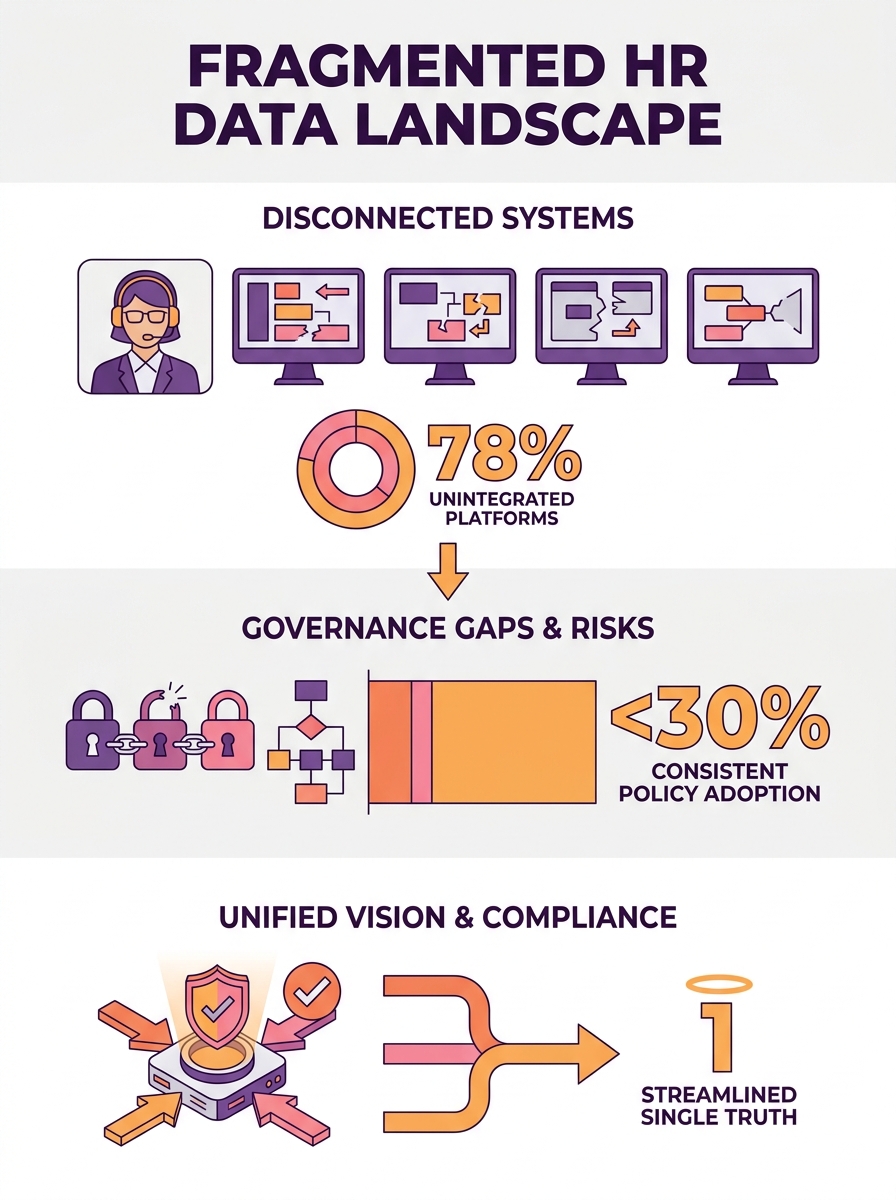
The Akshaya Patra Foundation digitized its employee lifecycle—recruitment, attendance, learning, and performance management—before integrating these systems into a unified HR ecosystem. “Successful scaling requires this sequence: data integrity first, then process discipline, governance, then technology,” Mukesh Tiwari said.
Another common failure point: the absence of a clearly defined business case tied to measurable outcomes. Many organizations deploy AI because of perceived potential rather than a specific problem it is expected to solve. Without sustained leadership sponsorship and documented success metrics, initiatives struggle to secure continued investment beyond the pilot phase.
This pattern appears particularly evident in applications requiring stakeholder trust and transparent decision-making, including predictive attrition modeling, pay equity monitoring, and compensation trend analysis. These capabilities depend on data integrity across multiple HR and business systems.
Managerial Ownership Drives Implementation Success
While analytics platforms and automation tools provide direction, successful implementation depends on managerial ownership and employee engagement rather than platform sophistication alone, according to Sajid Iqbal, CHRO and Senior Vice President HR at Brigade Group.
Brigade Group integrated technology into leadership assessments through data-driven Development Centers and used digital tools to track individual development journeys over six months. Managers remained central to the process by providing structured feedback and supporting targeted development interventions. “Without such digital integration, this level of tracking and measurement would be difficult to achieve at scale,” Iqbal said.
The organization adopted a similar data-driven approach to improve first-year employee retention by integrating insights from HRMS, employee engagement surveys, and learning platforms. The consolidated view helped HR Business Partners identify teams facing higher early attrition and strengthen onboarding and assimilation programs before turnover patterns became entrenched.
The focus on managerial accountability reflects a broader theme: technology boosts existing processes but cannot compensate for unclear ownership structures or inconsistent execution. Organizations that succeed at scale typically establish clear accountability for data quality, process compliance, and outcome measurement before expanding technology deployments beyond initial business units.
Why This Matters Now
HR teams evaluating ATS platforms, learning systems, and workforce analytics tools in 2026 face a paradox: the technology works, but the organizational infrastructure required to support it at scale frequently doesn’t exist. The gap between pilot success and enterprise adoption grows wider as AI capabilities advance faster than governance maturity.
For recruiting teams specifically, this translates to a practical challenge. ATS implementation projects that focus primarily on feature comparison and vendor selection miss the more difficult work: establishing consistent job data taxonomies, standardizing intake workflows across hiring managers, and building audit trails that support compliance requirements. Technology deployed without that foundation layer generates fragmented candidate data, inconsistent screening criteria, and reporting gaps that undermine hiring quality metrics.
The 64 percent of HR leaders seeking integrated ecosystems, as the Fosway Group documented, are responding to this reality. The next wave of HR tech ROI comes not from deploying more AI capabilities, but from building the data governance, process standardization, and ownership structures that allow those capabilities to function reliably across the enterprise. Organizations that sequence implementation correctly—data integrity and governance before technology expansion—position themselves to extract value from automation investments. Those that don’t will continue running successful pilots that never scale.