
Job seekers who successfully landed offers in 2026 made specific changes to how they applied—tailoring resume keywords to job postings, reaching out directly to recruiters, and optimizing for applicant tracking systems—according to patterns identified in Indeed research covering 4,516 job seekers and 4,517 employers across the United States, United Kingdom, and Canada. The data show that volume-based application strategies underperformed in a market where nearly 40 percent of employers now use ATS screening software.
TL;DR: Job seekers who broke through hiring bottlenecks shifted from mass applications to targeted tactics: matching keywords, contacting recruiters directly, and formatting resumes for automated screening systems, according to Indeed’s survey of over 9,000 job seekers and employers.
The findings matter for HR teams because they reveal exactly where current screening processes are failing candidates—and where small adjustments to applicant tracking system configurations, keyword transparency, and response protocols could attract stronger applicant pools. When 61 percent of U.S. job seekers reported ghosting two to four employers in the previous 12 months, the breakdown in feedback loops runs both directions.
ATS Screening Creates a Pre-Human Filter
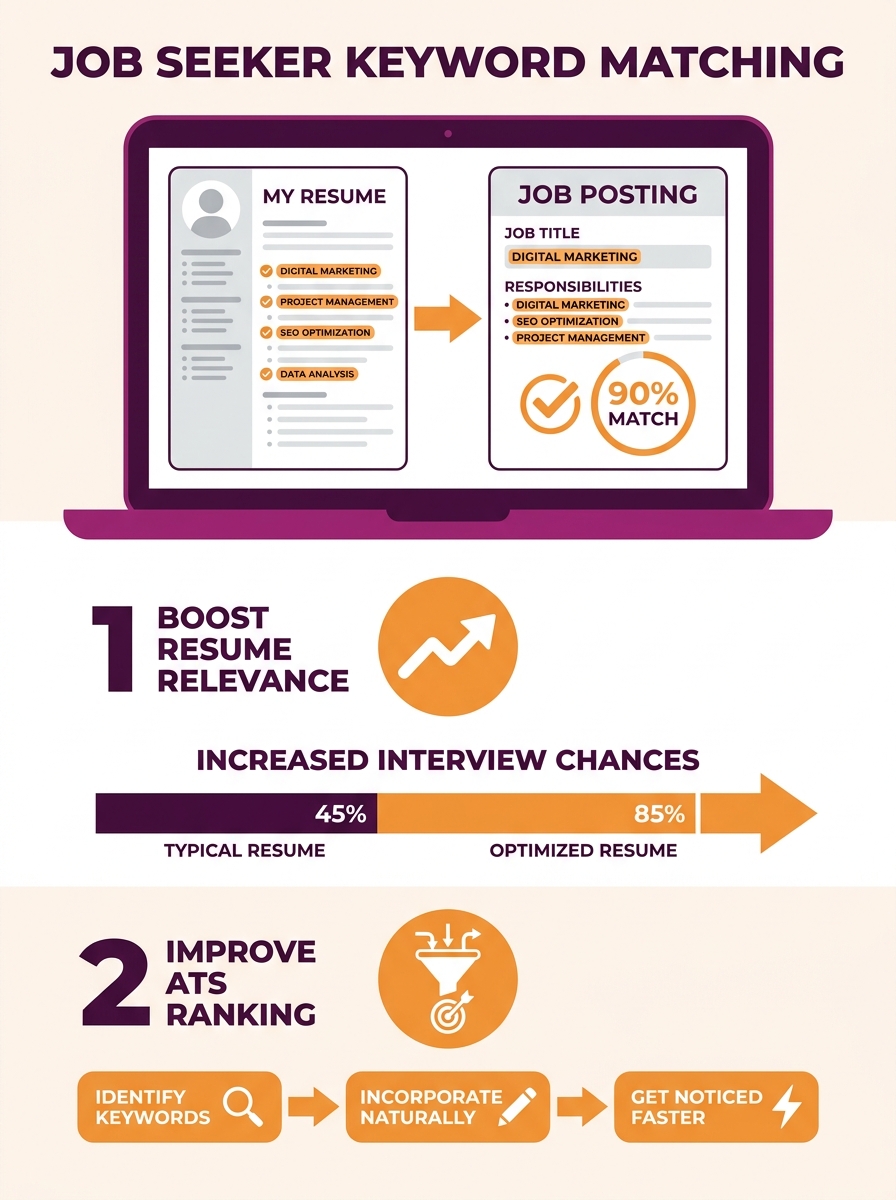
Nearly 40 percent of employers use ATS tools to screen candidates before a recruiter reviews any applications, according to the Indeed survey. That shifts the first audience from a person to software that scores resumes based on keyword matches, title alignment, and formatting readability.
Jobscan, a resume optimization service cited in the Prism News report, advises applicants to mirror the exact language in job postings because ATS platforms often rank candidates by direct matches in skills, job titles, and technical terms. A resume that reads well to a hiring manager can still underperform if it does not echo the posting’s phrasing closely enough—meaning the best-qualified applicant can lose to the better-matched document.
The four job seekers named in the research—Megan Nicole O’Neal, Angelo Mendoza, Russ Garcia, and Marianne Matarese—each reported making structural changes to how they entered the hiring funnel rather than simply applying more often. The common thread: they adjusted for a system in which software screens first, humans arrive later, and silence has become routine on both sides.
Labor Market Data Show Competition Remains Intense
U.S. Bureau of Labor Statistics data show payroll employment rose by 172,000 in May 2026, with the unemployment rate holding at 4.3 percent. But that steady headline masks longer-duration joblessness: 1,696,000 people were unemployed for 27 weeks or longer in 2025, according to BLS figures.
The St. Louis Federal Reserve reported nominal wage growth for private industry workers slowed to approximately 3.4 percent in the fourth quarter of 2025, while the quits rate fell to 1.9 percent in August and October 2025. That combination—slower wage growth and fewer employees voluntarily leaving—signals a low-churn, low-hire economy where workers stay put and openings created by turnover shrink.
For job seekers, fewer people moving means fewer openings appearing through attrition. A stable labor market can still feel blocked if employers are not expanding aggressively and internal mobility is muted, making small mismatches in resume formatting or keyword selection decisive factors in whether an application advances.
What Actually Moved Candidates Through the Funnel
The job seekers who finally received offers changed four specific behaviors, according to the patterns documented in the Indeed research:
They tailored each resume to the specific posting, especially headline skills and job title language, rather than submitting a generic version. They used networking to create a human touchpoint before the application disappeared into software queues. They reached out to recruiters or hiring managers proactively instead of waiting for responses that often never arrived. They optimized resumes for ATS parsing by matching keywords, formatting cleanly, and avoiding design elements that software can misread.
These adjustments respond to a hiring environment where employers filter harder, respond less, and hire more cautiously. The applicants who broke through did not increase application volume—they increased precision, persistence, and timing to match how automated screening workflows actually process candidates.
Ghosting Has Become Routine on Both Sides
Indeed’s survey found that just over three in five U.S. job seekers—61 percent—said they had ghosted two to four employers in the previous 12 months. That silence reflects a breakdown in the feedback loop: job seekers fire off dozens of applications and hear nothing back; employers, faced with large applicant pools and limited bandwidth, sometimes do the same.
The result is a hiring process where both sides behave as if nonresponse is normal, which only deepens the sense that qualified applicants are vanishing into the system. When nearly 40 percent of employers are using ATS tools and more than half of job seekers admit to ghosting multiple employers themselves, the market rewards precision and direct outreach far more than volume alone.
HR teams managing high application volumes may be inadvertently training candidates to bypass standard application channels entirely—reaching out on LinkedIn, emailing hiring managers directly, or using referrals to avoid ATS knockout questions and parsing failures that silently disqualify strong applicants.
What Happens Next
Recruitment teams looking to reduce candidate drop-off and improve applicant quality can test three adjustments based on what actually worked for the job seekers in the Indeed data: publish the exact keywords and skill terms their ATS is scanning for, implement automated acknowledgment emails that confirm receipt and outline next steps, and audit resume parsing accuracy to identify where strong candidates are being auto-rejected due to formatting errors.
The small businesses and mid-market companies adopting recruitment software for growing teams have an advantage here—lighter application volumes mean they can afford to reduce ATS filtering aggressiveness and prioritize human review earlier in the funnel. Larger enterprises with thousands of applications per role may need to add a secondary review layer specifically for candidates who match on experience but underperform on keyword scoring.
The job seekers who finally got hired did not break through by applying more often. They broke through by learning how the system actually works—and HR teams can close the loop by making that system less opaque, more responsive, and harder to game with keyword stuffing while easier to navigate for genuinely qualified candidates.