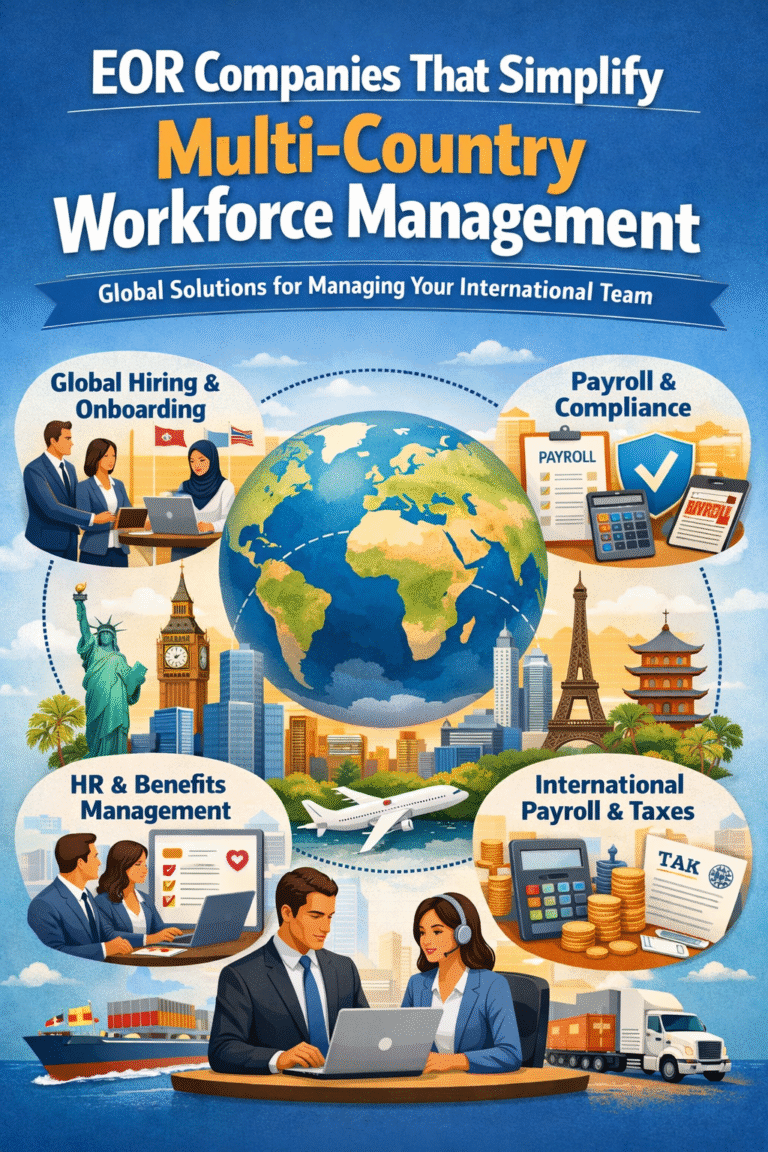
Managing a workforce across multiple countries isn’t just an HR challenge — it’s an operational one. Every jurisdiction adds another layer of payroll logic, another set of compliance deadlines, another benefits structure to administer. At some point, the complexity stops being manageable through spreadsheets and good intentions.
The companies below don’t just make international hiring possible. They make the ongoing management of multi-country teams genuinely simpler — which is a harder problem to solve, and a more important one.
1. Borderless AI
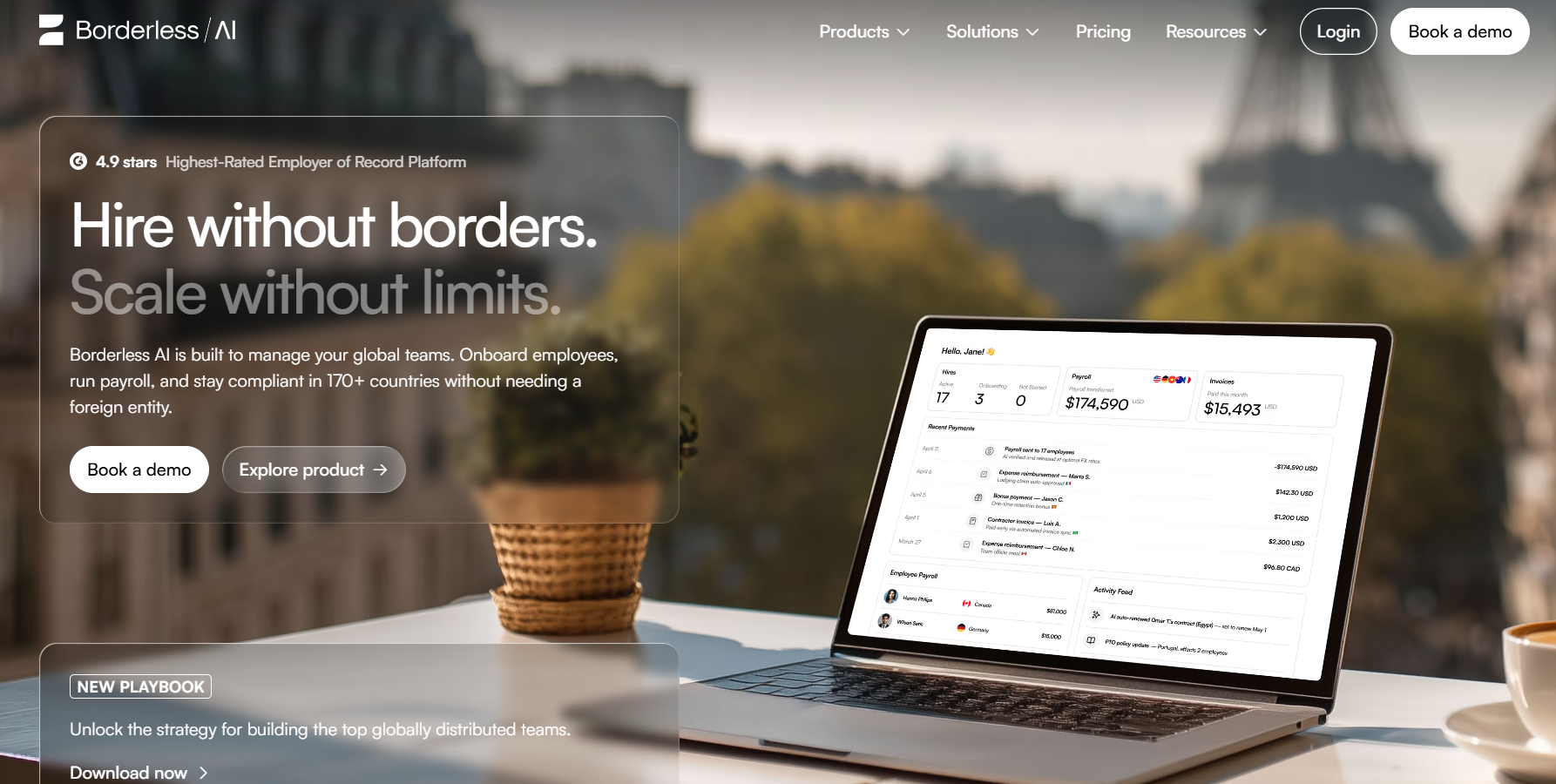
Most EOR platforms handle compliance reactively — something changes in a country’s labor law, and they update their processes eventually. Borderless AI is designed to work the other way around.
Their AI assistant, HRGPT, monitors regulatory changes across all active jurisdictions automatically, flags potential issues before they become problems, and generates locally compliant contracts on demand in 170 languages. For HR teams managing employees in five, ten, or fifteen countries at once, that proactive intelligence replaces what would otherwise be constant manual research.
The operational numbers back it up. Employee onboarding completes in 24 hours across 170+ countries. Payroll runs in roughly 20 minutes with taxes, currency conversions, and local compliance handled end-to-end. Payments process in 5 days — a fraction of the 20+ day industry standard. And unlike most competitors, Borderless AI requires zero upfront security deposits, freeing capital that would otherwise sit idle while you wait to hire.
Every entity is 100% owned, with no third-party intermediaries involved. When something needs resolving, you’re talking directly to the people accountable for it. Support is available 24/7, based in North America, and reachable through Slack.
For teams scaling quickly across many countries, Borderless AI removes the ceiling on how fast you can actually move.
2. Deel
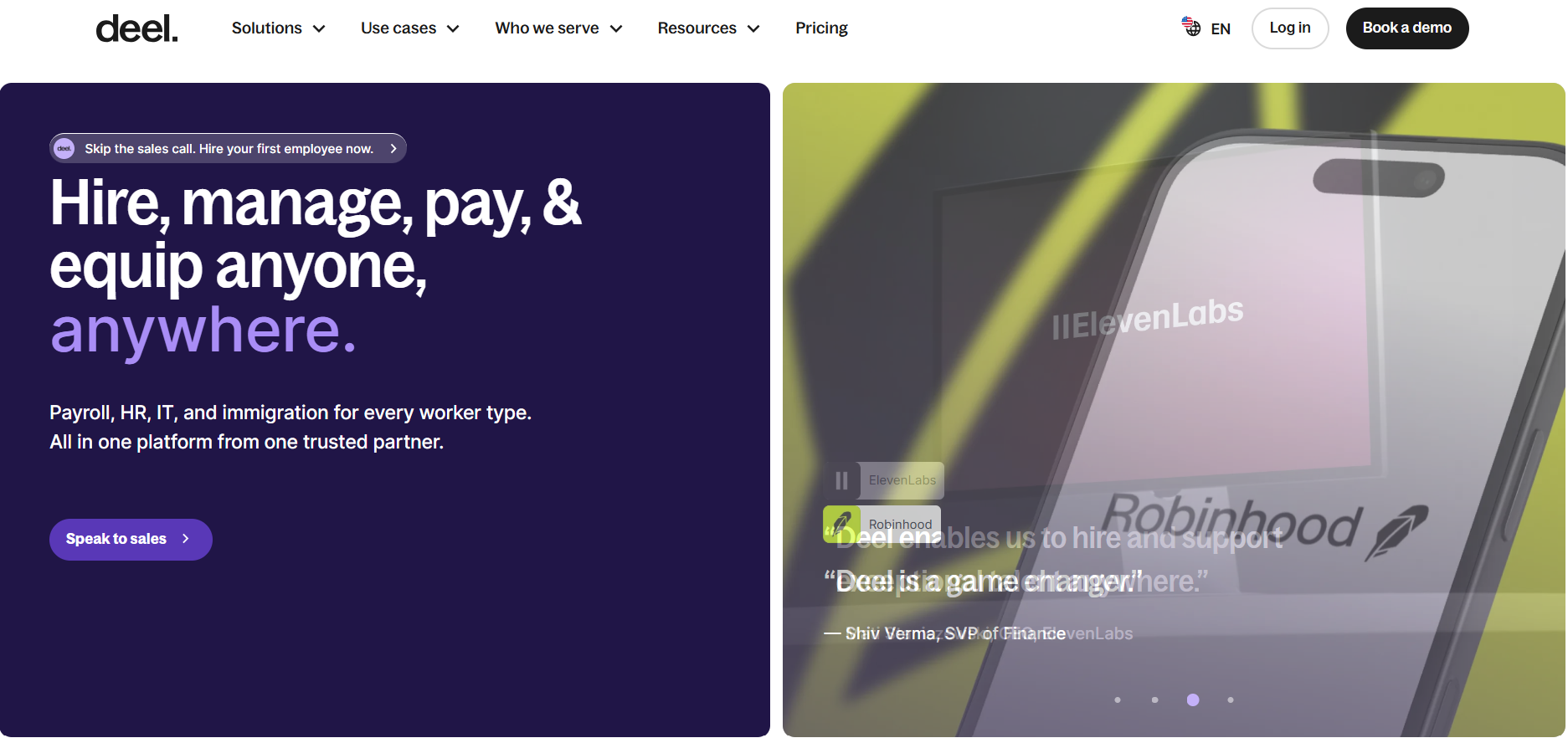
What makes multi-country workforce management complicated isn’t just the compliance — it’s the fragmentation. Different tools for contractors versus employees, different processes for different regions, different systems that don’t talk to each other.
Deel addresses this by consolidating everything into one platform. EOR services, contractor management, global payroll, immigration support, and HRIS functionality all live in the same place, across 150+ countries. That consolidation matters in practice: fewer logins, fewer reconciliation headaches, fewer gaps where things fall through.
For companies whose international workforce is a mix of full-time employees, contractors, and relocated talent, having a single system that handles all three without friction is a significant operational advantage.
3. Remote
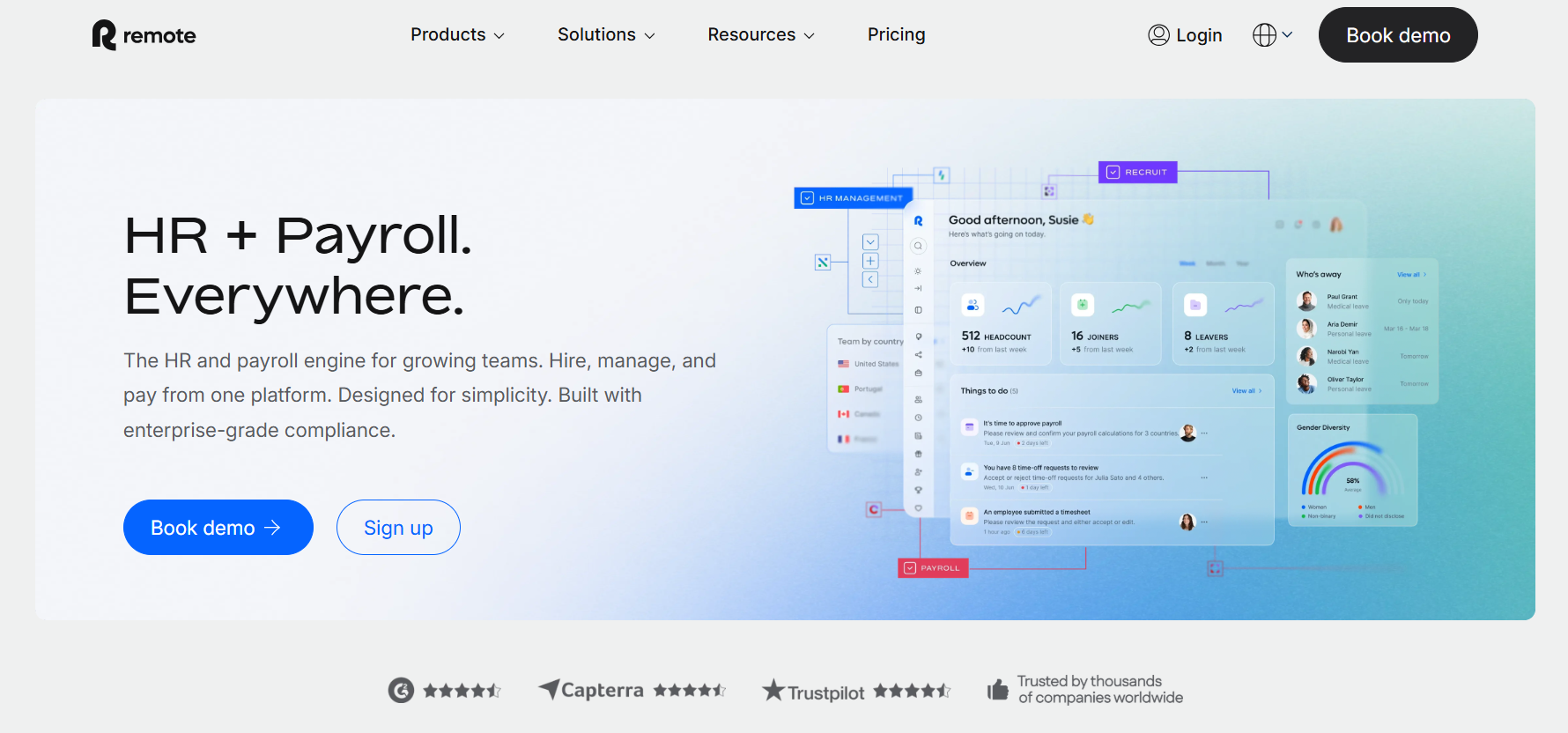
There’s a version of global expansion that’s technically functional but permanently fragile — EOR providers that rely on in-country partners, creating chains of intermediaries between you and your employees. When something goes wrong, accountability diffuses quickly.
Remote was built to avoid that. They own their legal entities in every country they operate in, which means full control over how employment is managed and clear accountability when issues arise. Pricing is published upfront with no hidden fees, and their platform covers 75+ countries with locally compliant contracts, IP protection, and equity management built in.
For companies that have been burned by opaque EOR relationships or unexpected costs, Remote’s model is a deliberate corrective.
4. Rippling
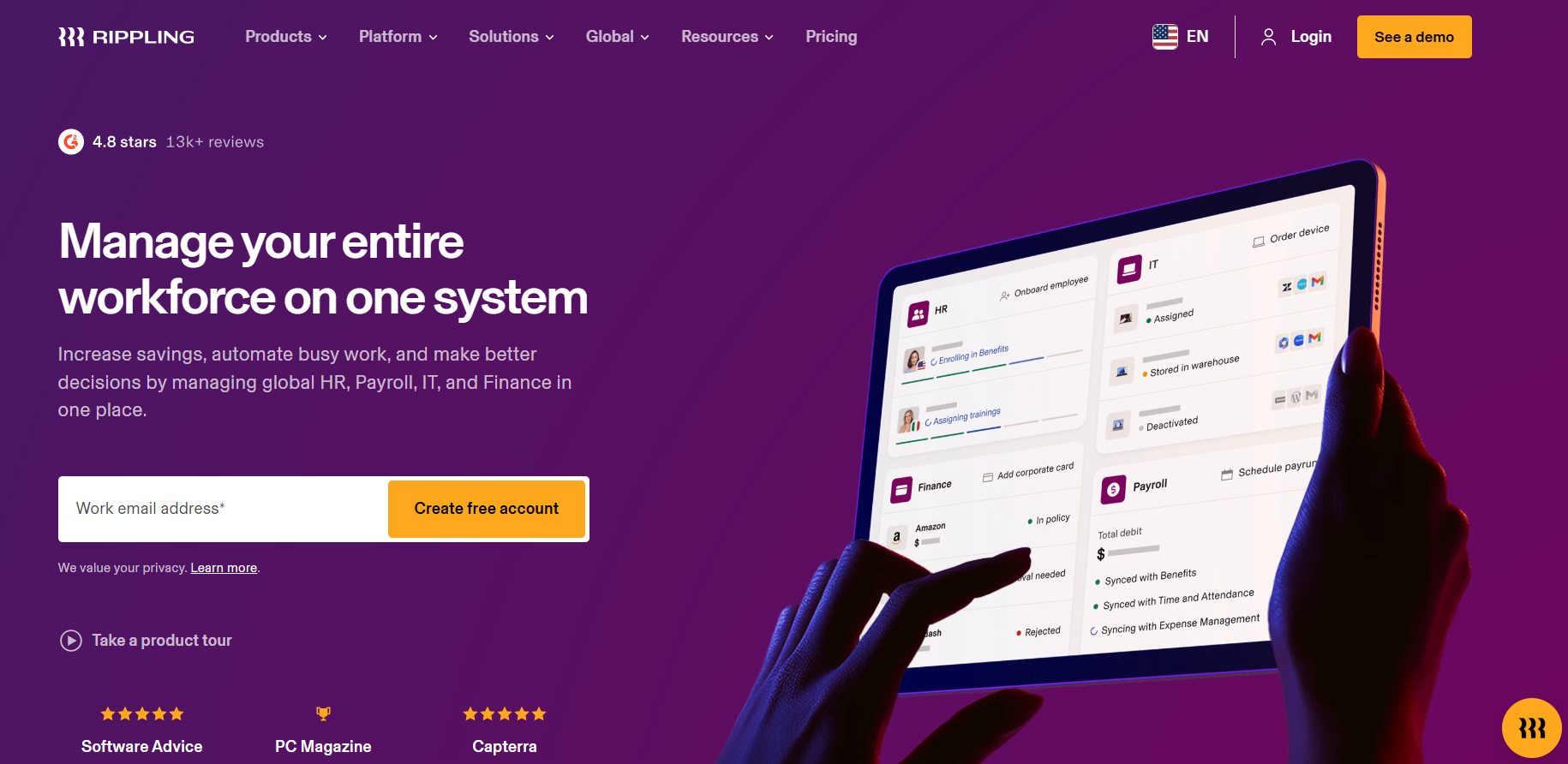
For most EOR providers, their job ends when the employment contract is signed. Rippling’s starts there and keeps going.
Alongside its global payroll and EOR coverage across 50+ countries, Rippling manages IT provisioning, software access, device management, and HR workflows — all from the same platform. When you hire someone internationally, you can set up their equipment, configure their app access, enroll them in payroll, and handle their compliance paperwork without leaving a single system.
For tech companies where every new hire touches both HR and IT processes, that integration eliminates a whole category of coordination overhead that most teams have simply learned to live with.
5. Papaya Global
Multi-country workforce management at enterprise scale introduces a different class of problem. It’s not just about hiring compliantly in many countries — it’s about having consolidated financial reporting, audit-ready records, and reliable integrations with the ERP and HRIS systems that large organizations already run on.
Papaya Global was built for exactly that environment. Their platform handles global payroll, EOR, and contractor management across 160+ countries, with native integrations for Workday, SAP, and Oracle. Compliance monitoring runs continuously, regulatory changes are reflected automatically, and finance teams get the consolidated global workforce data and reporting they need without manual aggregation.
For organizations where payroll runs into the hundreds or thousands of employees across dozens of countries, Papaya provides the infrastructure that makes that scale manageable.
The Common Thread
What each of these platforms shares isn’t a country count or a feature checklist — it’s a genuine reduction in the operational burden of managing people across borders. The right choice depends on where that burden is heaviest for your organization: speed and automation, platform consolidation, ownership and transparency, HR-IT integration, or enterprise-grade reporting. Start there, and the decision becomes much clearer.