
When companies scale, recruitment teams often find themselves swamped with applications for dozens—or even hundreds—of open positions. That’s when HR leaders start wondering how to leverage applicant tracking systems (ATS). The answer lies in efficiency, control, and the ability to handle large candidate pipelines without overwhelming your team. The benefits of using an applicant tracking system are especially clear in high-volume hiring, where speed, accuracy, and consistency directly impact business growth.
Challenges of High-Volume Hiring
Recruiting at scale can quickly spiral into an administrative burden. Posting jobs manually across multiple boards, tracking hundreds of resumes in spreadsheets, and coordinating interviews across departments all create bottlenecks. Without the right tools, recruiters risk:
- Slower time-to-fill due to manual screening.
- Losing qualified candidates in messy pipelines.
- Candidate dissatisfaction from a lack of communication.
- Burnout among recruitment staff managing repetitive tasks.
This is where using an applicant tracking system in the hiring process becomes a game-changer.
How an ATS Supports Large-Scale Recruitment
Choosing an applicant tracking system should align with your business needs, and it becomes especially valuable when managing high-volume recruitment. The right ATS not only streamlines the hiring process but also creates structure and visibility across every stage. It allows recruiters to fill roles faster while maintaining a positive candidate experience.
Here are other benefits of using an ATS for large-scale recruitment:
1. Pipeline visibility and control
An ATS gives recruiters a centralized view of the entire candidate funnel. Whether you’re hiring for 10 roles or 200, you can see where every applicant stands: who just applied, who passed initial screening, who is scheduled for interviews, and who has an offer pending. Visibility eliminates the chaos of spreadsheets and helps managers reallocate resources where bottlenecks appear.

2. Automated screening to cut down manual work
High-volume hiring means hundreds of resumes arrive daily. An ATS uses parsing tools and keyword filters to shortlist candidates that meet your minimum requirements. Instead of spending hours on initial screenings, your team can focus directly on the top 10–20% of candidates, drastically reducing time-to-fill.
3. Job distribution at scale
Posting a single vacancy to multiple job boards, LinkedIn, and career pages can take hours when done manually. With an ATS, recruiters post once and distribute everywhere instantly. This allows HR teams to reach a larger pool of candidates without adding workload—an essential feature for companies scaling quickly.
4. Consistent candidate communication
A poor candidate experience can damage your employer brand, especially when hundreds of applicants never hear back. Popular ATS used in HR operations automates status updates and follow-ups so candidates feel informed at every stage. For recruiters, this means no one falls through the cracks, even in large hiring rounds.
5. Collaboration across hiring teams
In high-volume recruitment, decisions aren’t made by one recruiter alone. ATS platforms allow hiring managers, interviewers, and HR leaders to share notes, rate applicants, and move candidates forward seamlessly. This eliminates back-and-forth emails and keeps decisions moving quickly.
6. Data-driven hiring at scale
High-volume hiring requires constant adjustment. ATS dashboards track KPIs like application sources, time-to-hire, and candidate drop-offs. If one job board delivers better applicants than another, you know where to invest more resources. This ensures hiring stays efficient even as demand increases.
Reducing Bottlenecks with Smarter Workflows
High-volume recruitment magnifies the pain points in your hiring process. Without systems in place, recruiters end up buried in resumes, struggling to coordinate interviews, and chasing down hiring managers for feedback. The right ATS features address these bottlenecks head-on:
-
Resume Overload
When a single role receives hundreds of applications, manual resume reviews become unsustainable. Recruiters risk overlooking qualified talent or wasting hours screening unqualified candidates. An ATS solves this by using automated filters and resume parsing to highlight applicants who meet your minimum requirements, such as education, certifications, or years of experience. Instead of sifting through piles of resumes, recruiters can immediately focus on the strongest candidates. It speeds up the process and ensures consistency in shortlisting.
-
Scheduling
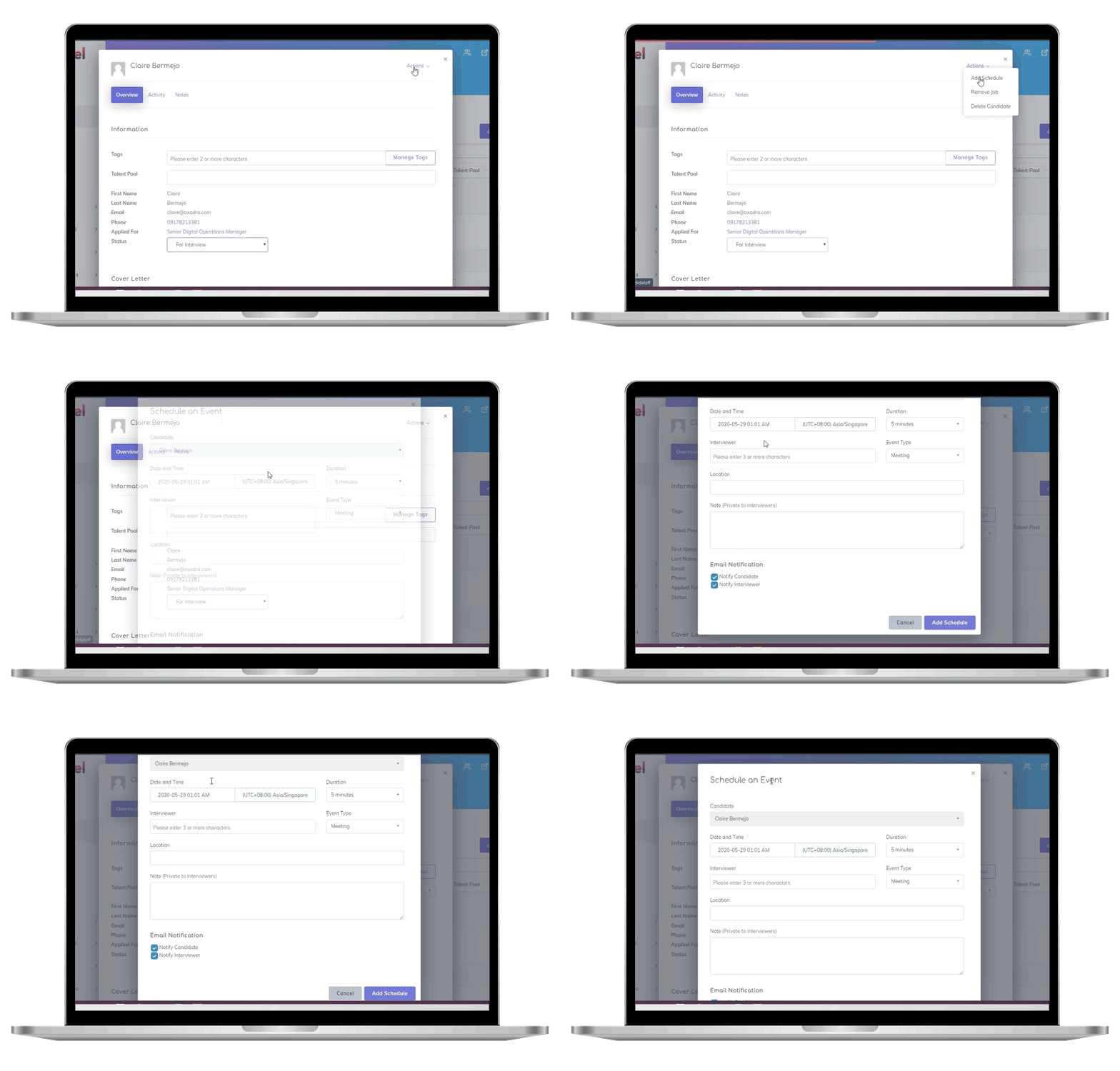
Coordinating interviews is another major roadblock in high-volume hiring. Email back-and-forth with candidates and hiring managers can drag on for days, causing delays and risking candidate drop-off. An ATS integrates directly with calendars to improve the hiring process. With a few clicks, recruiters can confirm interviews, send automated invites, and share available time slots. Self-scheduling features in certain systems allow candidates to schedule interviews at times that correspond with predetermined recruiter availability. The result of the ATS integration? A smoother hiring process and faster movement through the pipeline.

-
Feedback
When multiple stakeholders are involved in hiring decisions, feedback often gets lost in email threads or delayed because managers are busy. It creates unnecessary stalls in the process. An ATS centralizes notes, ratings, and interview evaluations in one shared platform, ensuring every stakeholder has visibility into candidate performance. It keeps the process moving and makes it easier to compare candidates objectively, reduce bias, and reach a decision faster.
By addressing these common slowdowns, ATS tools help recruitment teams maintain hiring speed without sacrificing quality.
Scale Hiring Without Overwhelming Your Team
Recruitment at scale can feel unmanageable without the right support system. The answer to why use an applicant tracking system becomes obvious when you consider how it enables recruiters to manage pipelines, reduce bottlenecks, and fill roles faster without overloading the team.
By adopting an ATS, you gain:
- Faster turnaround from application to offer.
- Clear visibility across every candidate pipeline.
- Automation that prevents recruiter burnout.
- Smarter allocation of resources based on real data.
Skillfuel’s all-in-one recruitment management software gives HR leaders the tools to hire smarter, manage growth, and deliver a positive candidate experience even in the busiest hiring cycles.
Take the next step today. Streamline your high-volume recruitment with Skillfuel’s free applicant tracking system and start hiring with confidence.