
RecruitWrite launched as an HR-specific AI writing platform charging $9.99 monthly for unlimited job description generation after a free 10-document trial, according to a ToolsPedia review published August 27. The tool targets recruiters seeking compliant hiring documents without full applicant tracking system costs.
TL;DR: RecruitWrite offers unlimited AI-generated job descriptions, interview guides, and assessments for $9.99/month with HR-specific training data, positioning itself between generic AI assistants and enterprise ATS platforms.
The platform addresses a narrow but high-frequency task: producing standardized recruitment content at scale. ToolsPedia rated the service 4.52 out of 5.0, noting its HR-aligned training data and direct export capabilities to Google Docs and PDF formats. RecruitWrite was built by HR practitioners and tested through Georgetown University’s HRM Capstone program, according to the review.
Recruitment teams have historically faced a choice between generic AI writing tools requiring extensive prompt engineering and expensive all-in-one applicant tracking systems bundling content generation with candidate management features. RecruitWrite targets the gap by focusing exclusively on document creation—job descriptions, interview guides, skill assessments, and social media posts—without candidate pipeline functionality.
Pricing Structure Built for Volume Hiring Teams
The free tier provides 10 job description generations with no credit card requirement, allowing teams to test output quality before committing. The Pro plan at $9.99 monthly removes generation limits and adds access to advanced AI models, proprietary HR best-practice training data, early feature access, product roadmap input, and discounts on Greater Human Capital HR consulting services.
ToolsPedia’s review noted the fixed pricing model contrasts with per-seat applicant tracking systems, which can run hundreds of dollars monthly for small teams. Organizations running seasonal hiring surges or filling multiple roles simultaneously face no overage charges under the unlimited structure.
The 10-document free cap restricts prolonged testing but matches typical job opening volumes for small businesses evaluating recruitment software for SMBs before purchase decisions.
HR-Specific Training Data Differentiates Platform From Generic AI
RecruitWrite’s core differentiation stems from proprietary training data grounded in human resource best practices, according to the ToolsPedia analysis. The platform stores organizational profiles and custom templates, ensuring consistent document output aligned with company-specific hiring standards—a workflow generic AI assistants like ChatGPT do not natively support.
Georgetown University’s HRM Capstone program validated the platform’s models, though the review did not specify testing methodology or participant counts. The academic backing signals quality control beyond consumer-grade AI tools, which often produce generic or non-compliant job postings when users lack HR expertise in prompt construction.
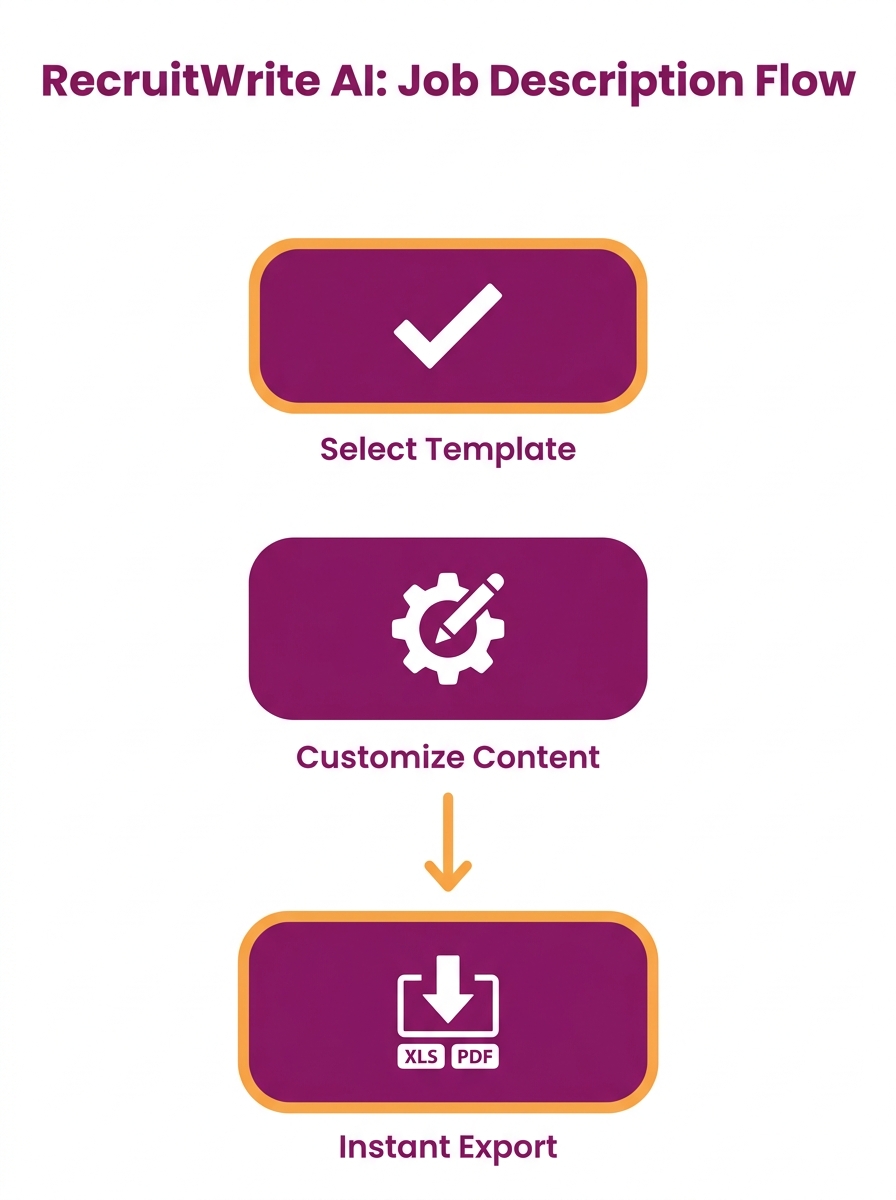
Users configure organization profiles once, then input role-specific details to generate full hiring collateral in minutes. The centralized content library stores all created documents, enabling retrieval and version management across hiring campaigns. Teams managing high-volume recruitment—such as retail seasonal hiring or enterprise expansion—gain efficiency by reusing templates rather than rebuilding descriptions from scratch for each requisition.
Export Options Target Document Workflow Integration
Direct export to Google Docs and PDF formats addresses a practical friction point: moving generated content into existing hiring workflows. Recruiters frequently draft job descriptions in AI tools, then manually copy text into applicant tracking systems, career pages, or job boards. RecruitWrite’s one-click export reduces that manual transfer step.
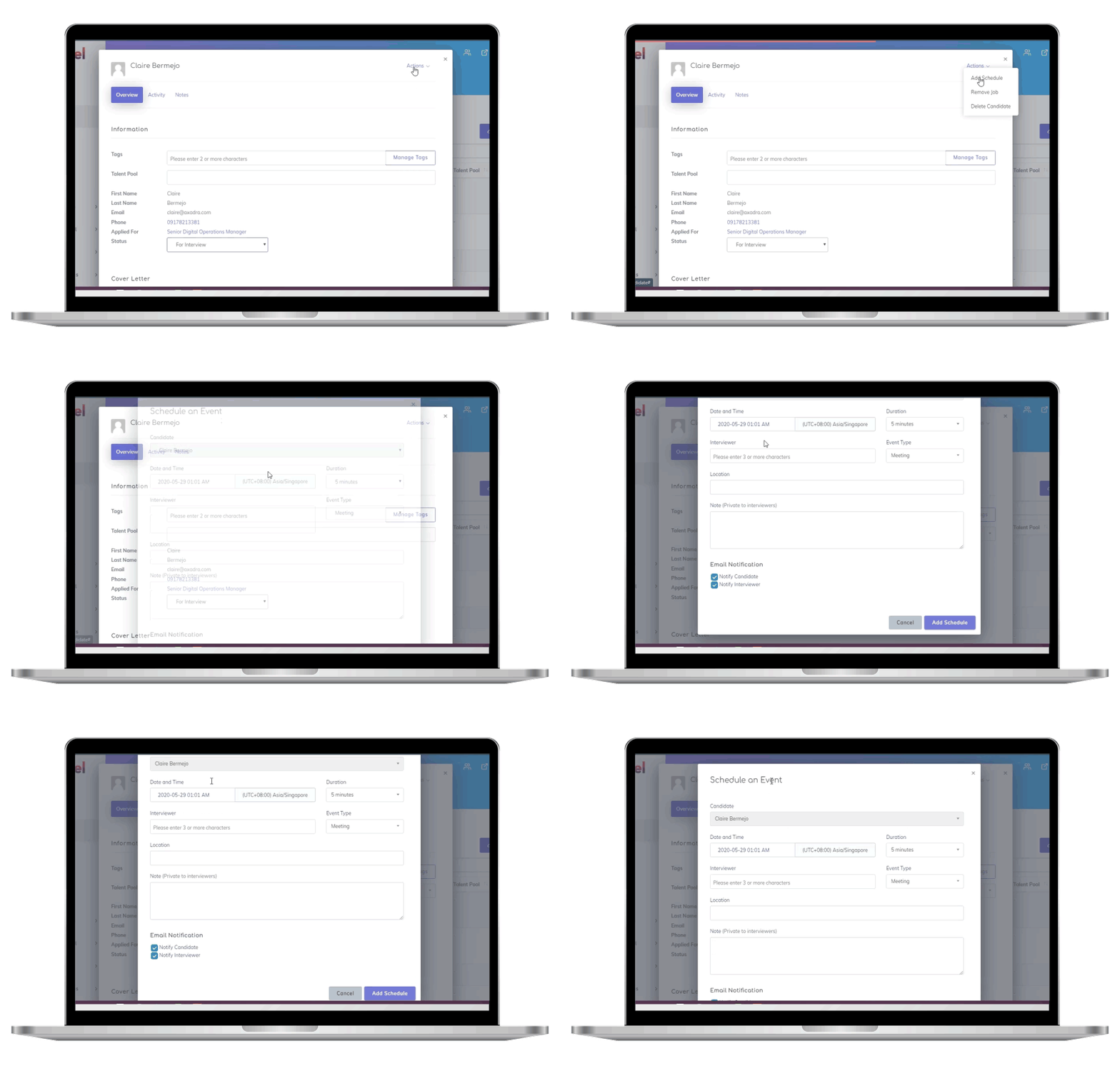
The platform does not currently advertise native integrations with applicant tracking systems, according to the review. Teams using platforms like Workable or Greenhouse will still need to paste exported content into their ATS job requisition fields. That limitation positions RecruitWrite as a free recruitment software supplement rather than a replacement for candidate management tools.
The review noted RecruitWrite generates interview guides and skill assessments alongside job descriptions, extending utility beyond initial job posting creation. Those documents typically require separate drafting effort or expensive third-party assessment tools, making the bundled generation a cost advantage for lean HR teams.
What This Means for In-House Recruiters
Recruiters managing multiple requisitions simultaneously now have a dedicated tool for content generation priced below generic AI assistant subscriptions. The $9.99 unlimited tier undercuts per-seat ATS pricing for organizations not yet ready to adopt full applicant tracking platforms or needing document volume exceeding free ATS limits.
The HR-specific training data reduces prompt engineering time compared to tools like ChatGPT, which require detailed instructions to produce compliant job descriptions. Teams without dedicated HR writers gain standardized templates validated by Georgetown’s HRM program, lowering the risk of non-compliant or poorly structured postings that discourage qualified candidates.
However, RecruitWrite’s lack of candidate tracking or sourcing features means in-house recruiters will still need separate systems for application management, interview scheduling, and pipeline analytics. Organizations evaluating recruitment software pricing should assess whether standalone content generation tools offer better value than bundled ATS platforms that include description templates as secondary features. For teams hiring sporadically or managing job boards outside traditional applicant tracking workflows, the focused scope and low cost may justify adding RecruitWrite to existing recruitment tech stacks.