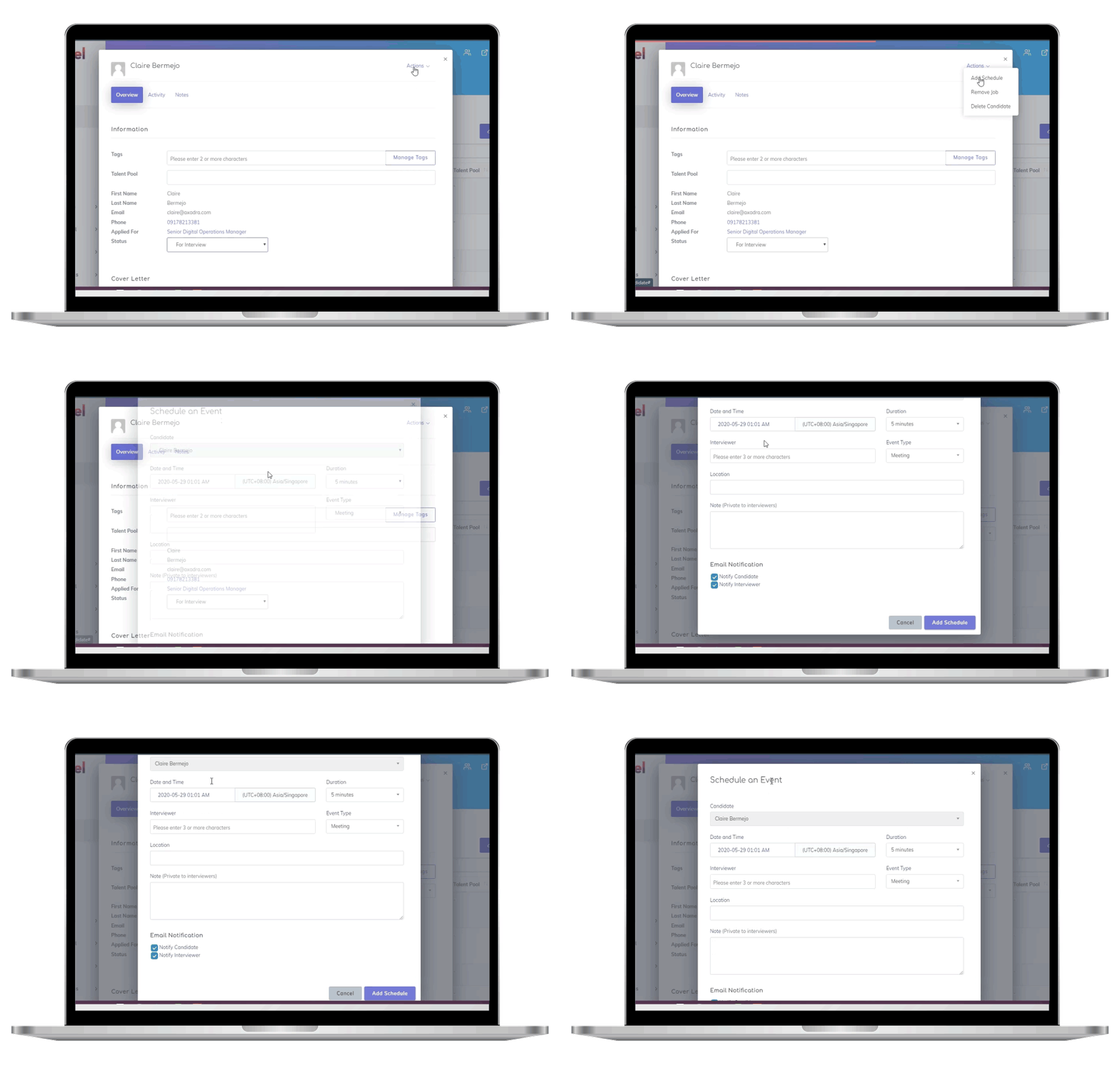

Hiring was simple in the past, wasn’t it? You posted a job ad, waited for resumes, interviewed a handful of candidates, and made an offer. But much has changed now. Between surging application counts and a tightening talent market, the pressure is on.
Candidate experience is the new competitive frontier. Beyond competitive pay, applicants are judging organizations by the efficiency and transparency of their hiring pipeline.
If your hiring process is poor, you lose a customer, not just a hire. Research shows that job seekers are less likely to engage with or purchase from a brand following a negative recruitment process.
Don’t worry, though. Technology can make your recruitment process smarter, faster, and far less stressful. How? We’ll walk you through that here.
#1 ATS Centralizes Talent Database
Traditionally, recruitment data was siloed in individual email inboxes and paper files. That led to a phenomenon known as lost candidates. Qualified applicants were overlooked simply because their information was not accessible to the entire hiring team.
An applicant tracking system (ATS) now centralizes the entire talent base. Rather than searching through fragmented folders, you can use an ATS to instantly locate specific candidate information.
Centralized data ensures that every resume, application, and interview note is housed in one reliable spot. That establishes a single source of truth for the entire organization.

Centralization starts with streamlined job distribution. In a single click, recruiters can broadcast openings across internal portals, social media, and major aggregators like LinkedIn.
Once the applications roll in, natural language processing (NLP) takes over. It parses resumes to transform unstructured text into clean, searchable data. That way, you can navigate thousands of profiles instantly using keyword filters to find the perfect match.
Beyond storage, an ATS provides a visual representation of the recruitment pipeline. You can view the status of any candidate, from applied to interview, at a glance. This eliminates the need for constant status update meetings and allows for real-time collaboration.
It’s because of these benefits that ATS adoption is soaring. Worldwide, the ATS market is expected to generate $4.88 billion in revenue by 2030.
#2 AI Can Scan Resumes for Specific Skills
Recruiters are seeing a surge in job applications. Each job posting now receives around 150 to 200 applications within the first 24 hours. It takes HR professionals 3 to 5 hours to go through applications every day. What’s worse is that fewer than half the applications meet all the criteria for the role.
Artificial intelligence screening tools (AI) have the analytical power to process that data at scale in minutes. They can scan resumes for specific skills and experience levels and identify top talent with higher precision than human reviewers who are subject to fatigue and bias.
Take, for instance, you’re hiring for home health nurse roles. According to Keypath Education, home health nurses are clinical experts equipped to provide the continuous, long-term nursing oversight necessary for chronic disease management.
In the case of home health nurse job roles, AI screening software can quickly flag candidates who hold the right nursing licenses and have experience in chronic disease management.
It can also highlight soft skills such as empathy and adaptability by analyzing role descriptions, patient care narratives, and long-term care experience across multiple positions. This approach dramatically shortens time-to-hire while improving accuracy.
#3 Automated Scheduling Tools Eliminate the Need for Back-and-Forth Emails
The scheduling bottleneck has long been a source of inefficiency and frustration in recruitment.
Coordinating a single interview manually often triggers an exhaustive chain of emails and calls to align the recruiter, the manager, and the applicant. Automation eliminates this by syncing directly with calendars, creating a seamless scheduling matrix that operates in real-time.
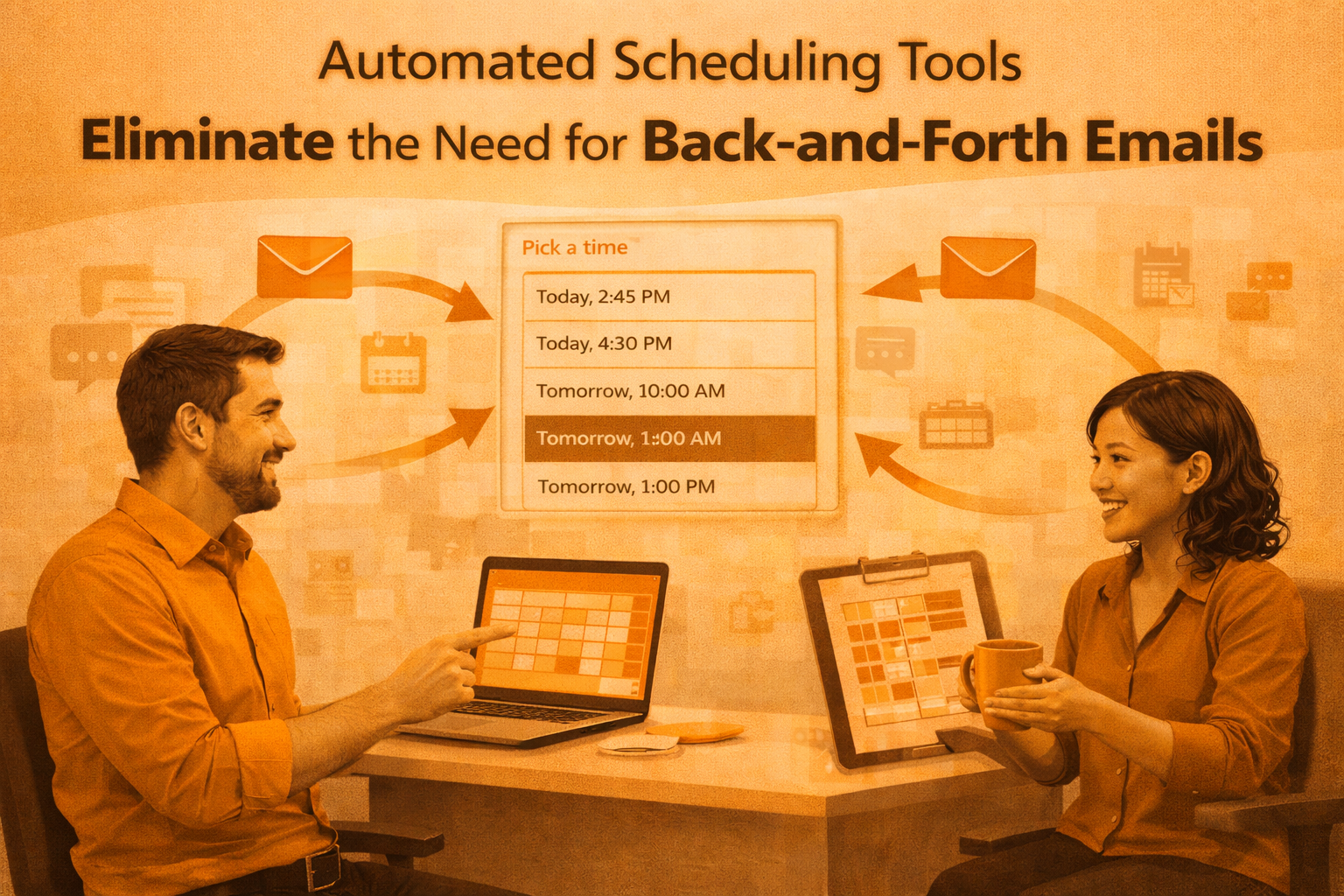
Automated scheduling allows candidates to choose their own interview slots directly from a real-time calendar of available windows. Moving away from manual coordination offers several operational advantages, including faster time-to-hire and reduced administrative overhead.
Recruiters, who previously spent 45 minutes or more coordinating a single interview, can now complete the process in under 10 minutes. Large-scale organizations like Southwest Airlines have saved over $3,000 recruiter hours by automating interview bookings.
Speed is a differentiator in a competitive job market. In a survey of 1,500 U.S. respondents, 70% of candidates now expect the entire recruitment journey to conclude within a 3-week window.
Automated systems send confirmations and reminders via email or SMS. That provides candidates with clear instructions and reduces the likelihood of missed appointments.
Technology as a Friendly Partner, Not a Replacement
At its core, recruitment is about people. Technology isn’t here to replace human connection but to support it.
Adopting the right technological solution can help you hire faster without sacrificing quality, improve candidate experience, and reduce recruiter burnout. In short, recruitment becomes less reactive and more strategic with the right tech tools.
So, if your current hiring volume feels unmanageable, it’s an indication that your existing workflows have outgrown their manual limitations. Choose tools that fit your needs and watch your recruitment process become more organized, efficient, and human-centered.
Author bio: Agwalogu Bob holds a Bachelor’s degree in Economics and has been crafting high-performance content since 2017. He has worked with some of the world’s leading content agencies in the UK, Ukraine, India, and Nigeria, producing engaging copy in the SaaS, finance, tech, health and fitness, and lifestyle niches.