
Behavioral competency evaluations and skills testing are two essential tools in hiring. They serve different purposes: one assesses how candidates work and interact, while the other measures their technical abilities. Combining both methods ensures better hiring decisions by evaluating both long-term potential and immediate job readiness.
Key Points:
- Behavioral Competency Evaluation: Focuses on soft skills like communication, leadership, and teamwork. Uses tools like STAR interviews, situational judgment tests, and psychometric assessments.
- Skills Testing: Verifies technical expertise through coding challenges, writing samples, and other job-specific tasks.
- Why Both Matter: Skills testing confirms technical abilities, while behavioral evaluations assess fit and growth potential. Together, they reduce hiring risks and improve outcomes.
Quick Comparison:
| Criteria | Behavioral Competency Evaluation | Skills Testing |
|---|---|---|
| Focus | Soft skills, work style | Technical abilities, job readiness |
| Methods | STAR interviews, situational tests | Coding challenges, work samples |
| Insights | Long-term fit, interpersonal skills | Immediate job performance |
| Data Type | Qualitative | Objective |
Using both approaches together provides a balanced view of candidates, ensuring they meet both role-specific requirements and team dynamics.
Understanding Behavioral Competency Evaluation
Definition and Core Principles
Behavioral competency evaluation focuses on assessing how candidates perform in workplace settings, their personality traits, and their ability to adapt. It helps determine how well they align with the company’s values and their potential for growth. Unlike evaluations that focus solely on technical skills, this approach digs deeper into how individuals behave and learn in professional environments.
“Behavioral competency refers to the specific set of behaviors and skills that an individual exhibits in a professional setting… this approach goes beyond evaluating technical skills and focuses on how a candidate might fit within the company culture.” – Siddhartha Gunti, Adaface
At its heart, this evaluation method relies on the idea that past behavior is a strong predictor of future performance. For instance, if someone has consistently shown strong problem-solving abilities in previous roles, they’re likely to bring those same skills to a new job. This makes it especially effective for assessing soft skills like teamwork, communication, adaptability, and emotional intelligence – qualities that don’t always stand out on a resume. These principles form the foundation for the methods discussed next.
Common Techniques for Behavioral Competency Evaluation
Recruiters use a variety of tools and methods to evaluate behavioral competencies effectively. One commonly used approach is structured interviews, where standardized behavioral questions ensure fairness and consistency across all candidates. The STAR technique is a popular format here: candidates share a past Situation, the Task they faced, the Action they took, and the Result they achieved. This method provides concrete examples of their abilities.
Situational Judgment Tests (SJTs) are another tool, presenting candidates with realistic workplace scenarios. These tests assess how they would handle challenges, such as resolving conflicts or managing difficult customers. Role-playing exercises take this a step further by allowing recruiters to observe candidates’ interpersonal and problem-solving skills in action. Similarly, one-way video interviews let candidates record responses to predefined behavioral questions, enabling evaluators to review them later.
Additional techniques include psychometric tools and adjective indexes, which offer insights into traits like emotional intelligence and leadership potential. The effectiveness of these methods lies in tailoring them to the specific competencies required for the role, rather than relying on generic assessments.
Benefits and Challenges of Behavioral Competency Evaluation
One of the biggest advantages of behavioral competency evaluation is its ability to predict long-term performance and ensure candidates align with the company’s culture and values. By focusing on behaviors and soft skills, this approach often uncovers high-potential candidates who might lack traditional experience but bring other valuable qualities to the table. It also helps reduce turnover by identifying individuals who are a strong fit for the team and work environment. Additionally, structured assessments can minimize unconscious bias, making the hiring process more merit-based.
However, there are challenges. For one, subjectivity can creep in – gut feelings or first impressions may skew results if the process isn’t carefully structured. Designing assessments that match the specific needs of a role can be time-intensive, and interviewers require proper training to recognize subtle behaviors and avoid bias. Another issue is that candidates often give generic answers unless prompted with specific, well-crafted questions, which can limit the accuracy of the evaluation. Recognizing these strengths and challenges is crucial when comparing this approach with other methods, such as skills testing.
sbb-itb-e5b9d13
Understanding Skills Testing
Definition and Core Features
Skills testing evaluates a candidate’s practical abilities to determine their suitability for a specific job. Unlike behavioral assessments – which focus on personality traits and work styles – skills assessments measure what a candidate can actually do. This involves applying their knowledge to achieve specific results. These tests rely on objective, measurable data, often through hands-on tasks or standardized evaluations, to provide a clear picture of a candidate’s capabilities.
Examples of Skills Testing
Skills tests vary widely depending on the role. For instance:
- Coding challenges for software developers
- Writing samples for content creators
- Technical problem-solving exercises for engineers
Standardized assessments, like the Competencies (TNA) and the Acumen Capacity Index (ACI), offer structured evaluations of personal skills and decision-making abilities. Additionally, tools like DISC and EISA focus on response strategies and emotional intelligence. Many of these tests are integrated into Applicant Tracking Systems or cloud-based platforms, streamlining the hiring process. They also serve as a “job preview”, helping candidates gauge whether the role aligns with their expectations and skills.
In addition to traditional skills testing, some organizations use an online certification platform by Assess to offer a structured and accessible way to verify technical skills. These platforms provide a standardized method for candidates to demonstrate their expertise in various fields, with features like adaptive testing that adjust the difficulty based on performance. By using such tools, employers can streamline the certification process and ensure consistency across assessments, making it easier to evaluate technical proficiency in a more efficient manner.
Benefits and Challenges of Skills Testing
One major advantage of skills testing is its objectivity. These evaluations provide clear, data-based insights into whether a candidate meets the job’s requirements. They help identify unqualified applicants and highlight areas where training may be needed. By focusing on verified skills, organizations can make better hiring decisions, which could lead to lower turnover rates and higher employee satisfaction.
“Formal education alone is not always the best indicator of one’s competency.” – Manatal
However, skills testing has its drawbacks. While it excels at assessing technical abilities, it often falls short in evaluating softer skills like teamwork, adaptability, or emotional intelligence. Behavioral assessments are better suited for these traits. As Spark Hire points out:
“Skill assessments grade a candidate’s ability to perform specific tasks – like coding, writing, or operating machinery. While… behavioral assessments focus on predicting how a candidate will approach their work.” – Spark Hire
Another challenge is test anxiety. Some candidates may struggle under timed conditions, which could result in lower scores and potentially exclude individuals who might otherwise excel in a real-world setting.
Technical skills tests vs. behavioral assessments
Behavioral Competency Evaluation vs. Skills Testing: Main Differences
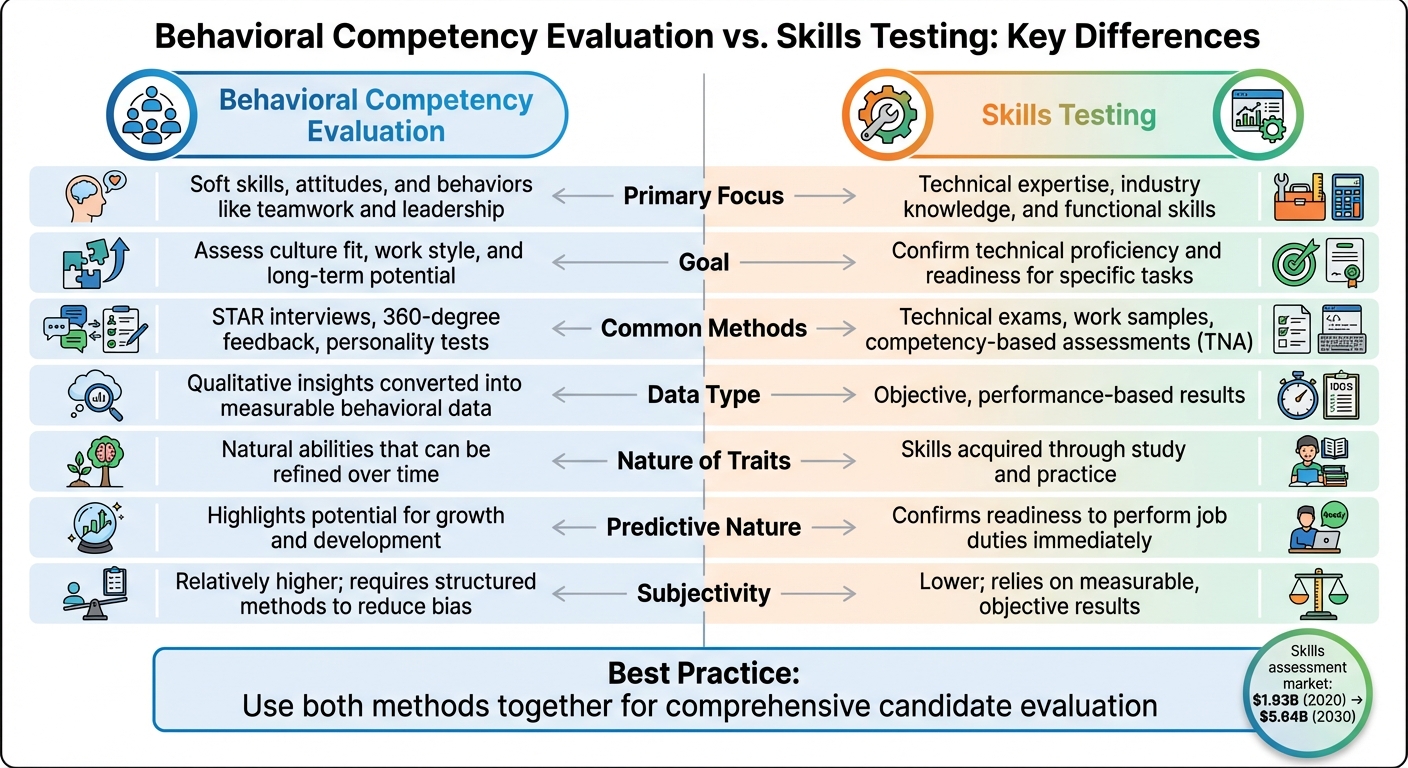
Behavioral Competency Evaluation vs Skills Testing: Key Differences Comparison
Comparison Criteria and Overview
Behavioral competency evaluations and skills tests each play unique roles in the hiring process. While one focuses on understanding a candidate’s work style and potential for growth, the other zeroes in on verifying their technical know-how for immediate job performance. The differences lie in what they assess, how they forecast success, and the type of insights they provide.
Behavioral assessments delve into traits like teamwork, leadership, and flexibility – qualities that shape how someone works and adapts over time. On the other hand, skills testing is all about measuring technical expertise and job-specific knowledge using clear, performance-based metrics. Think of it this way: behavioral evaluations help predict long-term success and alignment with company values, whereas skills tests confirm whether someone can hit the ground running.
The numbers back up the importance of these tools. In 2020, the global skills assessment market was valued at $1.93 billion, and it’s expected to grow to $5.64 billion by 2030. This growth underscores how integral both methods have become in modern hiring practices.
Detailed Comparison Table
Here’s a side-by-side breakdown of the key contrasts between these two approaches:
| Criteria | Behavioral Competency Evaluation | Skills Testing |
|---|---|---|
| Primary Focus | Soft skills, attitudes, and behaviors like teamwork and leadership | Technical expertise, industry knowledge, and functional skills |
| Goal | Assess culture fit, work style, and long-term potential | Confirm technical proficiency and readiness for specific tasks |
| Common Methods | STAR interviews, 360-degree feedback, personality tests | Technical exams, work samples, and competency-based assessments (TNA) |
| Data Type | Qualitative insights converted into measurable behavioral data | Objective, performance-based results |
| Nature of Traits | Focuses on natural abilities that can be refined over time | Focuses on skills acquired through study and practice |
| Predictive Nature | Highlights potential for growth and development | Confirms readiness to perform job duties immediately |
| Subjectivity | Relatively higher; requires structured methods to reduce bias | Lower; relies on measurable, objective results |
These distinctions make it easier to decide which method aligns best with your hiring objectives, whether you’re looking for long-term potential or immediate job readiness.
When to Use Behavioral Competency Evaluation or Skills Testing
Choosing the Right Method for Your Recruitment Goals
Deciding between behavioral evaluations and skills testing depends largely on your hiring objectives. If your priority is to confirm technical expertise, skills testing is the way to go. It’s a practical way to ensure candidates can perform specific tasks from the start. For example, a coding test or a financial analysis exercise quickly distinguishes those with real proficiency from those who simply claim to have it. This aligns with the earlier distinction of assessing “what” a candidate can do versus “how” they approach their work.
On the other hand, behavioral evaluations are better suited for understanding a candidate’s long-term potential, alignment with company culture, and leadership capabilities. Research indicates that behavioral competencies often serve as stronger predictors of future job performance and adaptability than technical skills alone. For roles where work style, interpersonal dynamics, or leadership qualities are just as important as technical know-how, behavioral assessments offer insights that skills tests cannot.
“By focusing on behavioral competencies, organizations can improve their hiring processes, ensuring they select candidates who not only have the right skills but also the right mindset.” – Siddhartha Gunti, Co-founder, Adaface
In many cases, a combination of both methods works best. Skills testing can confirm the “what” – whether candidates have the technical expertise they claim – while behavioral evaluations uncover the “how” – their work style, adaptability, and growth potential. This dual approach reduces the risk of hiring someone who is technically capable but a poor cultural fit, or someone who aligns with your culture but lacks the necessary skills. Tailoring the method to the role ensures you make the best hiring decision.
Examples of Job Roles and Suitable Assessment Methods
Different roles call for different assessment priorities. Here’s how the two methods apply:
- Technical and specialized roles like Software Developers, Accountants, or Executive Assistants are best evaluated through skills testing. For instance, a coding test for a Software Developer can reveal their ability to write clean, functional code in languages like Java or Python. Similarly, an Accountant might be tested on financial analysis through practical exercises, ensuring their competency goes beyond theoretical knowledge.
- Leadership and interpersonal roles are better suited for behavioral competency evaluations. Sales Managers, for example, need to demonstrate decision-making abilities and a track record of overcoming challenges. Project Leaders should show they can motivate teams and resolve conflicts – qualities that are most effectively assessed through structured STAR interviews, where candidates explain specific Situations, Tasks, Actions, and Results. For Social Media Teams, collaboration and adaptability are critical, and these traits are better revealed through behavioral assessments than technical tests.
- Blended roles often require both methods. For example, an Engineering Manager must demonstrate technical credibility through skills testing while also undergoing behavioral evaluation to assess their leadership, communication, and team-building abilities.
Integrating Both Methods in Recruitment with Skillfuel Tools
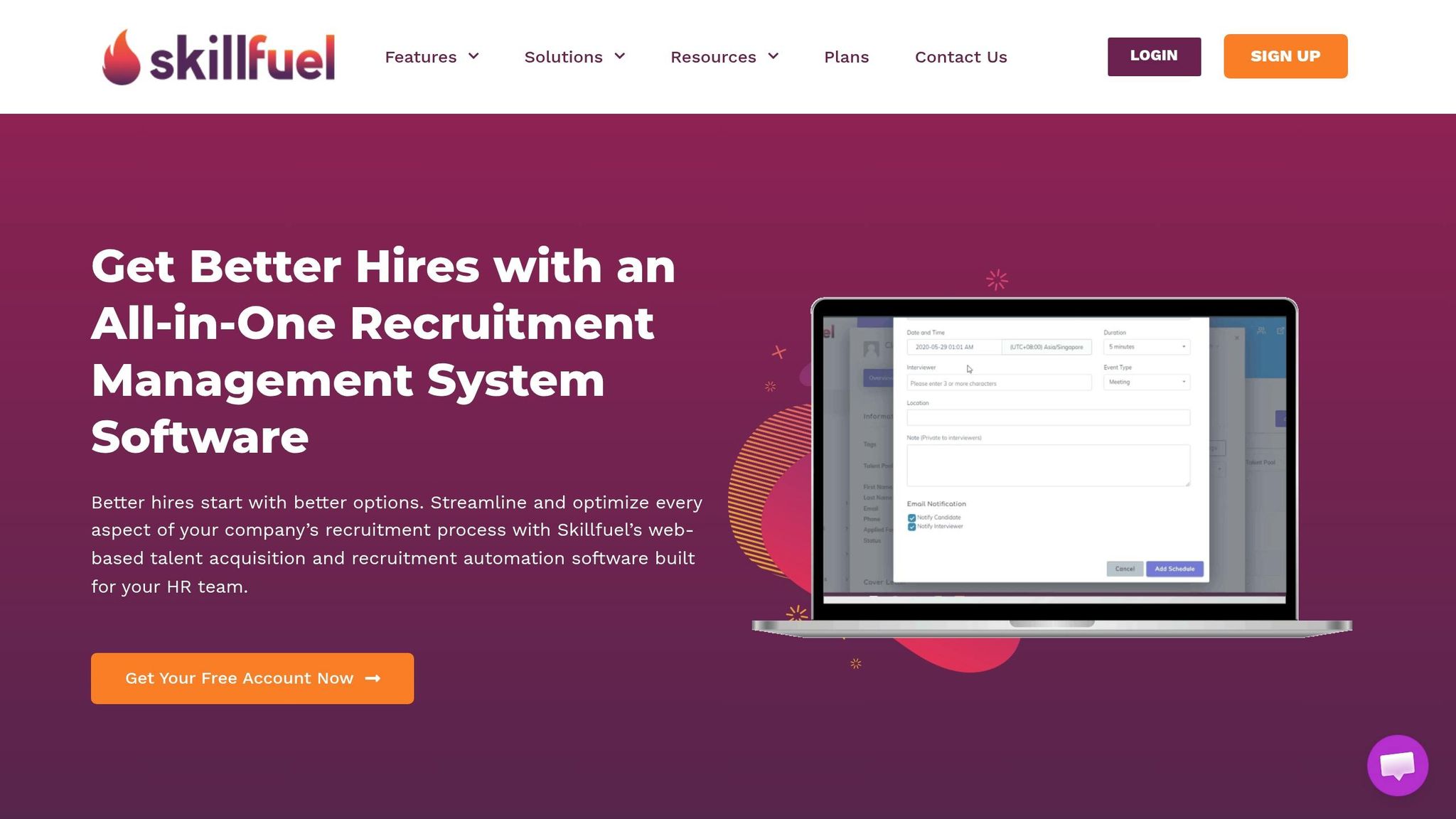
Using Skillfuel to Manage Assessments
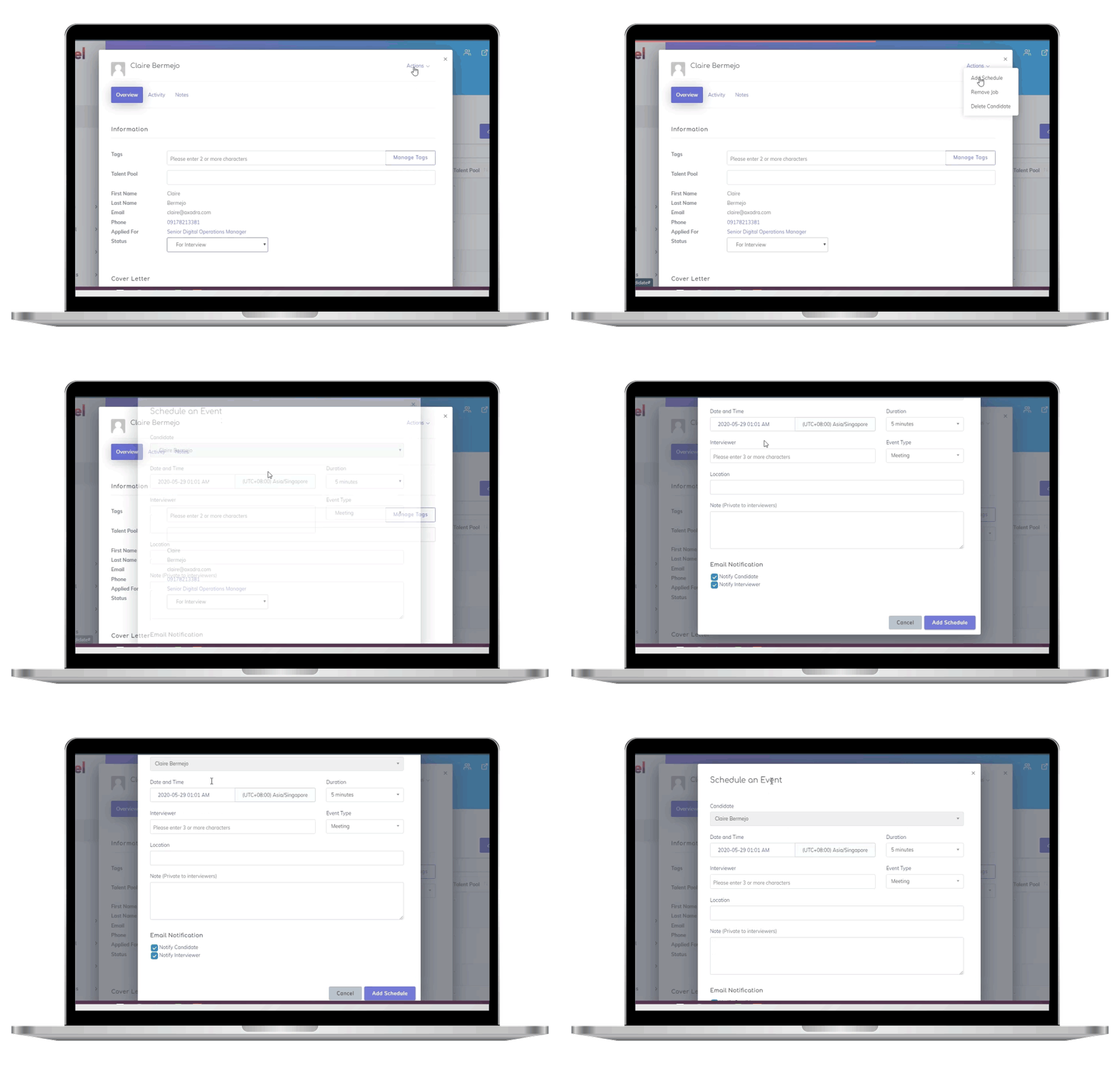
Skillfuel makes it easy to combine behavioral and skills assessments into one streamlined recruitment process. Instead of juggling multiple systems or endless spreadsheets, Skillfuel’s centralized applicant tracking system keeps everything in one place. Its drag-and-drop Kanban boards give you a clear, visual overview of your pipeline. You can quickly see which candidates are scheduled for skills tests, who’s ready for behavioral interviews, and where any bottlenecks might be.
Moving candidates between these assessment stages is simple. For example, once a candidate aces their skills test, you can use the interview scheduler to set up behavioral interviews. Prep notes – including STAR-method questions tailored to the role – are already attached, saving time and ensuring consistency. Features like calendar syncing and automated communication keep the process running smoothly while keeping candidates informed every step of the way.
The numbers back up the need for a system like this. A reported 74% of employers face challenges in filling open positions, while 82% say data heavily influences their hiring decisions. Skillfuel addresses these challenges with tools like customizable dashboards and real-time collaboration features. These make it easier to spot issues, like candidates excelling in skills tests but stalling during behavioral interviews, and adjust your approach as needed.
Improving Candidate Experience with Skillfuel
A well-organized hiring process isn’t just good for your team – it’s a game-changer for candidates too. Skillfuel helps create a transparent and stress-free experience by offering customizable career pages. These pages clearly outline the process, letting candidates know they’ll go through both skills and behavioral assessments. This upfront clarity helps reduce uncertainty and allows candidates to prepare confidently.
Automated messaging ensures consistent communication, so candidates aren’t left in the dark as they move from one stage to the next. By simplifying the workflow for your team, Skillfuel also improves how candidates view your company. For smaller teams, there’s even a free plan that covers basic recruitment needs, with scalable pricing options as your hiring volume grows.
Conclusion
Key Takeaways
Behavioral competency evaluations and skills testing each play a crucial role in the hiring process. While skills testing focuses on verifying technical expertise and validating resume claims, behavioral evaluations dig deeper into a candidate’s communication style, adaptability, and potential to integrate well with the team. Together, they provide a well-rounded view of a candidate – ensuring they meet immediate job requirements and align with the team’s long-term goals.
Using both methods together not only confirms technical proficiency but also helps build stronger, more cohesive teams. This approach reduces turnover, enhances team dynamics, and ultimately leads to better hiring outcomes.
Data supports the importance of a combined, data-driven hiring process. Pre-hire evaluations offer measurable insights that help hiring teams make confident decisions while avoiding costly mistakes.
Skillfuel simplifies this process by integrating both skills testing and behavioral evaluations into a single platform. It allows you to manage everything from tracking skills assessments to scheduling interviews, keeping the entire process organized and transparent. Your team gets the insights needed to hire smarter, and candidates enjoy a seamless, professional experience.
FAQs
Which roles should use behavioral evaluation vs. skills tests?
Behavioral evaluations work best for positions that emphasize traits like personality, work style, cognitive abilities, and emotional intelligence. These are especially useful for leadership roles, client-facing jobs, or team-focused positions. They can highlight how well a candidate aligns with the company’s values and how effectively they interact with others.
On the other hand, skills tests are ideal for roles that demand specific technical expertise. Think IT, engineering, or specialized trades – fields where confirming technical proficiency and task-specific knowledge is a must.
How can we reduce bias in behavioral interviews?
To make behavioral interviews fairer and less biased, involve multiple interviewers. This approach brings a variety of perspectives to the table, reducing the influence of any single person’s biases. Using structured interviews with standardized questions and clear scoring systems also helps maintain consistency and fairness throughout the process.
It’s equally important to train interviewers to recognize and address their own biases. By setting explicit evaluation criteria, decisions can be based on objective factors rather than unconscious assumptions. These strategies create a more balanced hiring process and encourage diversity in the workplace.
In what order should we run skills tests and behavioral interviews?
Starting with skills tests is a smart move. These tests provide an objective way to evaluate a candidate’s technical abilities, ensuring they meet the job’s core requirements right from the start. This step helps filter out those who might not have the necessary skills for the role.
Once candidates pass the skills test, you can move on to behavioral interviews. This phase focuses on evaluating their soft skills, personality traits, and how well they align with the company’s values and team dynamics.
By following this order, you save valuable time and effort. You only dive deeper into personality and cultural alignment with candidates who have already proven they possess the technical expertise needed for the position.