
Independent recruiters shopping for applicant-tracking software in 2026 face monthly subscription prices ranging from €19 to €400 (roughly $20 to $435 USD), with basic setups typically landing around €49 monthly, according to selection guidance published August 8 by French mobility publication Mobilicites. The guide targets freelance recruiters managing multiple client pipelines simultaneously while facing client demands for faster hires and candidate expectations for professional application experiences.
TL;DR: Mobilicites published pricing and feature guidance August 8 for solo recruiters evaluating ATS platforms, identifying resume parsing, multi-client pipeline separation, and LinkedIn integration as critical capabilities in a market where monthly costs range from €19 to over €400.
Core ATS Functions Positioned as Table Stakes for Independents
The guidance frames applicant-tracking systems as command-center software that consolidates job posting, application collection, candidate tracking, stage progression, and client reporting in a single platform. For independent recruiters juggling multiple roles and timelines across different clients, the publication positions ATS adoption as “table stakes” rather than optional technology in 2026.
The primary value proposition centers on time recovery. By automating repetitive tasks such as resume organization and candidate activity logging, the systems free recruiters to focus on sourcing, screening, and closing activities, according to the guide.
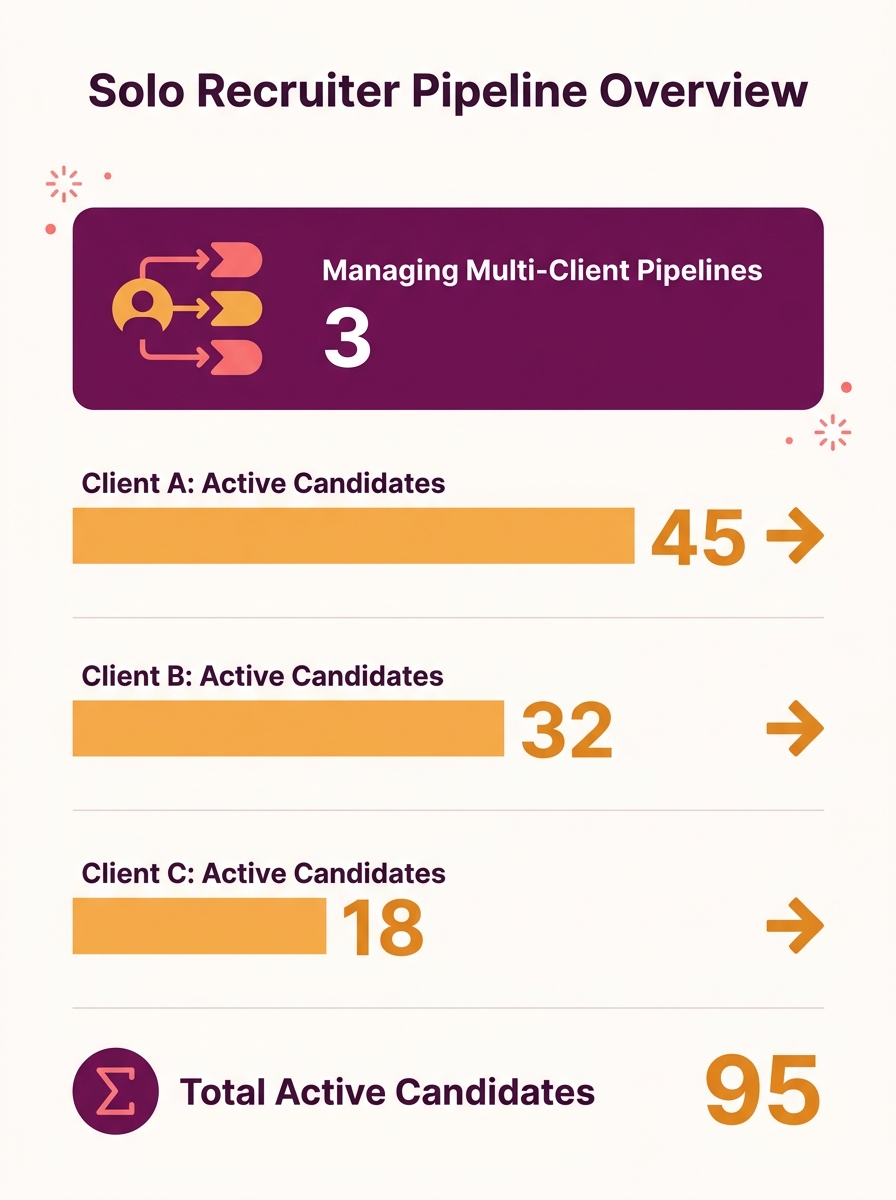
Independent recruiters evaluating platforms should prioritize tools that separate pipelines by client, customize workflow stages for each search, and enable collaboration without creating system complexity, the guidance states. Platforms that cannot handle multi-client work cleanly “are not built for your reality,” the publication notes.
Resume Parsing and Advanced Filtering Identified as Productivity Levers
The August 8 guidance singles out resume parsing as one of the highest-impact productivity features for solo recruiters. The technology automatically extracts key details from resumes—skills, employment history, contact information—and converts them into searchable database fields, reducing manual data entry and accelerating shortlist creation.
Advanced filtering capabilities pair with parsing to help recruiters managing high application volumes narrow candidate pools based on role-specific criteria rather than recency bias or informal prioritization, according to the guide. Teams evaluating ATS selection frameworks for non-dedicated recruiting scenarios have highlighted similar filtering requirements.
For recruiters working closely with hiring managers or client stakeholders, collaboration tools that enable candidate slate sharing, feedback collection, and decision tracking in a unified interface reduce email back-and-forth that extends time-to-hire, the publication reports.
Integration Requirements Center on LinkedIn and Multi-Board Posting
Native integrations with LinkedIn and other sourcing channels emerged as non-negotiable requirements in the guidance. Platforms lacking reliable connections to LinkedIn and job boards force recruiters into manual profile copying and data duplication across systems, creating friction that undermines the automation value proposition.
Multi-posting features that publish job listings across multiple boards simultaneously save time, but the guide emphasizes that the best platforms also surface channel-level performance data showing which boards actually deliver qualified candidates. That visibility allows recruiters to cut spending on low-yield sources and double investment in productive channels, according to the publication.
Recruiters exploring free recruitment software options should verify integration depth during trial periods, as advertised partnerships often deliver limited functionality compared to native builds.
Pricing Transparency Issues and Trial-Based Evaluation Approach
While the €19 to €400 monthly range establishes rough market boundaries, the guidance cautions that advertised subscription prices rarely reflect total cost. Onboarding fees, training charges, premium support tiers, and feature add-ons frequently surface after initial commitment, inflating the effective monthly spend beyond sticker pricing.
The publication recommends that solo recruiters use free trial periods—commonly structured as 30-day access windows—to test features that directly affect daily workflow execution: resume parsing accuracy, job distribution reach, pipeline management usability, and sourcing integration reliability.
During trial periods, recruiters should run live searches through the system and involve any collaborators (contract sourcers, scheduling coordinators, client contacts) early to gather candid feedback on interface usability before signing annual contracts, according to the guidance.
When migrating from existing systems, the publication advises treating the rollout as a structured project: export candidate and client data in CSV or Excel format, import a small test batch first, and stress-test workflows before full migration. Rushed implementations risk workflow disruption that damages recruiter responsiveness and client relationships, the guide states.
Teams Implications
While the August 8 guidance targets independent recruiters, in-house talent acquisition teams operating with lean headcount face parallel platform selection pressures—especially when dedicated recruiting specialists are unavailable and hiring responsibility distributes across departmental managers. The identified feature set translates directly: multi-requisition pipeline separation, resume parsing to reduce screening burden, and collaboration tools that keep hiring managers engaged without overwhelming email threads.
The pricing data also establishes useful baseline expectations for small HR teams evaluating recruitment software pricing at organizations where recruiting volume doesn’t justify enterprise ATS contracts. A €49 monthly baseline (approximately $55 USD) positions basic ATS capabilities as accessible even for teams managing modest hiring volumes, though feature expansion toward advanced analytics, API integrations, or compliance reporting will push costs toward the upper range.
For teams currently managing requisitions through spreadsheets or shared inboxes, the automation emphasis—particularly around resume parsing and candidate stage tracking—directly addresses the manual coordination work that creates bottlenecks when hiring accelerates or headcount freezes lift unexpectedly.