
AI tools are eliminating routine screening tasks and freeing recruiters to focus on relationship-building and strategic decision-making rather than replacing their roles entirely, according to a recruitment tech CEO whose clients report saving hundreds of hours per hire.
TL;DR: Ritu Mohanka, CEO of VONQ, published an August 6 Forbes Council analysis arguing AI is raising performance expectations for recruiters rather than eliminating positions, citing customer examples including one staffing firm that screened 300,000 applications and saved 400 recruiting hours—equivalent to 10 working weeks—to fill a single role.
Ritu Mohanka, CEO of VONQ, published the analysis August 6 in response to recent executive predictions about AI-driven job displacement in recruiting. The article cites David Blaxham, CEO of GCS Recruitment, who predicted in a 2025 interview that 80% of recruiters will be replaced by AI, along with earlier claims from Microsoft AI CEO Mustafa Suleyman that AI would automate most computer-based jobs within 18 months and OpenAI CEO Sam Altman’s projection that AI would eliminate half of all entry-level white-collar jobs within five years.
Both Suleyman and Altman have since walked back their predictions, according to Mohanka’s account, explaining that AI replaces tasks within jobs rather than entire positions. VONQ works with more than 350 global enterprises and staffing agencies on recruitment technology implementation.
Automation Shifting Work From Manual Screening to Candidate Assessment
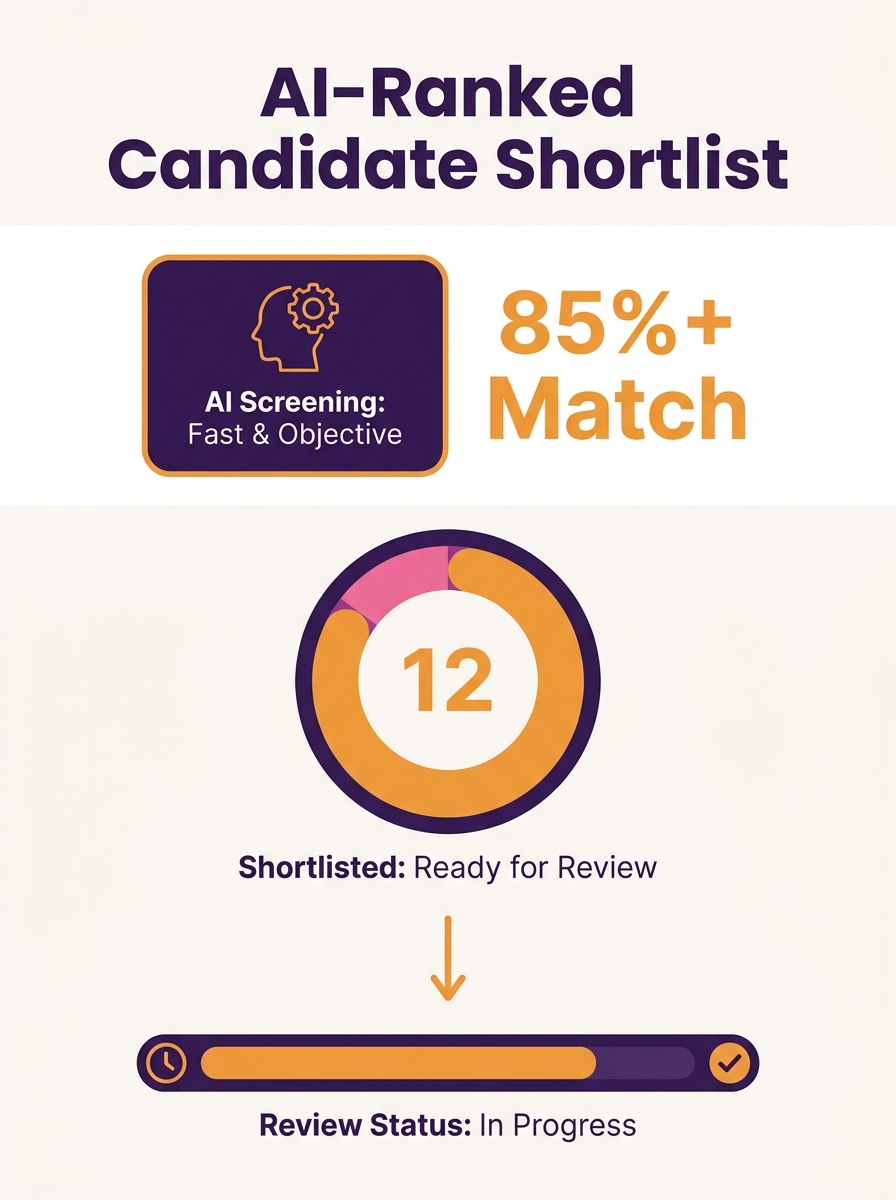
AI implementation is moving recruiter workload from résumé sorting to performance prediction and candidate evaluation, according to customer examples in the analysis. A large technology company using VONQ’s platform in high-volume markets such as India reduced time spent on application screening by implementing AI-assisted candidate ranking, allowing recruiters to skip directly to ranked shortlists and focus time on real-world assessments, Mohanka wrote.
The shift addresses a resource allocation problem where highly paid recruiters spend the majority of their time on administrative sorting rather than exercising expert judgment, according to direct customer feedback cited in the article. Corporate recruiters surveyed earlier this year ranked communication and problem-solving skills above technical AI capabilities when evaluating candidates, suggesting human assessment remains central to hiring decisions even as automation handles initial screening.
A global staffing firm working with VONQ screened more than 300,000 applications using AI tools, freeing up 400 recruiting hours—the equivalent of 10 working weeks—to fill a single role, according to the analysis. The technology also enables recruiters at large staffing firms to maintain candidate engagement outside business hours without requiring weekend or evening work, with AI agents handling initial screening and delivering warm candidate lists by Monday morning.
Language Support and Geographic Barriers Removed
AI-powered screening tools are expanding the candidate pools available to recruiters by removing language and timing constraints that previously eliminated qualified applicants, according to deployment examples in Mohanka’s article. A global staffing agency using VONQ added screening support for Arabic, Ukrainian, and German in addition to English, allowing the firm to evaluate candidates who speak languages its recruiters don’t speak.
The language expansion shifts which candidates reach the final interview stage from an “accident of geography or timing” to best-fit assessment based on role requirements, Mohanka wrote. The change particularly benefits single parents who can only interview outside business hours and immigrants with job skills but limited language proficiency to communicate competency in the recruiter’s language.
A European grocery chain automated routine screening calls, freeing recruiters to spend more time connecting with qualified applicants and making final hiring decisions, according to another customer example. The process reduced mechanical, rushed assessments while creating fairer candidate evaluations, Mohanka wrote.
Organizations adopting recruitment software designed for growing teams face implementation decisions about which tasks to automate versus which to retain human oversight. DoorLoop implemented human-review gates at every AI screening stage to address bias risk, illustrating the range of approaches to balancing automation with recruiter judgment.
What This Means for In-House Recruiters
The examples presented position AI adoption as a process redesign exercise rather than a simple technology addition. Mohanka’s analysis argues that recruiters succeeding with AI are “rebuilding their entire hiring model” around the tools rather than bolting new technology onto existing workflows. The distinction matters for talent acquisition teams evaluating ATS and automation software, where implementation approach appears to determine whether AI delivers time savings or simply adds new administrative overhead.
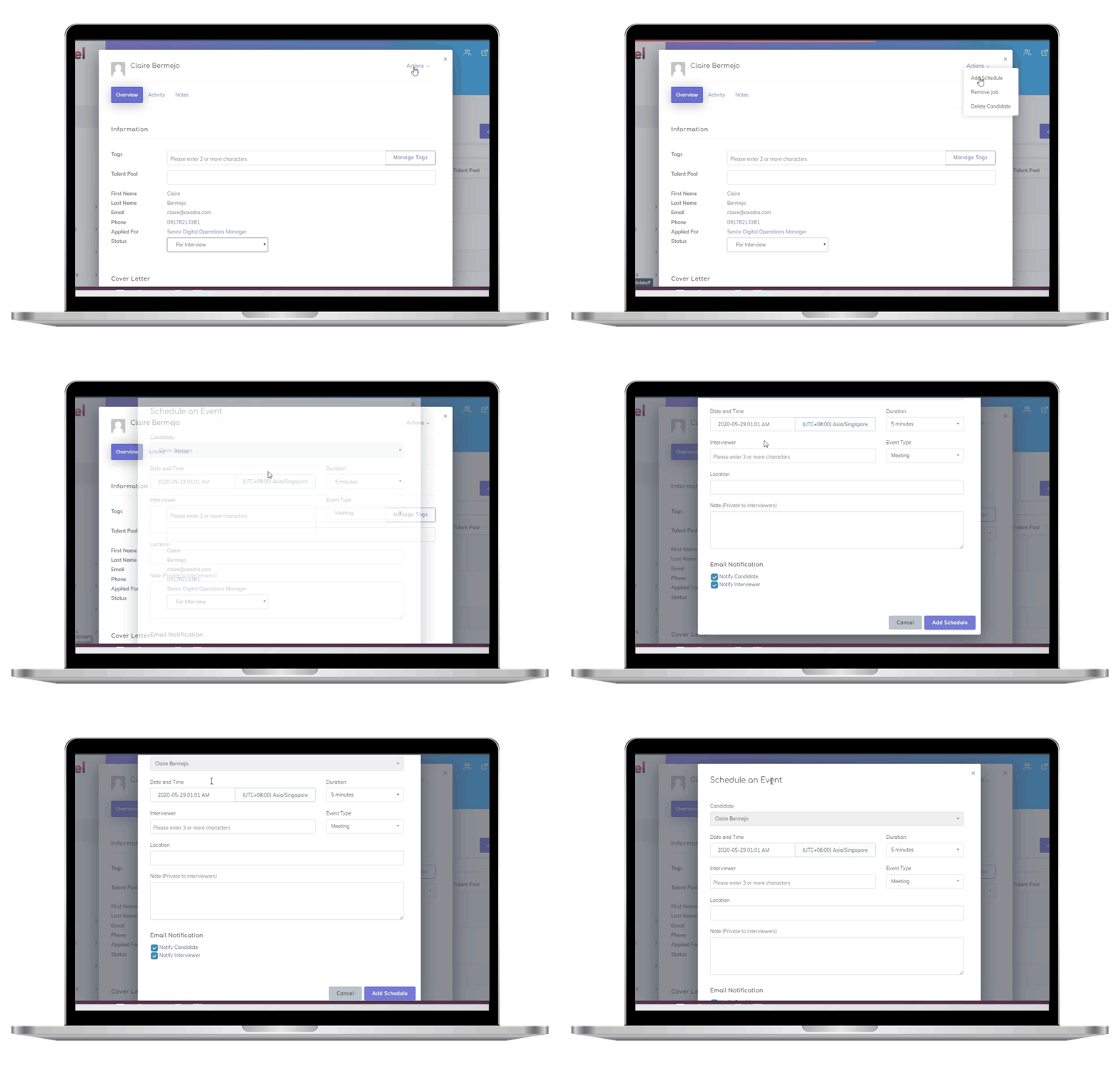
The 400-hour savings example—10 working weeks per role—suggests meaningful capacity gains are possible when automation handles high-volume screening. For small and mid-sized HR teams without dedicated recruiters, those time savings could free staff to run automated interview scheduling for qualified candidates rather than spending weeks manually coordinating calendars after already investing weeks in manual résumé review.
However, governance and data quality challenges may block scaling regardless of AI capability, according to separate reporting from three CHROs earlier this year. In-house teams should evaluate whether their existing job description libraries, candidate data structures, and approval workflows can support AI-driven ranking before expecting the efficiency gains described in Mohanka’s customer examples.