
Communication, problem-solving, and adaptability lead recruiter wish lists despite widespread AI adoption across hiring functions, according to a Graduate Management Admission Council survey of 600 corporate recruiters published July 10. Data analysis skills jumped from 10th to fourth place year-over-year, while AI skills ranked 14th—up from 16th in 2025 but far behind distinctly human capabilities, HR Executive reported.
TL;DR: Six hundred corporate recruiters surveyed by GMAC ranked communication, problem-solving, and adaptability as 2026’s most critical skills, placing AI proficiency at 14th despite automation investments reshaping talent acquisition workflows across industries.
Current Hiring Priorities Emphasize Human-Centered Capabilities
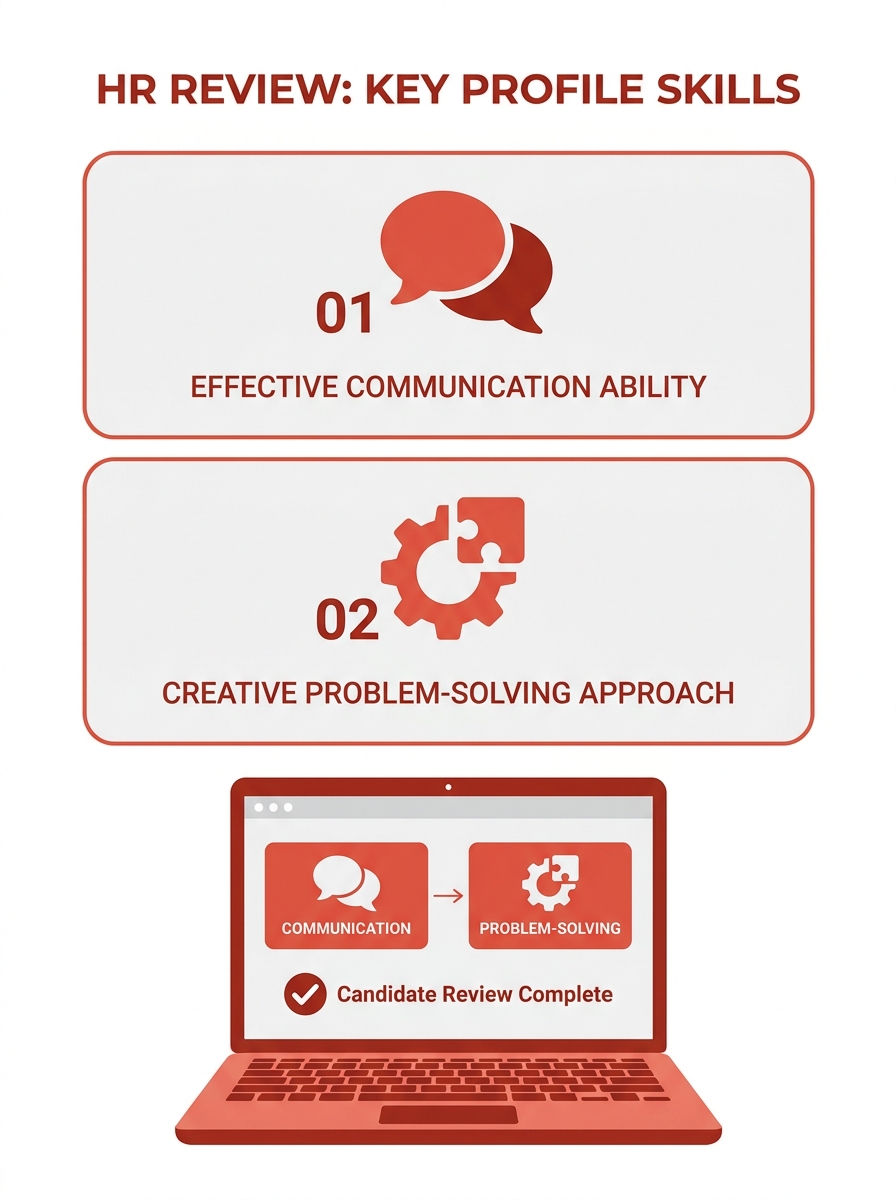
The survey identified five skills recruiters consider most important in 2026: communication, problem-solving, adaptability, data analysis and interpretation, and interpersonal teamwork skills. Technology and IT skills placed eighth, moving up from 11th position in 2025.
Data analysis saw the sharpest climb, rising six positions to claim the fourth slot. The jump reflects growing demand for employees who can interpret automated outputs and translate algorithmic insights into business decisions, according to the GMAC findings.
AI-specific skills placed 14th this year. The ranking suggests recruiters view AI fluency as a supporting competency rather than a foundational requirement, even as HR professionals increasingly prioritize AI-driven recruitment automation for screening and coordination tasks.
Future-Skills Forecast Shows Technology Capabilities Rising
When recruiters projected the most critical capabilities for 2031, technology-focused skills dominated the list. Skills in using AI tools topped the forecast, followed by strategic thinking, technology and IT skills, decision-making, and problem-solving.
The shift between current priorities and five-year projections highlights a transition period in which organizations invest in automation while maintaining emphasis on uniquely human capabilities their systems cannot yet replicate. Strategic thinking appeared in the 2031 forecast but not in the 2026 top five, indicating recruiters expect AI tools to handle routine analysis while employees focus on higher-order planning.
Problem-solving appeared in both current and future rankings, suggesting recruiters view the skill as durable across technology cycles.
HR Leaders Frame Automation as Complement to Human Judgment
Sara Chapman, CHRO at infrastructure engineering services firm Ultieg, told HR Executive that her organization is reexamining work to emphasize skills like critical thinking and client strategy—capabilities that align with the survey’s top-ranked human skills. “Where can automation or AI help our employees focus on the work they’re really great at—critical thinking, using their experience to connect the dots, strategize with clients?” Chapman said, describing questions Ultieg HR considers when deploying AI.
Chapman described targeted AI upskilling initiatives paired with emphasis on human judgment as a sustainable long-term strategy. The approach mirrors broader industry patterns in which companies implement human-review gates at AI screening stages to maintain quality while automating volume tasks.
A 2025 Workday report found 83% of employees surveyed believe AI integration will heighten the need for capabilities only humans can exhibit. “AI’s greatest application is in making companies more human—returning their focus to the creativity, empathy, ethical judgment and symbiotic relationships that make an organization powerful and nimble,” Workday researchers wrote in the report.
Teams Implications
Recruitment teams deploying ATS automation and AI screening tools face a staffing paradox: the same systems that handle volume processing create sharper demand for human skills in remaining roles. The GMAC survey confirms that emphasis belongs in job descriptions and interview rubrics today, not in five-year plans.
Data analysis climbing to fourth place directly reflects recruiter frustration with team members who cannot interpret automated outputs or challenge algorithmic recommendations. Teams should audit current role descriptions to confirm they explicitly call out communication, adaptability, and problem-solving—not just list AI tools candidates must operate. Hiring for those human capabilities now positions teams to use automation effectively rather than manage around its limitations.
The gap between 2026 and 2031 forecasts suggests a window for dual investment: upskilling current teams on AI tool proficiency while recruiting for judgment-intensive skills that will remain scarce as automation scales. Organizations that treat the two skill sets as complementary rather than competing will staff ahead of competitors still choosing between human-centered hiring and technology adoption.