
Profit margins in most sectors outside technology show no sign of rising from AI investments, and many HR-heavy industries must rebuild workforce operations before realizing returns, according to a June 30 analysis by Torsten Slok, chief economist at Apollo Global Management, published by HR Executive.
TL;DR: An Apollo economist warns that AI ROI in HR and most industries will take years, not months, as companies face deep process re-engineering requirements before productivity gains appear.
The analysis arrives as recruitment leaders face mounting pressure to justify automation budgets while IBM research shows only 25% of AI initiatives deliver expected returns and just 16% have scaled enterprise-wide.
Why HR Technology Adoption Lags Software Companies
Software and tech firms providing enterprise recruitment software can integrate AI into products immediately, making them an exception to the broader economic pattern, Slok wrote. Most sectors move slower because they operate on expensive physical assets and face government oversight that requires extensive process changes before AI delivers measurable outcomes.
Companies in healthcare, banking, insurance, energy, manufacturing, and education must first retrain employees and redesign workflows before automation tools produce returns, according to the analysis. They also face data cleanup and security requirements under legal constraints that extend implementation timelines.
Slok identified “deep process re-engineering and data governance requirements” as primary delays to AI payoff across industries that employ large HR teams and complex hiring operations. These constraints mirror patterns recruitment teams encounter when implementing applicant tracking systems that require workflow redesign before automation benefits materialize.
Boardroom Pressure Conflicts With Implementation Reality
Stock prices across the S&P 500 reflect investor expectations that AI will make companies meaningfully more profitable soon, Slok noted, creating a mismatch between current earnings expectations and the actual time firms need to generate ROI. CEOs told IBM researchers they are weighing pressure for near-term returns against longer-term innovation goals, with only 16% successfully scaling AI projects beyond pilot phase.
The economist warned that companies may pull back on AI spending if returns don’t appear quickly, even though the productivity curve could take years rather than months to show gains. “A mismatch between current earnings expectations and the actual time firms need to generate ROI on AI investments could have significant implications for many AI company valuations today,” Slok wrote.
This tension particularly affects HR technology budgets, where leaders must justify automation purchases while governance and data quality challenges block scaling more than capability gaps, according to recent CHRO reports.
Which Industries Face Longest AI ROI Timelines
Slok expects the slowest AI adoption in sectors built on physical infrastructure and regulatory compliance, including defense and aerospace, pharmaceuticals and life sciences, transportation and logistics, construction and real estate, legal services, and the public sector. These industries carry the heaviest workforce restructuring requirements before AI tools produce efficiency gains.
The pattern aligns with recruitment automation trends, where 60% of HR professionals now rank AI as a top priority yet face extended timelines to restructure candidate screening and interview workflows before automation reduces time-to-hire metrics.
Banking, insurance, and healthcare sectors face particularly long timelines because compliance frameworks require human oversight at multiple decision points, limiting the automation scope even after initial implementation, the analysis showed.
The Takeaway
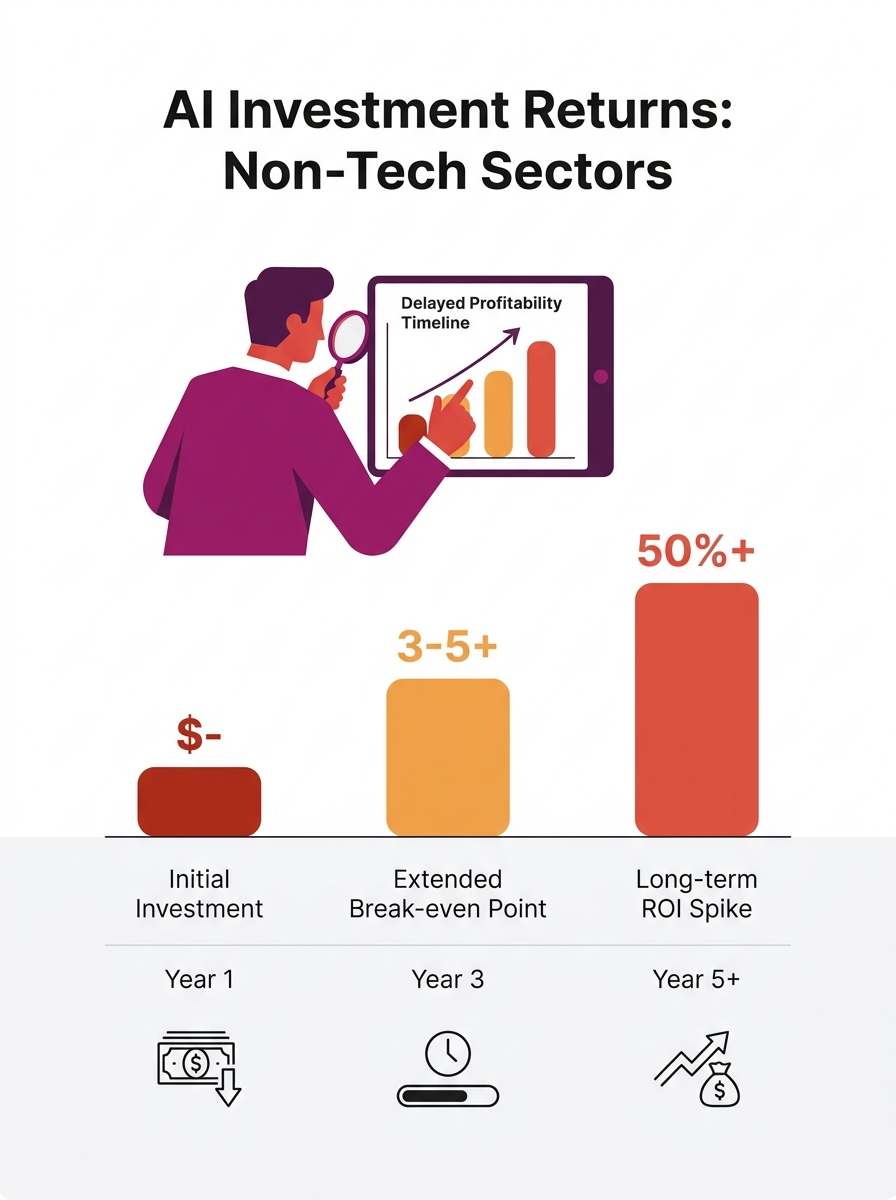
Recruitment leaders evaluating AI-powered ATS platforms and automation tools face a two-to-five-year timeline before ROI appears in most organizations, based on Slok’s analysis of broader economic patterns. The delay stems not from technology limitations but from the operational restructuring required before automation delivers measurable hiring efficiency gains.
HR teams should set internal stakeholder expectations for extended implementation phases that include data cleanup, workflow redesign, and employee retraining before productivity metrics improve. Companies that frame AI purchases as multi-year transformation projects rather than immediate efficiency fixes will face less pressure to abandon investments before returns materialize.
The economist’s warning suggests recruitment automation budgets require longer runway protection than technology vendors typically project in sales cycles, particularly for organizations operating under compliance constraints or managing large distributed hiring teams across regulated industries.