
Mexican HR consultancy Rinteli published strategic guidance on July 1 positioning recruiters as marketing strategists who must actively sell job opportunities to qualified candidates, marking a fundamental shift from traditional post-and-wait hiring models, according to the firm’s recruitment marketing framework.
TL;DR: Rinteli’s framework argues that modern recruiters must position job openings using marketing principles—analyzing candidate motivations, building employer brand narratives, and selling professional growth opportunities—because qualified candidates now evaluate employers as consumers evaluate products.
The guidance addresses a structural change in talent acquisition: specialized candidates now receive multiple competing offers, research employers before applying, and evaluate opportunities based on growth potential rather than job descriptions alone. Rinteli’s framework responds to this shift by outlining how recruiters should adopt marketing strategies traditionally used to attract customers.
The Strategic Repositioning of Recruitment
Rinteli’s framework identifies the core problem: organizations continue publishing generic job descriptions with responsibility lists while expecting top candidates to apply, even as those candidates act as consumers comparing multiple opportunities. The consultancy argues that recruitment marketing requires the same strategic discipline companies apply to product launches—audience analysis, value proposition development, and differentiated messaging.
“The recruiter’s function no longer consists solely of identifying the ideal candidate, but also of convincing them that the organization represents the best available option,” the guidance states. The framework positions this as “Reclutamiento con Marketing” (Recruitment with Marketing), requiring recruiters to evolve into what Rinteli calls “strategic recruiters” who understand how to position, differentiate, and communicate value.
The shift affects how organizations structure job postings. Rinteli recommends recruiters analyze candidate motivations before writing listings—identifying salary expectations, professional goals, valued benefits, preferred leadership styles, and factors that would motivate a job change. That analysis should inform messaging that transmits a promise of professional development rather than merely listing functions.
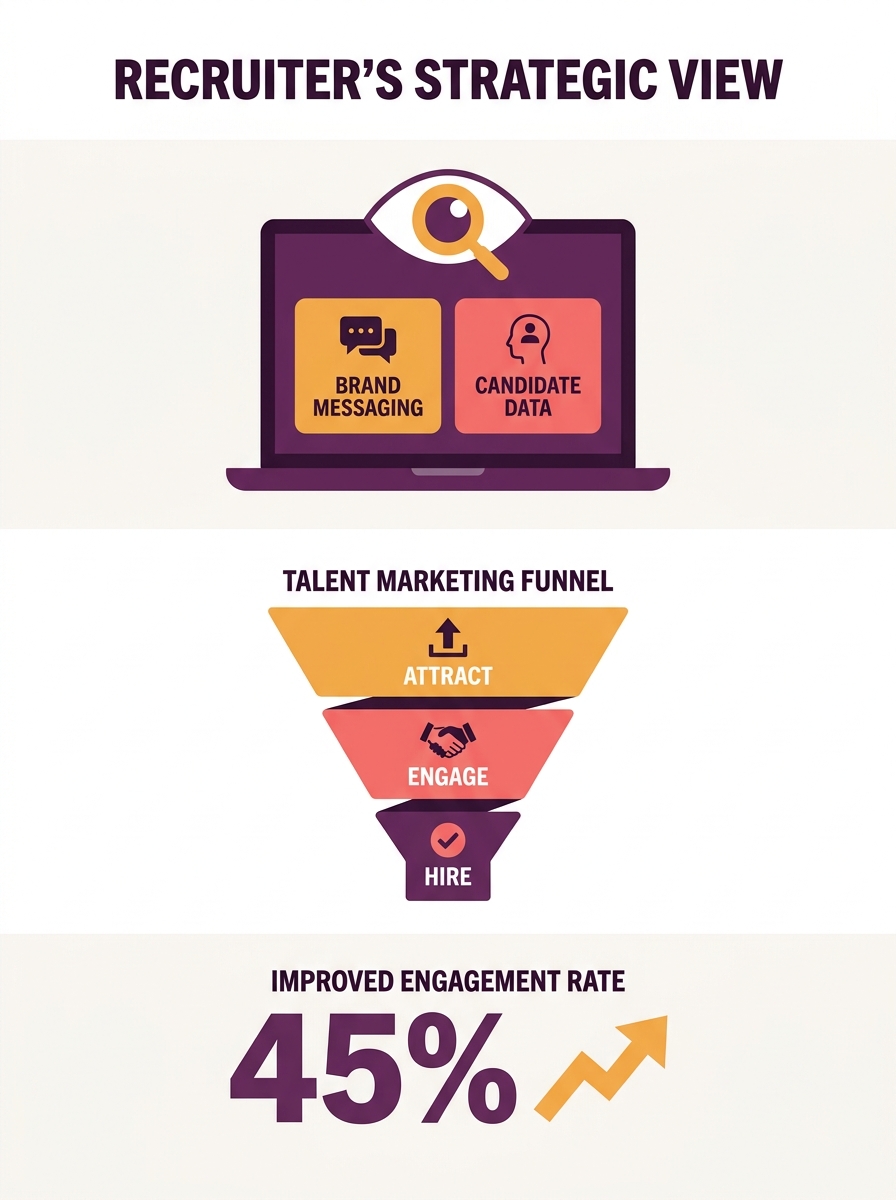
Employer branding emerges as a critical component in the framework. Rinteli positions company reputation as equivalent to commercial brand prestige, arguing that organizations communicating solid culture, positive leadership, learning opportunities, and workplace well-being generate candidate trust before first contact. The firm notes that job posting language reflects organizational personality—technical, impersonal, rigid language creates distance while transparent, authentic messaging increases qualified candidate interest.
The Marketing Funnel Applied to Talent Acquisition
Rinteli’s framework adapts the marketing conversion funnel to recruitment, noting that marketing teams never expect immediate purchase from everyone who sees an advertisement. The process moves through awareness, interest, evaluation, and decision stages. The consultancy argues recruitment follows an identical pattern.
The guidance identifies multiple touchpoints that function as positioning strategy components: social media presence, corporate websites, employee testimonials, institutional videos, and response speed to applications. Rinteli compares successful organizations to major brands—where Nike sells personal achievement and Apple sells innovation, top employers sell career projects rather than job positions.
“The candidate doesn’t solely seek competitive salary; they seek to belong to a place where they can grow, learn, develop, and feel valued,” the framework states. Organizations that communicate growth opportunities from the initial job posting stop competing solely on compensation and begin competing on inspiration, according to Rinteli.
The framework’s approach aligns with persistent challenges documented in enterprise recruitment: the employer brand–ATS mismatch where marketing attracts candidates that automated screening rules reject. Rinteli’s positioning strategy addresses the front-end attraction problem, though implementation requires coordination with intake filtering calibration to prevent message-system disconnects.
The consultancy recommends specific job posting architecture: explain how the position impacts the organization, identify specific challenges, detail growth opportunities, and articulate why joining the team represents an intelligent career decision. That structure differs sharply from standard responsibility-and-requirements listings that still dominate corporate career pages.
What Happens Next
Rinteli’s framework signals broader recognition across Latin American and international HR communities that talent acquisition requires marketing discipline. While the consultancy published guidance for Mexican organizations, the strategic principles apply to US-based SMB and enterprise recruiters facing similar candidate evaluation behaviors. Qualified professionals in technology, healthcare, finance, and specialized trades increasingly research employers through Glassdoor, LinkedIn, and industry networks before applying—behavior that mirrors consumer product research.
The framework’s practical application requires recruiters to develop skills traditionally housed in marketing departments: audience segmentation, message testing, brand narrative development, and multi-channel campaign execution. Organizations implementing recruitment marketing strategies typically establish cross-functional teams where recruiters collaborate with employer brand managers and content strategists. That structural change has accelerated since 2024 as competition for specialized talent intensified.
Implementation challenges persist. Many ATS platforms still prioritize resume parsing accuracy and screening speed over candidate experience optimization, creating friction between marketing-driven attraction strategies and system-driven filtering logic. Recruiters adopting Rinteli’s strategic positioning approach need corresponding workflow adjustments—particularly around response timing, personalized communication, and transparent process updates—to deliver the employer brand experience that initial marketing messages promise.