
Applicant tracking systems are systematically filtering out qualified candidates between ages 30 and 60 through automated age calculations that trigger rejection before human review, according to a May 30 analysis published by NotiActual. The software evaluates candidate age by subtracting university graduation year from the current year and auto-rejecting applicants whose degrees were earned more than 15 to 20 years ago, the publication reported.
TL;DR: ATS platforms calculate estimated candidate age through graduation-date math and experience-year totals, automatically discarding applicants over 30 through algorithmic filters that HR teams may not know are active in their screening workflows.
The filtering mechanism creates what the report termed “algorithmic ageism”—a pattern where recruiting software scores candidates lower or disqualifies them entirely based on numeric proxies for age rather than skills or qualifications. The system operates invisibly to both candidates and many hiring teams, rejecting applications within minutes of submission without flagging the age-based logic to recruiters.
Two Mathematical Triggers Drive Age-Based Rejections
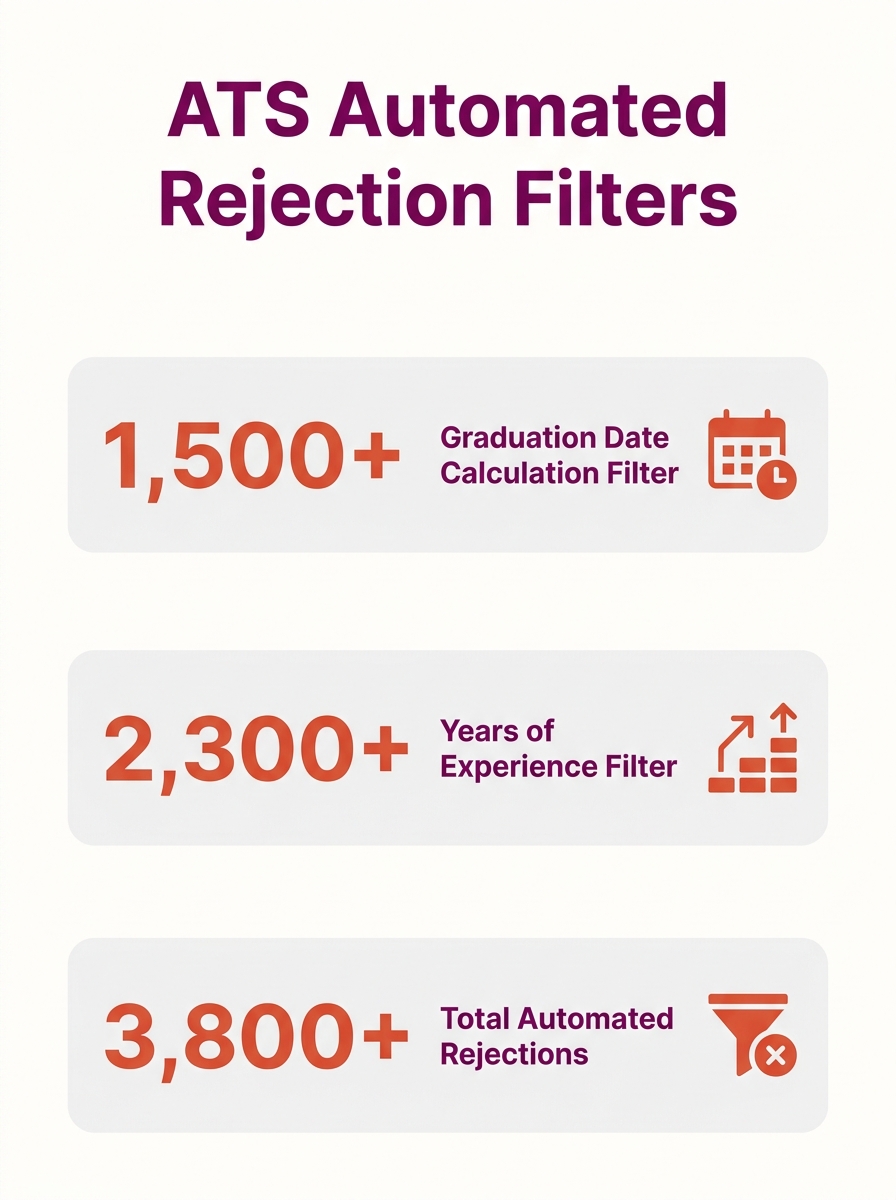
ATS platforms use two primary data points to estimate candidate age and execute filtering rules, the analysis found. The first calculates years elapsed since college graduation. When the system detects a degree completion date exceeding 15 to 20 years prior, it activates an automatic disqualification rule under the assumption that academic credentials are “outdated” or that the candidate falls outside a preferred age bracket for the role.
The second trigger evaluates total years of professional experience against job requirements. When a posting requests a minimum of five years of experience and a candidate profile shows 22 years, many ATS algorithms interpret the discrepancy as overqualification rather than enhanced capability. The software assigns a lower compatibility score or routes the application directly to a rejection folder based on assumptions about salary expectations exceeding budget parameters.
Candidates encountering these filters receive generic rejection emails minutes after applying, with no indication that automated age calculations—rather than qualifications review—determined the outcome. The report noted that applicants typically assume their résumés were inadequate when in fact no human ever reviewed their materials.
Bidirectional Damage Affects Candidate Confidence and Employer Talent Access
The automated filtering creates parallel costs for job seekers and hiring organizations, according to the NotiActual analysis. Candidates aged 30 to 60 experience what the publication called “corporate silence limbo,” receiving repeated unexplained rejections that erode confidence in their market value. The pattern pushes experienced professionals to question whether their skills remain relevant when the actual barrier is résumé formatting and algorithmic scoring rather than capability gaps.
Employers using age-proxied ATS filters lose access to mid-career and senior professionals who bring crisis resilience, institutional knowledge, and complex problem-solving capacity that junior candidates typically lack. The systems retain applicants who optimize résumés for keyword density—a skill set distinct from job performance—while screening out candidates with demonstrated track records in the functional areas the role requires.
The mismatch becomes self-reinforcing: hiring teams relying on ATS knockout questions and automated scoring see homogeneous junior candidate pools and assume the market lacks experienced applicants, when the actual constraint is that their filtering logic has already removed those profiles from consideration.
Résumé Optimization Strategies Target Algorithmic Age Signals
The report outlined tactical approaches for candidates seeking to bypass age-calculation filters. The primary recommendation involves limiting career history to the most recent 10 to 15 years rather than listing complete employment chronology dating to the 1990s or early 2000s. Older roles can be consolidated under a single generic line item without detailed date ranges, preventing the ATS from calculating total career span.
A second tactic removes graduation years from education credentials entirely. The NotiActual analysis noted that ATS platforms scan for degree type and institution but do not require completion dates to evaluate educational qualifications. When application portals enforce mandatory graduation-year fields, candidates face a decision about whether to submit through that channel or pursue direct contact routes that avoid the automated screening layer.
The third strategy emphasizes current technical proficiency markers throughout the résumé. For candidates in fields like content strategy, SEO, or digital operations, explicit mentions of modern project management platforms, analytics tools, and collaboration software counteract algorithmic assumptions that older workers lack digital fluency. The analysis positioned technology references as signals that update the system’s age-proxy scoring.
These formatting adjustments address candidates being auto-rejected through ATS required fields and parsing logic rather than actual disqualification criteria. The optimization treats the ATS as a technical obstacle requiring code-level workarounds rather than a neutral evaluation system.
Alternative Hiring Channels Reduce ATS Filter Exposure
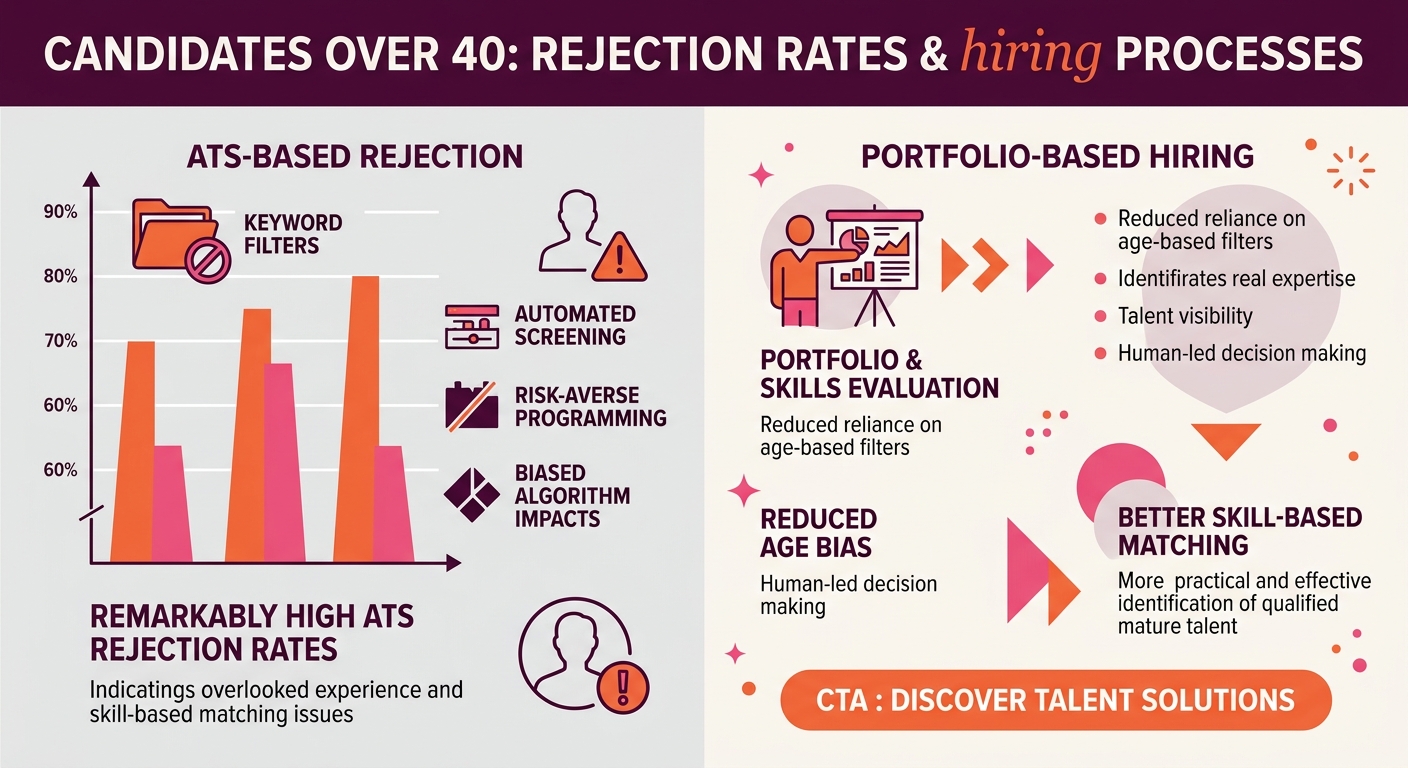
Direct networking and portfolio-based platforms offer routes around corporate ATS screening, the report found. LinkedIn profile optimization for inbound recruiter search operates under different filtering logic than applicant tracking systems, with headhunters and agency recruiters typically prioritizing skill validation and client fit over automated age-calculation rules.
Remote-first organizations and digital-native companies frequently emphasize work samples, GitHub repositories, or case-study deliverables over standardized application forms. These hiring processes evaluate demonstrated capability in real project contexts rather than résumé formatting compliance with keyword algorithms. The NotiActual analysis noted that such employers “care that you solve the problem today, not what year you first stepped into university.”
The shift toward alternative channels mirrors broader frustrations with resume parsing failures in ATS platforms that discard qualified candidates through technical misreads and formatting incompatibilities unrelated to job requirements.
Teams Implications
Hiring teams operating ATS platforms should audit their knockout question logic, experience-range filters, and scoring algorithms for unintended age proxies that disqualify mid-career and senior talent before human review. Graduation-date calculations and excessive-experience penalties may be active in legacy system configurations without explicit recruiter awareness, creating legal exposure under age-discrimination statutes while simultaneously narrowing the candidate pipeline to junior profiles who’ve optimized résumés for keyword gaming.
The practical fix involves removing or widening graduation-year filters, adjusting experience-maximum thresholds to “preferred” rather than disqualifying status, and supplementing automated screening with manual review samples to validate that qualified 15-plus-year professionals are reaching interview stages. Organizations using DEI analytics integrated with ATS data can track age-range distribution in applicant-to-interview conversion rates to surface algorithmic bias patterns that structured interviews and skills assessments would otherwise catch.
For recruiters managing high application volumes, the calculus is whether time saved through automated age filtering outweighs the cost of systematically losing the talent segment with the deepest institutional pattern recognition and operational resilience—the professionals who’ve navigated multiple economic cycles and technology transitions. An effective recruitment process treats automation as a supplement to human judgment rather than a replacement, particularly when the automation encodes demographic assumptions that hiring teams would reject if presented explicitly.