
Business leaders across multiple industries are abandoning traditional documentation-heavy onboarding in favor of systems that assign new hires customer-facing work within 72 hours, according to insights published May 24 in AZ Big Media. The shift prioritizes real project exposure over passive training materials, with managers reporting measurable productivity gains when employees engage actual customer deliverables during their first week rather than spending weeks reviewing process documentation.
TL;DR: Companies are cutting onboarding ramp time by assigning new hires real customer work by day three and pairing them with senior employees for structured four-week shadowing periods instead of relying on documentation.
Real Work Replaces Documentation for Early Learning
Noah Jolly, founder of Merchwell, told AZ Big Media his company eliminated lengthy onboarding documents entirely after observing that new employees retained almost nothing from passive reading. Jolly instead assigns customer-facing deliverables by day three of employment, according to the report.
When Merchwell hired Travis as senior account manager, the company had him quote an actual inbound sales lead on his third day. Travis initially miscalculated pricing and selected incorrect products, but Jolly reviewed the quote line-by-line before it reached the customer, the article states. That single exercise produced more learning than a week of process documentation would have delivered, according to Jolly.
The approach accelerates context-building because new hires immediately encounter the decisions they will make independently within weeks, rather than absorbing abstract procedures divorced from application. By week two, Travis was sending customer quotes without supervision, the report shows.
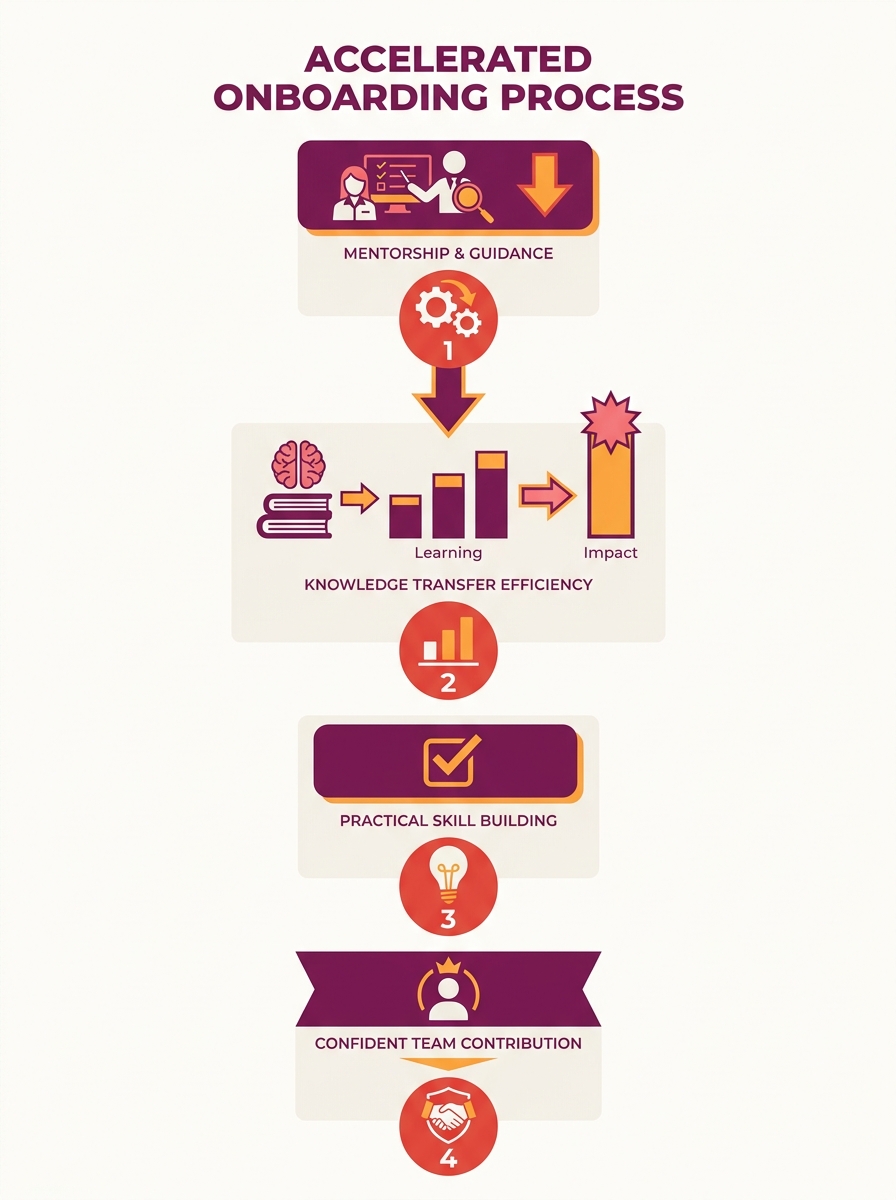
Four-Week Pairing System Transfers Standards and Client Practices
Daniel Vasilevski, director of Bright Force Electrical, structures onboarding around a mandatory four-week pairing between new hires and the company’s most experienced technicians, according to the AZ Big Media piece. The pairing focuses not on technical skills alone but on client communication standards and job-site conduct that directly affect customer satisfaction.
Bright Force operates primarily in residential electrical work, where homeowner interactions determine repeat business and referrals. Vasilevski assigns new employees to shadow senior team members who already demonstrate the company’s service standards in live customer environments, the article reports.
During one residential rewire project, an apprentice observed how the senior technician explained each installation step to the homeowner in plain language, requested permission before drilling or moving household items, and ensured the work site was cleaner at project completion than at arrival, according to Vasilevski’s account in the piece. That single job-site experience established behavioral expectations more effectively than any written policy manual could, Vasilevski said.
The four-week timeline allows new hires to observe the company’s client-interaction standard across multiple projects and customer personalities before working independently. Employees who complete the pairing period demonstrate greater confidence and consistency because they have already seen correct execution in varied real-world scenarios, the report states.
Early Authority and Targeted Relationship Building
The AZ Big Media article also describes strategies that grant new employees decision-making authority within narrow scopes during their first month, rather than positioning them as observers for extended periods. Several leaders interviewed for the piece emphasized prioritizing direct introductions to the two or three colleagues a new hire will need daily answers from, rather than overwhelming them with full organizational charts.
Jolly told AZ Big Media he instructs new employees to ask more questions than feels comfortable during their first 30 days. Employees who attempt to solve problems quietly without seeking input consistently take longer to reach full productivity, according to his observation shared in the article.
The relationship-building approach focuses on functional necessity rather than ceremonial meet-and-greets. New hires benefit most from knowing exactly who holds answers to the specific questions they will encounter in their role, rather than memorizing names and titles across departments they will rarely interact with, the article explains.
Some companies featured in the piece assign first-week strategic audits or small initial wins—discrete projects with clear completion criteria that new employees can deliver independently within days. These assignments create early ownership and tangible output that reinforces the employee’s value to the team while familiarizing them with tools, processes, and stakeholders they will engage regularly.
Context and Outlook
The documented shift away from documentation-heavy onboarding aligns with broader recruitment analytics showing that time-to-productivity metrics increasingly influence hiring ROI calculations at both SMB and enterprise scale. Organizations measuring onboarding effectiveness by first-month output rather than training-hours completed are discovering that exposure to real work contexts accelerates learning curves more reliably than staged simulations or reading materials.
For talent acquisition teams, these findings suggest that post-hire success—and by extension, quality-of-hire scoring—depends significantly on structured onboarding design that hiring stakeholders typically don’t control. TA leaders who collaborate with department managers to build onboarding systems that mirror the customer-facing strategies described in the AZ Big Media report may improve retention metrics and reduce time-to-contribution for new hires. The four-week pairing model in particular offers a replicable framework for industries where client interaction standards matter as much as technical skill.
The trend also reinforces that employee referral programs gain additional value when referred candidates enter environments designed to activate their contributions quickly, since referrals already carry cultural fit advantages that structured early-work assignments can boost into faster productivity gains.