
A former Google recruiter told the National Consumer Unit on May 19 that artificial intelligence is not automatically rejecting job applications, despite widespread belief among candidates that algorithms are blocking them from interviews. Farah Sharghi explained that human recruiters still review applications filtered by basic applicant tracking systems, according to WMUR.
TL;DR: Ex-Google recruiter Farah Sharghi says AI isn’t auto-rejecting candidates; human recruiters review applications after ATS filters by basic qualifications, and 75% of applicants apply to roles they’re not qualified for.
The clarification comes as job market confidence has dropped sharply. Gallup data shows 28% of workers now say it’s a good time to find a quality job, down from 70% in mid-2022. Job seekers currently submit between 32 and 200 applications before receiving an offer, and the average time to hire has climbed to 44 days, with some roles taking closer to two months.
What Applicant Tracking Systems Actually Do
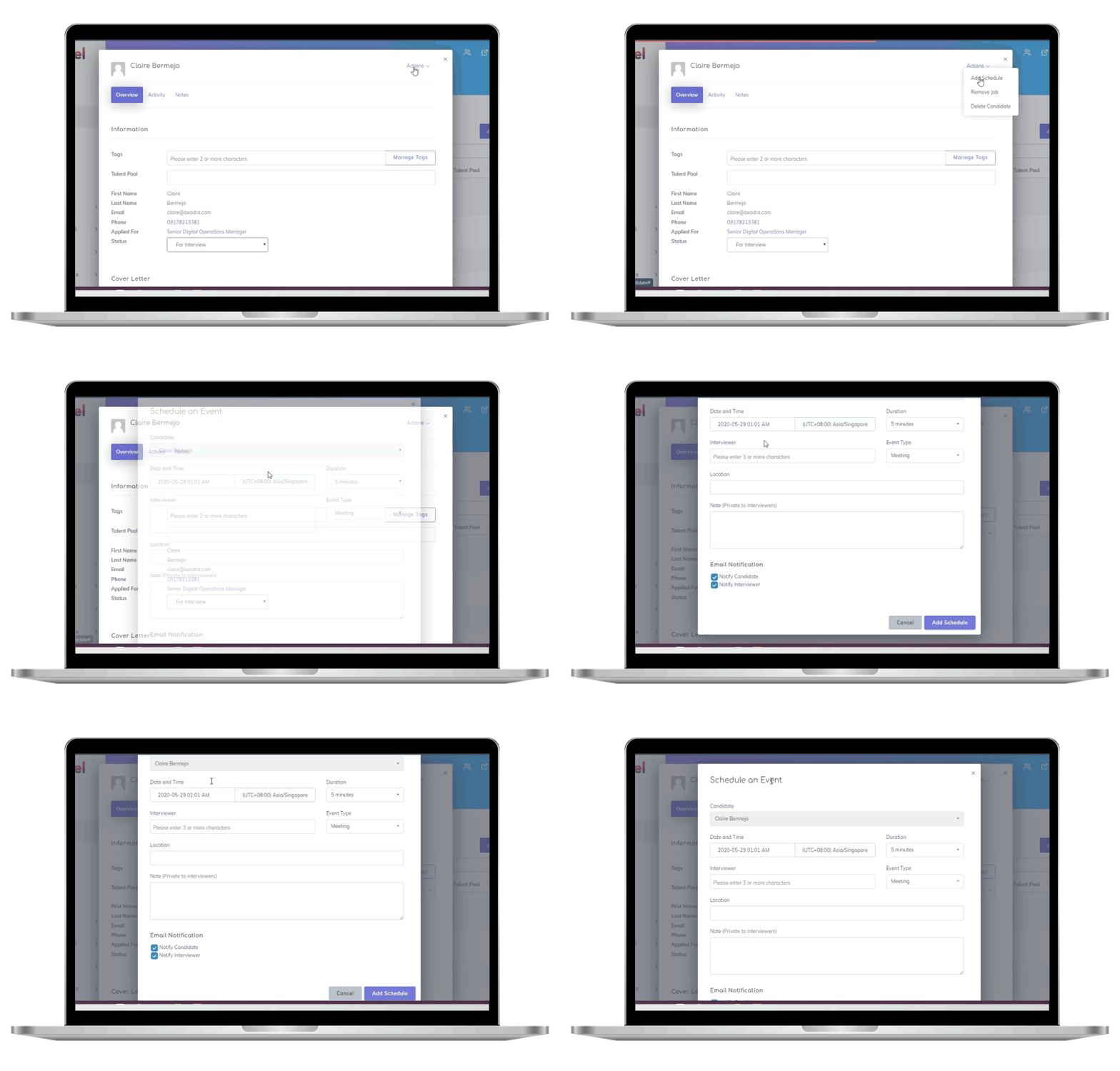
Applicant tracking systems organize and filter applications based on screening questions set by recruiters, not machine-learning rejection algorithms. “It’s a system that tracks applicants like an Excel spreadsheet,” Sharghi said in the interview. The systems help recruiters store resumes, track candidates through interview stages, and filter for baseline requirements such as years of experience, required certifications, or work authorization status.
Filters are configured by human hiring teams, and when a candidate doesn’t meet those requirements, the application is removed from the active pool. That screening step happens before a recruiter reviews the remaining candidates, but the decision to filter is based on qualifications the company explicitly required, not on predictive scoring by an AI model. Sharghi noted that before AI tools entered the hiring conversation and after, “the percentage of applicants that are qualified versus not qualified has remained the same.”
The confusion stems from the visibility gap in an effective recruitment process. Candidates see a rejection but don’t see the screening criteria that were applied. In many cases, the problem is a misconfigured required field or knockout question that hiring teams set once and never audited, not an AI decision.
Why 75% of Applicants Shouldn’t Be Applying
Sharghi estimates that roughly 75% of people who apply to jobs should not be applying to that specific position because they are not qualified. The issue isn’t that candidates lack skills; it’s that they’re applying broadly without asking whether their experience matches what the company needs. “If I could encapsulate job search in one word, it’s alignment,” Sharghi said.
Job seekers often focus on what they want from the role (remote work, salary, title) instead of asking why the company is hiring in the first place and what problem they’re trying to solve. That misalignment shows up in resumes that don’t connect past work to the role’s actual requirements, and those applications get filtered out early in the candidate journey.
Nearly half of active job seekers describe their experience as negative, according to survey data cited in the report. Many can’t land an interview despite submitting dozens of applications. Sharghi says the root cause is usually the resume itself. “If your resume doesn’t align, it won’t make it through the necessary filters,” she said.
How to Improve Alignment Using AI Tools
Sharghi recommends building a master resume that clearly documents what a candidate has done, then uploading it into an AI tool such as ChatGPT or Claude. Instead of simply asking the tool to tailor the resume to a job description, she suggests going a step further. Ask the AI: “Why is the company hiring for this role? If they don’t hire me for this role, how will it negatively impact the team and the position?”
Feeding the tool additional context (the job description, the company’s recent news, the hiring manager’s LinkedIn profile) improves the quality of the output. The goal is to reframe experience in terms of the company’s needs, not just to match keywords in the ATS. Once the resume makes it past the filter, the interview becomes the next hurdle. Sharghi says candidates should show they understand the company’s problems and connect past work to financial outcomes.
“What is it that they need to hear from me in order to make an informed decision that I am the right person for this role?” she said. That requires research and preparation, not just listing responsibilities from previous jobs.
Where Job Seekers Get Stuck
Sharghi says figuring out where in the process you’re failing is the key to improving results. If you’re submitting resumes and not getting interviews, the problem is the resume. If you’re getting recruiter calls but not moving forward, the issue is how you’re relating your experience to what the company wants during those conversations.
She also recommends making yourself more marketable by learning to use AI tools for work tasks beyond resume writing. Free platforms such as LinkedIn Learning and Coursera offer courses on generative AI, prompt engineering, and automation. Hiring managers increasingly expect candidates to know how to use these tools in day-to-day work, and listing that skill on a resume can help differentiate applicants in competitive fields.
The National Consumer Unit report also noted that some companies are now using AI to conduct initial interviews, a practice that has been around for close to a decade but is becoming more common. Sharghi clarified that these tools are used for screening consistency, not to auto-reject candidates. A human still reviews the interview responses.
Reading Between the Lines
The persistent myth that AI is mass-rejecting qualified candidates gives job seekers an external explanation for rejection, but it distracts from the real issue: most applications don’t align with what the role actually requires. For recruiting teams, that misalignment is expensive. Sorting through hundreds of unqualified applications per opening slows hiring efficiency and increases time-to-fill metrics that already average 44 days.
The fix isn’t more sophisticated AI screening. It’s clearer job descriptions, better-configured ATS filters that don’t accidentally screen out strong candidates, and candidate education on how to align experience with the role’s actual problem statement. Sharghi’s advice to job seekers (research the company’s challenges, connect your work to their goals) is also advice for recruiters: make it obvious what you’re hiring for and why.
When 75% of applicants shouldn’t be applying in the first place, the breakdown isn’t in the ATS. It’s in the communication gap between what companies need and what candidates understand about the role. Transparent job postings, visible qualification requirements, and rejection messages that explain why an application didn’t move forward would address that gap far more effectively than blaming the software.