
The Josh Bersin Company released a four-year roadmap projecting HR departments will shrink by 30 to 50 percent in headcount by 2030 as agentic AI automates core people processes, according to the research unveiled June 8 at the firm’s Irresistible 2026 conference in Oakland. The HR 2030 blueprint describes an architecture of up to 130 specialized agents working across talent acquisition, internal mobility, learning, and workforce planning.
TL;DR: The Josh Bersin Company’s HR 2030 blueprint projects 30–50% smaller HR teams by decade’s end, powered by agentic AI handling work from screening candidates to workforce redeployment, with strategic work rising from 30% to 75% of HR roles.
The report maps a shift from transactional HR administration to what Josh Bersin, CEO of The Josh Bersin Company, called “dynamic enablement for growth” in a statement accompanying the release. The blueprint warns organizations to take an architectural approach now to avoid fragmented “agent sprawl” as systems scale across the function.
What the Blueprint Outlines
The HR 2030 architecture describes five categories of agents—employee, decision, monitoring, action, and business-rule agents—coordinated by an “HR superagent” that spans talent, development, rewards, employee experience, and workforce services. The framework identifies 95 distinct HR-focused agent capabilities, alongside additional workflow and rules agents that draw on internal and external data to manage end-to-end processes, according to the research.
The report positions these systems as “digital coworkers” that respond to alerts and opportunities by assembling teams of specialist agents. Organizations that use existing business rules and train agents to align with company policies, culture, and governance frameworks will maximize impact, the blueprint states.
The study also anticipates growing use of AI-generated digital personas, described as “digital twins,” capable of interacting with employees to provide coaching and support.
HR Headcount and Role Restructuring
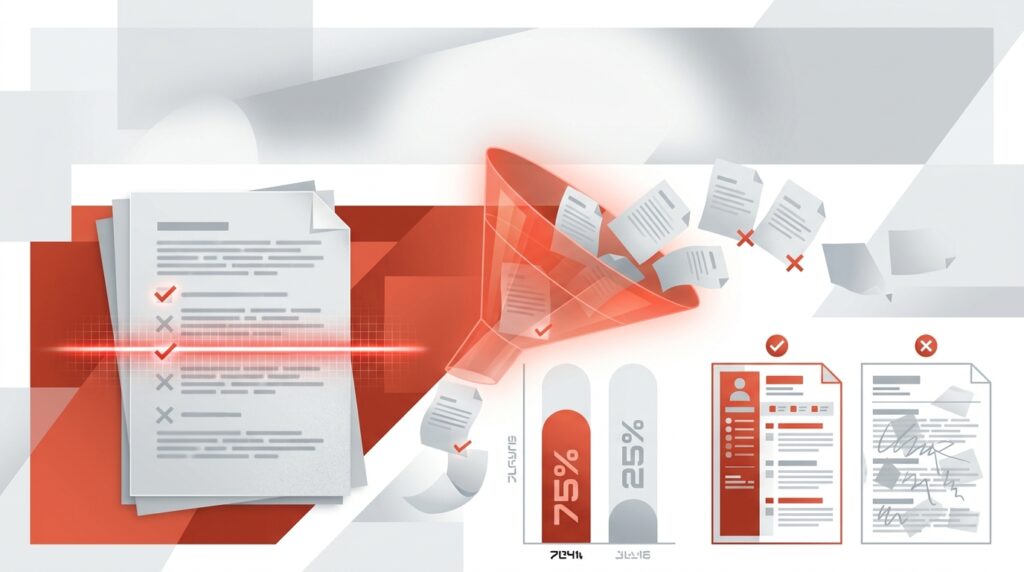
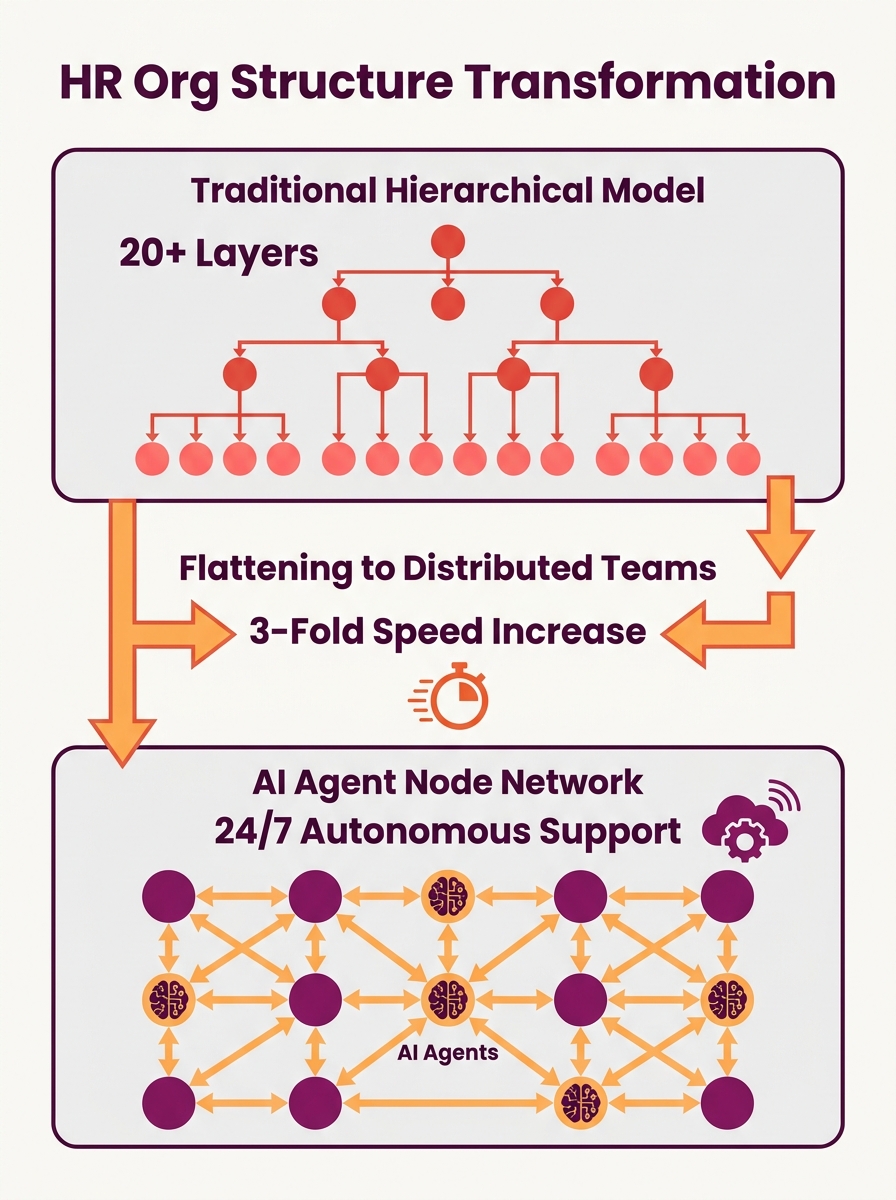
HR functions are expected to become smaller and flatter, with headcount reductions distributed unevenly across roles, the report states. At the same time, the proportion of strategic work within HR is projected to increase from approximately 30 percent to as much as 75 percent by 2030.
The Josh Bersin Company research identifies more than 250 specialized roles and 400 skills currently operating within the HR function. New roles will emerge, with HR and IT teams central to training, managing, and optimizing AI agents, alongside growing demand for skills in data integration, quality, labeling, and governance, according to the blueprint.
The transformation will reshape core functions: talent acquisition, internal mobility, and workforce redeployment will become more automated and connected. Career development, learning, and upskilling will shift toward more dynamic, personalized, and business-aligned models, the report states.
HR professionals’ roles will evolve from process owners to enablers of business capability, with more federated, business-embedded teams, according to the research. Organizations may deliver significantly greater value with fewer people by 2030 as work is redesigned around AI-driven systems.
Business Impact Beyond Headcount Reduction
The opportunity for business from AI extends beyond staffing reductions, the report states. By improving hiring speed and precision, organizations can avoid over-hiring. By enabling faster reskilling and redeployment, companies can enter new markets more quickly. The blueprint estimates these benefits are 10 to 100 times more impactful than simply using AI to reduce headcount.
“HR is facing its biggest transformation in decades,” Bersin said in the statement. “This is not simply about inserting AI into transactional systems but building a totally new HR operating model that delivers continuous insights-to-action for the employees and leaders.”
The framework describes enterprise-grade systems that connect multiple data sources, orchestrate workflows, and manage processes end-to-end. These agents continuously draw on data, monitor operational metrics, and create feedback loops to improve performance, according to the architecture details.
Timeline and Implementation
The full HR 2030: The Journey to Agentic HR analysis and implementation blueprint is available through Corporate Membership and within the Galileo Suite, including new agentic workflows to help companies model their existing HR operation for change. The Josh Bersin Company announced it will publish detailed architectures, vendor analysis, operating models, and benchmarks in coming months.
The report urges organizations to begin the journey now with a phased approach involving continuous improvement across workflows, architecture, and organizational design. Bersin presented additional details during his June 8 keynote at Irresistible 2026, the firm’s sold-out global conference for HR leaders.
An HR 2030 course is available on the Galileo Learn platform for organizations implementing the framework.
Reading Between the Lines
For recruiting teams evaluating AI recruiting tool integration decisions in 2026, the 30–50 percent headcount projection carries immediate implications: procurement conversations that assume static headcount through 2030 are building on an outdated baseline. Talent acquisition leaders planning multi-year ATS and automation roadmaps need vendor partners architecting for agentic workflows—not bolt-on chatbots marketed as “AI-powered.”
The blueprint’s warning against “agent sprawl” mirrors the fragmentation recruiting teams already face with point-solution tools that don’t share candidate data or trigger coordinated actions. An architecture where screening agents, scheduling agents, and outreach agents operate inside a unified superagent structure directly addresses the integration barriers practitioners cite as the primary obstacle to AI adoption in hiring workflows.
The shift from 30 percent strategic work to 75 percent repositions recruiting as a business-embedded function, not a requisition processor. That demands different skills from hiring teams—and different features from the platforms they use. If the Bersin timeline holds, 2027 budget cycles are the last chance to lock in procurement before the talent acquisition function you’re buying for no longer exists in its current form.