
Employees are sending measurable retention risk signals through dissatisfaction with career development opportunities, workplace flexibility policies, manager relationships, and artificial intelligence deployment, according to a June 11 report by SHRM authored by Roy Maurer. The analysis identifies these four factors as primary drivers of retention vulnerability across the current workforce.
TL;DR: SHRM’s June 11 report identifies career development gaps, flexibility limits, management quality, and AI concerns as the four primary retention risk signals employees currently exhibit.
The report arrives as organizations face competing pressures: nearly 90% of companies now prioritize retention as workforce reshaping drives up the cost of losing top performers, yet many HR teams lack visibility into the specific friction points that prompt voluntary departures.
Career Development Emerges as Core Retention Lever
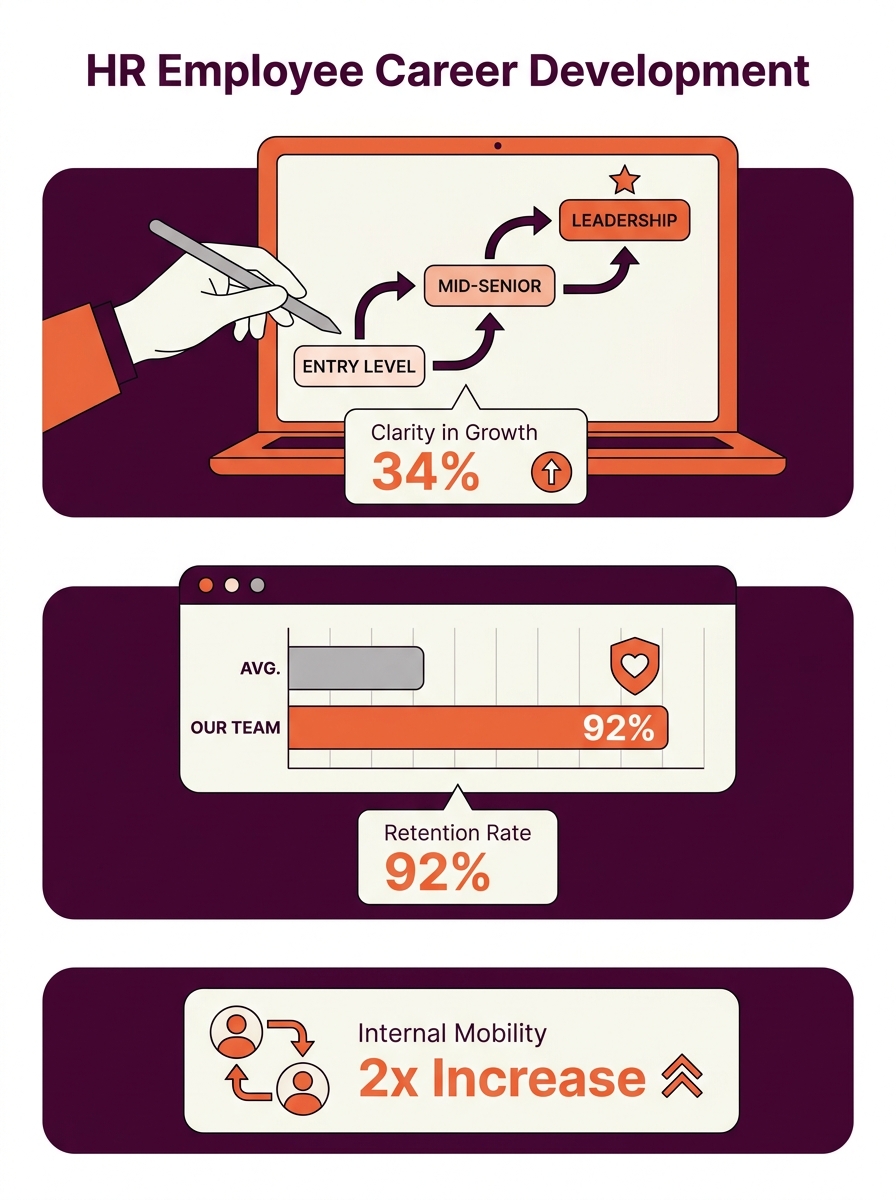
The SHRM analysis positions career development access as a primary retention driver. Workers who perceive limited advancement paths or skill-building opportunities represent elevated flight risk, the report indicates.
For recruitment teams, this finding directly affects employee onboarding design. New hires who encounter unclear career progression frameworks during their first 90 days show higher turnover rates, making onboarding the earliest intervention point for retention-focused organizations.
Flexibility and Management Quality Drive Satisfaction Gaps
Workplace flexibility policies and direct manager relationships surfaced as interconnected retention factors in the SHRM findings. Employees who lack schedule autonomy or remote-work options while experiencing poor manager communication face compounded retention risk.
The research aligns with operational patterns recruitment leaders observe during exit interviews: departing employees frequently cite inflexible policies paired with inadequate management support as dual catalysts for job searches. Organizations that address only one dimension while ignoring the other fail to close retention gaps.
AI Deployment Creates New Retention Friction
Artificial intelligence implementation emerged as an unexpected retention variable. Workers express concern over how AI tools affect their roles, job security, and required skill sets, according to the report.
This factor carries direct implications for how recruitment teams position roles during candidate sourcing. AI-driven workforce cuts create market-wide anxiety that recruiters must address in employer branding and hiring conversations. Candidates increasingly ask detailed questions about AI deployment timelines and reskilling support during interview processes.
Organizations that deploy AI hiring screening tools without communicating their workforce AI strategy risk triggering retention flight among both current employees and accepted candidates who rescind offers after learning implementation details.
What This Means for In-House Recruiters
Retention risk factors directly inform candidate evaluation criteria. Recruitment teams should audit whether job descriptions and interview scorecards surface candidate expectations around career development timelines, flexibility requirements, management style preferences, and AI comfort levels before extending offers.
The hiring process itself serves as a retention diagnostic. Candidates who ask detailed questions about advancement paths, remote-work policies, and AI tool usage during interviews are signaling the exact factors SHRM identifies as retention drivers. Recruiters who dismiss these questions as premature or overly specific miss early indicators of post-hire satisfaction risk.
Most critically, these four retention factors should shape onboarding automation workflows. New-hire sequences that clarify career frameworks, document flexibility policies, establish manager communication cadences, and explain AI tool deployment within the first two weeks address retention vulnerabilities before they calcify into flight risk. Organizations that treat onboarding as pure compliance processing rather than retention engineering will continue to lose employees they spent budget and recruiter hours to attract.