

Brownie Points CEO published a framework September 5 positioning employee retention as a CEO-level business performance issue rather than an HR department responsibility, citing recruitment costs, productivity disruption, and knowledge loss as measurable impacts on competitive advantage, according to the Australian employee recognition company.
TL;DR: Brownie Points CEO argues retention should be measured as business performance, recommending three CEO-owned strategies: internal career development, systematic recognition culture, and leadership training investment.
The framework arrives as HR teams face pressure to demonstrate ROI on retention programs while C-suite executives treat turnover primarily as a finance department concern. The piece argues every departure carries costs beyond the recruitment bill—remaining employees absorb additional workload, customer experience suffers during knowledge transfer gaps, and high performers often leave at higher rates than average contributors.
Three Strategic Areas CEOs Should Own
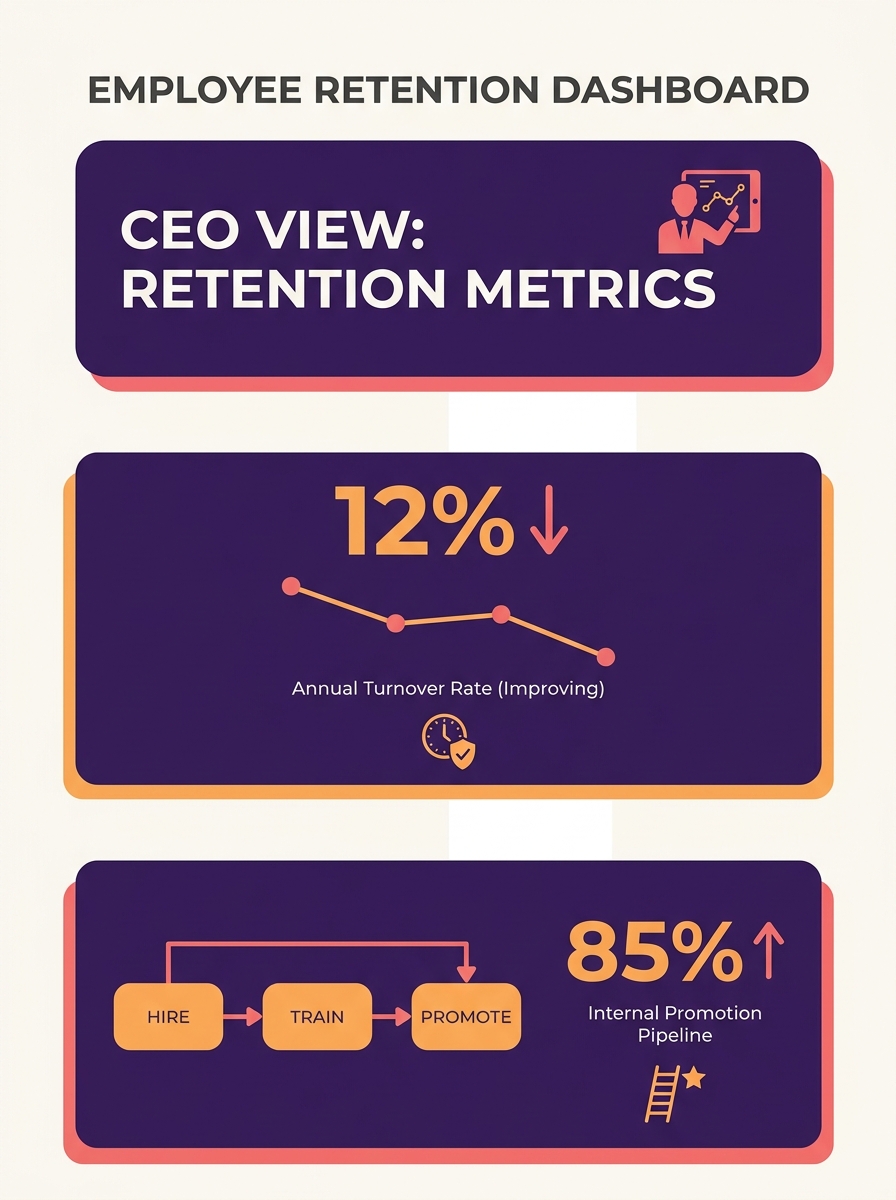
The framework identifies career visibility as the first retention driver. Employees stay longer when they see progression paths inside the organization rather than external job searches as the only advancement route, according to the analysis. The recommendation centers on internal mobility conversations rather than automatic promotions—meaningful discussions about skill development, lateral moves, and increased responsibility.
“Are we developing the people we already have, or are we constantly looking outside the organisation for the talent we need?” the framework states. Organizations that build internal development cultures reduce turnover while strengthening leadership pipelines, the analysis notes.
Recognition emerges as the second strategic area. The framework argues compensation alone does not determine retention—employees also need visible acknowledgment of contributions. Most organizations deliver inconsistent recognition, the piece observes, with high performers receiving attention while daily operational excellence goes unnoticed.
Recognition can reinforce specific behaviors CEOs want replicated across teams, according to the framework—exceptional customer service, peer support, problem-solving, and discretionary effort. The analysis notes recognition need not always involve financial rewards, with timely acknowledgment often carrying significant impact.
Leadership capability represents the third area. “People don’t always leave companies. They leave poor management and leadership,” the framework states. Organizations frequently promote technically capable employees into management roles without training them in communication, coaching, empathy, accountability, or conflict resolution—skills distinct from technical expertise.
Great managers create clarity, communicate expectations, listen actively, recognize contributions early, address problems before escalation, and develop their direct reports, the analysis observes. Poor management undermines engagement, morale, and retention regardless of compensation levels. The framework positions leadership investment as business performance spending rather than people-development overhead.
Data-Driven Exit Analysis Over Assumption
The framework recommends CEOs replace assumptions about employee needs with systematic exit data. Questions to investigate include: which teams show highest turnover, whether high performers leave at elevated rates, whether specific managers correlate with departures, whether employees perceive recognition, whether career paths appear visible, whether workloads drive burnout, and whether organizations act on employee feedback, according to the piece.
Organizations that operate on assumptions rather than exit interview patterns and employee referral program participation data miss retention drivers specific to their workforce, the analysis warns. Different industries and business models require tailored retention approaches, but core drivers remain consistent—fair compensation, respect, recognition, support, development opportunity, and voice, the framework states.
The analysis connects retention strength to bottom-line performance through multiple channels. Lower turnover reduces recruitment spending, experienced employees deliver higher productivity, stable teams provide superior customer experiences, strong cultures simplify talent acquisition, and engaged employees contribute discretionary effort during change periods, according to the framework.
What Happens Next
The framework’s CEO-accountability framing challenges the traditional HR-department ownership model for retention. Organizations treating turnover as an isolated people metric rather than a competitive performance indicator leave business value on the table, the analysis suggests.
For recruitment and talent acquisition teams, the piece reinforces the internal-talent-development case. When CEOs view retention as business performance rather than HR administration, budgets shift from external recruiting toward career-pathing infrastructure and leadership training—investments that reduce the volume of open requisitions TA teams must fill. The framework’s emphasis on exit data and listening systems also strengthens the business case for structured employee onboarding frameworks that track retention signals beyond the first 90 days.
The question the framework poses—”What kind of organisation do we need to build so that our best people want to stay?”—positions retention design as a strategic planning exercise rather than a benefits-package negotiation. Organizations that answer it build competitive advantages in both talent acquisition and workforce stability, the analysis concludes.