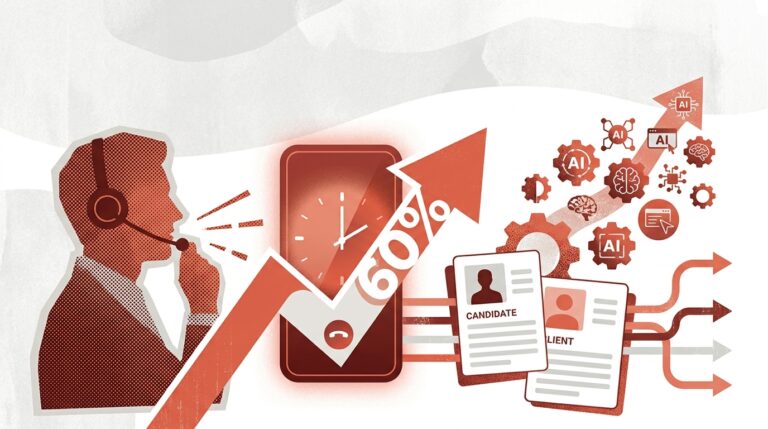
Recruiter call time reached 286 minutes per week in the first quarter of 2026—the highest level on record and double the volume logged in the first quarter of 2024—as staffing professionals increased their use of AI tools from an average of one to 1.36 over the same period, according to a Staffing Productivity Report released June 4 by the American Staffing Association in partnership with Prodoscore.
TL;DR: Recruiter phone time doubled over two years while AI tool adoption rose 36%, indicating automation frees recruiters to spend more time on candidate and client relationships rather than replacing human judgment.
AI Adoption Correlates With Increased Human Interaction
The report analyzed approximately 1.6 million monthly data points from the Prodoscore platform to track recruiter productivity patterns, work behaviors, and AI tool usage across staffing firms. The data compares average recruiter performance with top-performer benchmarks, providing staffing companies with metrics to assess their teams’ productivity and identify growth opportunities.
Recruiters now use an average of 1.36 AI tools per person in Q1 2026, up from only one AI tool in Q1 2024, the report found. The correlation between rising AI adoption and increased call time suggests automation is handling administrative tasks that previously consumed recruiter hours, according to the findings.
Industry Leaders See Automation Freeing Capacity for Relationship Work
“Relationship-building continues to serve as a cornerstone of modern recruiting,” said Stephen Dwyer, president and chief executive officer of the American Staffing Association. “As staffing firms continue to embrace AI, recruiters will have more time to focus on developing the connections that drive long-term growth.”
Sam Naficy, CEO at Prodoscore, described the doubling of call time as a significant finding that challenges assumptions about AI’s impact on recruiting roles. “Recruiters aren’t being replaced by automation; they’re being freed by it to do the work that requires human judgment and human connection,” Naficy said in the report release. “Prodoscore exists to give staffing firms the visibility to understand what their top performers are doing differently, and data like this is exactly why that visibility matters.”
The American Staffing Association serves as the industry association for the U.S. staffing, recruiting, and workforce solutions sector, advancing member interests through advocacy, research, and professional standards development.
Productivity Data Offers Benchmarks for Staffing Firm Performance
Prodoscore’s AI-powered data intelligence platform tracks recruiter activity across digital tools and communication channels to generate productivity metrics. The platform captures work patterns regardless of employee location, providing staffing firms with objective data to assess team performance, identify coaching opportunities, and measure the impact of process changes.
The Staffing Productivity Report provides standardized benchmarks staffing companies can use to gauge recruiter productivity relative to industry averages and top-performer cohorts. The metrics allow hiring leaders to quantify whether investments in recruitment automation tools translate into measurable productivity gains or simply shift work patterns without improving outcomes.
Firms evaluating AI recruiting tool integration can use the report’s findings to set realistic expectations for how automation affects recruiter time allocation. The data suggests automation’s primary value lies in creating capacity for high-value activities—candidate conversations, client relationship management, and nuanced talent assessment—rather than reducing headcount.
Why This Matters Now
The doubling of recruiter call time over two years directly contradicts the common fear that AI adoption in recruitment will eliminate human roles or reduce the need for relationship-driven talent work. For HR teams evaluating applicant tracking systems and recruitment automation platforms, the American Staffing Association data offers concrete evidence that automation increases recruiter capacity for candidate engagement rather than replacing it.
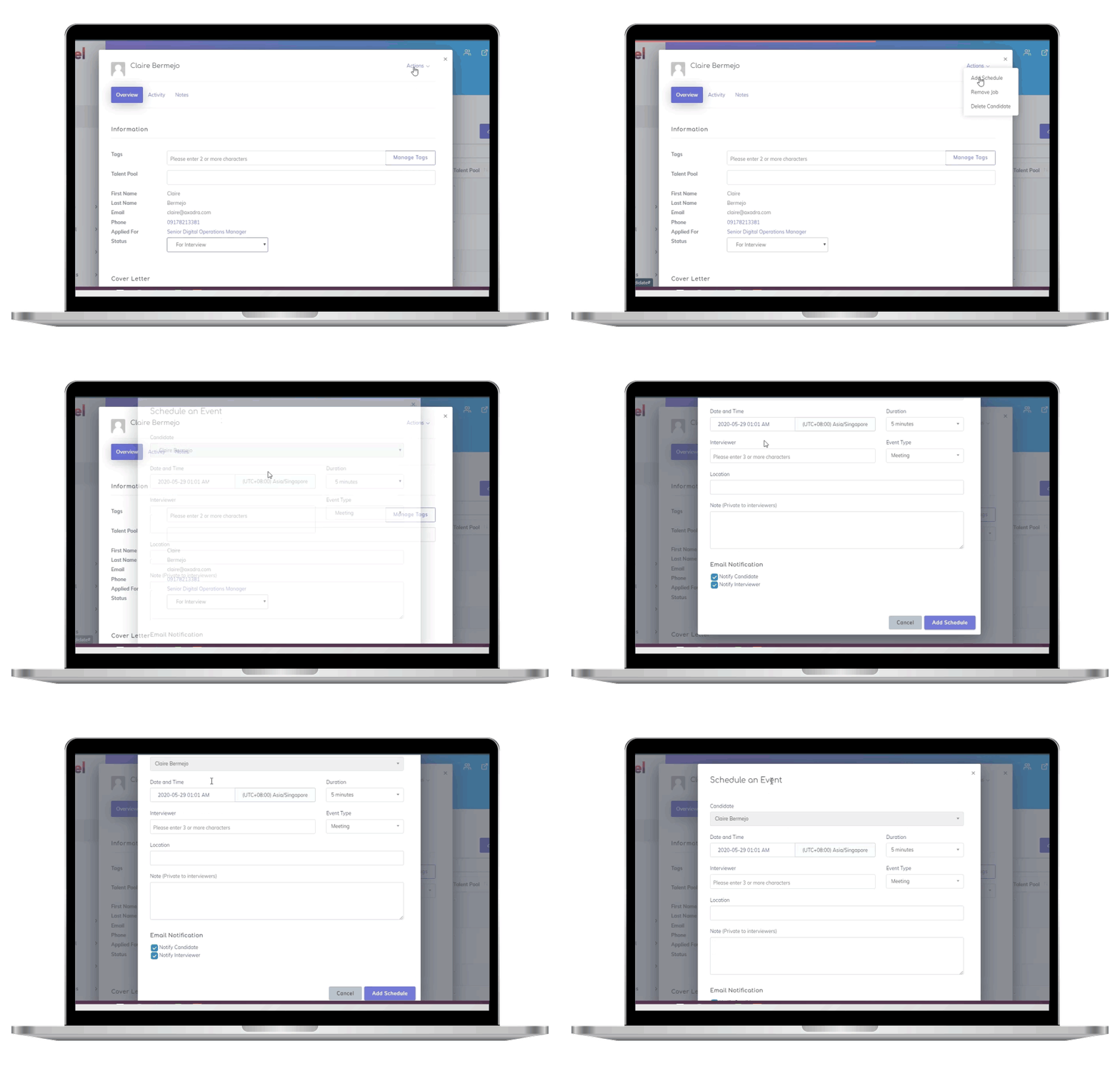
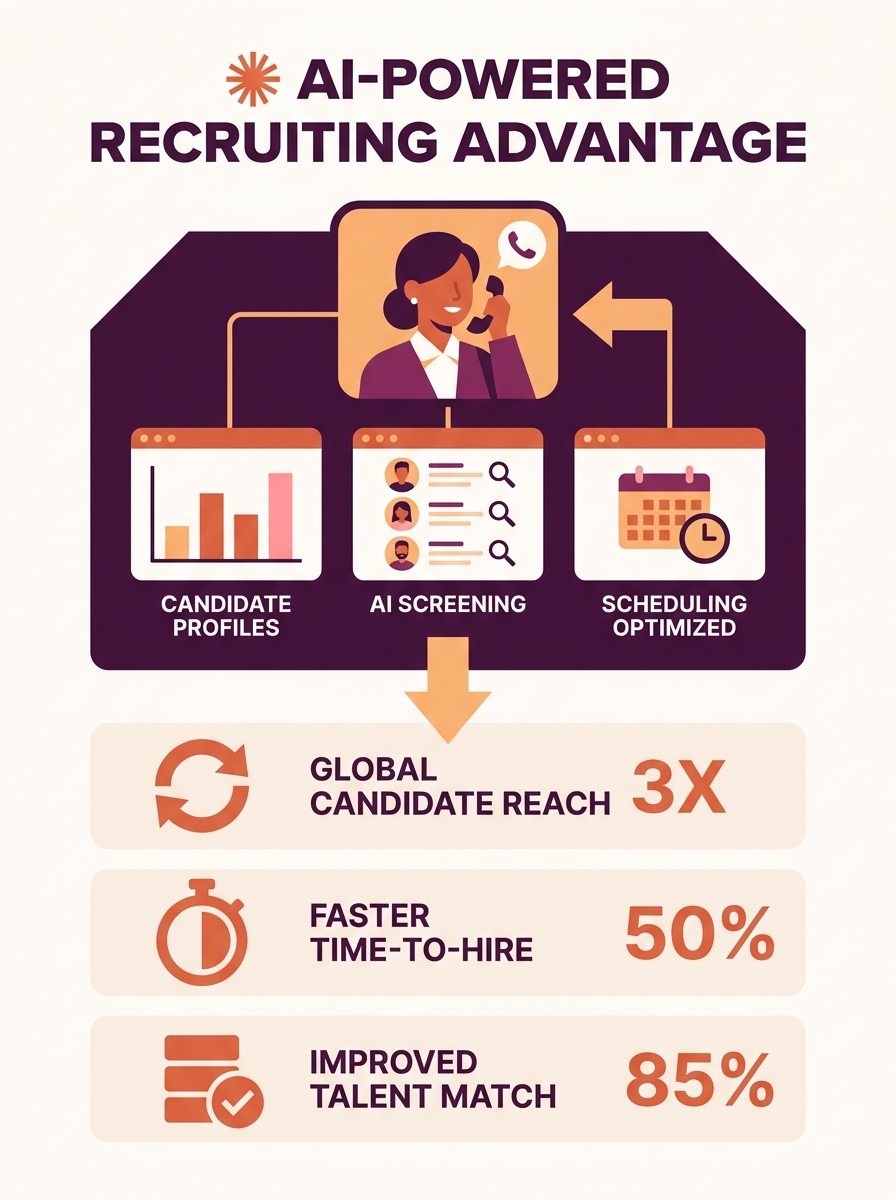
This matters immediately for talent acquisition leaders making 2026 technology investment decisions. The 36% increase in AI tool usage correlating with doubled call time suggests that automation handles resume parsing, initial screening, interview scheduling, and administrative workflows—freeing recruiters to focus on the judgment-intensive work that determines hiring quality. Teams concerned that automation will depersonalize their hiring process can point to this data as evidence that the opposite occurs when automation targets the right tasks.
The productivity benchmarks also give staffing firms and in-house recruiting teams a measurement framework for assessing whether their automation investments deliver the promised time savings. If a team adopts AI-powered sourcing or screening tools but doesn’t see increased recruiter availability for candidate conversations, the data suggests the automation strategy may be targeting the wrong workflows or failing to integrate properly with existing processes.