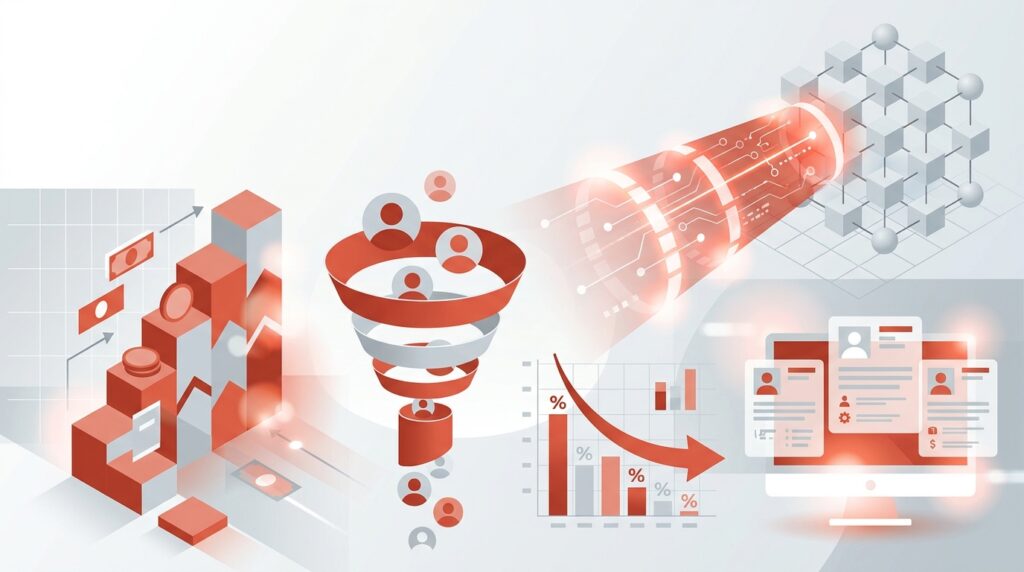

LinkedIn employer brand content and the actual candidate hiring experience are managed by different teams inside most companies, with different KPIs and zero shared accountability. That structural split explains why 76% of candidates show up impressed by a company’s reputation while 72% of those who have a bad hiring experience broadcast it publicly, compounding reputation damage faster than any content calendar can repair.
The Content Machine Spins Up
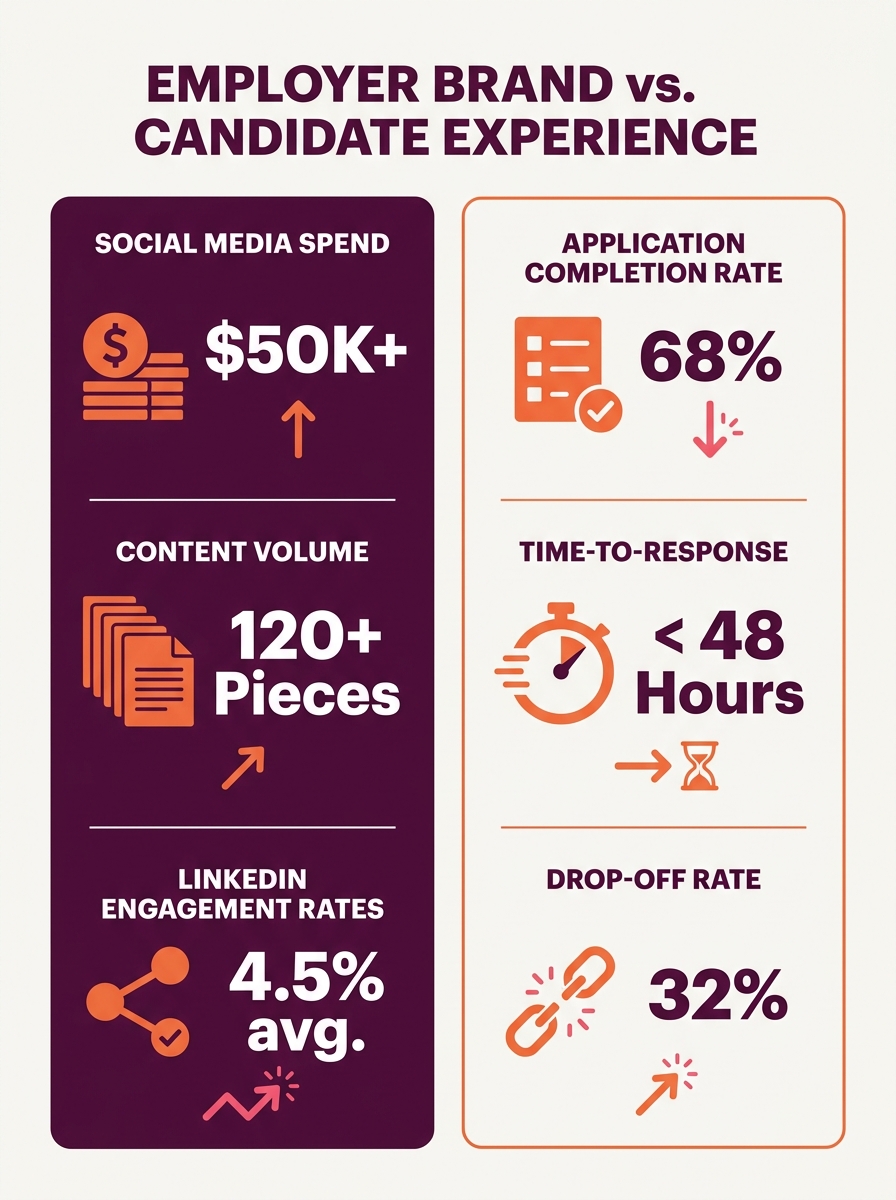
Employer brand teams create polished LinkedIn Career Pages, culture reels, employee testimonial videos, and “day-in-the-life” posts. The output looks great. Companies with a strong talent brand grow 20% faster and get a 31% higher InMail acceptance rate, according to LinkedIn’s own employer brand research. That ROI is real, and it incentivizes further investment in content production.
But the investment concentrates on perception. Ninety-eight percent of in-house recruitment teams now use social media for employer branding. The budgets, headcount, and creative energy go toward the top of the funnel. The recruiter workflows, ATS configurations, interview logistics, and communication cadences that define actual candidate experience sit in a different budget line, often with a fraction of the attention.
This is where employer brand consistency starts to fracture. The brand promise is speed, transparency, and a people-first culture. The operational reality is a 25-minute application form, a confirmation email that never arrives, and three weeks of silence.
The Application Wall
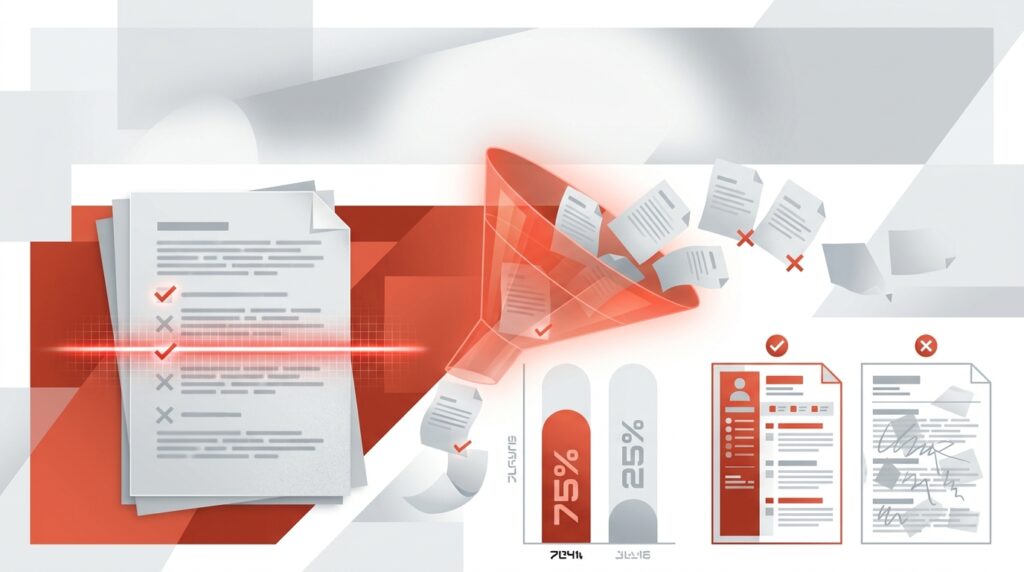
The candidate experience gap opens the moment someone clicks “Apply.” According to recruitment funnel analysis from Pin, long forms, mandatory account creation, and clunky mobile experiences kill applications. If the apply process takes more than 5 minutes, you’re filtering for patience, not talent.
The numbers back this up. Candidates in the DACH region abandon career pages 70% of the time, compared to 45% in France, largely because French employers provide clearer salary and flexibility information earlier in the process. The friction isn’t random. It follows predictable patterns: too many required fields, missing salary ranges, no mobile optimization, and redirect loops between ATS portals and company websites.
If your careers page builder sends applicants through three redirects before they can upload a resume, the LinkedIn post that attracted them is already forgotten. And if your ATS knockout questions aren’t configured carefully, you risk filtering out your strongest applicants before a human ever sees their application.
Every unnecessary step, delayed response, and friction-laden process element causes good candidates to abandon your pipeline and accept offers from faster competitors, as the Hyring recruitment funnel framework documents. The recruitment process friction here is structural, baked into the tools and workflows. No amount of employer brand storytelling fixes an application form that doesn’t work on a phone.
The Communication Blackout
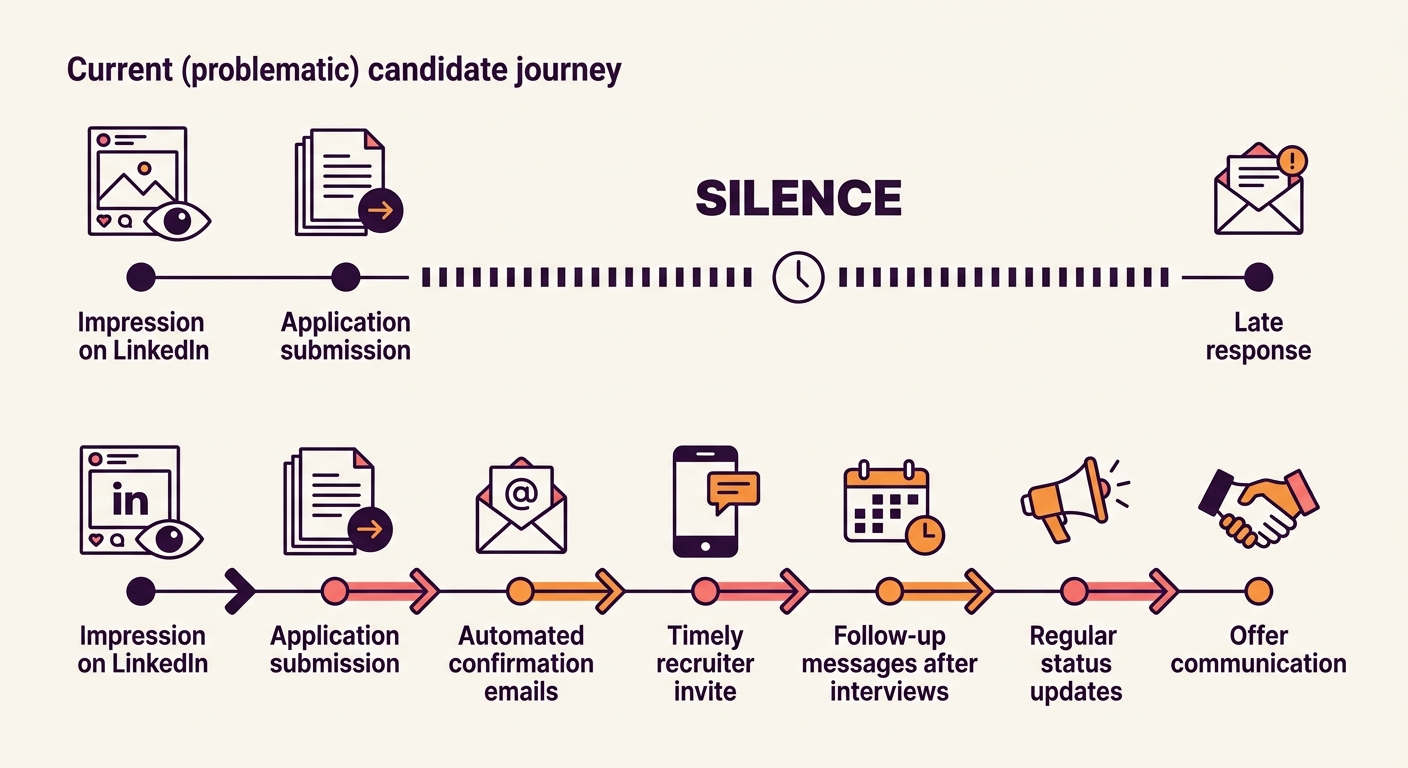
Candidates who survive the application wall enter what many describe as a black hole. This is the phase where hiring funnel drop-off accelerates fastest, and it’s the most common complaint on Glassdoor and Indeed reviews.
The pattern is consistent: a candidate submits an application, receives an automated confirmation (if they’re lucky), and then hears nothing for days or weeks. Seventy-one percent of candidates say their perception of a company improves when that company responds to reviews. The inverse holds, too. Silence signals that the company doesn’t care, which directly contradicts whatever the LinkedIn content promised about culture and respect.
Employer brand is how you want to be perceived in the labour market, and employee experience is what actually happens to real people who apply to and who work for an organisation.
The fix here isn’t complicated. Notification systems that keep candidates informed at each stage of the process reduce abandonment and protect the brand investment. But implementing them requires the employer brand team and the recruiting ops team to actually coordinate, which brings us back to the accountability gap.
When Interviewers Undo the Brand
A SHRM survey found that 46% of respondents said an interviewer’s attitude or behavior led them to quit the hiring process entirely. The advice from SHRM’s reporting is blunt: “If you like the candidate, show them. Never forget that they are deciding if they want to work with you or for you.”
This is the phase where the candidate experience gap becomes personal. A candidate has seen the LinkedIn content, navigated the application, waited through the silence, and now sits across from someone who represents the company in real time. If that interviewer is unprepared, dismissive, or running 15 minutes late with no apology, the brand story collapses instantly.
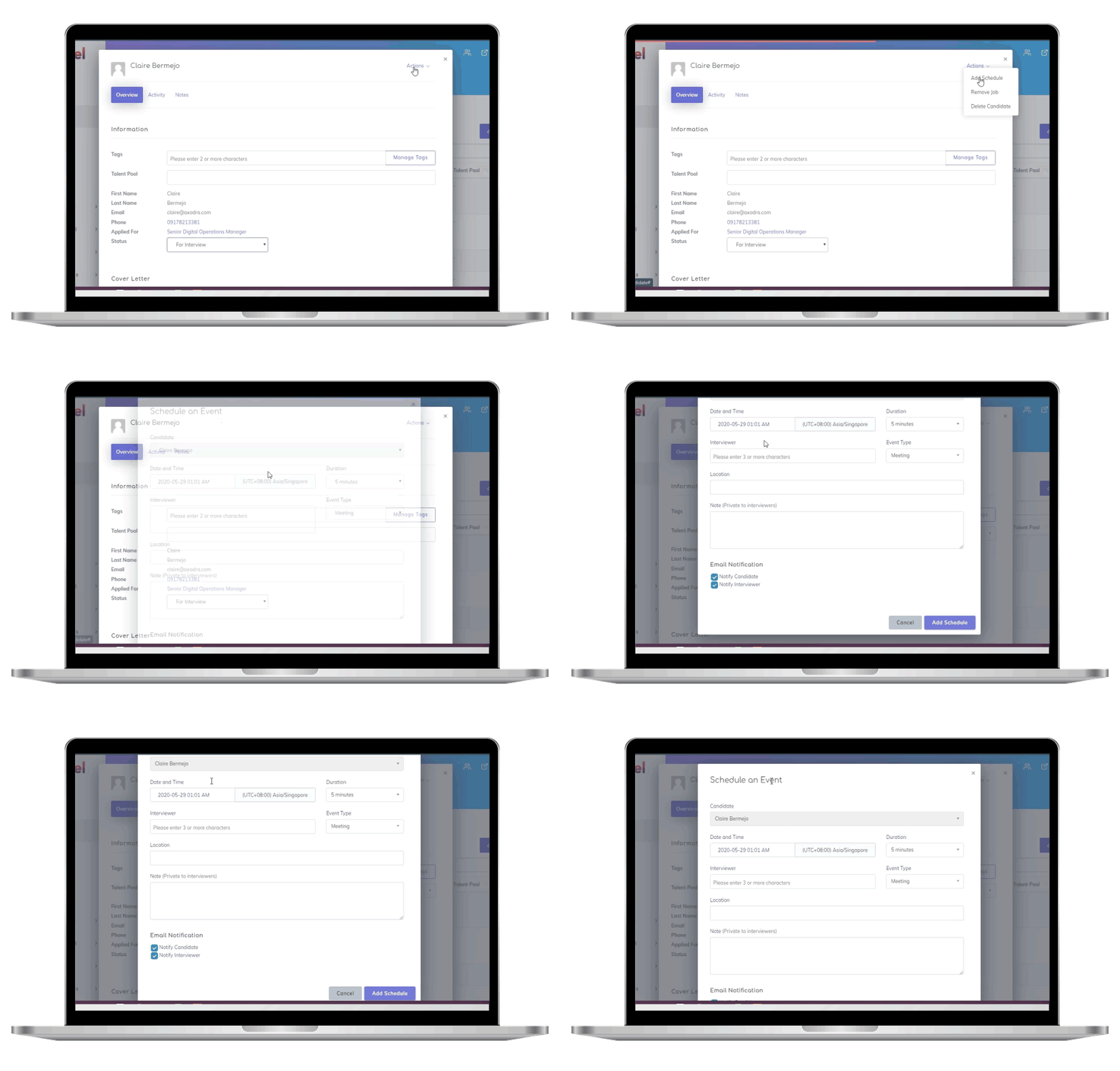
Candidates trust company employees 3x more than the company itself for credible information about working there. The interview is the highest-stakes moment of that trust equation. And most companies do almost nothing to standardize it. Building a structured interview scorecard in your ATS takes about 30 minutes and gives interviewers a consistent framework. Using automated interview scheduling eliminates the back-and-forth email chains that add days of delay and signal disorganization.
Yet many hiring managers still wing it. They show up without reviewing the resume, ask inconsistent questions, and give candidates no clear picture of next steps. The employer brand content promised transparency and respect. The interview delivered neither.
Late-Stage Collapse
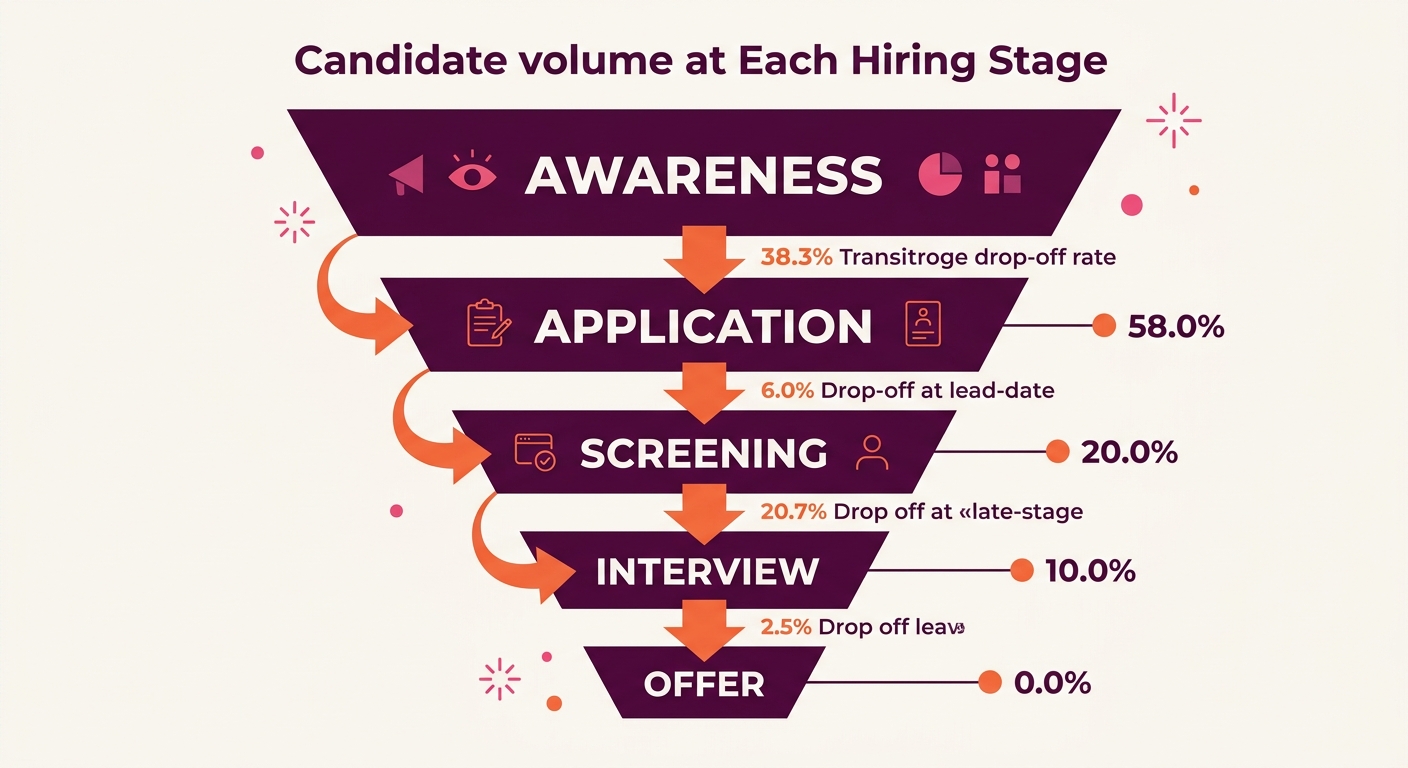
The most expensive hiring funnel drop-off happens late. Candidates who’ve invested time in multiple interview rounds walk away when something changes: the timeline stretches, the role shifts, the compensation doesn’t match what was implied, or communication simply stops.
National Search Group’s research on late-stage withdrawal identifies delay as the single most common cause: “They leave because something changed.” Hybrid roles, which companies market heavily on LinkedIn as flexibility perks, take 17% longer to fill and suffer 14% higher late-stage drop-offs when processes exceed 40 days. The brand promise of flexibility and modernity gets undermined by a hiring process that can’t close in a reasonable timeframe.
Inaccurate job descriptions compound the problem. When candidates reach the offer stage and discover the role doesn’t match what was posted, according to Hoops HR research, they don’t just decline. They leave with a story about being misled, and that story reaches the same networks where the employer brand content lives.
Companies with weak employer brands face 2x higher cost-per-hire. Late-stage collapse is where that cost multiplies, because you’ve already spent recruiter hours, interviewer time, and pipeline capacity on a candidate who was winnable and walked away.
The Aftermath
The tension between talent attraction vs retention of candidates through the hiring funnel comes down to operational credibility. Seventy-seven percent of recruiters rely on LinkedIn as their primary channel, and the platform rewards polished employer brand content with visibility. The incentive to keep investing in perception is strong. But the 72% of candidates sharing bad experiences online create a counter-narrative that grows in parallel.
You end up with two competing signals about the same company: curated content from the brand team and unfiltered reviews from people who actually went through the process. Candidates who do their research, and 76% of them do, encounter both. The gap between those signals erodes trust before a recruiter ever makes contact.
Closing the candidate experience gap requires treating hiring operations with the same creative energy and budget attention that employer brand content receives. The company, as one LinkedIn analysis put it, only gets to have one brand. What the careers page promises needs to match what the ATS delivers, what the recruiter communicates, what the interviewer demonstrates, and how fast the offer arrives. When those pieces align, the LinkedIn content becomes evidence rather than marketing. When they don’t, candidates notice, and they talk.