

What a tragedy to think that a lot of workplaces give more importance to coffee than to learning! What if learning could also be treated as coffee? In other words, the former could also be brewed every morning, shared casually, and refilled whenever someone required a boost.
Well, it looks like workplaces have started behaving this way. The employee training and development services market was valued at about $418 billion in 2025. It is expected to become $650 billion by 2035.
Such huge spending proves that learning is seen as ongoing and imperative, not occasional. That explains the need to strengthen professional development programs. This article will share three ways to make it happen.
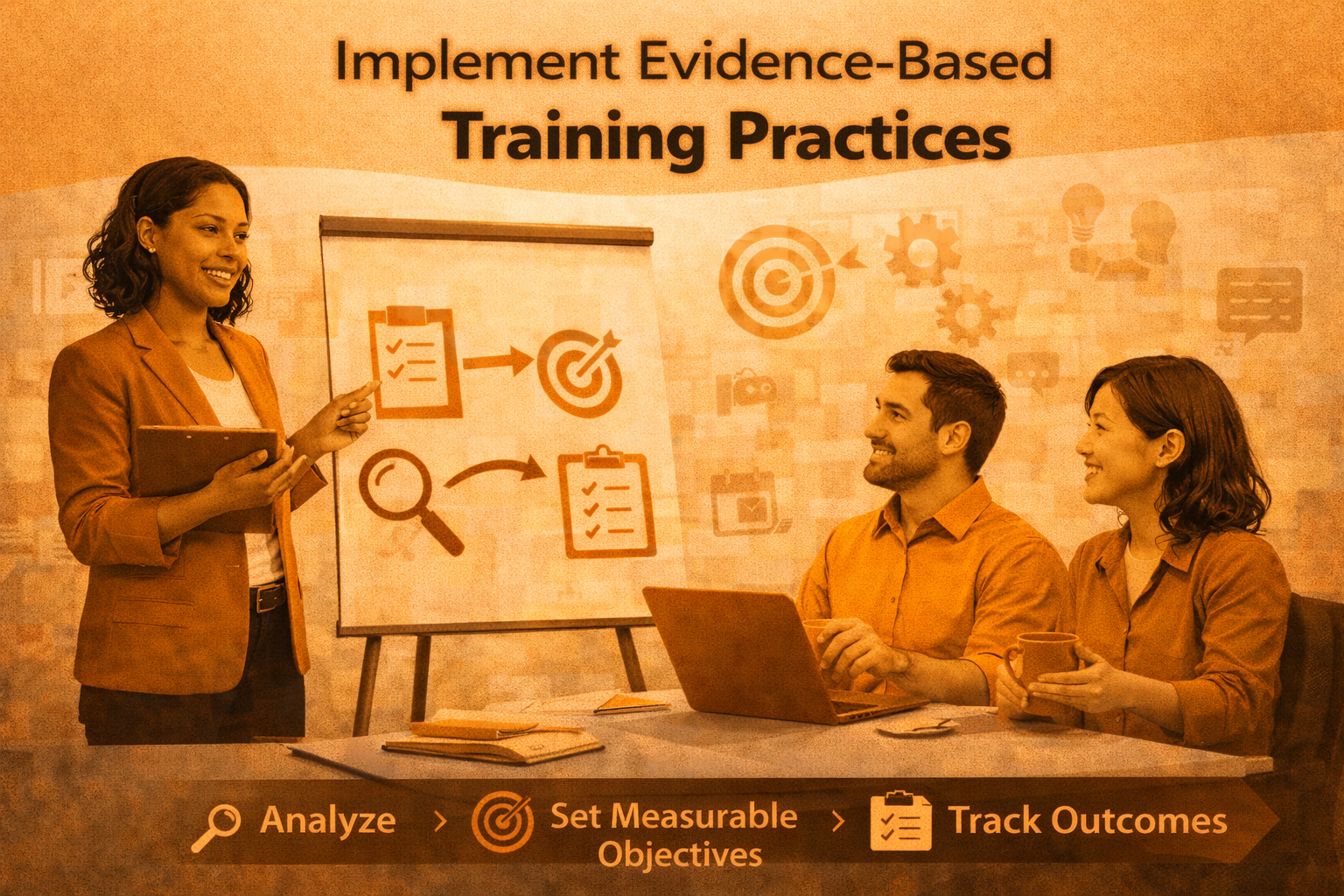
Implement Evidence-Based Training Practices
By evidence-based, we mean that all the training materials and instructions are based on proven research. There is always some sort of scientific evidence involved, be it in the form of meta-analyses or longitudinal studies.
Since the instructional strategies are proven, they contribute to learner engagement and performance. Moving past standard workshops and cookie-cutter methods, evidence-based training focuses on how adults learn.
For measurable results, organizations benefit from incorporating expertise rooted in advanced research and training. One way to acquire this expertise is through a Doctor of Education (EdD). It is a practice-focused doctoral program designed for experienced educators and instructional leaders.
A traditional PhD focuses heavily on original research. An EdD emphasizes the practical application of research to real-world learning and leadership challenges. Within this degree, a specialization in teaching and learning equips professionals with the skills needed to design curricula from evidence-based strategies.
Working professionals can pursue this degree in an online format to learn flexibly. An online EdD in teaching and learning allows educators or workplace learning specialists to continue their careers while deepening their expertise. They gain access to faculty mentorship and collaborative projects that can be applied immediately to professional development programs.
As the American International College shares, a key component of teaching and learning is critical reflection. Educators must possess this trait and promote it in others. The following are some practical ways to apply evidence-based training practices:
- Active learning sessions, including simulations and hands-on exercises
- Concise learning segments for better retention
- Real-world scenarios that develop critical thinking
- Regular feedback for continuous improvement
Align Learning Programs With Organizational Goals
When professional development is tied to an organization’s bigger priorities, it is most impactful. Training initiatives that operate in a vacuum often fail to drive measurable value. It’s only when learning programs align with organizational goals that they support strategic objectives.
A recent benchmark report from 2026 found that 75% of HR managers say their company’s learning and development strategy is aligned with key performance indicators. Most organizations today see learning as an integral part of the business engine, not a separate initiative.
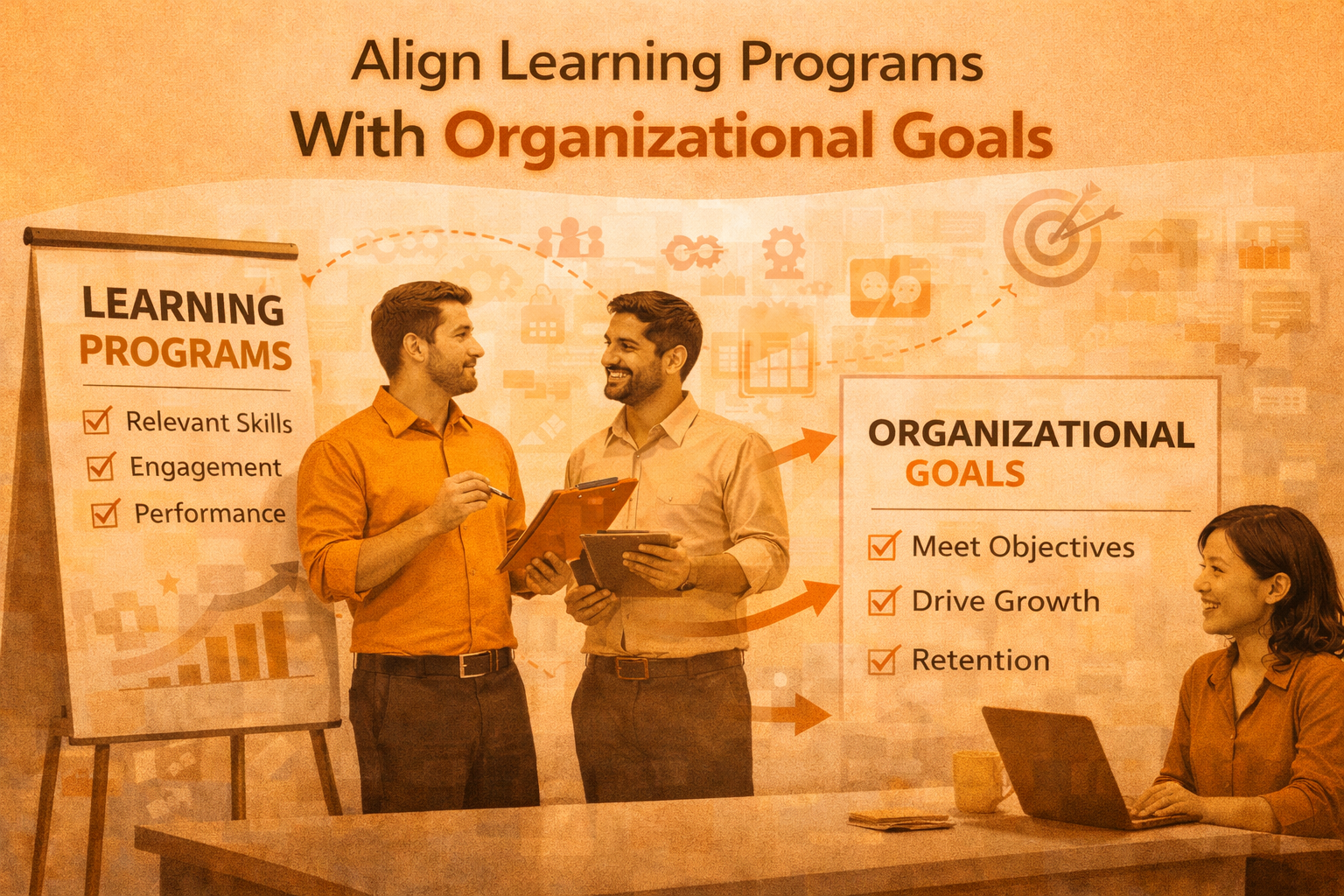
To achieve this alignment, start by identifying the critical skills and performance gaps holding back the company. This often involves collaboration between HR, team leaders, and business executives. Once these priorities are clear, it’s important to consider performance metrics and quality benchmarks.
Also, embed learning into career pathways as well as performance reviews so employees can see how their skills relate to promotions and long-term growth. Let’s look at some effective strategies to do so:
- Define how each training program supports business goals.
- Ensure higher management is involved in the program design process.
- Use metrics and feedback to adjust the content.
- Make learning a regular part of growth discussions and organizational goals.
In this way, you won’t simply build skills using your company’s programs. It’s also possible to strengthen workforce capabilities in ways that matter to the business at large.
Cultivate a Culture of Ongoing Learning and Feedback
Learning should never be treated as a one-time activity. The minute that happens, you can be sure that even the best training program will fall short. Organizations that experience rapid growth regard learning as a lifelong process.
When learning becomes a part of work, employees get to adapt and grow meaningfully over time. According to the World Economic Forum’s Future of Jobs Report 2025, several core skills of value are expected to gain importance in the coming years.
Nearly six in 10 workers will require new or updated training to remain competitive by 2030. Can periodic training keep up with this? It’s far from likely, so the need of the hour is ongoing learning.
Most importantly, at the heart of such a culture is continuous feedback. A constructive dialogue is what your employees need to understand where they stand and how they can improve. To nurture a wholesome culture of learning and feedback, take the following steps:
- Enable learning opportunities in the form of mentorship and coaching.
- Include small learning moments into every employee’s daily work in the form of quick resources or a questionnaire.
- Celebrate progress and efforts openly.
- Conduct regular and specific feedback conversations instead of rigid annual ones.
Just remember that building such a culture seldom happens in a vacuum. Be intentional about it, but do not overthink it. Sometimes, the most valuable learning experiences come from trial and error.
Most companies are busy collecting the best talent and technology. While there is nothing wrong with that, there is no guarantee that these alone would suffice.
The need of the hour is for organizations to learn on purpose. Once changes are made at the deepest level, growth becomes a part of a company’s daily routine. In short, a workplace may be considered ready for any future challenges or opportunities.