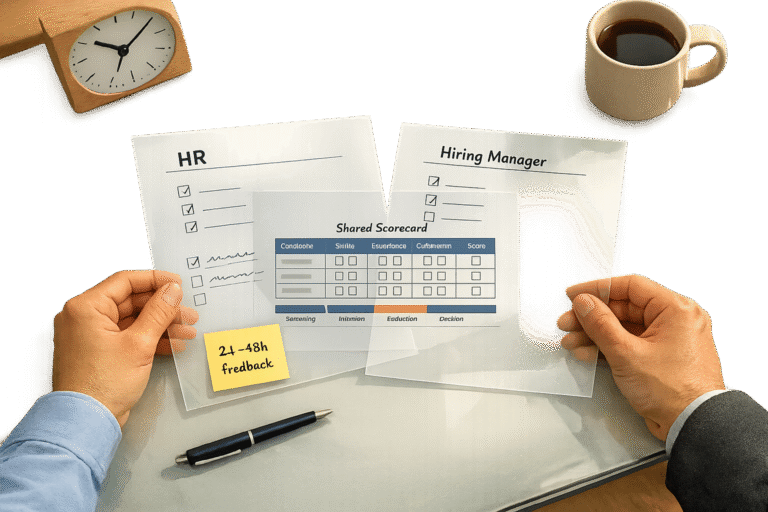
Finding the right talent isn’t just about HR or hiring managers working alone – it requires teamwork. HR manages recruitment logistics, while hiring managers focus on role-specific needs. But misalignment can lead to slow hiring, missed opportunities, and high turnover.
Key challenges:
- Slow feedback: 67% of recruiters wait over two days for hiring manager input.
- Unrealistic expectations: 56% of recruiters face "unicorn" demands.
- Ambiguous roles: Undefined responsibilities cause inefficiencies.
Solutions:
- Collaborate on job descriptions for clarity and alignment.
- Schedule weekly check-ins to share updates and feedback.
- Use structured evaluation criteria to ensure fair, consistent decisions.
Tools like Skillfuel centralize candidate data, streamline communication, and automate tasks, helping HR and hiring managers work together effectively. Clear communication and shared goals are the foundation of successful hiring partnerships.
Uniting Hiring Managers and Recruiters – Collaborative Recruitment Approach
sbb-itb-e5b9d13
HR and Hiring Manager Responsibilities
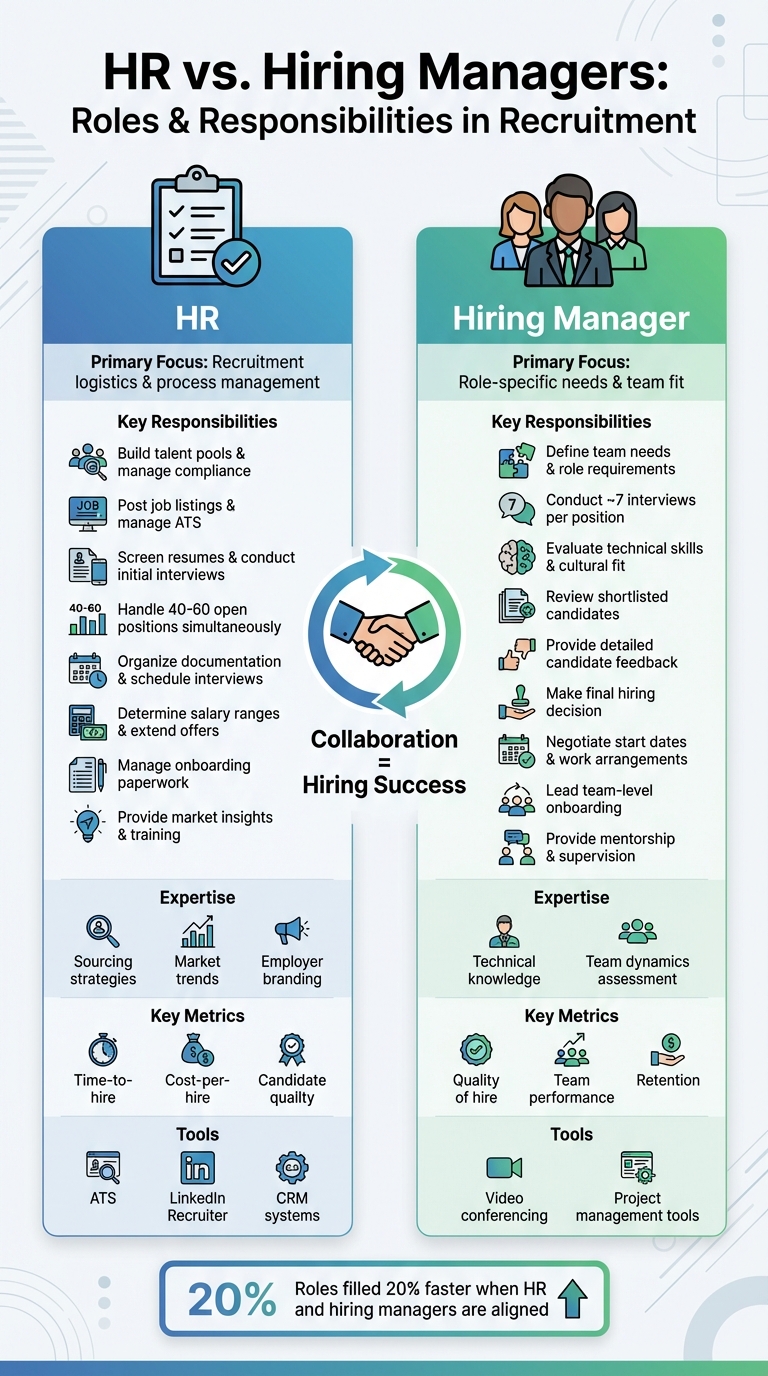
HR vs Hiring Manager Roles and Responsibilities in Recruitment
Defining roles clearly is the cornerstone of effective hiring collaboration. HR teams focus on recruitment logistics – building talent pools, managing compliance, and streamlining processes – while hiring managers zero in on role-specific needs and evaluating whether candidates are a good fit for their team.
This division of responsibilities is standard in most companies. On average, hiring managers conduct around 7 interviews per open position, leveraging their expertise to assess technical skills and team dynamics – areas where their deep involvement adds critical value.
"The job of a good recruiter, therefore, is to make the hiring decision a hard one for the hiring manager by assembling a list of high-quality applicants." – SmartRecruiters
However, when responsibilities blur or remain undefined, inefficiencies crop up. For example, 66% of candidates have walked away from potential jobs simply because the hiring process dragged on too long. The solution? Clearly outline who handles each step – from crafting the job posting to issuing the final offer letter. This clarity fuels smoother collaboration and faster decision-making.
What HR Does in Recruitment
HR lays the groundwork for the hiring process. They craft company-wide recruitment strategies, scout potential candidates through networking and social media, and build a pipeline of talent even before roles open up. When a position becomes available, HR steps in to post job listings, manage applicant tracking systems (ATS), and screen resumes. They also conduct initial phone interviews to weed out unqualified applicants. Considering that recruiters often juggle between 40 and 60 open positions at once, their ability to efficiently narrow down candidates is crucial.
HR also oversees the administrative side of hiring. This includes organizing candidate documentation, ensuring legal compliance, scheduling interviews, and handling salary and benefits discussions. Once a candidate is chosen, HR determines salary ranges, verifies references, extends offers, and negotiates terms. They also play a key role in onboarding, ensuring all necessary paperwork is completed and helping new hires transition into their roles.
Beyond logistics, HR supports hiring managers by offering training and market insights. They guide managers on interview techniques, behavioral questioning methods, and current trends in salary expectations and candidate availability.
What Hiring Managers Do in Recruitment
Hiring managers focus on identifying team needs and defining the specific requirements of open roles. They bring a deep understanding of technical demands, team dynamics, and what success looks like in the position. During interviews, they evaluate technical expertise and how well candidates align with the team’s culture. They review the shortlist provided by HR, participate in multiple interview rounds, and provide detailed feedback on each candidate’s strengths and areas for improvement.
Ultimately, the hiring manager usually has the final say on who gets the job. After HR presents a pool of qualified candidates, the hiring manager decides who receives an offer. They also negotiate specific details, like start dates or remote work options, within the budget and parameters set by HR.
Once a candidate is hired, the hiring manager’s role becomes even more hands-on. They take charge of onboarding at the team level – offering direct supervision, mentorship, and support to help the new hire succeed. While HR handles broader onboarding tasks like compliance and documentation, the hiring manager ensures the employee is integrated into ongoing projects, introduced to key stakeholders, and aligned with performance expectations. These distinct but complementary roles make the hiring process more efficient and effective at every stage.
How HR and Hiring Managers Differ
HR teams and hiring managers both aim to bring in top-tier talent, but their roles in the hiring process are quite distinct. Think of HR as the engine that keeps the recruitment process running smoothly – handling tasks like sourcing, screening, and ensuring a positive candidate experience. Meanwhile, hiring managers act as the drivers, steering the process by focusing on the technical and team-specific needs of a position. Christina Vidauri, Principal Recruiter at SeekOut, explains it well: "I think of recruiting as the engine and the hiring manager as the driver. I keep things moving and can adjust the speed as needed, but the hiring manager has to steer and pay attention."
Each brings unique expertise to the table. HR professionals excel in areas like market intelligence, salary benchmarking, and ensuring inclusive hiring practices. On the other hand, hiring managers rely on their technical knowledge to evaluate how well a candidate fits the immediate needs of their team. This division of labor means HR often focuses on assessing soft skills and overall cultural alignment, while hiring managers zero in on technical skills and the candidate’s potential for immediate contribution.
However, this dynamic isn’t without its challenges. Hiring managers may seek "perfect" candidates, while HR, guided by market realities, often has to set realistic expectations. This difference in priorities can sometimes create friction.
Comparison Table: HR vs. Hiring Managers
| Aspect | HR / Recruiter | Hiring Manager |
|---|---|---|
| Primary Focus | Overseeing the entire recruitment process and ensuring a great candidate experience | Addressing team-specific goals and ensuring technical fit |
| Expertise | Sourcing strategies, market trends, and employer branding | Deep technical knowledge and understanding of team needs |
| Decision Authority | Screens candidates and provides recommendations | Makes the final hiring decision |
| Key Metrics | Time-to-hire, cost-per-hire, and candidate quality | Quality of hire, team performance, and retention |
| Tools Used | ATS, LinkedIn Recruiter, and CRM systems | Video conferencing and project management tools |
| Common Challenge | Juggling 40–60 open requisitions at once | Balancing recruitment responsibilities with daily team management |
Understanding these differences is crucial for fostering collaboration. When HR and hiring managers recognize each other’s strengths and limitations, they can work together more effectively. Mutual respect and clear communication are the foundation for overcoming recruitment challenges and achieving shared hiring goals.
Common Collaboration Problems Between HR and Hiring Managers
Even though HR and hiring managers aim for the same outcome – hiring top talent – the road to success often comes with its fair share of challenges. One of the most common issues is the "feedback black hole." Data shows that 67% of recruiters report it takes hiring managers at least two working days to provide feedback on resumes, and 59% say it takes two or more days after interviews for managers to debrief. These delays don’t just slow things down – they cost companies great candidates. In fact, 66% of candidates have walked away from opportunities because the process took too long.
Another big obstacle is what’s often called the "unicorn hunt." Hiring managers sometimes set unrealistic expectations, seeking senior-level expertise for roles that don’t require it or demanding a mix of skills that’s nearly impossible to find. This isn’t a rare issue either – 56% of recruiters cite unrealistic demands from hiring managers as a major challenge. As John Vlastelica, Founder of Recruiting Toolbox, puts it:
"Misalignment is the root of all evil!"
Ambiguous or shifting job requirements also derail the process. When job descriptions are outdated or when hiring managers operate on an "I’ll know it when I see it" mindset, recruiters are left guessing. This often results in candidates who check all the boxes on paper but don’t meet unspoken expectations. It’s no surprise that 46% of recruiters say they struggle to separate must-have skills from "nice-to-haves" when working with hiring managers. The outcome? Wasted interviews, searches that need to start over, and growing frustration on both sides.
Rushed or incomplete kickoff meetings only make matters worse. In 57% of organizations, recruiters are expected to "own" the hiring process, leaving hiring managers less engaged. When intake meetings are skipped or rushed, essential details are overlooked, and the search starts off on the wrong foot. Roberta Matuson, President of Matuson Consulting, captures the dynamic perfectly:
"Hiring managers are exasperated with HR’s inability to fill open requisitions, while at the same time, HR is frustrated with hiring managers who are not making recruitment a priority."
Lastly, communication breakdowns are a persistent issue, often made worse by fragmented tools. Many teams still rely on basic email or messaging software, which leads to lost information and repeated questions. With 45% of recruiters depending solely on these tools to communicate with hiring managers, valuable insights often disappear into email chains or Slack threads. This lack of organization results in inconsistent evaluations, wasted time, and missed opportunities. These challenges highlight the need for better collaboration strategies between HR and hiring managers.
How to Improve Collaboration Between HR and Hiring Managers
Collaboration gaps between HR and hiring managers can be addressed with deliberate alignment at every stage of the hiring process. As Metaview wisely observes:
"Most recruiting problems aren’t talent problems. They’re alignment problems."
When HR and hiring managers work as true partners instead of operating in silos, the hiring process becomes faster, clearer, and more efficient. Below are three actionable strategies to strengthen this partnership and achieve better hiring outcomes.
Create Job Descriptions Together
The foundation of a successful hiring process starts with a well-crafted job description – and it’s best when created collaboratively. Interestingly, 72% of hiring managers consider the job description to be the most critical part of the hiring process.
HR and hiring managers each bring unique expertise to the table. HR contributes insights into market trends, salary benchmarks, and candidate-attracting language, while hiring managers provide technical knowledge, role-specific details, and a clear vision of what success looks like for the position. Together, they can pinpoint the "must-have" skills versus the "nice-to-have" qualifications, making the description more precise and inclusive.
This approach also helps tackle a known bias: men often apply for jobs when they meet only 60% of the qualifications, while women tend to apply only if they meet 100%. By focusing on the three most essential attributes, teams can simplify the process and attract a broader, more diverse pool of candidates.
Schedule Regular Check-Ins and Share Feedback
Consistent communication is key. Shawna Hondorp, Area Lead at Disher Talent, highlights the importance of staying engaged:
"Recruiting isn’t ‘set it and forget it.’ It’s an iterative process, and staying aligned is an active job."
Short, weekly check-ins – just 15–30 minutes – help both HR and hiring managers stay on the same page. These meetings allow for quick updates, sharing market insights, and addressing potential roadblocks before they escalate. They also give hiring managers a chance to provide timely feedback on resumes and interviews.
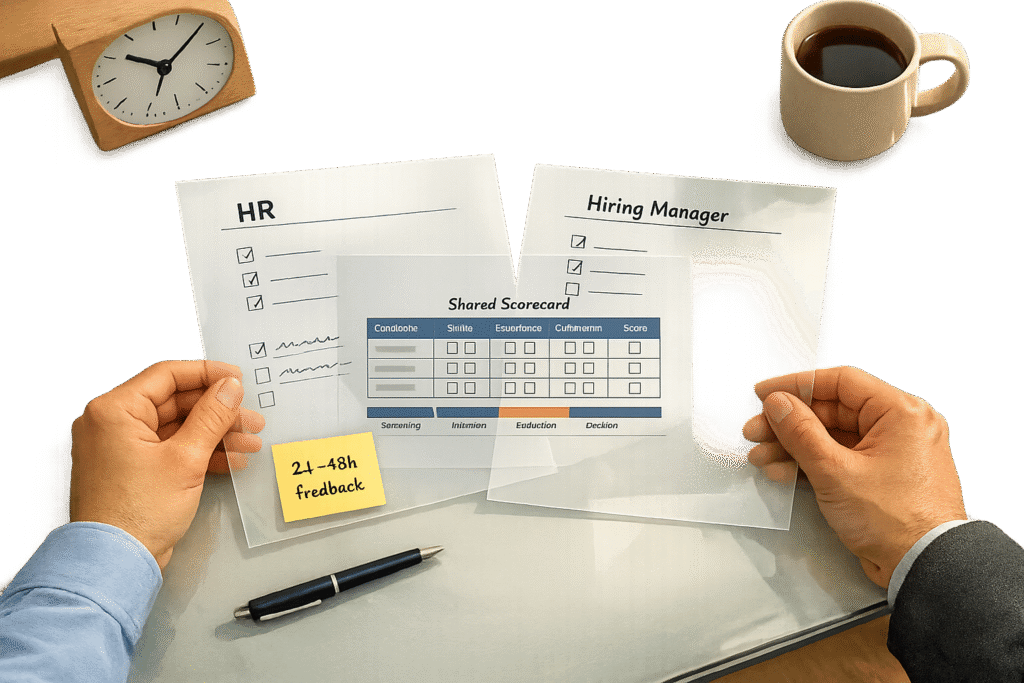
To keep the process moving, establish a feedback timeline. A 24–48 hour rule for providing specific, evidence-based feedback ensures momentum isn’t lost. This is especially important since recruiters often handle 40 to 60 open roles at a time. Quick, actionable feedback not only keeps top candidates engaged but also strengthens the partnership between HR and hiring managers.
Agree on Candidate Evaluation Standards
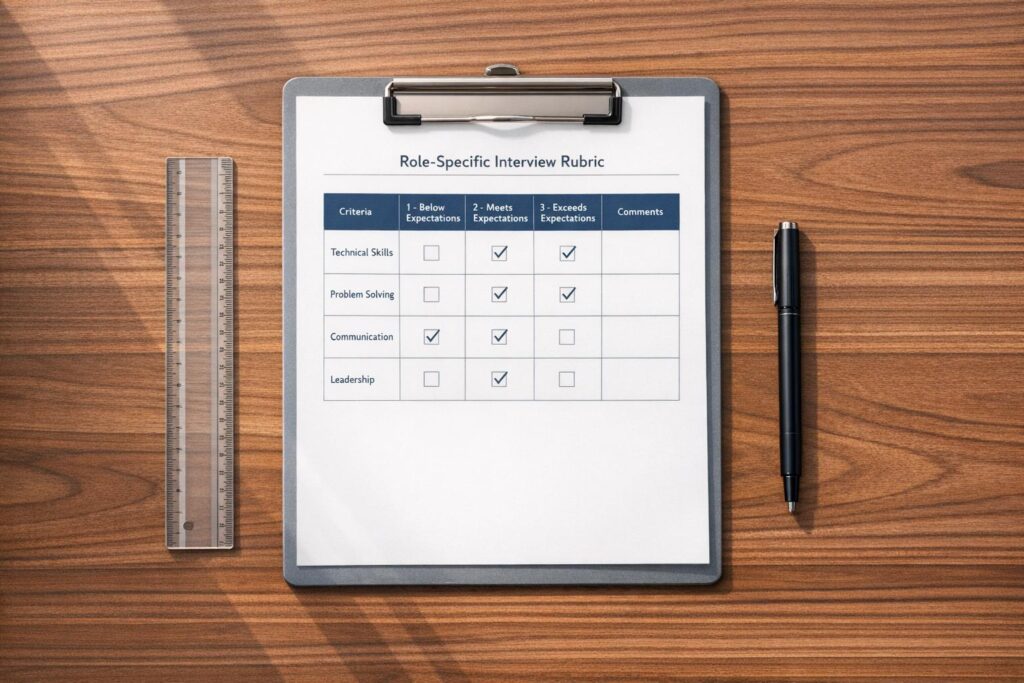
Clear and consistent evaluation criteria lead to better hiring decisions. Without them, hiring managers might reject candidates based on vague impressions like "didn’t click" or "not quite right", leaving HR in the dark about what went wrong. Structured interviews, however, are proven to be twice as effective as unstructured ones in predicting job performance.
The best way to avoid confusion is by creating a shared scorecard before screening begins. This scorecard should outline the technical skills, soft skills, and role alignment criteria to be assessed, along with a standardized scoring system. Assign different focus areas to interviewers – such as technical expertise or leadership potential – to avoid overlap and ensure a thorough evaluation.
Another useful practice is the "Week 2 Calibration Review." After reviewing the first group of candidates, HR and hiring managers can evaluate whether the profiles align with expectations or if adjustments are needed. This early checkpoint helps refine the search criteria, saving time and ensuring alignment throughout the hiring process.
Using Skillfuel to Improve HR and Hiring Manager Collaboration
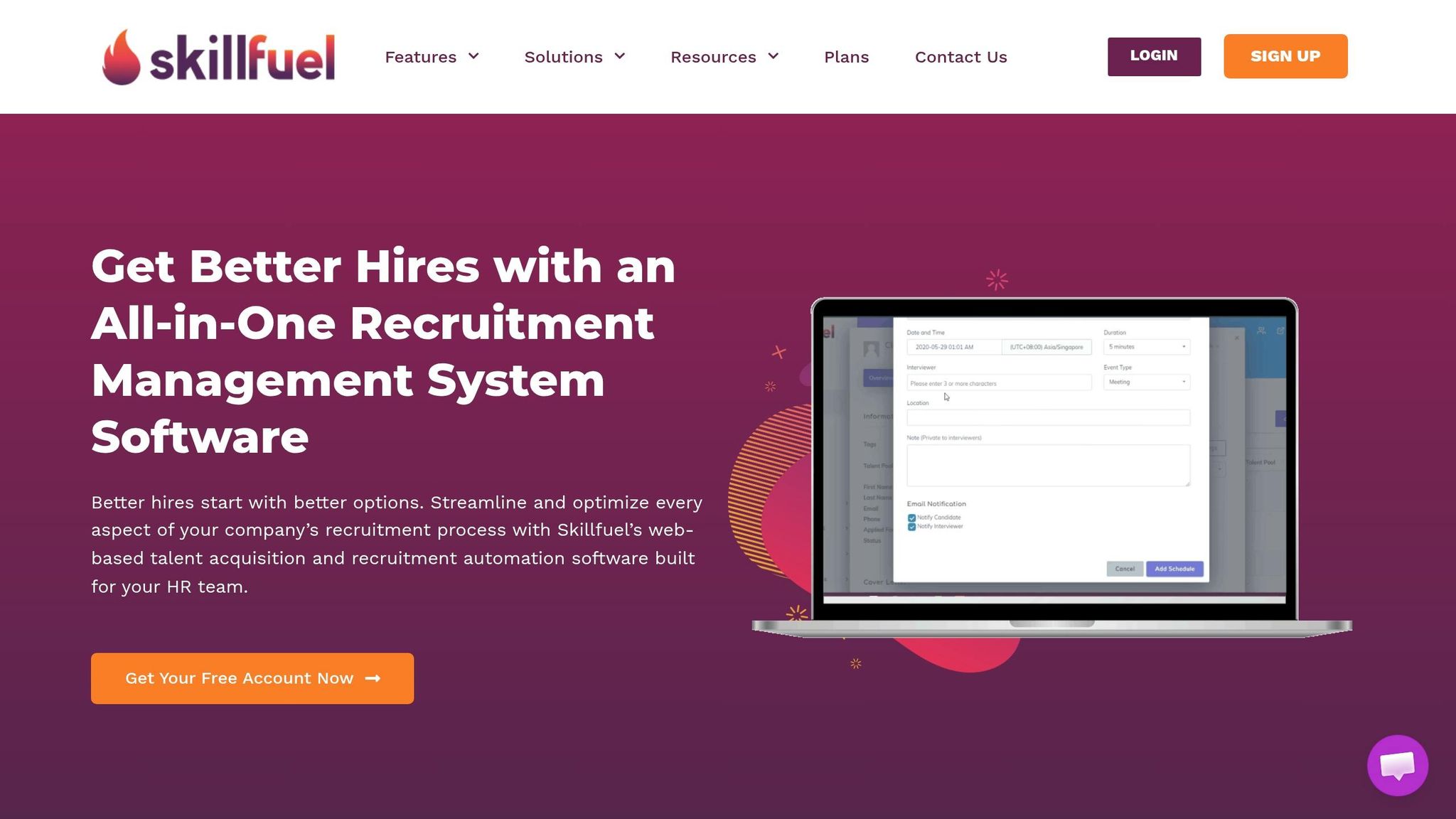
Skillfuel’s platform takes collaboration between HR and hiring managers to the next level by simplifying and organizing candidate management. By addressing common hurdles like scattered data and miscommunication, Skillfuel creates a smoother, more efficient hiring process.
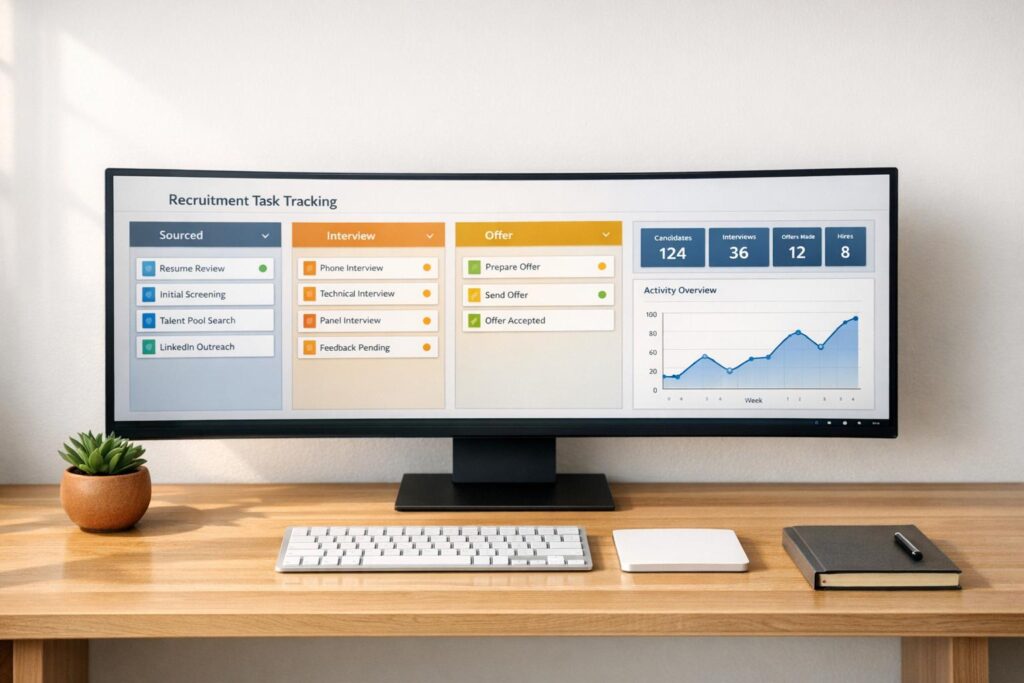
The centralized dashboard is a game-changer. Instead of juggling spreadsheets and endless email threads, both HR and hiring managers can access real-time candidate profiles, feedback, and status updates – all in one place. This eliminates information silos and ensures everyone stays on the same page. Add to that the Kanban workflow, which visually maps out candidate progress, highlights bottlenecks, and helps teams act quickly. It’s a straightforward way to keep the hiring process moving efficiently.
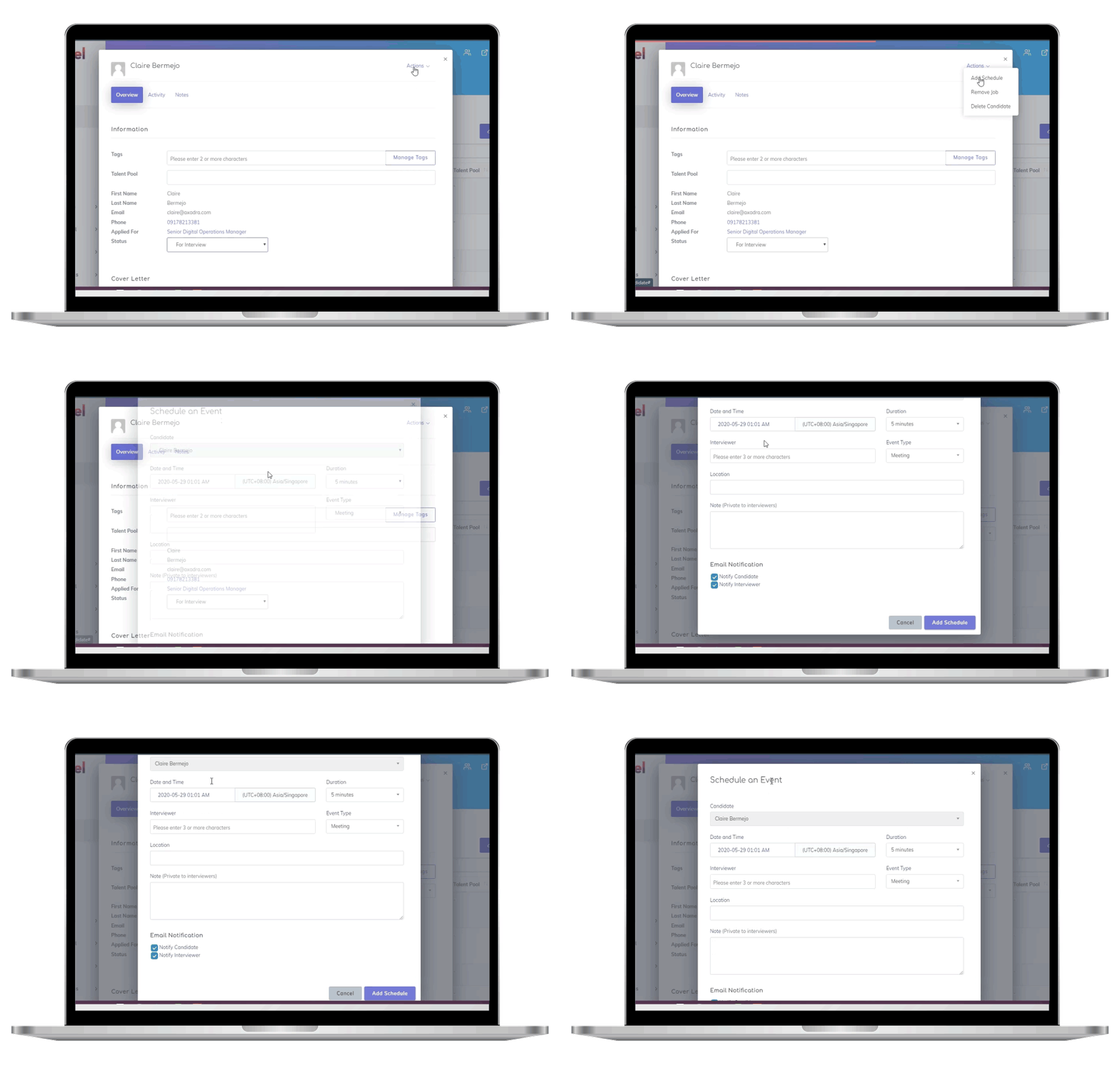
Scheduling headaches? Skillfuel’s Interview Scheduler syncs seamlessly with popular calendar apps, cutting out delays. HR teams can also share interview prep notes and standardized questions directly within the platform, ensuring hiring managers are well-prepared and consistent in their evaluations.
Timely feedback is another area where Skillfuel shines. The integrated feedback tools let hiring managers share evaluations immediately after interviews, keeping feedback specific and actionable. This is especially important when 82% of companies say data is critical to guiding their hiring decisions. Automated updates also keep candidates informed, reducing administrative back-and-forth and letting HR and hiring teams focus on what matters most – finding the right hire.
For smaller teams, Skillfuel offers a free plan, making it an easy choice for organizations wanting to improve collaboration without stretching budgets. As companies grow, Skillfuel’s scalable pricing ensures it can adapt to their expanding needs, supporting every stage of the hiring journey.
Building Long-Term Partnerships Between HR and Hiring Managers
Creating lasting partnerships between HR and hiring managers is essential for consistent recruitment success. The best teams view collaboration as an ongoing effort, not just something triggered by an open position.
Hold Regular Feedback Sessions
Frequent communication keeps both teams on the same page and helps address small issues before they escalate. Scheduling weekly or bi-weekly check-ins – short 15–30 minute meetings – can cover pipeline updates, upcoming interviews, and any changes in hiring needs. These "micro-syncs" foster transparency and accountability. In fact, research shows that roles are filled 20% faster when recruiters and hiring managers are aligned.
Adopting a 24–48 hour feedback rule ensures hiring managers provide timely, actionable feedback after interviews. This is particularly important as 94% of candidates want interview feedback, but only 41% actually receive it. Additionally, recruiters who conduct thorough intake meetings and share weekly pipeline updates are rated 40% higher by hiring managers. Setting clear expectations early reduces unnecessary back-and-forth, streamlining the entire process.
To make these feedback loops work smoothly, having the right tools and training in place is essential.
Use Integrated Tools and Provide Training
Shared technology can act as the backbone of effective collaboration. Platforms like Skillfuel centralize candidate information, enabling both HR and hiring managers to track progress, leave comments, and review interview notes in real time. This eliminates endless email chains asking, "Where are we with this candidate?" and provides a single, reliable source of information.
Training is equally important. Organize joint training sessions to help hiring managers refine their interview techniques, understand behavioral-based questioning, and stay informed about current market trends like salary expectations and talent availability. For example, organizations using AI in recruitment have reported a 54% increase in recruiter capacity, allowing both teams to focus on strategic goals rather than administrative tasks. When everyone uses the same tools and operates with a shared understanding, collaboration becomes second nature.
Conduct Interviews Together
Collaboration during interviews can deepen understanding and improve decision-making. When recruiters and hiring managers conduct interviews together, they combine their perspectives – recruiters can assess motivation and cultural fit, while hiring managers focus on technical qualifications. This teamwork reduces unconscious bias and results in better hiring decisions.
Before interviews, co-develop structured guides and scorecards to ensure every candidate is evaluated consistently. Structured interviews, as studies show, are twice as effective at predicting job performance compared to unstructured ones. After interviews, hold formal debrief sessions where both parties share specific observations tied to agreed-upon criteria, avoiding vague comments like "we just didn’t connect."
Encourage recruiters to shadow the hiring manager’s team or attend team meetings. This firsthand exposure helps recruiters better understand the role and team dynamics, enabling them to screen candidates more effectively and communicate authentically during interviews.
"Developing strong relationships with hiring managers is the top driver of talent acquisition performance." – Bersin by Deloitte
Finally, once a hire is made, hold post-hire retrospectives with the entire interview team. These sessions evaluate what worked, what didn’t, and identify ways to improve the hiring process for future roles. By treating hiring as a continuous partnership rather than a one-time task, teams can strengthen their collaboration and achieve better results with every new hire.
Conclusion
Hiring success hinges on collaboration between HR and hiring managers. When these teams join forces right from the start – working together on job descriptions, maintaining regular check-ins, and sticking to structured evaluation criteria – they not only speed up the hiring process but also attract stronger candidates.
Clear and timely communication plays a critical role. For example, when hiring managers provide feedback within 24–48 hours and recruiters share weekly updates on the candidate pipeline, the process stays on track. Without this alignment, delays can frustrate candidates, leading them to walk away from opportunities.
Technology also plays a big part in simplifying the process. Tools like Skillfuel centralize candidate data, automate scheduling, and provide real-time hiring insights, cutting down on endless email threads and ensuring everyone works from a single, accurate source of information. With 98.4% of Fortune 500 companies utilizing Applicant Tracking Systems, it’s clear that integrated tools like these have become essential for staying competitive in today’s hiring landscape.
But perhaps the most important factor is treating hiring as a genuine partnership – not just a handoff. When recruiters and hiring managers respect each other’s expertise, they create a unified approach. Recruiters bring market insights and sourcing strategies, while managers contribute technical knowledge and team dynamics. Together, they form a cohesive team that’s better equipped to attract top talent.
Building this partnership requires effort, like scheduling joint training sessions, offering shadowing opportunities, and consistently using shared tools. The benefits, however, are worth it: faster hiring, stronger candidates, and a positive candidate experience that boosts your employer brand. Start small with weekly sync meetings and structured scorecards to set the foundation for success.
FAQs
Who owns each step of the hiring process?
Each stage of the hiring process is typically shared between HR and the hiring manager to keep things running smoothly. Hiring managers are responsible for tasks like defining job requirements, reviewing resumes, conducting interviews, and ultimately making the final hiring decision. On the other hand, HR or recruiters take charge of crafting job descriptions, finding potential candidates, and handling initial screenings. Clearly defining these roles helps ensure the process is both efficient and effective.
How can we stop “unicorn” requirements?
When hiring, it’s easy to get caught up chasing "unicorn" candidates – those mythical hires who seem to tick every single box on an overly ambitious wishlist. Instead, focus on identifying realistic and essential skills for the role. Separate the must-haves from the nice-to-haves and place value on transferable skills rather than overly specific expertise.
Another way to streamline the process is by setting measurable goals, such as a 90-day performance plan. This approach helps clarify expectations and ensures you’re prioritizing candidates who can deliver real results. By keeping the focus practical, you’ll create a more efficient and effective hiring process.
What should be included in a shared interview scorecard?
A shared interview scorecard should emphasize objective criteria such as a candidate’s skills, qualifications, and alignment with the company’s values. Incorporating standardized rating scales helps maintain fairness and consistency during evaluations. This approach ensures all interviewers assess candidates based on the same measurable factors, minimizing bias and fostering better collaboration between HR and hiring teams.