
Tracking diversity metrics in recruitment is essential for building a fair hiring process and creating a workforce that reflects diverse perspectives. Companies that monitor these metrics experience better retention rates, higher innovation, and attract top talent who value diversity. Here’s what you need to know:
- Why it matters: Data reveals where underrepresented candidates face challenges, enabling targeted improvements.
- Key metrics to track:
- Workforce demographics by race, gender, age, etc.
- Candidate progression through hiring stages (e.g., application to offer).
- Retention, promotion, and pay equity trends.
- How to collect data:
- Candidate self-identification surveys.
- Recruiter observations or software-based demographic inferences.
- Tools to use: Platforms like Skillfuel streamline tracking with dashboards, automated reports, and bias-reduction features.
- Next steps: Use data to identify biases, set measurable goals, and refine hiring strategies.
Diversity tracking isn’t just about compliance – it’s about creating a hiring process that aligns with business goals and attracts the best talent. Start small, focus on key metrics, and use data to drive meaningful improvements.
Top 4 DEI (Diversity, Equity, Inclusion) Metrics Every HR Leader Should Track| greytInsights
sbb-itb-e5b9d13
Key Diversity Metrics to Track
Measuring diversity in recruitment involves looking at three critical areas: who’s currently part of your workforce, how candidates progress through your hiring process, and whether employees are staying and advancing. These metrics help pinpoint where your recruitment efforts are thriving – or falling short.
Workforce Composition Metrics
Workforce composition focuses on understanding who makes up your organization. This involves tracking demographics such as race, gender, age, disability status, and veteran status across all levels of your company. The real insight comes from breaking this data down by job level and department. For instance, if 30% of entry-level hires come from underrepresented groups but only 8% reach senior positions, the issue lies in retention and promotion rather than recruitment. Similarly, if your marketing team is diverse but your engineering team isn’t, it’s clear where your efforts need to shift.
Comparing your internal demographics to local labor market data or industry benchmarks can help establish realistic goals. If your workforce diversity lags significantly behind your applicant pool, it’s likely that bias is creeping into your selection or interview process. It’s worth noting that 82% of companies now acknowledge the importance of data in guiding talent acquisition decisions. These foundational metrics are essential for driving any diversity initiative. The next step is understanding how diverse candidates move through your hiring pipeline.
Recruitment Funnel Metrics
Funnel metrics help you track diversity at each stage of the hiring process, making it easier to identify where underrepresented candidates drop out. Start by measuring candidate representation – the percentage of applicants from underrepresented groups entering your pipeline via applications, sourcing, or referrals. Then assess your diversity sourcing ratio to ensure you’re tapping into diverse talent pools, such as HBCUs or veteran networks, to attract candidates proactively.
One of the most telling metrics is stage-to-stage conversion rates. For example, if 35% of your applicants are from diverse backgrounds but only 10% of your finalists are, this points to bias during screening or interviews. Additionally, monitor the interview-to-offer ratio to confirm that interview panels are evaluating candidates equitably across all demographics. Tracking offer acceptance rates can also reveal whether underrepresented candidates see your workplace culture and compensation as competitive. Lastly, keep an eye on time-to-hire, especially for roles like engineering, where underrepresented candidates often receive competing offers within just 5–12 days.
"If diverse candidates exit the funnel disproportionately at any stage, you’ve identified a point of bias." – National Search Group
These metrics not only highlight areas for improvement in hiring but also set the stage for understanding retention and advancement.
Retention and Advancement Metrics
Hiring a diverse workforce is only the beginning; ensuring they stay and thrive is just as important. Start by tracking retention by cohort at intervals like 6, 12, and 24 months to uncover any gaps in inclusion or potential manager bias. Next, measure promotion and internal mobility rates to confirm that diverse employees have equal opportunities to move into leadership roles. Conducting a pay equity analysis – comparing starting salaries and merit increases across demographic groups – can reveal whether your compensation practices are fair and equitable.
Organizations that consistently track these metrics often see meaningful outcomes. For example, companies that monitor diversity hiring metrics report 35% better retention rates and 70% higher levels of innovation. Shifting the focus from simply hiring diverse talent to ensuring their success within the organization provides a clearer picture of whether your efforts are truly effective.
How to Collect Demographic Data
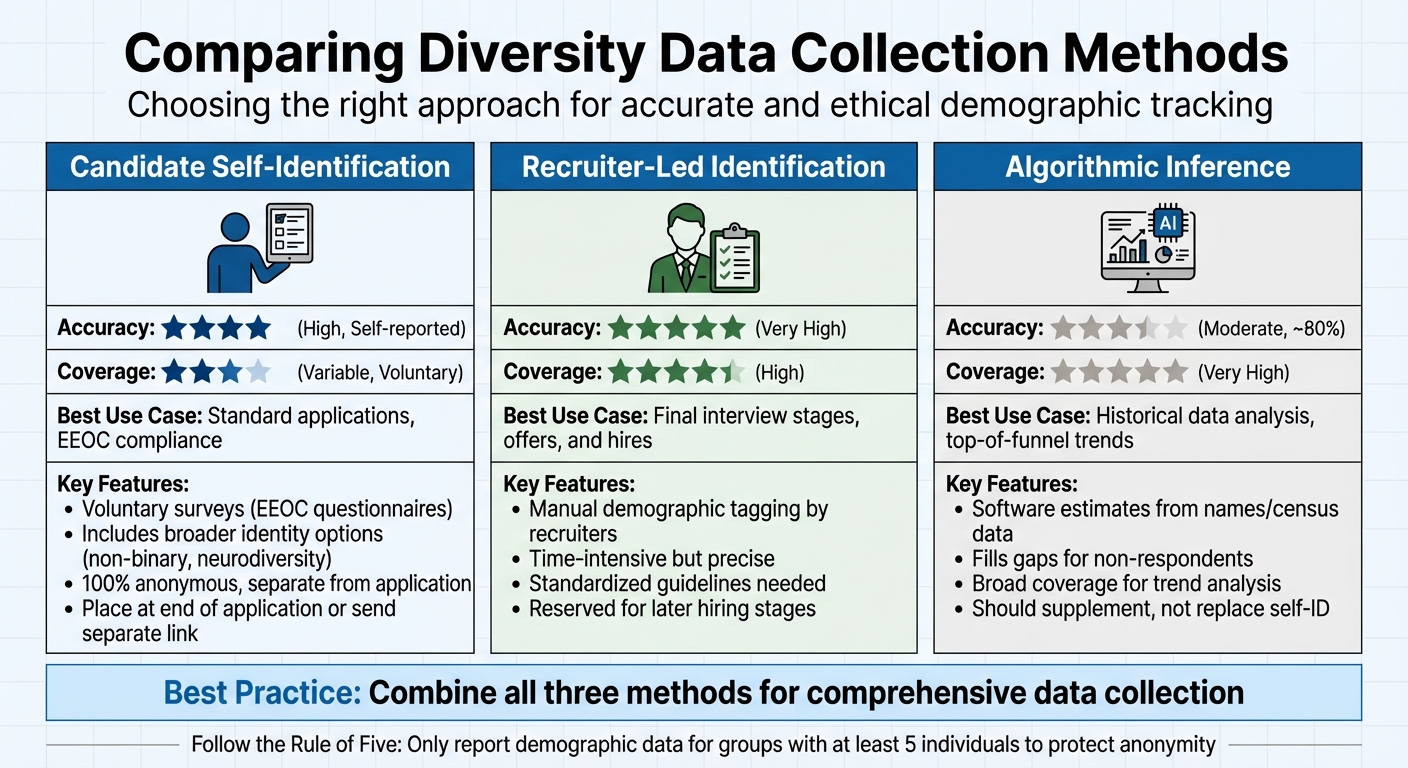
Diversity Data Collection Methods Comparison Chart
Gathering demographic data is essential for tracking diversity trends while ensuring candidate privacy. Most organizations rely on three main methods: candidate self-identification, recruiter observations, and algorithmic inference. A combination of these approaches often works best to fill data gaps and maintain accuracy. Let’s break down these methods to see how they contribute to effective and respectful data collection.
Candidate Self-Identification
Self-identification is the cornerstone of demographic data collection. Candidates voluntarily share details via surveys, often using EEOC questionnaires or custom forms that include broader identity options like non-binary gender, neurodiversity, or first-generation college status. Transparency is key to encouraging participation. A clear statement like the one below can help reassure candidates:
"The information shared here is strictly optional, and cannot and will not affect your job application in any way. It’s also 100% anonymous, and is not linked to your name, identity, or application."
– Workable
To emphasize that the survey is separate from the hiring process, place it at the end of the application or send it as a separate link. Applicant tracking systems can automate survey requests, ensuring all candidates – including those sourced or referred – are included. Additionally, forms should use inclusive language (e.g., gender options like "Non-binary" or "Prefer to self-describe") and store demographic data separately from application details to avoid influencing hiring decisions.
Recruiter Observations and Inferences
When self-identification data is incomplete, recruiters may manually assign demographic tags to candidates. This method is highly accurate but time-intensive, so it’s typically reserved for later stages, such as when offers are extended or hires are made. To minimize bias, establish standardized guidelines for recruiter tagging.
Another option is algorithmic inference, where software estimates demographics based on names and census data. While this method can cover a broad range and help fill gaps in historical data, its accuracy is about 80%. It’s particularly useful for analyzing trends at the top of the recruitment funnel or for candidates who don’t self-identify. However, it should only supplement, not replace, direct self-identification.
Combining Multiple Data Collection Methods
To ensure comprehensive data, combine all three methods. Use self-identification as the primary approach, rely on algorithmic inference to estimate trends for non-respondents, and apply recruiter-led tagging for final-stage candidates where precision is critical. For instance, if many applicants skip the self-identification survey, inference can help spot diversity trends in that group, while recruiter tagging ensures accuracy for hires.
| Method | Accuracy | Coverage | Best Use Case |
|---|---|---|---|
| Candidate Self-ID | High (Self-reported) | Variable (Voluntary) | Standard applications, EEOC compliance |
| Recruiter-Led ID | Very High | High | Final interview stages, offers, and hires |
| Inference | Moderate (≈80%) | Very High | Historical data analysis, top-of-funnel trends |
To protect anonymity, follow the "Rule of Five" – only report demographic data for groups with at least five individuals. This prevents identification in smaller teams or departments. Assign unique participant IDs to survey responses to reduce manual handling and safeguard privacy.
Tools for Diversity Tracking
Using the right software for diversity tracking can streamline the process, offering real-time insights that help organizations make informed hiring decisions. With 82% of companies relying on data to guide their talent acquisition strategies, recruitment platforms have become indispensable for HR teams aiming to build diverse workforces. The challenge lies in selecting tools that go beyond data collection to identify biases, track progress, and guide smarter hiring choices.
Features to Look For in Diversity Tracking Tools
Centralized data management is crucial. Relying on scattered spreadsheets often leads to inaccuracies and inefficiencies. Opt for platforms that consolidate all candidate information – from application to hiring – into a single, accessible system. This ensures data accuracy and makes collaboration easier across your team.
Detailed reporting is another key feature. Effective tools should allow you to break down diversity data by variables like location, recruiter, or hiring manager. This level of granularity can uncover patterns, such as differences in candidate attraction or conversion rates across various offices or team members, that might otherwise go unnoticed.
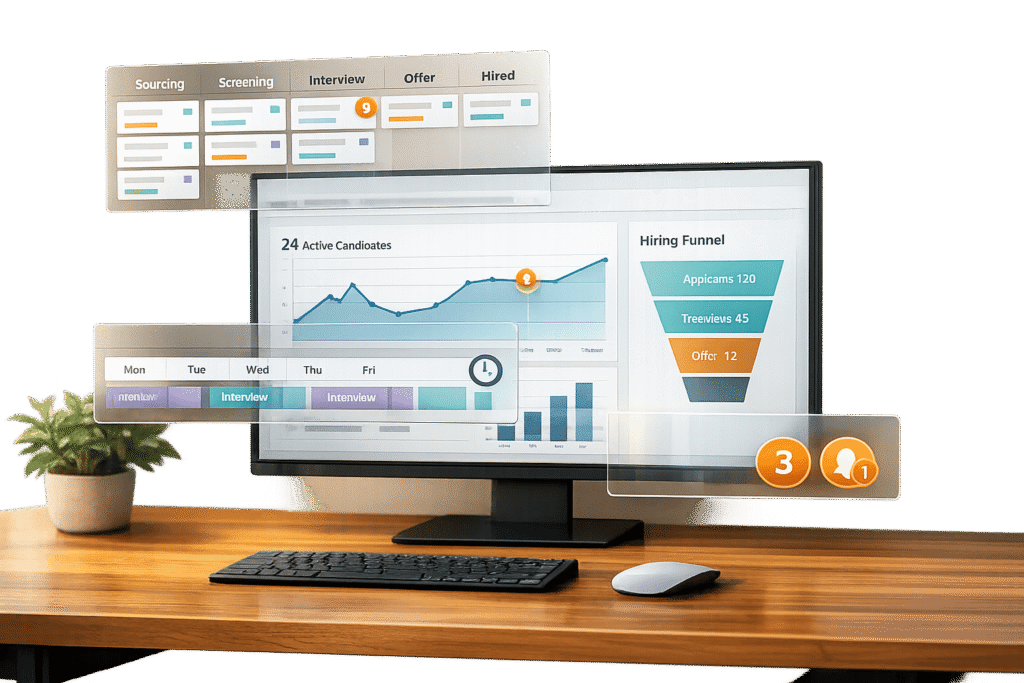
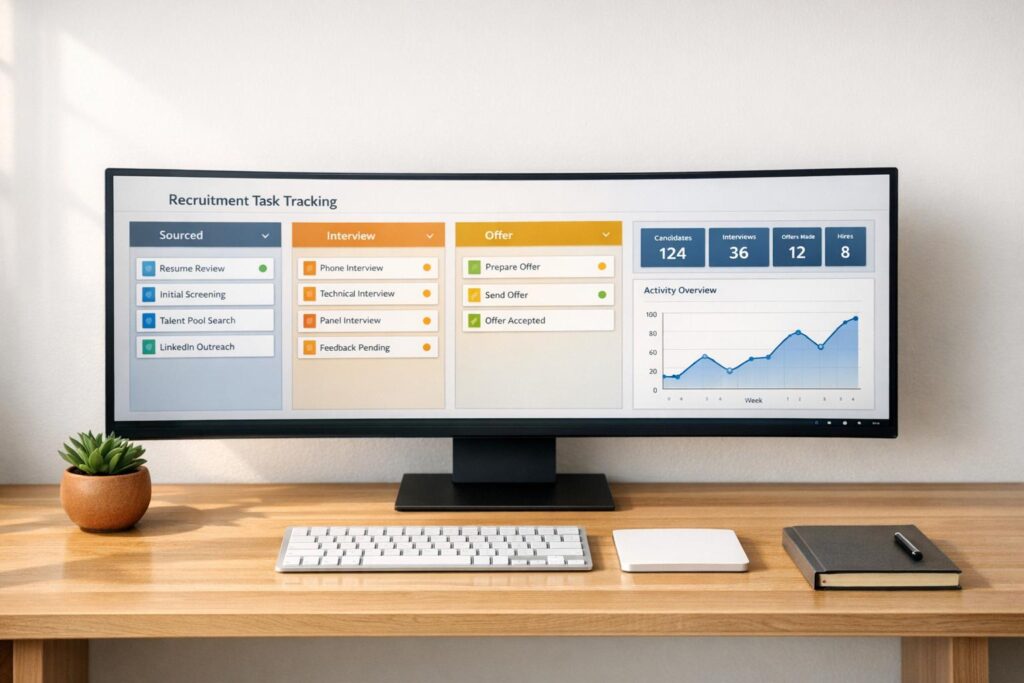
Visual workflow management is essential for identifying where diverse candidates may drop out of the recruitment process. Tools like Kanban boards and dashboards provide a clear view of candidate progress, making it easier to spot bottlenecks and address them before they become systemic issues. Coupled with automated reporting, these features can help track trends and uncover opportunities for improvement over time.
| Feature Category | Required Capabilities |
|---|---|
| Data Collection | Candidate self-identification forms, automated demographic storage, GDPR-compliant controls |
| Analytics | Real-time dashboards, diversity sourcing ratios, pass-through rate analysis by demographic group |
| Bias Reduction | Blind hiring features, structured interview templates, anonymous candidate scoring |
| Reporting | Automated diversity reports, customizable dashboards, visual trend analysis with graphs and charts |
Benchmarking capabilities are equally important. Your tool should allow you to compare your internal diversity data against general population demographics and industry-specific benchmarks. For instance, in the accounting sector, while 69.5% of bookkeepers and payroll clerks are women, only 44.6% of Chartered and Certified Accountants are female. This type of comparison highlights areas for improvement within specific industries.
These features form the backbone of a robust diversity tracking platform, and Skillfuel is an example of a tool that integrates these capabilities effectively.
How Skillfuel Supports Diversity Tracking
Skillfuel is designed to simplify and enhance diversity tracking by focusing on data-driven metrics throughout the hiring process. It eliminates the need for fragmented spreadsheets, instead offering a centralized repository that ensures demographic information is consistent and separate from application details.
The platform’s drag-and-drop Kanban boards provide a clear, visual representation of candidate progress. This makes it easy to identify where diverse candidates might be dropping out – whether during the initial screening, interview stages, or offer negotiations. As Skillfuel explains:
"Recruitment teams can use data to assess how the current hiring process may be attracting or deterring diverse talent".
This insight helps pinpoint potential issues, such as unconscious bias or unclear messaging, that might be affecting candidate outcomes.
Customizable dashboards give recruiters and hiring managers the ability to focus on the metrics that matter most. Teams can configure views to highlight diversity sourcing ratios, pass-through rates by demographic group, or time-to-hire comparisons. Automated reporting ensures that trends are tracked over time, making it easier to address emerging issues in the diversity pipeline.
Skillfuel also offers a free plan, which is ideal for small teams looking to start tracking diversity data without upfront costs. This plan includes essential tools for applicant tracking, interview scheduling, and job portal creation. As your team grows, Skillfuel scales with advanced analytics and collaboration features. Built-in compliance controls ensure that all candidate data is handled in accordance with regulations like GDPR.
Additionally, the platform supports social media recruitment and employee referral tracking, helping expand your talent pool beyond traditional job boards. By identifying which channels attract the most diverse candidates, Skillfuel enables teams to refine their recruitment strategies and focus on the sources that deliver the best results.
How to Analyze and Report Diversity Metrics
Collecting diversity data is just the first step. To make meaningful progress, you need to analyze patterns, uncover hidden biases, and communicate insights effectively. This approach ensures you can set realistic goals and address disparities.
Identifying Bias in the Recruitment Funnel
A closer look at conversion rates at each stage of the hiring process can reveal hidden biases that standard metrics often miss. For example, track how underrepresented candidates progress compared to majority candidates. If you notice significant drop-offs for certain groups at specific stages, it’s a red flag. Let’s say 40% of your interview candidates come from underrepresented groups, but only 20% receive offers – that’s a clear bottleneck worth investigating.
To stay ahead of these issues, conduct monthly audits of your recruitment funnel. Pay attention to time-to-hire metrics as well. Delays in the interview process can disproportionately impact diverse candidates, potentially costing them offers. Once you’ve pinpointed where bias exists, you can focus on setting actionable goals to address it.
Setting and Communicating Diversity Goals
After identifying areas of bias, it’s time to establish clear and realistic diversity goals. To do this, compare your team’s demographics with local census data, industry benchmarks, and even your customer base. For example, if you’re hiring accountants, it’s helpful to know that while 69.5% of bookkeepers are women, only 44.6% of certified accountants are female. This kind of context highlights where systemic gaps may exist.
Here’s a quick guide to benchmarking methods:
| Benchmarking Method | Description | Best Used For |
|---|---|---|
| Internal Benchmarking | Compare current data to previous years. | Tracking progress and evaluating initiatives. |
| Local Census Data | Compare workforce demographics to your location. | Ensuring your team reflects the local community. |
| Industry Averages | Measure against industry norms. | Identifying systemic gaps in fields like tech or manufacturing. |
| Customer Demographics | Align workforce diversity with your customer base. | Enhancing innovation and market alignment. |
Once you’ve set your goals, assign accountability. Specific leaders or managers should own each metric, and DEI objectives should be part of performance reviews. When presenting to leadership, don’t just show charts – tell the story behind the numbers. Explain how these metrics align with broader company goals.
With clear goals in place, the next step is to refine your recruitment strategies.
Adjusting Recruitment Strategies
Turn your data insights into actionable changes. If your sourcing data shows a lack of diversity in applications, start by revising your job descriptions. Look for biased language and rewrite them to attract a wider pool of candidates. Evaluate your recruitment channels – identify which ones bring in the most diverse applicants and focus your resources there.
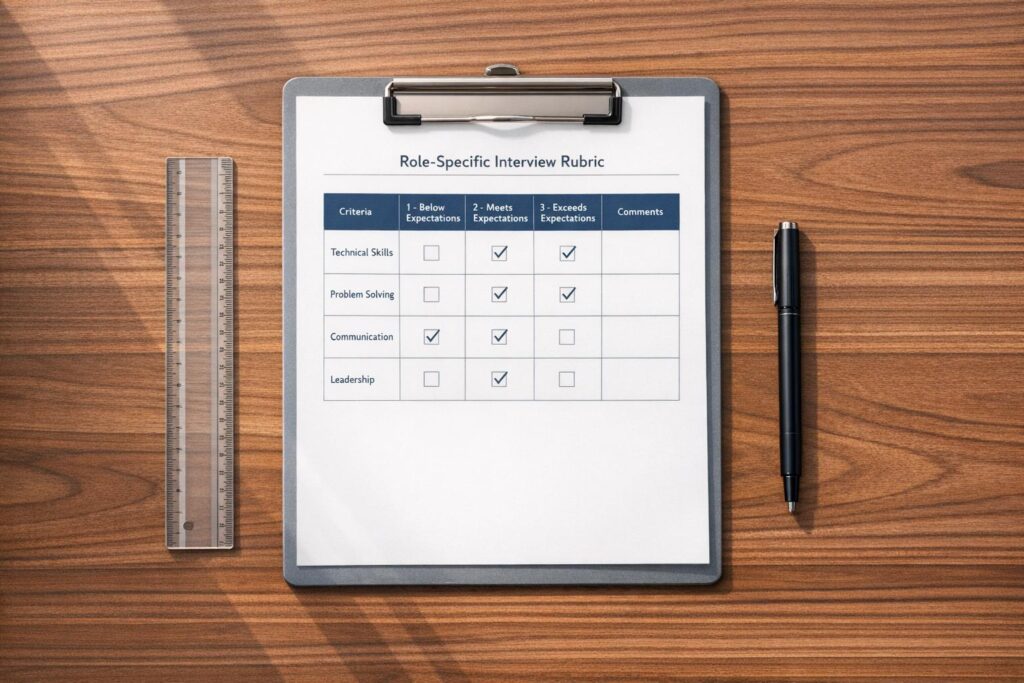
Structured interviews and diverse interview panels are essential. These ensure all candidates are evaluated using the same objective criteria. Combine quantitative data with feedback from candidates to understand the "why" behind the numbers. This approach can reveal whether certain groups feel less confident or welcome during specific stages of the hiring process.
To quote Priya Nain from RippleHire:
"What gets measured gets improved".
Conclusion
Tracking diversity metrics creates a more fair, open, and efficient hiring process. By analyzing the data, you can pinpoint exactly where biases may arise – whether in job descriptions, screening methods, or interview stages. Metrics like conversion rates, pay equity, and promotion speed turn vague assumptions into actionable strategies.
The numbers back this up. Companies that monitor diversity hiring metrics report 35% better retention rates and 70% greater innovation. Businesses with higher-than-average diversity generate 45% more revenue from innovation. Additionally, 67% of millennial and Gen Z job seekers prioritize diversity when deciding where to work.
"The data will tell the story of why DEI is not just a ‘nice-to-have.’ The human aspect will make it more real for people who may not understand that the employee experience is not the same for everyone at the company".
To make progress, start small. Focus on one or two key metrics and build from there. Shift from annual reports to ongoing tracking. Combine quantitative data with qualitative feedback from employees and candidates. Hold leaders accountable by linking DEI goals to performance evaluations. Use these insights to refine your recruitment process in real-time.
As explained, consistent tracking and analysis lead to meaningful change. When you turn data into purposeful action, you can uncover biases, set measurable goals, and improve your hiring strategies. The tools are at your disposal – now it’s time to take the next step.
FAQs
What diversity metrics should we track first?
Tracking key diversity metrics is a crucial first step in creating a more inclusive hiring process. Pay attention to data points like applicant demographics, hiring rates across different groups, diversity within shortlisted candidates, and even the composition of interview panels. These metrics provide insight into the diversity of your candidate pool, help uncover potential biases in the hiring process, and ensure your practices are inclusive enough to reach underrepresented groups. By focusing on these areas, you lay the groundwork for a fairer and more equitable recruitment strategy.
How do we collect demographic data without hurting candidate trust?
To gather demographic data while preserving candidate trust, it’s essential to design surveys with care. Ensure they are inclusive and aim to reduce any potential discomfort. Clearly state that sharing this information is entirely voluntary and will remain confidential. Additionally, explain the purpose of collecting this data and how it will be used. By being transparent and respectful in your approach, you can foster trust and encourage more honest responses.
How can we tell which hiring stage is causing bias?
To figure out where bias might be creeping into your hiring process, keep an eye on diversity metrics at every stage of the recruitment funnel. Pay attention to differences in pass-through rates, offer acceptance rates, withdrawal rates, and time-to-hire among various demographic groups. By analyzing these trends, you can identify problem areas – whether it’s during sourcing, screening, interviewing, or extending offers – and take specific steps to fix them.