
Recruitment chatbots are reshaping hiring by automating repetitive tasks and improving communication with candidates. Here’s what you need to know:
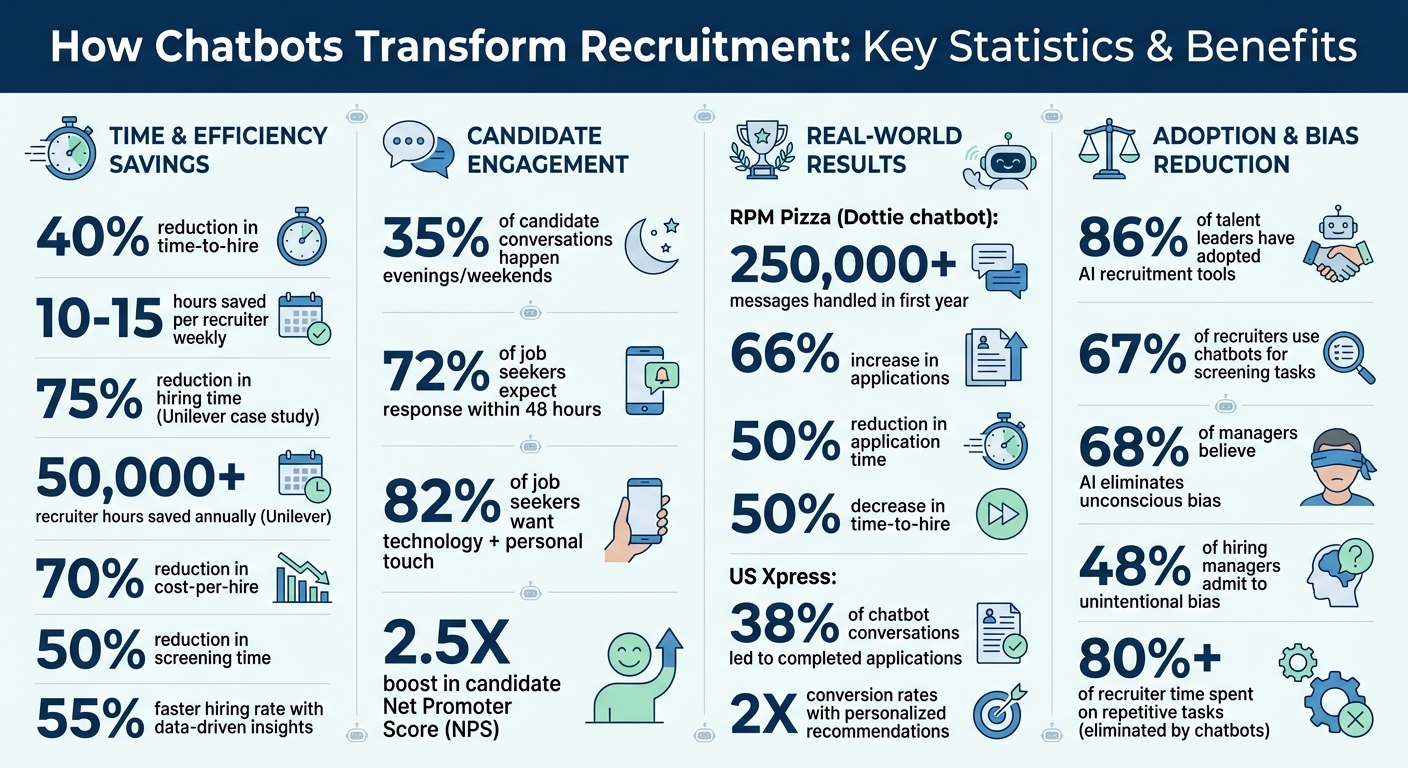
- Faster Hiring: Chatbots reduce time-to-hire by up to 40%, saving recruiters 10–15 hours weekly.
- 24/7 Availability: They provide instant responses, even outside business hours, meeting candidates’ expectations for quick updates.
- Personalized Interactions: Using AI, chatbots tailor responses to candidates’ questions, making the process smoother.
- Efficient Screening & Scheduling: Chatbots handle resume screening and interview scheduling, eliminating delays and manual tasks.
- Data Insights: They generate analytics on candidate behavior, helping recruiters improve processes.
- Fair Assessments: By applying consistent criteria, chatbots reduce bias in hiring decisions.
Companies like Unilever and RPM Pizza report massive time savings and increased application rates with chatbot integration. Whether it’s answering FAQs, scheduling interviews, or providing real-time updates, chatbots streamline recruitment while maintaining a human touch.
How Recruitment Chatbots Improve Hiring: Key Statistics and Benefits
How can AI-powered chatbots enhance candidate engagement and automate screening for recruiters?
How Chatbots Improve Candidate Communication
Candidates today expect quick and clear responses when they apply for jobs. Chatbots help bridge the gap between these high expectations and the limited availability of recruiters, ensuring no question goes unanswered. Let’s dive into how chatbots provide instant responses and keep candidates engaged throughout the process.
Instant Responses and 24/7 Availability
Waiting for days to hear back can frustrate candidates and hurt a company’s reputation. Chatbots solve this by offering immediate answers to common questions. For instance, candidates receive instant confirmation when they submit an application, along with clear details about the next steps.
Timing is everything – 35% of candidate conversations with recruitment chatbots happen in the evening or on weekends, times when recruiters typically aren’t available. A great example comes from RPM Pizza Inc., a Domino’s franchisee, which introduced a chatbot named "Dottie" in 2020. In her first year, Dottie handled over 250,000 messages, leading to a 66% rise in applications, a 50% reduction in application time, and a 50% decrease in time-to-hire.
This round-the-clock availability addresses a key issue: 72% of job seekers want to hear back from a recruiter within 48 hours of applying. Chatbots meet this demand by providing real-time updates pulled directly from applicant tracking systems.
But speed isn’t the only thing chatbots bring to the table – they also make communication more personal.
Personalized Interactions
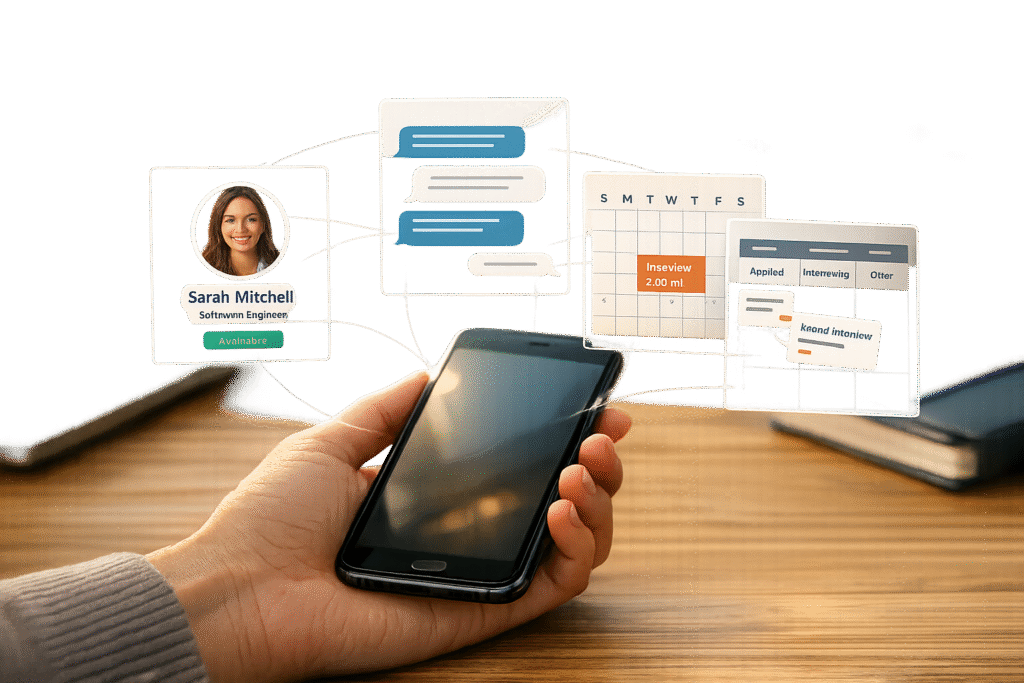
With natural language processing (NLP), modern chatbots can understand candidate questions and respond in a conversational, human-like way. This allows them to interpret intent and offer tailored guidance, helping candidates navigate the hiring process with ease.
Take US Xpress, for example. In 2020, this North American truckloader teamed up with Paradox to launch an AI assistant that uses geolocation and demographic data to personalize interactions. The results? 38% of candidates who started a conversation with the AI went on to complete a job application. By recommending roles based on a candidate’s skills, experience, and location, the chatbot doubled conversion rates.
Skillfuel takes personalization a step further with its customizable career pages. These pages, integrated with chatbot technology, match job-specific information to a candidate’s qualifications while staying aligned with the company’s brand. Whether through SMS, email, WhatsApp, or web chat, the system connects with candidates on the platforms they prefer. According to Randstad research, 82% of job seekers believe the best recruiter interactions combine advanced technology with a personal touch. Skillfuel’s approach blends these elements seamlessly, creating tailored engagement that resonates with candidates.
How Chatbots Streamline Recruitment Processes
Chatbots have become a game-changer in recruitment by handling time-consuming, repetitive tasks – tasks that occupy over 80% of a recruiter’s time. By automating these processes, chatbots free up hiring teams to focus on what truly matters: building relationships with top candidates and making smarter hiring decisions. Let’s take a closer look at how chatbots simplify candidate screening and scheduling.
Automated Candidate Screening
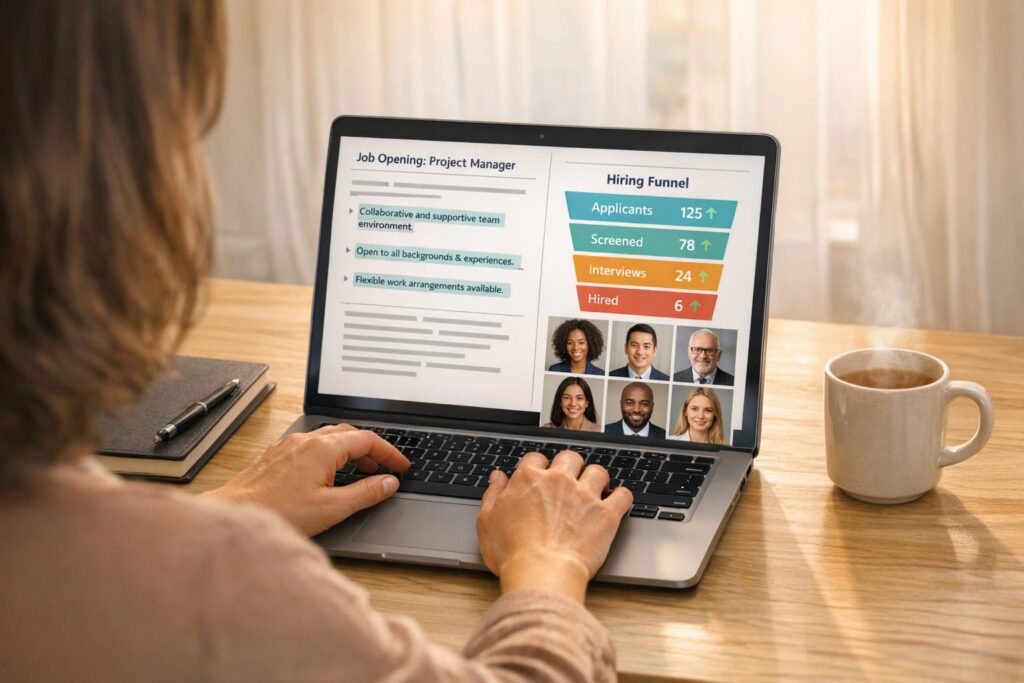
Chatbots can instantly pull key details like skills, education, and experience from resumes. But their real power lies in customizable screening questions, which help filter candidates before a recruiter even reviews an application. These "knock-out" questions assess critical qualifications, such as work authorization, certifications, salary expectations, or specific skills. Based on these responses, chatbots can immediately qualify or disqualify applicants, ranking the best candidates directly in your applicant tracking system. This 24/7 screening ensures only the most suitable candidates move forward without delays.
The impact is hard to ignore. For instance, in 2023, Unilever used AI chatbots and gamified assessments for its graduate hiring program, cutting hiring time by 75% and saving over 50,000 recruiter hours annually. Research also shows that AI chatbots can reduce screening time by up to 50%, with 67% of recruiters now relying on these tools to handle repetitive screening tasks.
Once candidates are screened, chatbots further simplify the process by handling interview scheduling.
Simplified Interview Scheduling
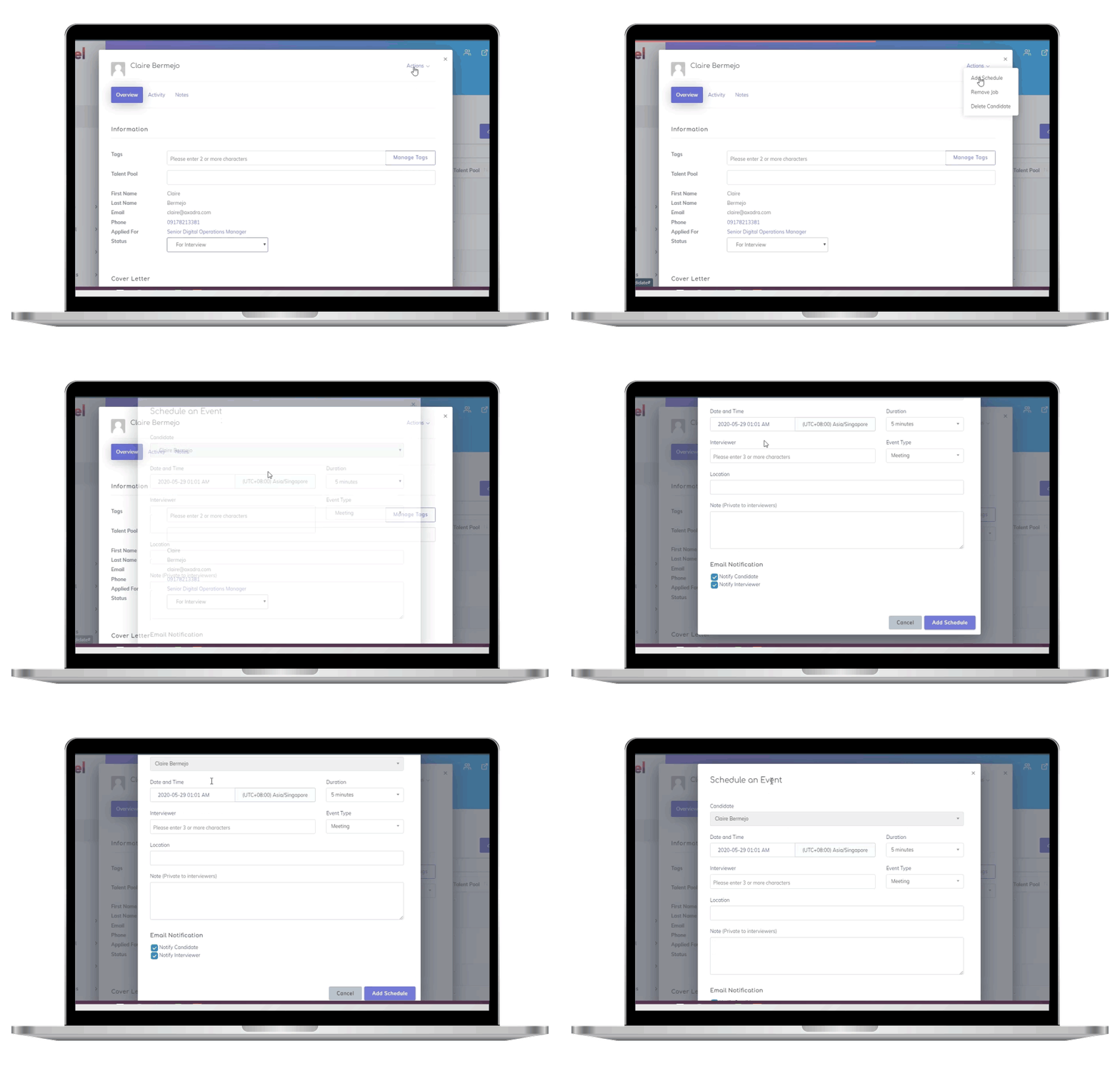
After screening, chatbots take over the tedious task of scheduling interviews. They sync with digital calendars to display real-time availability, allowing candidates to book interviews in just a few clicks. Automated confirmations and reminders are sent out, eliminating the need for back-and-forth emails or manual calendar coordination.
One staffing firm, SEEK Careers, saw significant improvements in their scheduling process. Sara Luchsinger shared:
"If we can get someone on our website to interact with the chatbot, apply, and schedule an interview with a few clicks, we’ve succeeded."
Tools like Skillfuel integrate chatbot technology with interview scheduling, ensuring a seamless transition from candidate screening to formal interviews. This integration reduces administrative tasks and keeps the hiring process moving efficiently, cutting out manual checks and lengthy communication delays.
sbb-itb-e5b9d13
Using Data and Insights to Improve Engagement
Chatbots are more than just conversation tools – they’re data goldmines. Every interaction with a candidate generates valuable information about their behavior, preferences, and challenges. By diving into this data, recruiters can fine-tune their hiring strategies and identify exactly where the candidate experience needs improvement. This isn’t just about tracking performance; it’s about using those insights to make meaningful, immediate changes.
Real-Time Analytics on Candidate Interactions
One of the standout features of chatbots is their ability to deliver real-time analytics. Metrics like response rates, engagement levels, and application drop-offs are all tracked and presented in a way that’s easy to act on. For example, if you notice a high dropout rate during a specific stage – say, when candidates are asked about salary expectations – you can quickly simplify or reframe those questions to keep applicants engaged.
These data-driven adjustments have real impact: companies using such insights report a 55% faster hiring rate and a 2.5X boost in candidate Net Promoter Score (NPS). It’s no wonder 86% of talent leaders have adopted AI tools to streamline recruitment workflows. And since 72% of job seekers expect a response within 48 hours of applying, chatbot analytics ensure your team stays on top of response times, meeting candidates’ expectations consistently.
Gathering Feedback to Improve the Hiring Process
Chatbots don’t just monitor interactions; they actively gather feedback to improve the hiring process. After key touchpoints, they can request feedback in real time, capturing candid insights that reveal bottlenecks or areas of confusion. For instance, if several candidates report difficulty understanding a particular step, you’ll know exactly where to focus your efforts.
Tools like Skillfuel’s centralized dashboards take this further by consolidating engagement metrics across your entire recruitment pipeline. These dashboards give your team a bird’s-eye view of trends, helping you pinpoint stages where candidates have the most questions or frustrations. Armed with this information, you can update your chatbot’s knowledge base, refine job descriptions, or adjust processes to eliminate confusion upfront. It’s all about making decisions based on solid data, not guesswork.
How Chatbots Support Fair and Consistent Recruitment
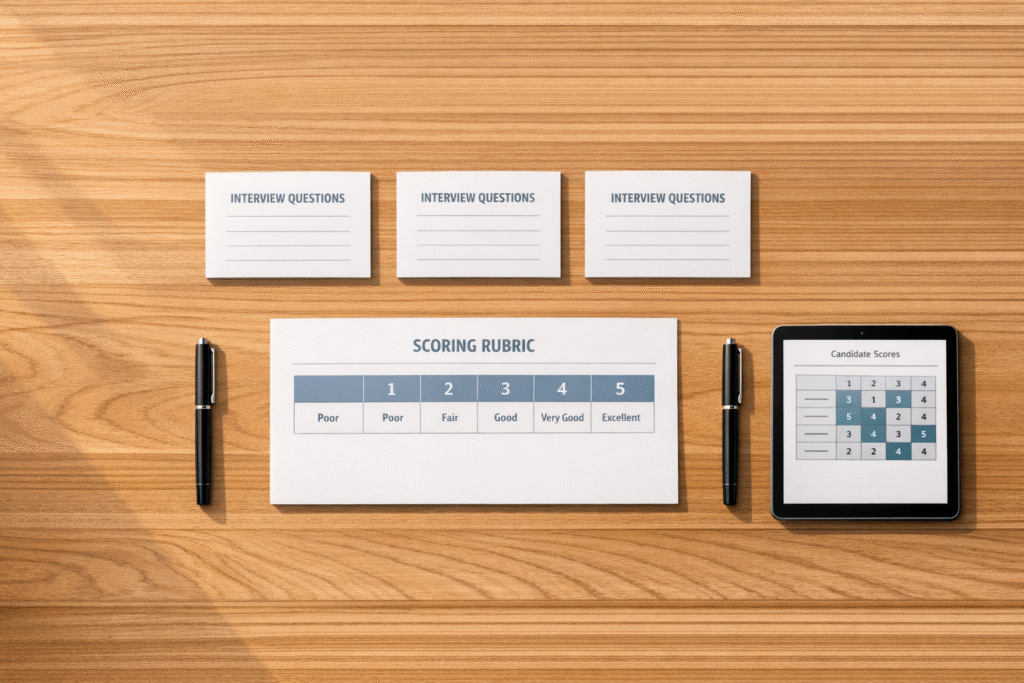
Chatbots don’t just add speed and personalization to the hiring process – they also play a key role in promoting fairness and consistency. Fair hiring practices are essential for building diverse and effective teams. By using the same baseline criteria to evaluate every candidate, chatbots remove inconsistencies and unconscious bias. This ensures that every applicant is assessed objectively, no matter when they apply or who might have handled their application.
Standardized Responses for Consistent Communication
One of the standout benefits of chatbots is their ability to deliver consistent information to all candidates. Whether someone applies at 8 a.m. or midnight, they receive the same details about job roles, company values, benefits, and next steps. This uniformity eliminates the frustration of some candidates waiting weeks for updates while others hear back immediately.
Chatbots also rely on predefined criteria – such as certifications, work experience, or legal work authorization – to evaluate applicants. This structured process ensures that every interaction is recorded, creating a transparent audit trail. It prevents discrepancies caused by recruiter availability, timing, or human error.
Reducing Bias with Objective Tools
Beyond consistent communication, chatbots help minimize bias by focusing strictly on job-relevant qualifications. Unlike human recruiters, who may unintentionally let personal biases influence decisions – something 48% of hiring managers admit to – chatbots apply the same logic and criteria across the board.
"By removing human discretion and bias from the initial assessment, these chatbots ensure that every candidate receives a fair evaluation." – Dave Anderson, Sense
The results speak for themselves. A significant 68% of managers believe that AI-powered tools can eliminate unconscious bias in hiring. Unilever serves as a prime example: after adopting AI-driven screening tools, the company reduced hiring time by 75% and saw a more diverse pool of applicants.
Additionally, tools like Skillfuel emphasize compliance and fairness by offering customizable workflows. These workflows help companies establish objective criteria upfront and ensure chatbots only ask legally permissible, job-relevant questions. With regulations like New York City’s 2023 law requiring independent bias audits for AI hiring tools, prioritizing fairness is no longer just a best practice – it’s a necessity.
Conclusion
Chatbots are transforming the way companies engage with candidates by blending efficiency with a personal touch. They deliver 24/7 instant responses, ensuring candidates never feel overlooked, even outside of traditional working hours. With natural language processing, these interactions feel less robotic and more conversational, creating a better experience for job seekers. Meanwhile, automated features like screening and scheduling allow HR teams to dedicate their time to connecting with top talent.
The numbers speak for themselves: chatbot automation can slash time-to-hire by up to 40% and reduce cost-per-hire by as much as 70%. Real-time data analysis helps hiring teams understand candidate preferences and challenges, enabling immediate adjustments to their strategies. Additionally, by applying consistent criteria to every application, chatbots contribute to a more impartial and objective recruitment process. These tools are reshaping recruitment by making it smarter and fairer.
Industry leaders recognize this shift:
"As hiring becomes more competitive, using AI chatbots is no longer optional but essential." – InCruiter
For HR teams looking to modernize their approach, Skillfuel offers a comprehensive platform that integrates chatbot automation with tools for applicant tracking, interview scheduling, and data insights – all accessible through a centralized dashboard. From resume screening to candidate outreach, the platform streamlines every step of the hiring process. With a free plan and customizable workflows tailored to growing businesses, Skillfuel eliminates tedious manual tasks while preserving the human connection candidates appreciate.
The rising adoption of chatbot technology highlights its growing importance in the recruitment landscape.
FAQs
How do chatbots promote fairness and reduce bias in hiring?
Chatbots play a key role in making the hiring process more consistent and impartial by standardizing how candidates are assessed during early stages like screenings and initial interactions. Using algorithms that focus on objective qualifications, these tools help reduce the impact of unconscious biases tied to factors like gender, age, or ethnicity. By applying the same criteria to all applicants, chatbots contribute to a recruitment process that feels fairer for everyone involved.
However, their success largely hinges on thoughtful design and the quality of the data they’re trained with. To keep chatbots unbiased and inclusive, regular updates and close monitoring are crucial. When carefully implemented, these tools can make a meaningful difference in creating a more equitable hiring process.
What tasks can chatbots handle to improve the hiring process?
Chatbots are game-changers when it comes to streamlining the hiring process. They can take over repetitive and time-consuming tasks, such as initial candidate screening, interview scheduling, sending updates and reminders, and answering common questions. On top of that, they can even evaluate candidate skills through automated tests, simplifying the process for both recruiters and applicants.
By automating these responsibilities, chatbots free up valuable time while improving candidate engagement. They ensure consistent communication and create a more personalized, seamless hiring experience.
How do chatbots make candidate interactions more personalized?
Chatbots bring a personal touch to hiring by tapping into a candidate’s profile, preferences, and application history to deliver responses that feel tailored and relevant. This approach makes interactions not only more engaging but also more natural – almost like chatting with a real person.
On top of that, chatbots handle routine tasks like answering FAQs or updating candidates on their application status. By taking care of these repetitive duties, they give recruiters more time to build genuine, one-on-one relationships with candidates. This blend of efficiency and customized communication elevates the entire hiring process.