
Hiring decisions are stronger when made by a team, not just one person. Why? Teams reduce bias, improve accuracy, and lead to better long-term outcomes. Here’s how it works:
- Bias is reduced: Individual hiring often leans on gut instincts or unconscious preferences. Teams balance these out by offering diverse perspectives.
- Evaluations are more accurate: Multi-rater assessments predict job performance better than solo evaluations. Structured tools like scorecards ensure consistency.
- Retention improves: When teams are involved, they feel invested in the hire, which boosts mentoring and long-term success.
A Harvard study and Google research both confirm that collective decision-making outperforms individual judgment. Using tools like shared rubrics and centralized platforms, organizations can make hiring fairer, faster, and more effective. The result? Better hires, stronger teams, and reduced turnover.
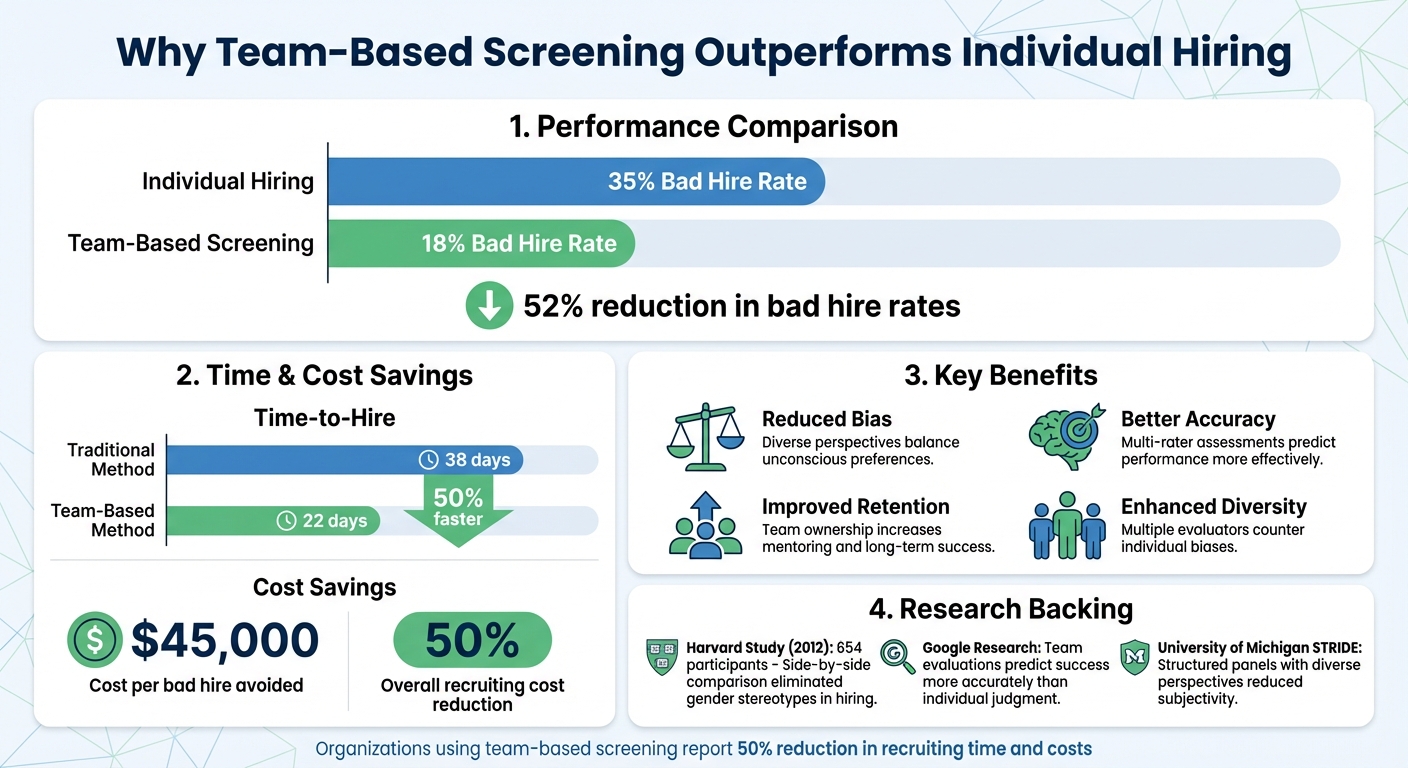
Team-Based vs Individual Hiring: Key Performance Metrics and Benefits
How to Engage Your Entire Team in Hiring: A Blueprint for Collaborative Hiring
Research Findings: Better Accuracy with Team-Based Screening
Studies show that team-based screening consistently outperforms individual decision-making. This approach improves hiring outcomes by reducing bias and providing more accurate predictions about candidates’ job performance. The data highlights how collaboration refines evaluations, ensuring decisions are both fairer and more effective.
Lower Individual Bias
Research from Harvard’s Decision Science Laboratory (June 2012) offers a clear example of this. Professors Iris Bohnet, Alexandra van Geen, and Max H. Bazerman conducted experiments with 654 participants acting as "employers" tasked with hiring "employees" for math and verbal tasks. When evaluators assessed candidates individually, they often relied on gender stereotypes – selecting men for math roles and women for verbal positions. However, when evaluators compared male and female candidates side-by-side, stereotypes disappeared, and decisions were based on actual performance instead.
"If you look at one pair of shoes, it’s hard to evaluate the quality of those shoes. You will be much more likely to go with stereotypes or heuristics… But if you have several pairs of shoes available, you’re much more likely to be able to compare different attributes." – Iris Bohnet, Professor and Academic Dean, Harvard Kennedy School
The University of Michigan‘s STRIDE Initiative further supports this. By using structured evaluations with diverse panels and standardized questions, the program reduced subjectivity in faculty hiring. The process allowed multiple perspectives to counter individual blind spots, addressing biases like affinity bias (favoring those with similar backgrounds) and confirmation bias (seeking evidence to support preconceived notions). This framework demonstrates how team evaluations can create a more balanced and equitable hiring process.
Better Prediction Accuracy
Team evaluations not only reduce bias but also improve the ability to predict candidates’ job performance. Multi-rater assessments are more accurate than evaluations made by a single person because groups are better at processing information and identifying key performance indicators.
Collaborative evaluations establish a comparative framework, allowing teams to assess candidates’ qualifications and attributes side-by-side. This method moves away from subjective instincts and focuses on measurable performance.
"By basing decisions on performance rather than uninformative stereotypes, instead of hiring who you think is the most productive person, you’ll hire who actually is the most productive person." – Iris Bohnet
Further evidence comes from Cornell University research (May 2025), where Assistant Professor Martin Wiernsperger found that external validation enhances objectivity in peer evaluations. This validation encourages evaluators to focus on the collective goals of the team rather than favoring specific subgroups, resulting in more equitable and accurate assessments.
Main Benefits of Team-Based Screening
Research highlights two standout advantages of team-based screening: it helps create more diverse teams and improves long-term retention. These outcomes provide a strong foundation for implementing this approach effectively.
Better Diversity and Inclusion
Having multiple evaluators helps balance out individual biases. For example, a single hiring manager might show affinity bias, but when a diverse panel reviews the same candidate, these biases are less likely to influence the final decision. Google’s research supports this, showing that team-based evaluations not only predict success more accurately but also guard against biases that can undermine diversity efforts. Additionally, Canadian human rights tribunals have recognized selection panels as a key strategy to defend against discrimination claims.
This method doesn’t just promote diversity – it also strengthens how teams work together internally.
Better Team Alignment and Retention
When team members participate in the screening process, they develop a sense of shared ownership over the hiring decision. This involvement enhances mentoring, onboarding, and retention.
"Because the team members had input into the hiring decision, they are more likely to feel like they ‘own’ the new hire. This feeling of ownership and responsibility will increase the chances that the involved employees will immediately help, mentor, coach, and train the new hire." – Dr. John Sullivan, HR Expert
This collaborative approach also gives candidates a realistic understanding of the job, which further boosts retention rates. By improving diversity and retention, team-based screening not only enhances the hiring process but also fosters stronger, more sustainable team performance.
sbb-itb-e5b9d13
How to Implement Team-Based Screening
Transitioning to a team-based screening process can make hiring more collaborative and effective. By following these practical steps, organizations can reduce bias and improve decision-making while keeping the process organized.
Use Standard Evaluation Criteria
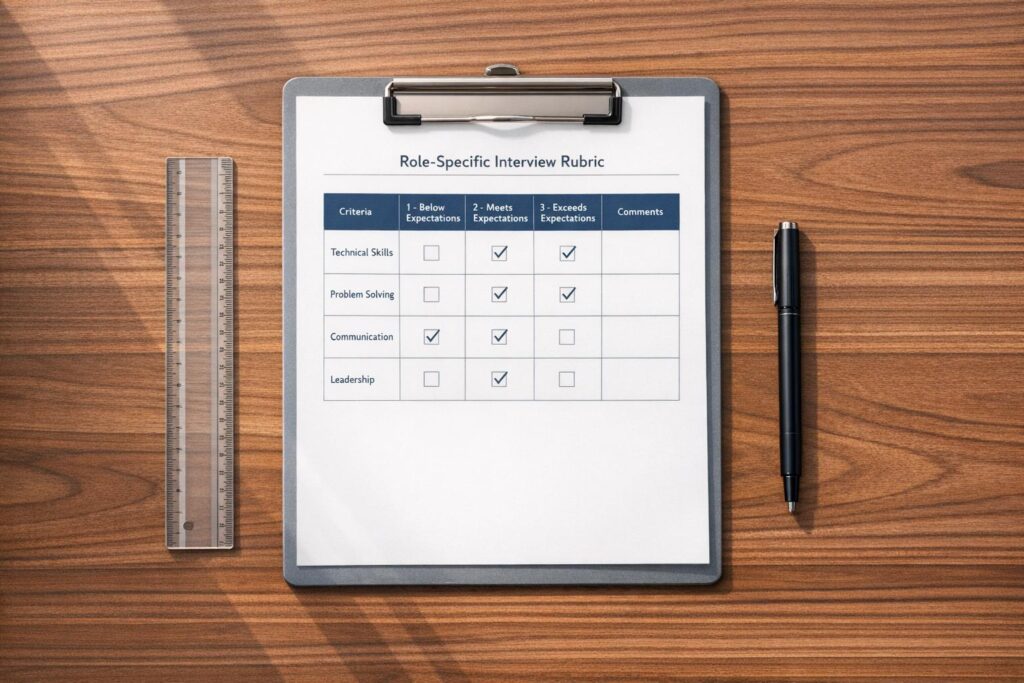
A shared rubric is key. Every panel member should evaluate candidates using the same criteria. For example, a 1–10 scoring scale can assess attributes like technical skills, leadership potential, and alignment with company values. Brief written explanations for each score add clarity. Research shows this structured approach can lower bad hire rates by 52% – from 35% in solo hiring to just 18%.
To keep the team aligned, use a centralized recruitment platform to track evaluations and ensure consistency.
Use Recruitment Tools like Skillfuel
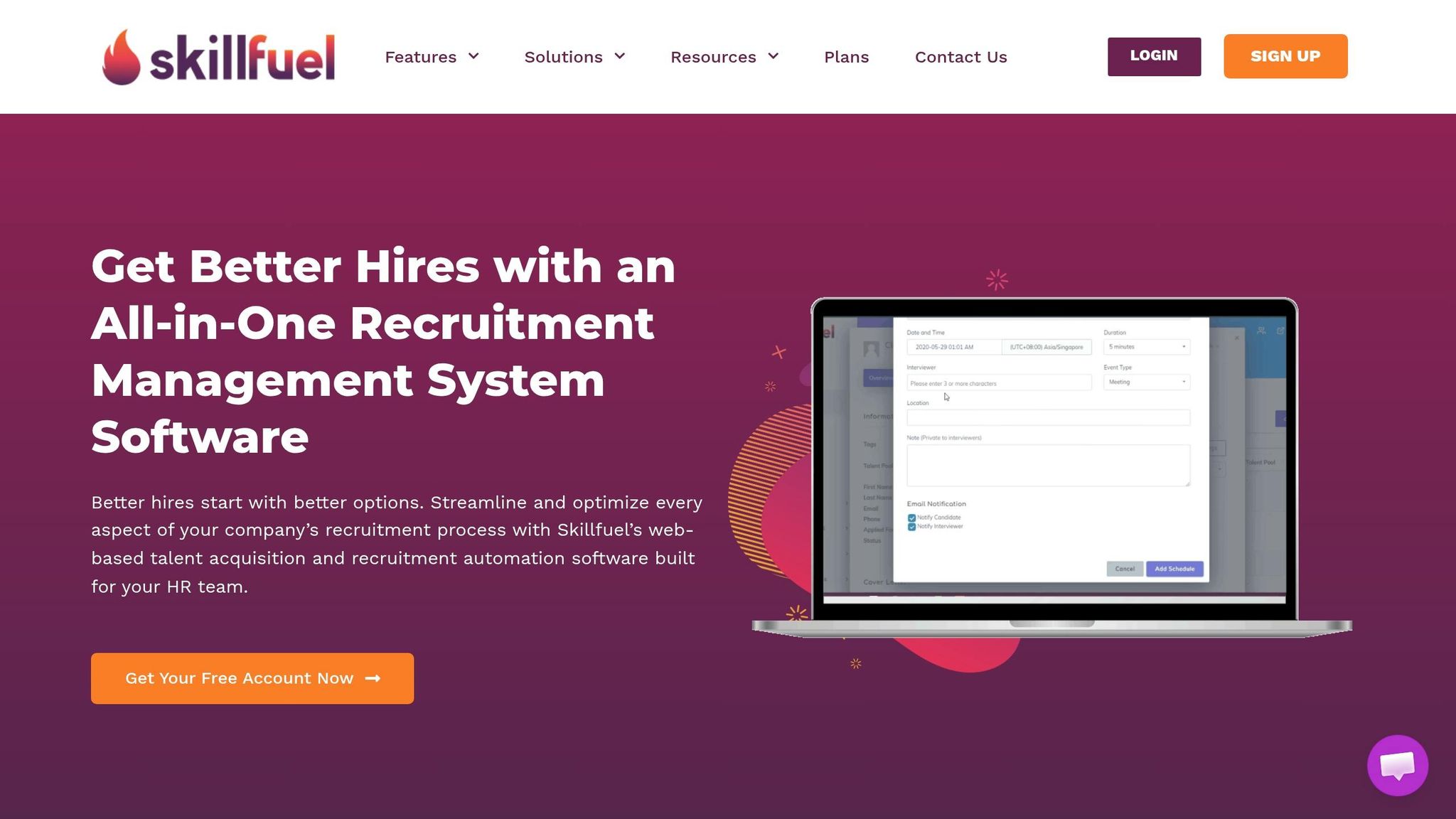
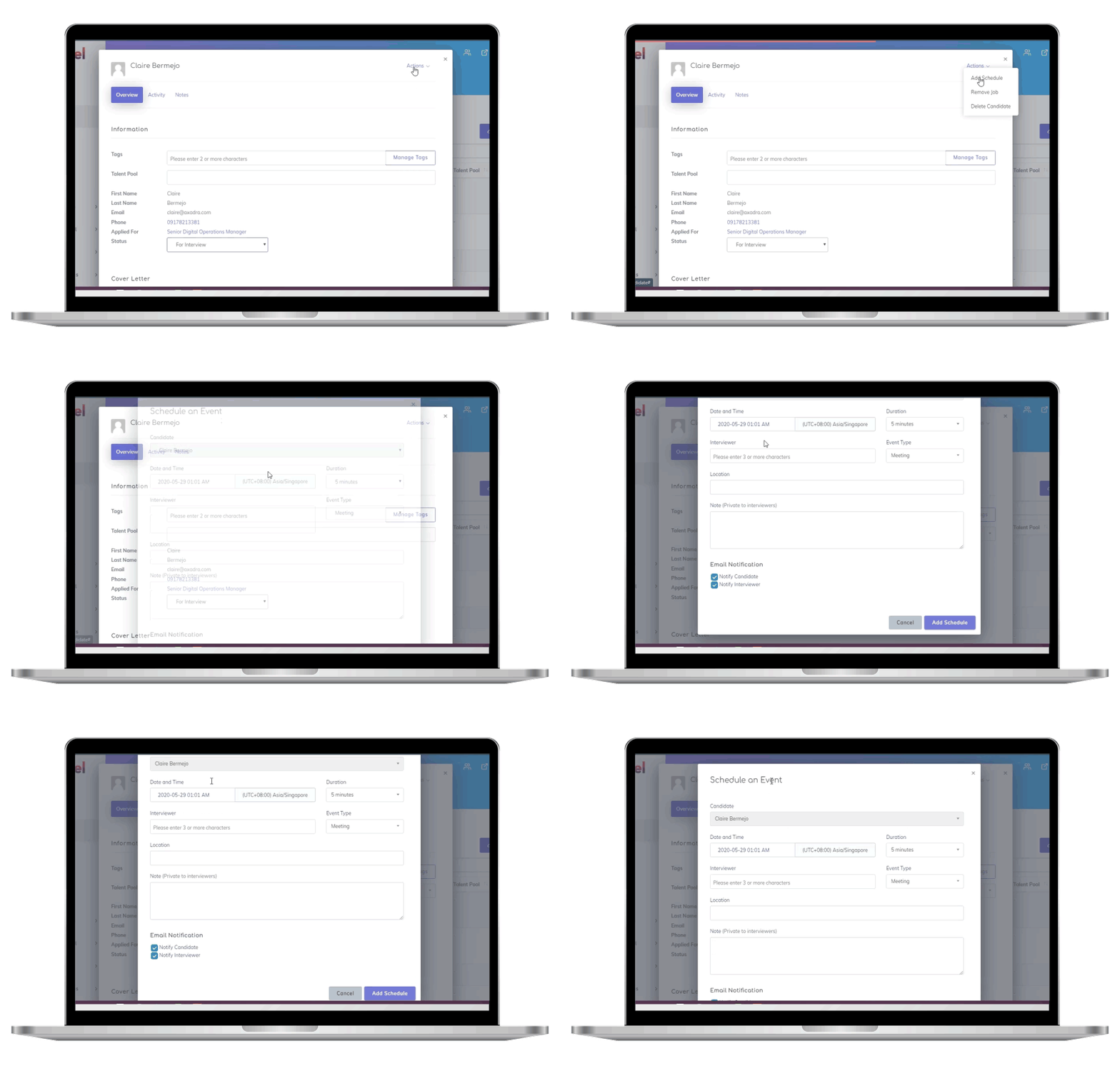
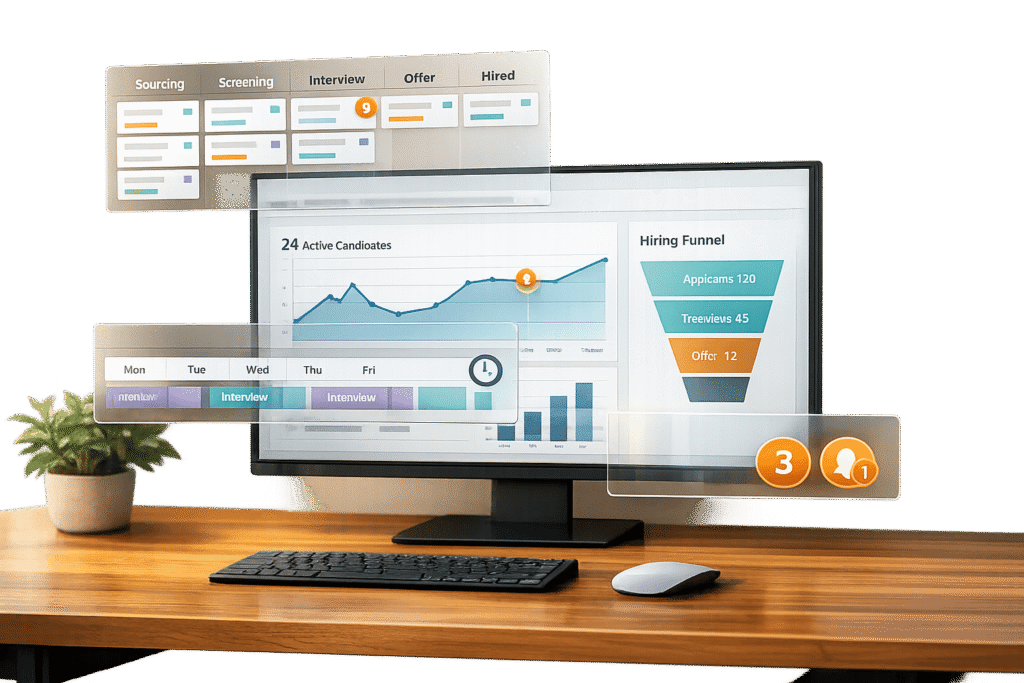
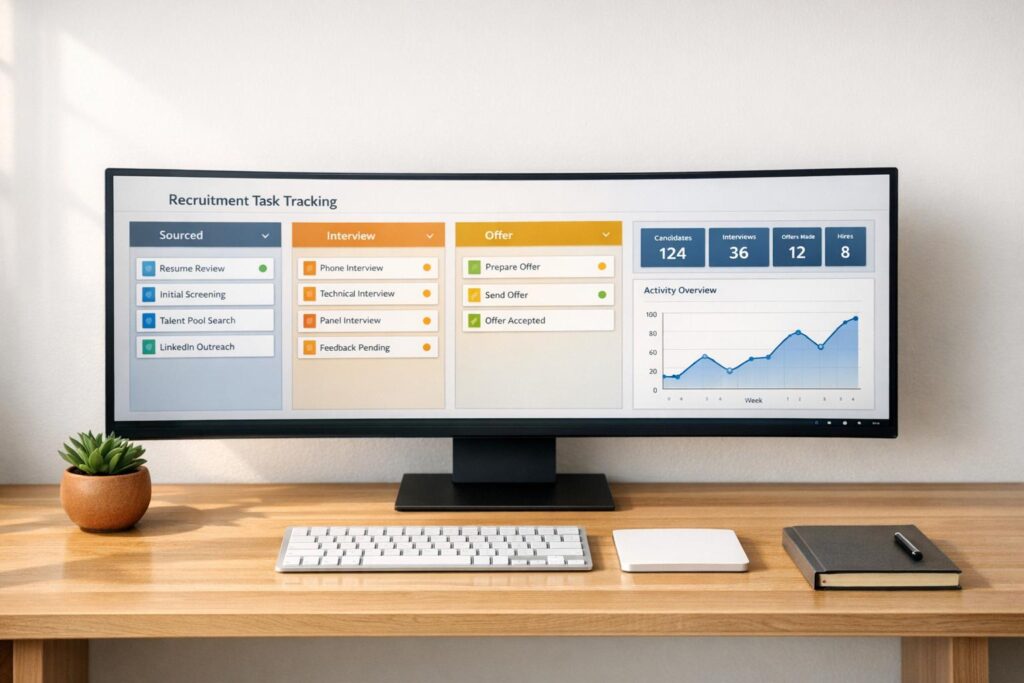
Centralized tools simplify collaboration. Relying on scattered emails or spreadsheets can lead to confusion. Platforms like Skillfuel provide a single hub where hiring teams can review candidate profiles, share interview feedback, and manage schedules. Features like automated calendar syncing, @mentions, and shared comment threads streamline communication and create a clear audit trail. The platform also automates scheduling for panel interviews, saving time and reducing administrative headaches.
Regularly refreshing panel members is another way to maintain objectivity and bring new insights to the table.
Rotate and Diversify Screening Panels
Diverse panels catch blind spots. Form three-to-five-member panels that include a mix of roles, such as a hiring manager, a peer, an HR representative, and a subject matter expert from a different department. Assign each panelist a specific focus area – for instance, one might assess technical skills while another evaluates alignment with company values. Rotating members periodically ensures fresh perspectives and prevents stagnation.
"You have to have the hiring team involved, ready and prioritizing hiring as part of their everyday. Leadership has an ‘everybody is a recruiter’ mindset." – Tony Myer, Principal Technical Recruiter at Mercari
Encouraging panelists to score candidates independently before group discussions helps prevent dominant voices from influencing the final decision.
Conclusion
Team-based screening is reshaping the hiring process by spreading evaluation responsibilities across multiple team members. This shared approach helps reduce bias and enhances candidate assessments. By gathering feedback from various evaluators, companies can significantly lower bad hire rates – an outcome supported by previous research. Incorporating diverse perspectives minimizes individual unconscious bias, resulting in more precise evaluations of both technical skills and team compatibility.
The advantages don’t stop at better assessments. When team members are involved in hiring, they feel a stronger sense of ownership over the new hires and are more committed to their success. For candidates, this process offers a genuine glimpse into the team dynamic and work environment, which can help reduce early turnover.
Centralized tools like Skillfuel simplify the hiring process by replacing fragmented communication with a cohesive workflow. Features like automated scheduling, shared feedback threads, and real-time calendar syncing keep everyone on the same page while cutting down on administrative tasks. Objective evaluation methods also help eliminate reliance on instinctive decisions that often lead to costly errors.
Streamlining the hiring process doesn’t just improve decision-making – it also saves time and money. Organizations have reported cutting recruiting time and costs by 50% compared to traditional methods, with the average time-to-hire dropping from 38 days to just 22 days. Avoiding a single bad hire can save companies around $45,000 in replacement and training expenses.
FAQs
How many people should be on a hiring panel?
The best size for a hiring panel is usually 3 to 5 members. This range strikes a balance by bringing in a variety of perspectives while ensuring the group remains small enough for efficient discussions and decision-making.
How do you stop one interviewer from dominating the decision?
To prevent any one interviewer from having too much influence over the hiring decision, it’s a good idea to involve multiple team members in the process. Make sure to collect feedback from everyone involved. Before starting, agree on clear evaluation criteria, and use structured feedback methods to keep things fair and consistent. This team-based approach brings in a mix of perspectives, leading to more balanced and thoughtful hiring decisions.
How does Skillfuel keep team feedback consistent and organized?
Skillfuel keeps team feedback consistent and organized through centralized dashboards and collaborative tools. These tools simplify the process, making it easy for team members to input and review candidate evaluations in a clear and structured way.