Real-time job posting analytics tools help recruitment teams analyze hiring data instantly, streamlining decision-making and improving efficiency. This article evaluates four leading platforms – Skillfuel, iCIMS, Greenhouse, and Workday – based on their features, ease of use, reporting, and integrations. Here’s a quick overview:
- Skillfuel: Offers real-time insights, customizable dashboards, and social media automation. Great for smaller teams with a free plan available.
- iCIMS: Enterprise-level ATS with robust integrations, prescriptive insights, and a focus on scalability.
- Greenhouse: Designed for structured hiring with advanced reporting and DEI analytics. Ideal for mid-sized businesses.
- Workday: Combines recruitment data with HR and finance workflows, offering deep analytics for large organizations.
Each tool caters to different business needs, from startups to global enterprises. Below is a comparison to help you choose the right one.
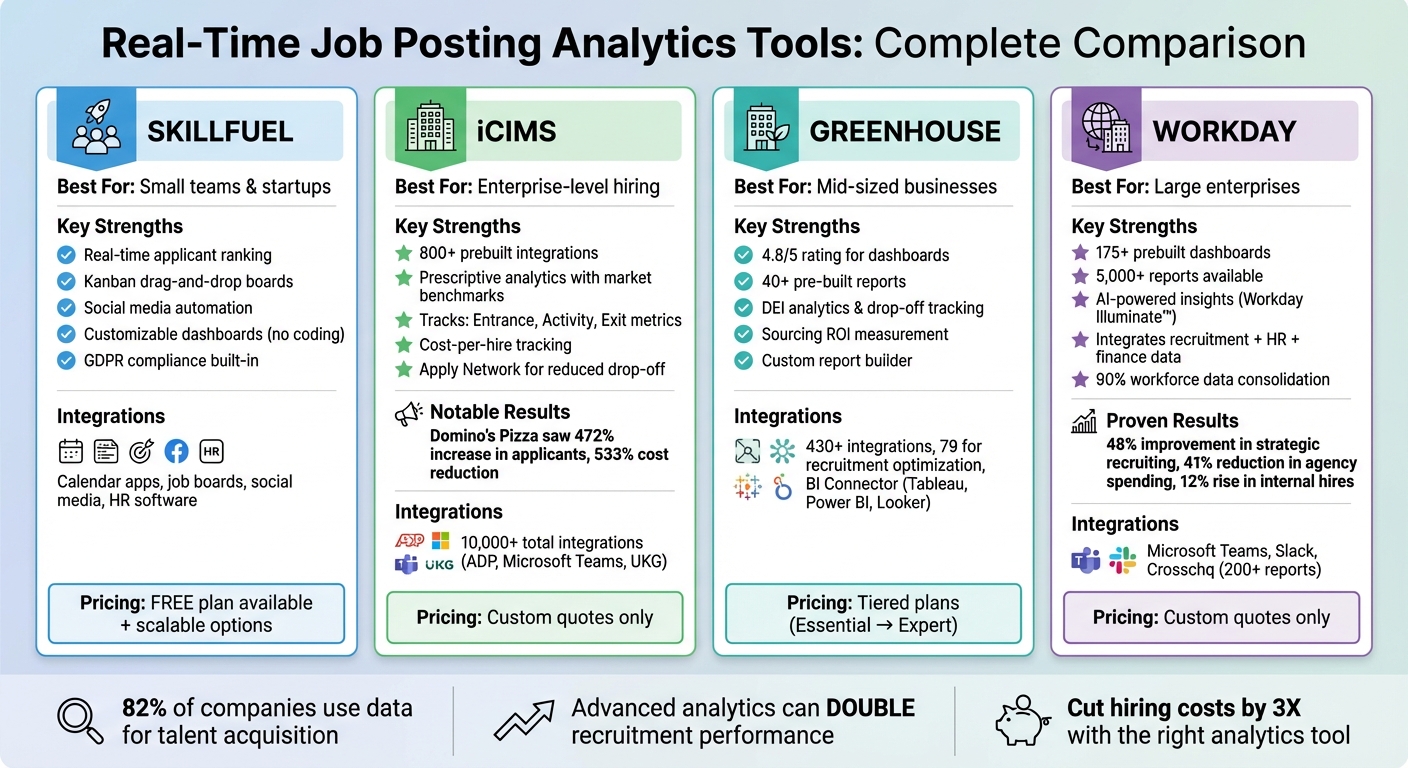
Comparison of Top 4 Real-Time Job Posting Analytics Tools for Recruitment Teams
5 Best Applicant Tracking Platforms for Every Business Size
Quick Comparison
| Tool | Best For | Key Features | Pricing |
|---|---|---|---|
| Skillfuel | Small teams/startups | Real-time metrics, Kanban boards, social media automation | Free plan + scalable options |
| iCIMS | Enterprise hiring | Prescriptive analytics, 800+ integrations, market benchmarks | Custom quotes |
| Greenhouse | Mid-sized businesses | Structured workflows, DEI analytics, BI tool integrations | Tiered plans (Essential to Expert) |
| Workday | Large enterprises | Recruitment + HR/finance integration, AI insights, 5,000+ reports | Custom quotes |
These platforms help optimize recruitment strategies, reduce time-to-hire, and improve hiring outcomes. Choose based on your team size, budget, and specific needs.
1. Skillfuel
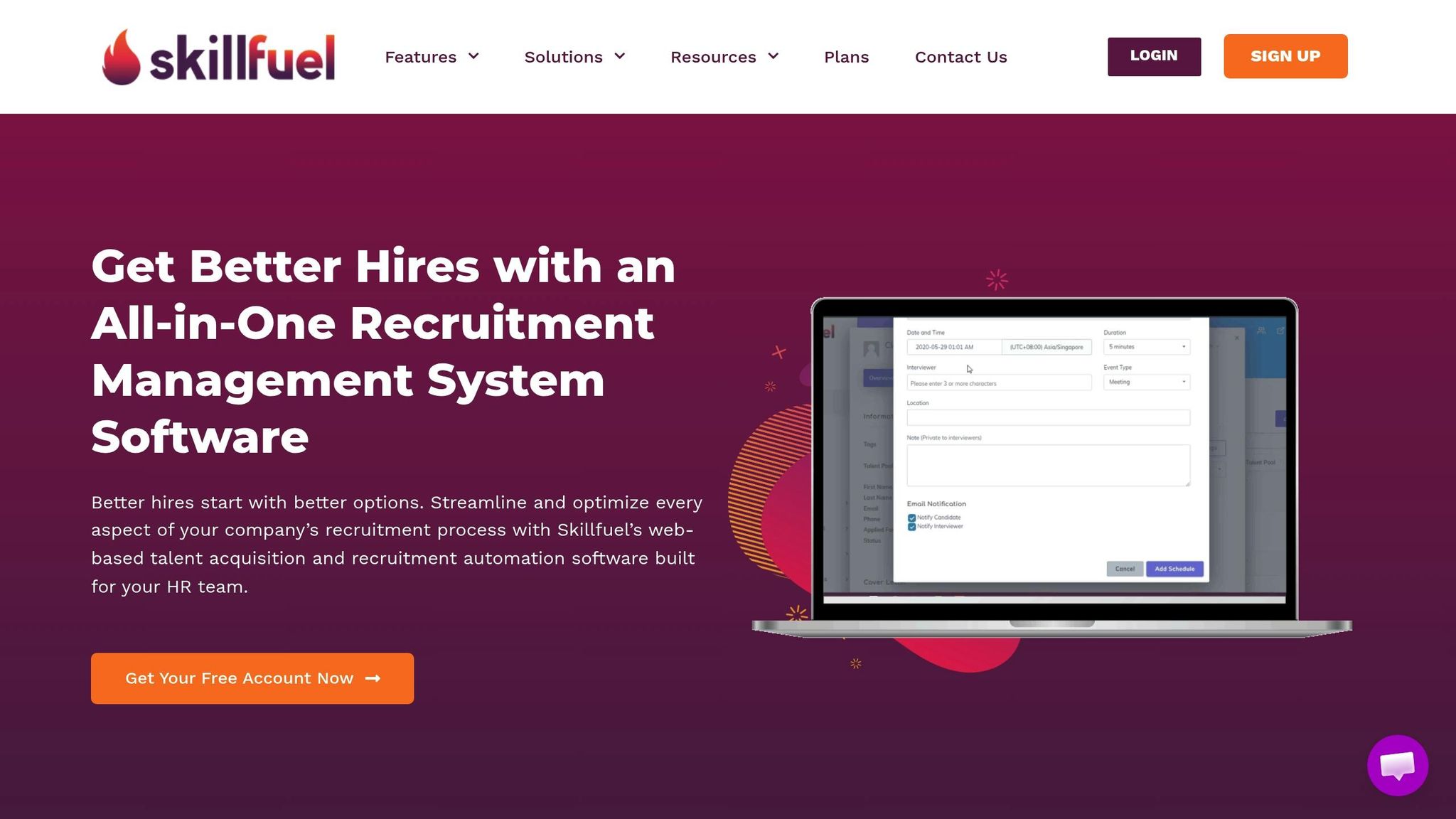
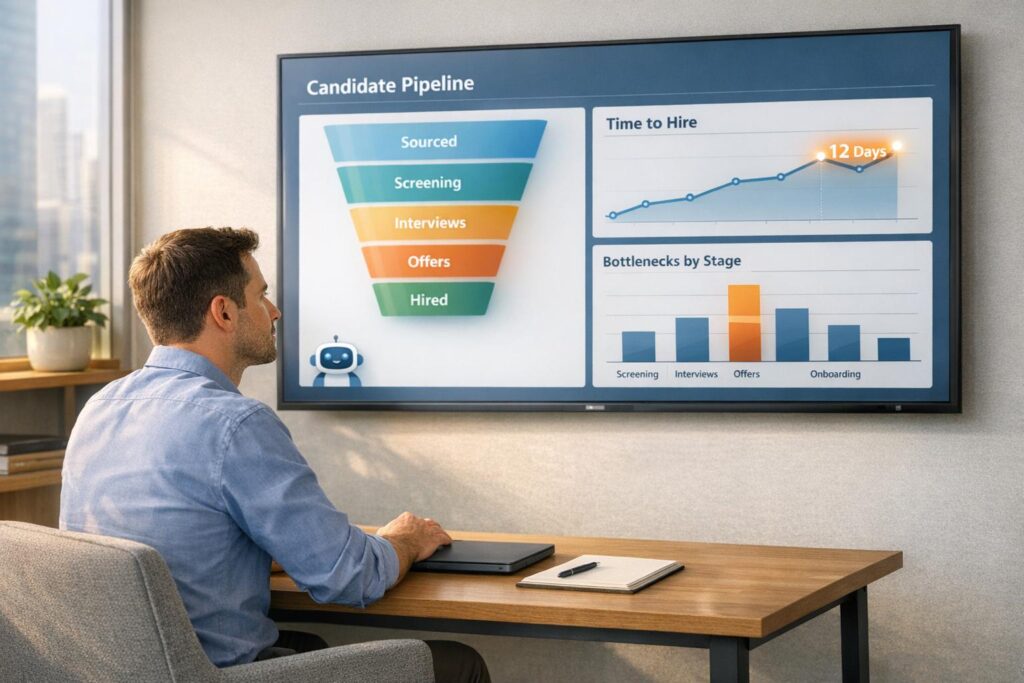
Skillfuel provides a clear, real-time view of every stage in the hiring process. Its Kanban board with drag-and-drop functionality makes it simple to identify where candidates may be stuck and where recruiters should focus their efforts. This setup gives hiring teams a snapshot of what’s happening at any given moment, offering actionable insights for smoother recruitment.
Real-time Metrics Tracked
Skillfuel keeps tabs on every step of the candidate journey, from the initial screening to final hiring decisions. It offers real-time applicant ranking, helping recruiters quickly pinpoint top candidates. The platform also tracks employee referral metrics, such as referral outcomes, progress updates, and rewards, ensuring employees stay informed about their referrals. Additionally, it captures interview feedback immediately after evaluations and measures recruitment marketing performance, so teams can assess the effectiveness of social media campaigns and targeted job postings.
Dashboard Customization
With Skillfuel, recruiters can tailor dashboards and use visual Kanban boards to quickly identify bottlenecks and monitor candidate progress. The platform allows for easy adjustments to workflows, career pages, and processes – no coding or IT assistance required – to align with company-specific needs. Users can also design branded career portals that automatically direct applicants to the appropriate hiring pipeline based on their job application.
Integrations
Skillfuel seamlessly integrates with commonly used calendar apps to automate interview scheduling. It connects with various job boards, consolidating application tracking and job postings in one place. The platform also includes social media automation, enabling strategic scheduling and targeting for job ads. Designed to complement existing HR software, Skillfuel ensures consistent data management throughout the hiring process and comes with built-in GDPR compliance to safeguard candidate information.
Pricing
Skillfuel provides a free plan, along with scalable pricing options to meet the needs of growing recruitment teams.
2. iCIMS
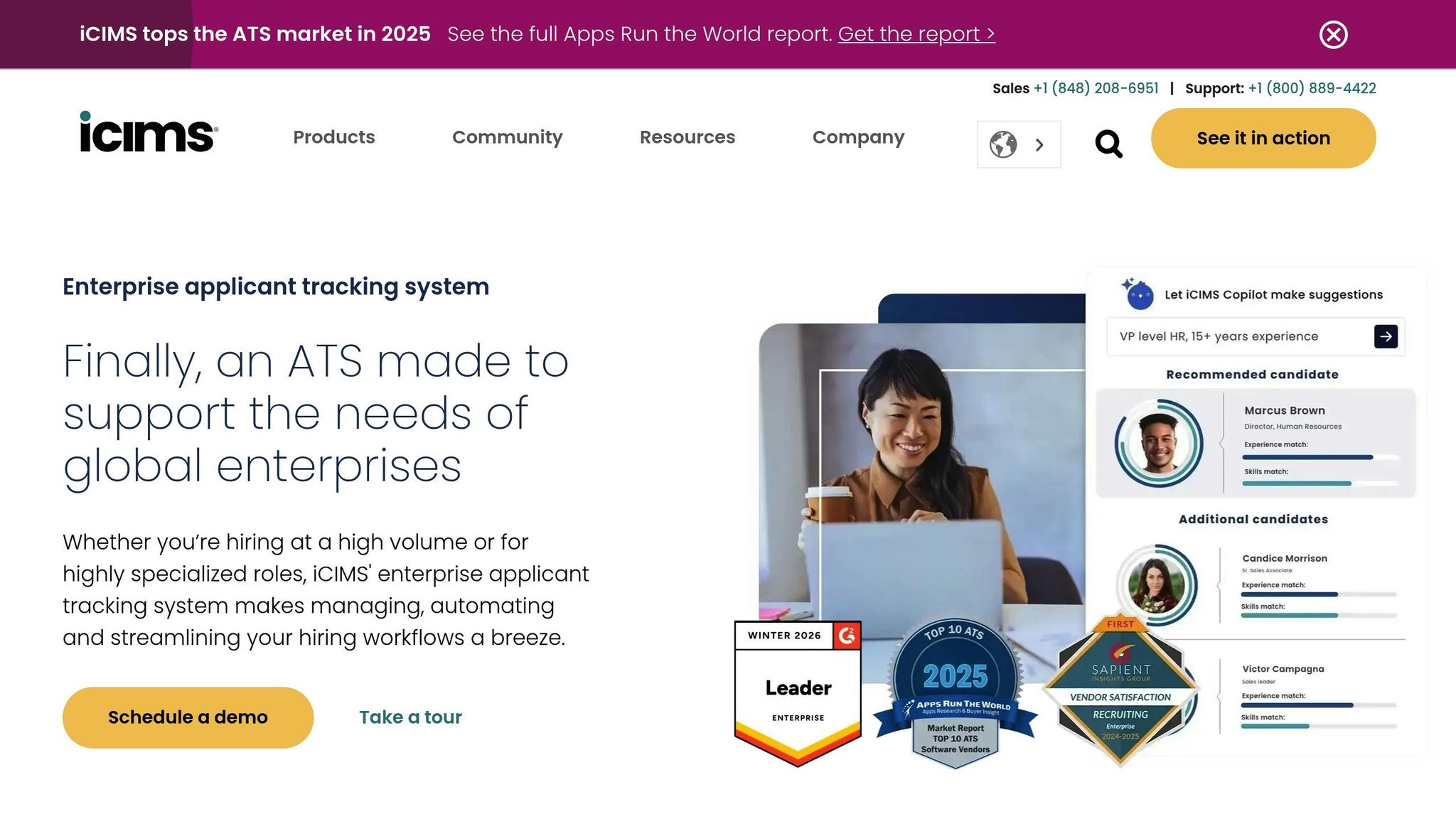
iCIMS is a high-powered applicant tracking system (ATS) designed for enterprise-level recruitment. In 2025, it was named the leading provider in the ATS market by the Apps Run the World report. It’s trusted by major employers like The Cheesecake Factory, which relies on iCIMS to manage the hiring process for over 40,000 employees annually. The platform combines a configurable ATS with Insights+, offering real-time market and industry analytics.
Real-Time Metrics Tracked
iCIMS excels in tracking recruitment data, breaking it into three key stages: Entrance (how candidates find job listings), Activity (what actions they take on your career site), and Exit (where they leave the process). Metrics include conversion rates, application completion trends, top landing page queries, and time spent on each step of the application. The platform also delivers prescriptive insights, comparing internal performance to industry benchmarks. For those using programmatic job ads, iCIMS tracks metrics like cost-per-applicant, cost-per-qualified-applicant, and cost-per-hire directly within its system. These metrics feed into customizable dashboards that adapt to specific business needs.
Dashboard Customization
iCIMS Hire allows HR teams to build dashboards tailored to their unique requirements. These dashboards can be customized for different roles, such as CHROs, talent acquisition leaders, or recruiters. Dynamic filters make it easy to dive into detailed data. However, administrators must manually map workflow statuses to hiring stages like Initial Review, Screen, Interview, Offer, and Hired.
Integrations
The platform boasts over 800 prebuilt integrations and has facilitated more than 10,000 total integrations across its ecosystem. Partnerships with providers like ADP, Infor, Microsoft Teams, and UKG ensure seamless data synchronization. iCIMS also offers the Apply Network, allowing job boards to embed the application process directly, reducing candidate drop-off and capturing real-time data. Domino’s Pizza, for example, saw a 472% increase in applicants and a 533% reduction in costs after integrating with PandoLogic‘s AI. Hackensack Meridian Health highlighted the platform’s integration capabilities:
iCIMS is configured to integrate and run smoothly with other providers while delivering a consistent experience for our end‑users – it’s a huge win.
These integrations ensure smooth data flow, empowering organizations to make well-informed hiring decisions.
Pricing
iCIMS doesn’t disclose pricing publicly. Businesses need to contact their sales team to get a custom quote tailored to their specific needs.
sbb-itb-e5b9d13
3. Greenhouse
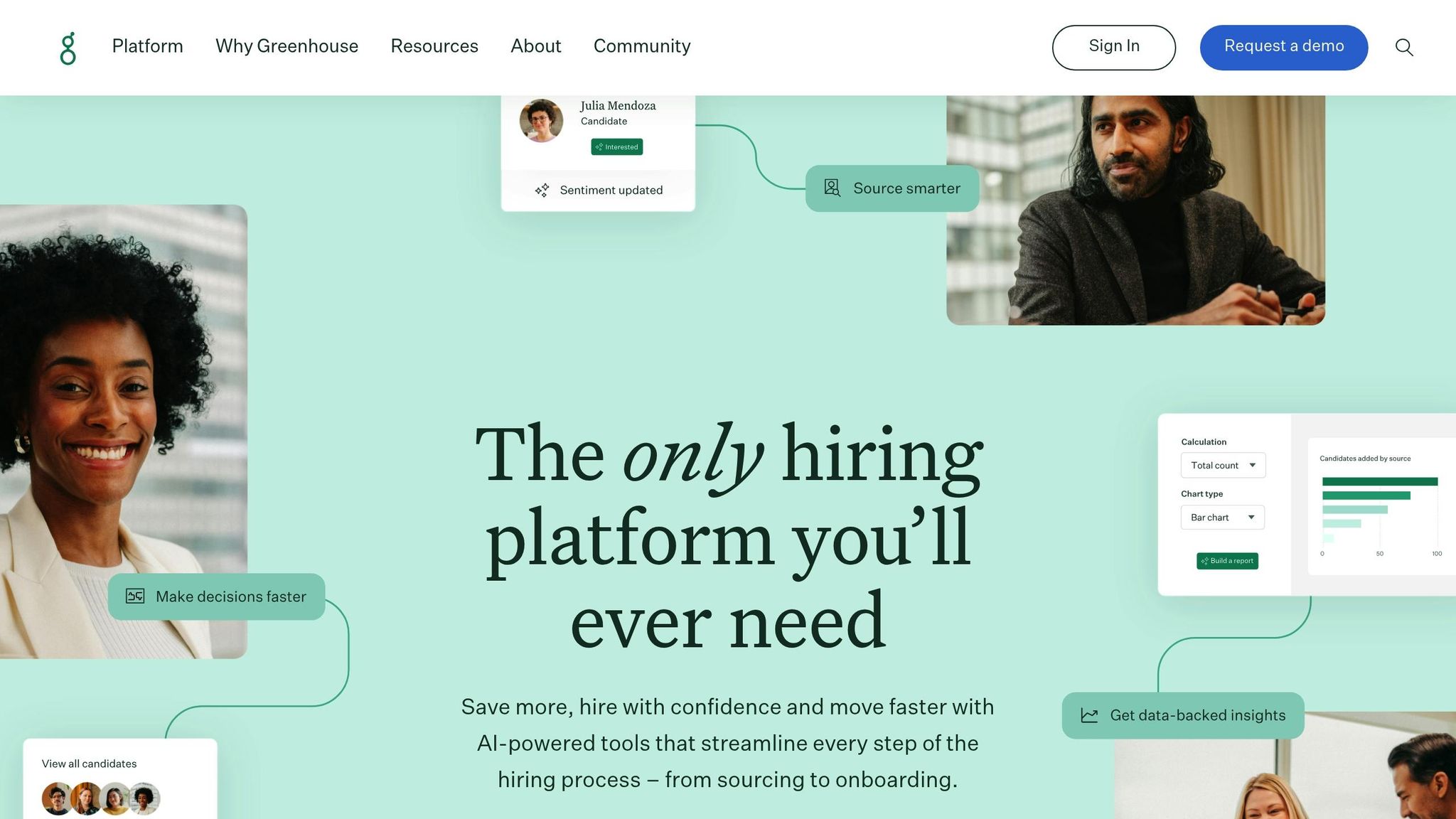
Greenhouse is a recruitment platform designed to streamline hiring processes with structured workflows. This approach ensures consistent data collection, enabling real-time analytics for better decision-making. With a 4.8/5 rating for its dashboards and analytics, the platform offers exceptional visibility into the hiring pipeline. Kelsey Biggs, Head of Global Talent Acquisition at Gong, highlights what makes Greenhouse stand out:
"I love Greenhouse reporting. There’s great dashboards built for me, and I can build ones myself. It’s one of the main reasons I choose Greenhouse over competitors."
Here’s a closer look at some of its standout features:
Real-Time Metrics Tracked
Greenhouse tracks a variety of metrics to give teams a clear picture of their recruitment efforts. These include pipeline health, hiring progress, recruiter productivity, sourcing ROI, and DEI performance. The platform identifies which sourcing channels attract the most qualified and diverse candidates, helping teams allocate their budgets more effectively. Additionally, it collects candidate feedback and demographic data to refine the hiring experience. With advanced filters, users can drill down into specific data points, while DEI analytics reveal drop-off rates for diverse candidates at each stage of the process.
Dashboard Customization
Greenhouse offers over 40 pre-built reports tailored to common stakeholder needs. For teams requiring more flexibility, the platform provides a report builder – available in the Plus, Pro, Advanced, and Expert tiers – allowing users to create custom dashboards from scratch. Reports can be tailored by selecting data fields, applying filters (like department or date range), and choosing from chart types such as bar, line, or pie charts. Interactive dashboards feature customizable widgets, and automated report distribution ensures stakeholders stay informed without manual updates. However, the advanced customization options may have a learning curve for new users.
Integrations
Greenhouse supports over 430 integrations, with 79 focused specifically on recruitment optimization and analytics. For advanced data analysis, the BI Connector syncs Greenhouse data with tools like Tableau, Power BI, and Looker, allowing teams to link recruitment metrics with broader business data. Simpler tools, like the Greenhouse Report Connector for Google Sheets, let users import and refresh reports directly within spreadsheets. For organizations needing more robust solutions, the platform can transfer raw data to Amazon Redshift daily, enabling in-house analysts to run complex queries. These integrations ensure that hiring data integrates smoothly into existing workflows.
Pricing
Greenhouse uses a tiered subscription model with plans – Essential, Plus, Pro, Advanced, and Expert – customized based on an organization’s size and employee count.
4. Workday
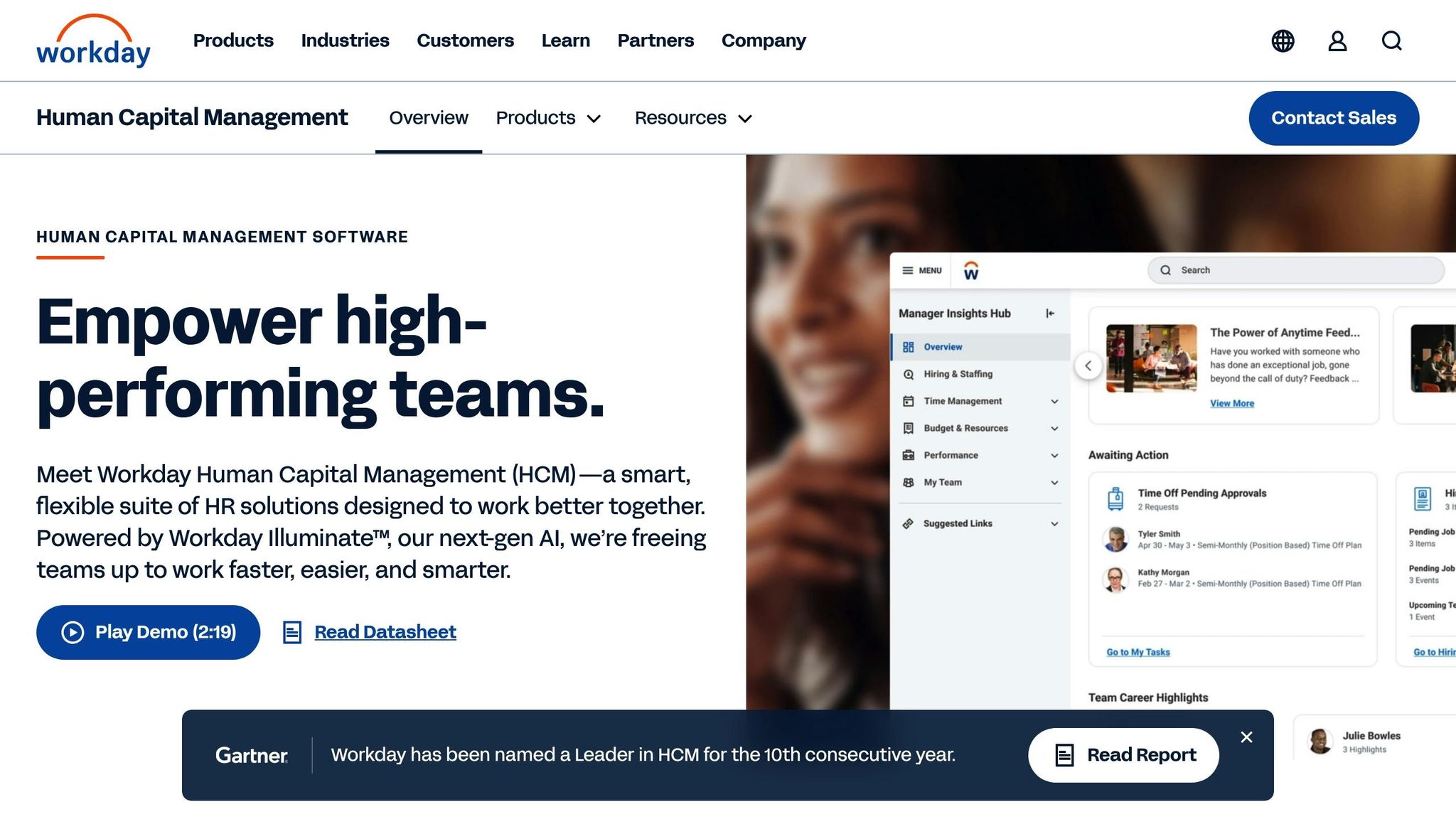
Workday is a sophisticated enterprise platform that weaves recruitment analytics into HR and finance workflows, offering seamless access to real-time job posting data. With in-line insights, recruiters can view essential metrics without toggling between tools, making decision-making more efficient. Organizations using Workday have reported a 48% improvement in strategic recruiting and a 41% reduction in agency spending.
Real-Time Metrics Tracked
Workday’s analytics capabilities focus on real-time tracking of key recruitment metrics. These include candidate pipeline acceleration, time-to-fill, recruiter productivity, and campaign performance for automated hiring pages. The platform’s AI tool, Workday Illuminate™, identifies workforce trends and potential risks, while the HiredScore AI integration streamlines candidate screening, helping to significantly reduce time-to-fill. Other tracked metrics include:
- Hiring funnel bottlenecks
- Diversity trends
- Sourcing channel performance
- Application completion rates
- Interview-to-hire ratios
Organizations have also seen a 12% rise in internal hires, showcasing how Workday’s tools support effective talent acquisition. These insights equip teams to respond to recruitment challenges in real time.
Dashboard Customization
Workday offers a robust selection of tools for data visualization and analysis. With 175+ prebuilt dashboards and over 5,000 reports, recruiters can prioritize tasks and manage pipelines efficiently. The platform’s drag-and-drop discovery boards allow for ad hoc analysis without requiring coding expertise. Customization options include:
- Tailoring visualizations with color palettes
- Drill-down views for deeper insights
- Workday Prism Analytics, which consolidates up to 90% of workforce data into one place for streamlined analysis
These features simplify data interpretation, enabling HR teams to act faster and more effectively.
Integrations
Workday enhances collaboration and data sharing through seamless integrations. For example, hiring teams can share interview feedback directly via Microsoft Teams and Slack, keeping workflows smooth and centralized. Additional integration capabilities include:
- Importing candidate data from social profiles
- Connecting with job boards, career sites, background check services, and assessment tools
- Advanced analytics powered by Crosschq, offering 200+ pre-built reports and real-time Quality of Hire metrics through bi-directional sync
These tools not only streamline recruitment processes but also improve hiring outcomes. Tom Nesteruk, Senior Vice President of HR and Associate Chief People Officer at AdventHealth, highlighted the platform’s impact:
"Reduced turnover costs and dependency on external agencies for hiring. As a result, there’s a notable decrease in agency-related costs, aligning seamlessly with key business priorities such as cost reduction."
Pricing
Workday does not disclose pricing publicly. For a custom quote tailored to your organization’s size and needs, you’ll need to contact their sales team directly.
Advantages and Disadvantages
Each platform offers unique benefits and trade-offs when it comes to real-time job posting analytics. Understanding these differences can help you choose the right tool for your team’s specific needs. Here’s a quick comparison of their key strengths and limitations:
- Skillfuel stands out for its user-friendly interface and real-time insights. It even includes a free plan, making it accessible for smaller teams. However, costs rise as your team grows, and some advanced features may not match up to those found in enterprise-level solutions.
- Greenhouse shines with its structured hiring processes and over 40 pre-built reports. That said, its premium pricing can be a hurdle for smaller teams, and mastering its advanced customization options can take some time.
- Workday integrates recruiting data with broader HR and financial metrics, providing a comprehensive view for enterprise users. But this level of depth comes with higher costs, longer implementation times, and a steeper learning curve.
- iCIMS offers robust scalability and deep integration through its Marketplace ecosystem. It’s designed to handle global hiring volumes and ensures compliance with the help of partners like eQuest.
Conclusion
The analysis above breaks down how different tools align with varying organizational needs. Selecting the right platform for real-time job posting analytics means evaluating your business size, goals, and the platform’s strengths. While 82% of companies leverage data for talent acquisition, more than 25% overlook recruitment analytics – a missed opportunity that could provide a competitive advantage.
For small teams and startups, Skillfuel stands out with its free plan and simple interface. It’s a cost-effective way to track key metrics right away, with the flexibility to scale as hiring demands increase.
Mid-market companies focusing on structured hiring and high-quality data should look into Greenhouse. Its 40+ pre-built reports and integration with BI tools support strategic hiring decisions, offering both ready-to-use and customizable dashboards for deeper insights.
For enterprise organizations managing complex, global operations, Workday is a strong choice. Its unified HCM system links recruitment metrics to broader workforce planning and financial strategies, making it worth the higher cost and longer setup time.
Each tool serves a specific market, from startups to large-scale enterprises. Research shows businesses using advanced analytics can double recruitment performance and cut hiring costs by threefold. The key is choosing a solution that fits your current needs while supporting future growth.
FAQs
What should small teams look for in a real-time job posting analytics tool?
When picking a real-time job posting analytics tool, small teams should zero in on a few critical factors to ensure it meets their specific needs. First up, ease of use – the tool should have a straightforward interface that allows team members to get up to speed quickly, without the need for extensive training sessions.
Next, reporting capabilities are crucial. The platform should deliver clear, actionable insights into key metrics like application rates, time-to-hire, and which job posting sources are performing best. This kind of data can help teams refine their strategies.
It’s also worth checking if the tool offers seamless integrations with your current recruitment systems. This can centralize your data and simplify workflows, saving time and effort. For small teams, cost-effectiveness is another big one. Look for tools with pricing options that scale with your hiring needs or that are designed for lower hiring volumes.
Lastly, features like automation can be a game-changer by reducing repetitive tasks, and compliance support ensures your hiring practices align with legal standards. Focusing on these essentials will help small teams run a tighter, more efficient hiring process.
What makes integration capabilities unique across real-time job posting analytics tools?
Integration options can differ significantly among real-time job posting analytics tools, depending on their features and how user-friendly they are. Skillfuel, for example, connects effortlessly with platforms like LinkedIn, allowing job postings and candidate data to sync automatically. It also supports integration with social media recruitment tools and custom job portals, making it easier to manage data and streamline hiring workflows.
Some tools may emphasize other features, like advanced automation or tailored data pipelines, but these often demand more manual setup or technical know-how. What sets Skillfuel apart is its focus on easy-to-use integrations that simplify recruitment tasks and promote better collaboration within teams.
What are the benefits of using real-time analytics in recruitment?
Real-time analytics bring a whole new level of insight to the hiring process. They let recruiters monitor crucial metrics like application rates, pipeline progress, and recruiter performance as they happen. This means bottlenecks or delays can be spotted and fixed early, cutting down on time-to-hire and boosting overall efficiency.
On top of that, real-time data makes budgeting smarter. By analyzing numbers like cost-per-hire and the performance of different sourcing channels, companies can ensure their resources are being used wisely. With these tools, organizations can make quicker, data-informed decisions, adapt to changes swiftly, and stay competitive in today’s fast-paced job market.