
Recruiting software technical failures during final-stage offer negotiations highlight support response time as an underweighted vendor evaluation criterion, according to a September 16 analysis by HR Tech Feed. The analysis frames vendor support responsiveness as a business-critical factor when system errors coincide with time-sensitive hiring decisions, particularly during counter-offer windows or competing-offer scenarios where delays of hours can determine whether a candidate accepts.
TL;DR: Support response time during recruiting software failures has emerged as a critical but often-overlooked ATS vendor selection criterion, particularly when technical issues coincide with time-sensitive offer negotiations or counter-offer scenarios.
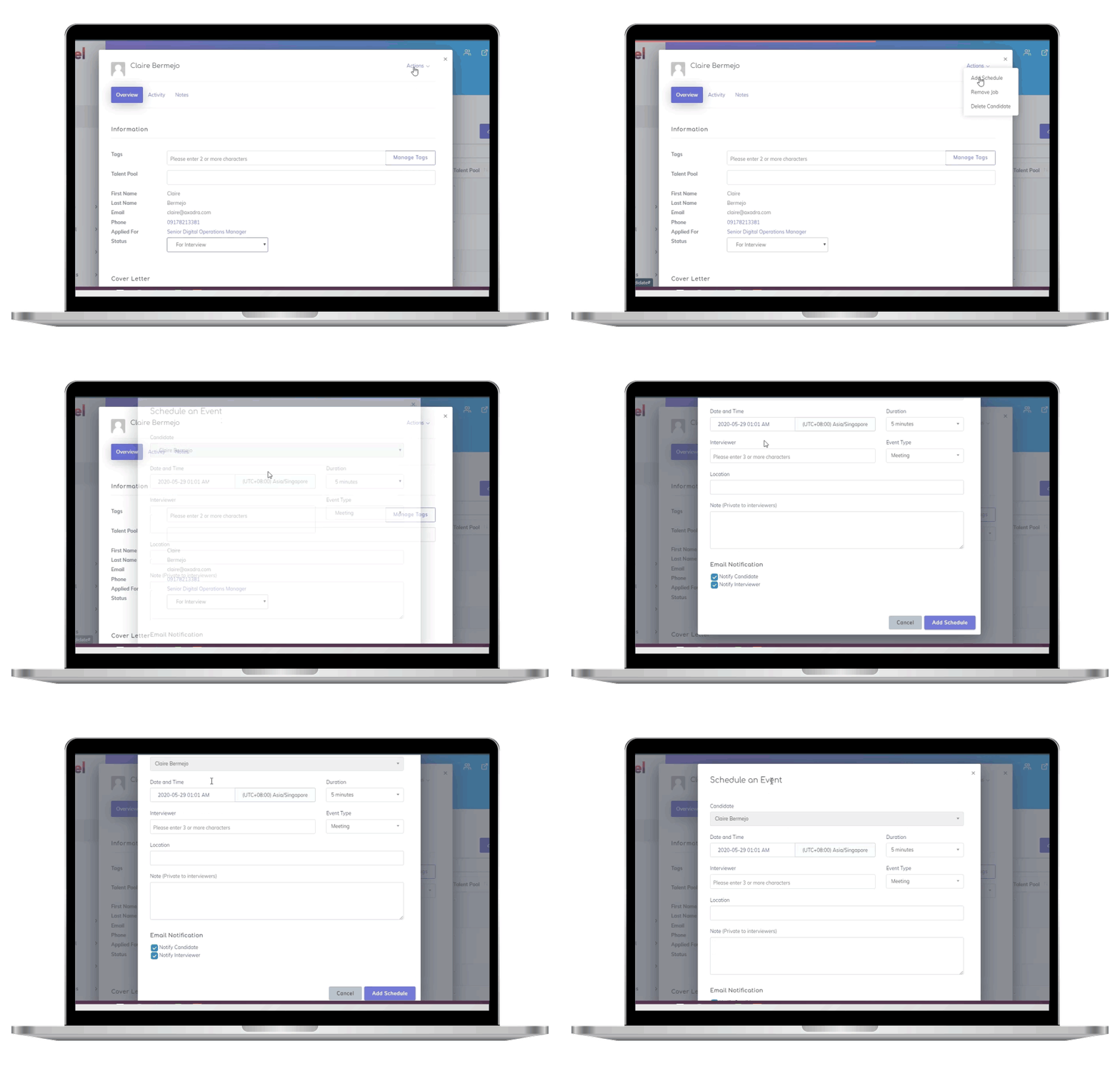
The scenario outlined in the analysis describes a recruiter managing a final-stage candidate who received a counter-offer from their current employer, creating a narrow decision window. When the ATS failed to populate offer template fields or advance candidate records between workflow stages, the inability to resolve the issue internally forced reliance on vendor support—with response time directly determining whether the offer could be extended while the candidate remained engaged.
When Software Failures Collide With Hiring Deadlines
Technical failures in recruitment software for small businesses carry boosted risk when they occur during compressed decision windows. The analysis identifies offer template field population errors and stage-transition failures as common technical issues that appear minor in isolation but become deal-critical when candidates are evaluating competing offers or counter-proposals.
“It’s a small thing, the kind of problem that normally takes two minutes to sort out, but today you can’t sort it out yourself,” the analysis states, framing the support-response question as distinct from general software reliability.
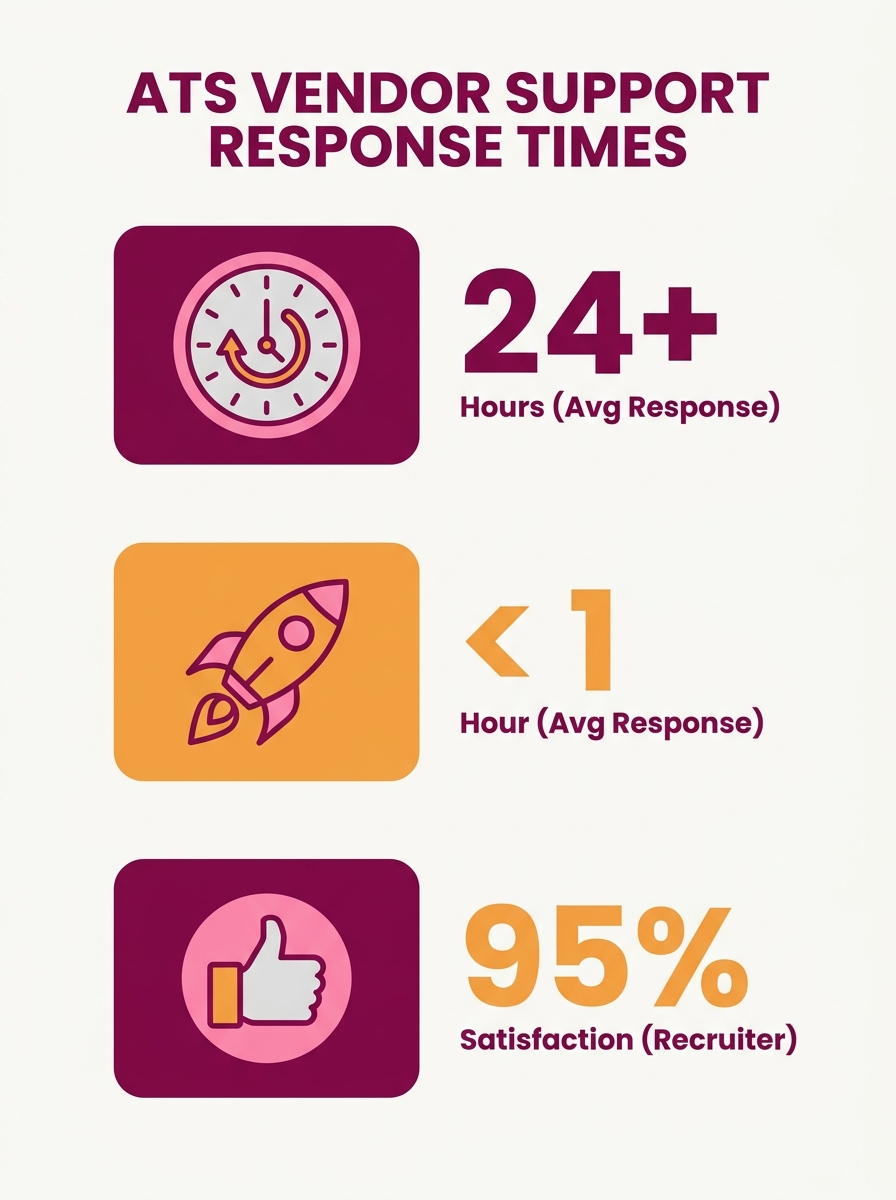
The business cost compounds when technical support operates on standard ticket-queue response times—24 to 48 hours in many vendor service-level agreements—while offer-acceptance windows close in hours. A counter-offer scenario described in the analysis compressed the decision timeline to “a few hours, maybe less,” creating conditions where multi-hour support delays functionally equal system unavailability.
Support Speed Versus Feature Depth in Vendor Evaluation
The September 16 analysis positions support response time as a vendor selection criterion distinct from feature completeness or user-interface design. Standard ATS evaluation frameworks prioritize resume parsing accuracy, workflow automation depth, and integration capabilities, but rarely quantify vendor support responsiveness or measure it against specific use-case urgency levels.
Recruiting teams evaluating recruitment software for SMBs face a particular trade-off: enterprise-tier vendors often bundle premium support tiers with faster response commitments, while mid-market and SMB-focused platforms may offer feature parity at lower cost but with support structured around ticket queues rather than real-time channels.
The analysis implicitly raises questions about support-tier accessibility. Many ATS vendors reserve same-day or phone-based support for enterprise contracts, leaving SMB buyers with email-only channels that operate on business-day response windows—a structure that doesn’t accommodate the timing of candidate offer decisions, which frequently occur outside standard business hours.
Measuring Support Responsiveness Before Contract Signature
Talent acquisition teams can quantify vendor support response time during the evaluation phase by requesting specific service-level agreement metrics: average first-response time for priority-one issues, phone support availability hours, and escalation pathways for deal-critical failures. Vendors that publish these metrics transparently signal operational maturity; those that resist disclosure or defer to “standard support processes” without time commitments present procurement risk.
Pre-contract testing opportunities include submitting support tickets during trial periods and measuring actual response times against vendor claims. This approach reveals whether marketing-site promises align with operational reality and whether support quality degrades during high-volume periods or outside core business hours.
The analysis also surfaces an indirect support metric: whether the ATS enables in-house teams to resolve common issues without vendor intervention. Systems with robust self-service documentation, visible error messages, and administrative controls that allow users to override stuck workflows reduce dependency on vendor support response speed, though they require higher technical literacy from recruiting teams.
What This Means for In-House Recruiters
Support response time should appear as a weighted criterion in ATS vendor scorecards, particularly for teams managing high-stakes senior roles or operating in competitive talent markets where offer-acceptance windows compress to hours. Recruiters evaluating vendors can request specific SLA commitments for business-critical scenarios, prioritize platforms with phone or chat-based support channels during business hours, and test actual responsiveness during trial periods by submitting intentionally timed support requests.
Teams working with free recruitment software or lower-tier ATS plans should build manual workarounds for critical offer-generation processes, including maintaining backup offer-letter templates outside the ATS and ensuring candidate contact information remains accessible in secondary systems. This operational redundancy reduces the risk that a single technical failure during a counter-offer window costs the hire.
The broader implication: recruiting software has become infrastructure, not tooling. When deal-critical processes depend on vendor systems functioning correctly during unpredictable high-stakes moments, support response time operates as system uptime. Procurement decisions should weight it accordingly.