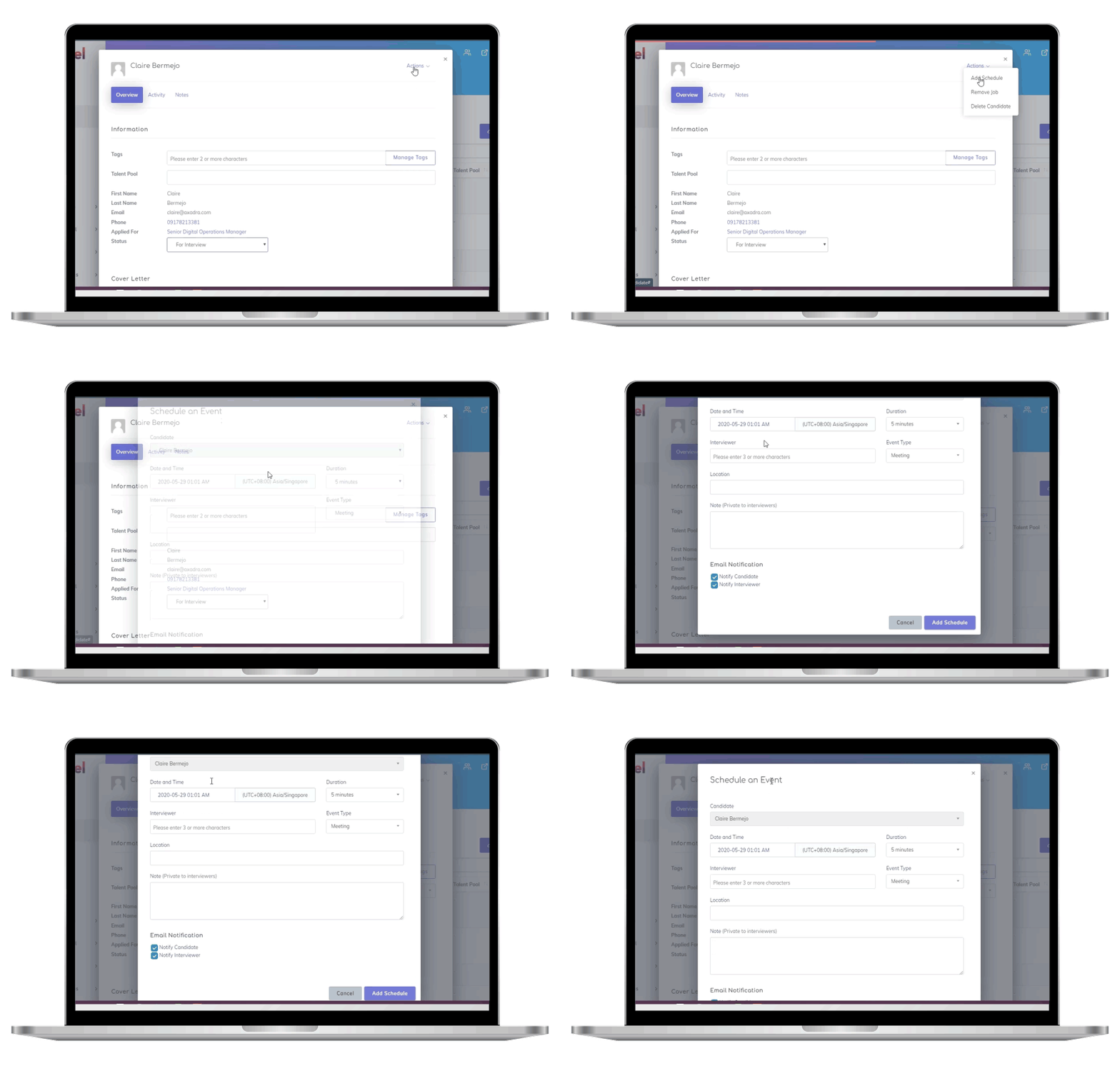

A technical analysis of applicant tracking system checker tools published September 10 by Analytics Insight identifies resume parsing, keyword matching, and document structure as three factors that determine whether hiring software can extract candidate details, while disputing the widely cited claim that ATS platforms automatically reject 75 percent of applications before human review.
TL;DR: Analytics Insight’s September 10 breakdown explains how ATS checker tools simulate resume screening by testing text extraction, keyword alignment, and formatting, concluding that the “75% rejection” statistic lacks research support.
The report, written by Pardeep Sharma and reviewed by Achu Krishnan, frames ATS checkers as diagnostic tools that simulate parts of the applicant tracking system review process rather than replicate employer hiring platforms directly. The analysis states that current ATS research does not support the 75 percent auto-rejection figure as a universal fact, describing the statistic as “false or based on a misunderstanding of ATS data.”
How Resume Parsing Determines Candidate Visibility
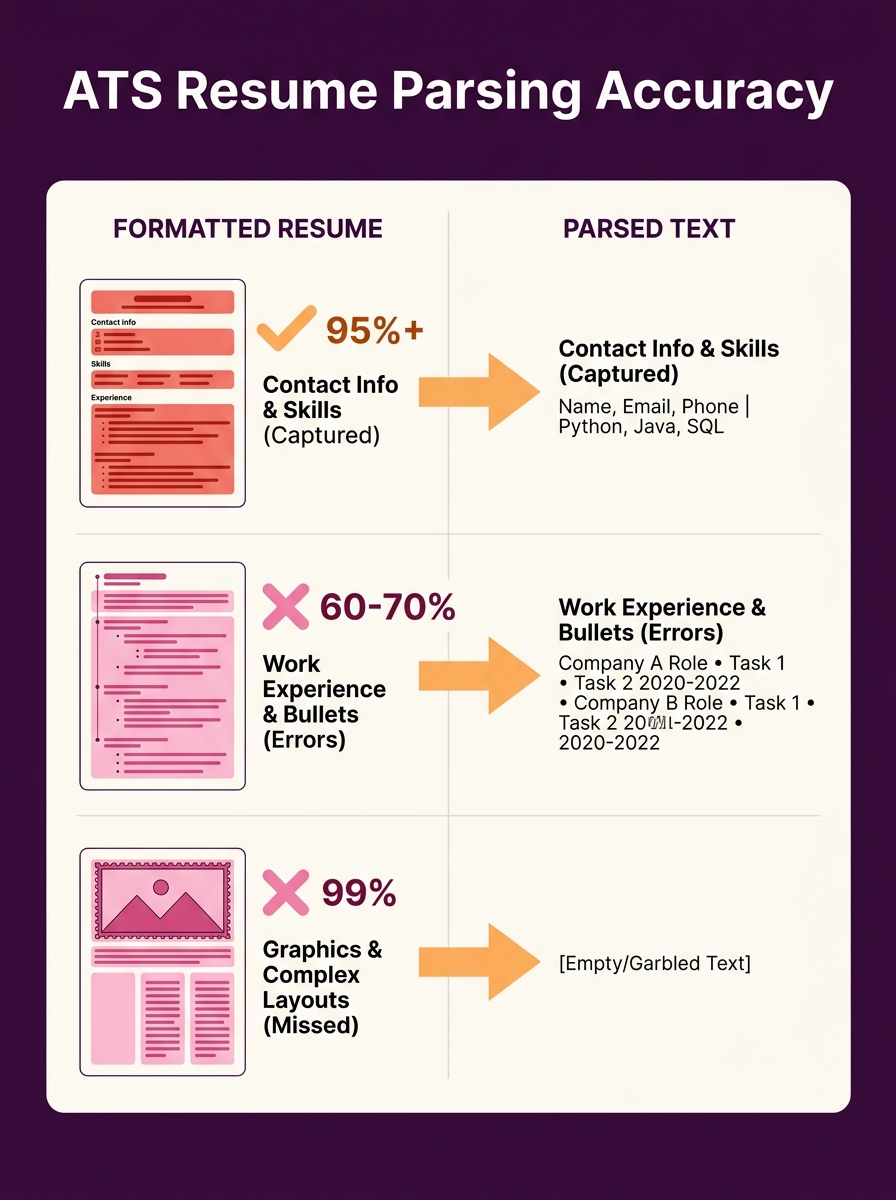
Resume parsing forms the first stage of ATS screening, according to the technical breakdown. The software extracts text from PDF or DOCX files and categorizes details such as candidate names, contact information, job titles, employers, dates, education, skills, and certifications into structured fields.
Document layout disrupts this extraction process when resumes contain tables, text boxes, graphics, icons, images, headers, footers, or complex columns. The analysis states that text embedded in images may not appear in extracted content, and two-column layouts can cause words to appear in incorrect order. “A simple structure gives the parser a clearer path through the document,” the report notes.
ATS checker tools test whether resume content remains machine-readable by simulating text extraction and identifying formatting elements that hiring software cannot process correctly.
Keyword Matching Evolves Beyond Exact Term Counts
After text extraction, ATS checkers compare resume content against job descriptions by scanning for role-related terms including technical skills, software, certifications, qualifications, job titles, and industry terminology, the analysis explains.
Modern systems use semantic matching to connect related terms and concepts rather than relying solely on exact word matches, according to the report. The breakdown advises that exact job terminology carries value when candidates genuinely possess listed skills, stating “a clear example has more value than a bare keyword list.”
The analysis contrasts this approach with older ATS advice that treated keyword use as “a simple numbers game.” If a job description specifies SQL, Tableau, data visualization, and A/B testing, the resume should mention those skills where they match actual candidate experience, the report states.
ATS Score Ranges Provide Guidance, Not Guarantees
Many online ATS checkers assign resumes scores from 0 to 100 covering formatting, parsing, keywords, skills, experience, and section structure, the technical breakdown reports. The analysis emphasizes that these numbers do not represent universal ATS standards.
“Employers use different ATS platforms, settings, screening questions, search methods, and recruitment processes,” the report states. “An online score therefore cannot predict a specific employer’s decision.”
A resume receiving a high score can still fail to secure an interview, while a lower score does not always trigger automatic rejection, according to the analysis. The report positions the score as a tool for identifying possible weaknesses rather than predicting hiring outcomes.
AI Integration Changes Screening Mechanics
Artificial intelligence now plays a larger role in recruitment software for enterprise teams, the analysis notes. Modern systems assess skills, experience, and job relevance with greater detail than older keyword filters.
This shift changes the function of ATS checker tools, which now inspect resume text structure and display what parsers can extract while assessing semantic connections between resume content and job requirements, the report explains.
The breakdown advises against attempting to “trick” an ATS, recommending instead that candidates focus on clear facts, relevant skills, measurable results, and clean document structure.
What This Means for In-House Recruiters
The technical breakdown provides recruiting teams with insight into what ATS selection frameworks actually measure when screening applications. The debunking of the 75 percent auto-rejection claim clarifies that filtering rates vary significantly based on platform configuration, search methods, and role requirements rather than following a universal industry standard.
Recruiters configuring ATS platforms should understand that parsing errors caused by complex resume formatting can hide qualified candidates from search results and ranking algorithms. The analysis suggests that educating hiring managers about preferred resume formats—standard sections, minimal graphics, normal text rather than embedded images—reduces the risk of missing strong applicants whose credentials exist in machine-unreadable formats.
For teams evaluating ATS checker tools or candidate-facing application guidance, the report’s emphasis on semantic matching over exact keyword counts indicates that modern systems can surface relevant experience even when terminology varies between resume and job description. This reduces pressure on candidates to game keyword density while raising the importance of clear, detailed descriptions of actual work performed.