
Mandy from Accounting has accused Paul from Finance of undermining her authority. It’s the umpteenth time this year they’ve barged into your office, pointing fingers at each other.
Your life is a boxing match, and you’re the referee. Mustering the last of your patience, you put on a demure smile and say, “Right, let’s start from the top, and only one speaks at a time.”
And here you thought going into HR would be a low-stress, high-reward gig. Still, you wouldn’t change it for the world. Some days are good, and others are, um, challenging, like today.
Time to put on your conflict resolution hat. Now back to Mandy and Paul…
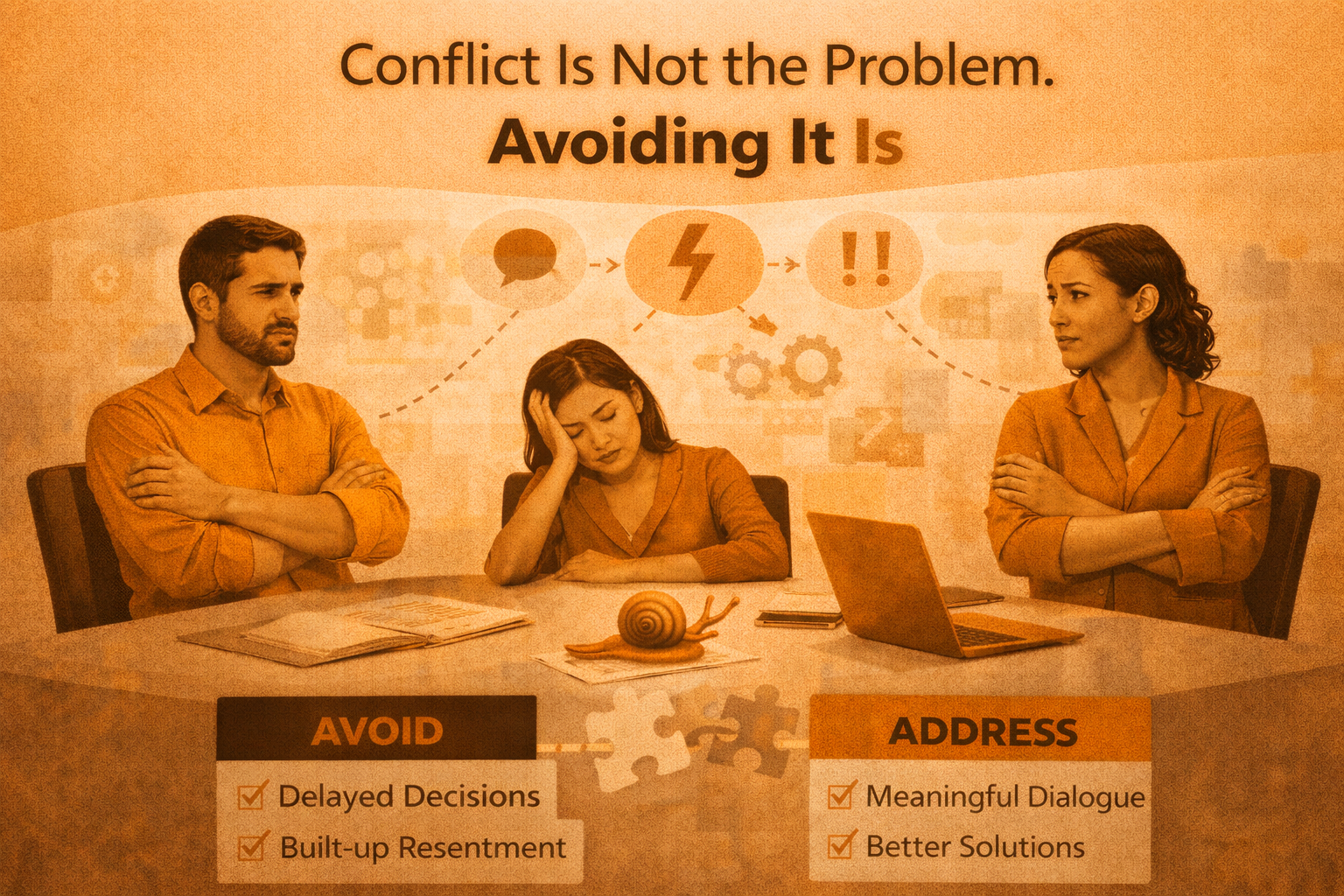
Conflict Is Not the Problem. Avoiding It Is
Conflict at work is normal. Different goals. Different styles. Different moods before coffee.
The problem isn’t disagreement. The problem is ignoring it until it turns into resentment, turnover, or a very tense Slack channel.
Strong leaders don’t fear conflict. They manage it early and calmly.
Conflict resolution is central to effective leadership because it builds trust and keeps teams aligned when things get uncomfortable.
Why HR Is Always in the Middle
HR sits at the crossroads of people and pressure. Employees want fairness. Managers want results. Leadership wants calm.
HR’s role is to be the translator, referee, and therapist, sometimes before lunch.
HR-led conflict management reduces stress, boosts morale, and protects company culture.
Translation: when HR handles conflict well, everyone else gets to do their jobs.
Curiosity Beats Control Every Time
The best conflict resolvers don’t come in hot. They come in curious.
Instead of:
- “Who’s right?”
- “What went wrong?”
They ask:
- “What’s really happening here?”
- “What’s not being said?”

HR Executive calls curiosity one of the most underrated HR skills today, and for good reason. Curiosity lowers defenses. People relax. Truth sneaks out. And resolution ultimately appears possible.
Soft Skills Aren’t Soft. They’re the Heavy Lifters
Conflict resolution pulls from a deep bench of so-called “soft skills.” Think:
- Listening
- Empathy
- Emotional control
- Clear communication
Forbes lists these as essential workplace skills, not “nice-to-haves.” In HR, these skills decide whether conflict becomes growth or a Glassdoor review waiting to happen.
No pressure, right?
The Culture Ripple Effect
Unresolved conflict spreads fast. Teams pick sides. Trust erodes. Meetings feel colder. Handled well? It does the opposite.
Emotionally grounded leadership, sometimes referred to as “dad mode,” creates safety and steadiness during tough moments.
It’s not being soft. It’s stable. And HR sets that tone.
Where HR Leaders Learn These Skills
Hint: It’s not from policy manuals.
Most HR pros don’t learn conflict resolution from textbooks. They learn it in hallways. In Zoom calls. In slightly uncomfortable moments.
That’s why many HR practitioners look to formal education that focuses on human behavior, systems, and communication. Degrees like Keuka College’s online MSW program are designed around people-first leadership and real-world problem solving.
For HR leaders who want stronger mediation skills and emotional awareness, this fits naturally into career growth without stepping away from work. With an online Master of Social Work (MSW) degree, you can address conflict resolution with knowledgeable confidence.
Leadership Isn’t Confined to the C-Suite
Conflict resolution isn’t reserved for executives with corner offices. It’s a daily leadership act.
Modern leadership is less about authority and more about influence. HR professionals influence culture every time they step into a tense conversation.
How you listen. How you respond. How you follow up. That’s leadership in real time.
Real Life, Not Theory
Scroll through LinkedIn or Instagram, and you’ll see it everywhere. Leaders talking about tough conversations, burnout, and emotional intelligence.
Even short-form content is catching on. HR experts say that conflict handled poorly lingers longer than we expect.
Quick reminder: silence doesn’t mean peace.
What Great HR Conflict Resolution Looks Like
No grand speeches. No dramatic interventions. Just a few solid habits:
- Address issues early
- Stay neutral
- Listen more than you talk
- Focus on outcomes, not egos
And most importantly, follow through. People don’t remember policies. They remember how HR made them feel during hard moments.
The Skill that Pays Dividends
Conflict resolution won’t win awards. It won’t trend on dashboards. But it will:
- Reduce turnover
- Protect culture
- Build trust
- Make your job easier
In HR, that’s the real win. Handle conflict well, and everything else runs more smoothly. Ignore it, and no policy will save you.
Your Superpower
Conflict resolution isn’t about fixing people. You’re creating space for clarity, respect, and progress.
HR leaders who master this skill don’t merely solve problems. They prevent them, quietly and consistently. Calm becomes your superpower. Listening becomes your edge. Fairness becomes your brand.
So no, conflict resolution may never get top billing in HR job descriptions. Yet, behind every healthy team and steady culture, someone is doing the real work. And that someone is you.
Author bio: Writer by day, dream catcher by night. Marchelle Abrahams cut her teeth during the infancy of the internet when the dial sound of the modem was more than a soundbite at a rave. Not a Millennial and not a Boomer, Marchelle is an in-betweener, making her a special breed of human. As a qualified journalist, Marchelle believes her superpower is stringing a few words together and people reading them.