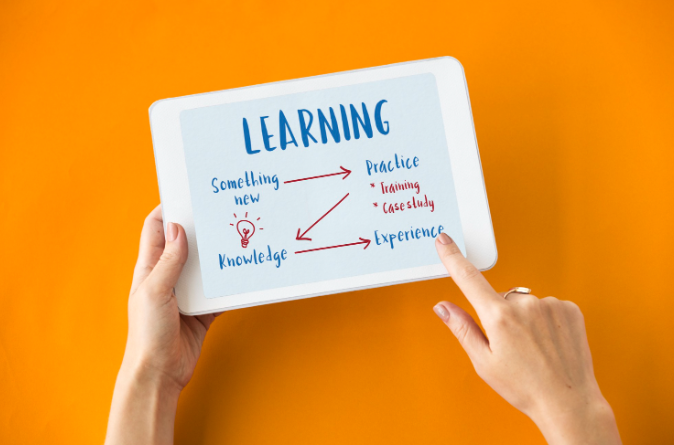

A college degree can open important doors, but it is no longer the only way to build a successful career. As industries change and employers look for people who can contribute from day one, practical skills are becoming increasingly valuable.
For many adults, this creates an interesting opportunity. You do not necessarily need to return to school for several years or earn another traditional degree to explore a new professional direction. In many cases, learning a specific skill, practicing it consistently, and gaining enough experience to demonstrate your ability can create an entirely different career path.
Practical skills can also complement an existing degree. Someone with a business background, for example, might learn a second language, develop digital skills, or acquire a specialized hospitality skill that makes them more versatile in the workplace.
Here are seven practical skills that can potentially open doors to new careers.
1. Digital Marketing and Content Creation
Almost every modern business needs an online presence, which makes digital marketing one of the most flexible skill areas to develop.
Digital marketing includes a wide range of abilities, including search engine optimization, social media management, email marketing, content creation, paid advertising, analytics, and website optimization. You do not necessarily have to master everything at once. Starting with one area can provide a foundation for developing additional skills later.
For example, someone interested in writing could begin with content creation and gradually learn SEO. Another person might start with social media and eventually move into paid advertising or marketing analytics.
One advantage of digital skills is that they can be demonstrated through practical work. A portfolio, personal website, campaign example, or successful project can sometimes communicate your capabilities more effectively than a list of qualifications alone.
These skills can lead to opportunities in agencies, companies, freelance work, consulting, e-commerce, and entrepreneurship.
2. Bartending and Hospitality Skills
Hospitality is another field where practical ability, communication, professionalism, and hands-on experience can be extremely valuable.
Bartending is often viewed simply as a service job, but professional bartending involves much more than preparing drinks. Good bartenders need customer-service skills, product knowledge, organization, time management, attention to detail, and the ability to remain composed in busy environments.
For someone interested in exploring the field before committing to in-person training, an online bartending school can provide a convenient way to learn foundational concepts and understand what professional bartending involves.
Hospitality skills can also transfer into other careers. Experience dealing with customers, managing busy service environments, handling payments, working as part of a team, and solving problems under pressure can be useful in events, hotels, restaurants, tourism, sales, and customer-facing roles.
For people who enjoy working with others and prefer active environments over desk-based work, hospitality can be worth exploring.
3. Learning a Second Language
Language skills can become a powerful career asset, particularly in workplaces that serve diverse customers, clients, or communities.
Being able to communicate in another language can make an employee more useful in situations where basic communication is not enough. It can help with customer service, sales, healthcare administration, education, tourism, hospitality, community services, and international business.
The key is to approach language learning as a practical skill rather than simply an academic subject. Instead of focusing exclusively on memorizing vocabulary and grammar rules, learners can practice conversations, workplace phrases, listening, and situations they are likely to encounter in real life.
For example, adults in Houston who want to learn Spanish language can focus their learning around everyday communication, work-related phrases, conversation, or other specific goals. Private instruction can also allow beginners to learn at a pace that fits their needs.
A second language does not automatically guarantee a new job or promotion, but it can strengthen a person’s overall professional profile and make certain opportunities more accessible.
4. Data Analysis
Businesses generate enormous amounts of information, but data only becomes useful when someone can interpret it and turn it into practical decisions.
Learning basic data analysis can therefore be valuable across many industries. You do not necessarily need to become a data scientist. Understanding spreadsheets, data visualization, basic statistics, dashboards, and tools such as Excel or SQL can already make a difference in many roles.
A marketing professional might analyze campaign performance. Someone working in sales could examine customer trends. An operations employee might use data to identify inefficiencies, while a small-business owner could analyze revenue and customer behavior.
The important part is learning how to answer business questions with data.
Rather than simply creating charts, a skilled analyst asks questions such as:
- What changed?
- Why did it change?
- Which customers or products are performing best?
- Where are we losing money or time?
- What should the business do next?
Those problem-solving abilities can make data skills useful far beyond traditionally technical careers.
5. Skilled Trades and Hands-On Technical Skills
Not every career requires spending most of the working day behind a computer.
Skilled trades such as electrical work, plumbing, carpentry, HVAC, welding, automotive repair, and other technical occupations continue to depend heavily on practical knowledge and hands-on ability.
These careers often require structured training, apprenticeships, certifications, or licensing depending on the occupation and location. However, the underlying lesson is broader: learning how to build, repair, install, maintain, or operate something valuable can create career opportunities that are difficult to replace with purely theoretical knowledge.
Hands-on skills can also provide an attractive path for people who enjoy solving tangible problems.
Instead of spending the day discussing what needs to be fixed, a skilled professional can identify the problem, determine what is required, perform the work, and see the result directly.
For people considering a career change, this combination of practical work and specialized knowledge can be particularly appealing.
6. Sales and Negotiation
Sales is sometimes misunderstood as simply convincing someone to buy something. In reality, effective sales involves communication, listening, research, relationship building, problem-solving, and understanding customer needs.
These abilities are useful in far more careers than traditional sales positions.
Negotiation skills, for example, can help professionals communicate with suppliers, clients, employers, contractors, colleagues, and business partners. Learning how to ask better questions, understand another person’s priorities, explain value, and reach mutually beneficial agreements can improve performance in almost any business environment.
Sales skills can also be developed through practice. A person can learn how to conduct discovery conversations, create presentations, handle objections, follow up with prospects, and communicate benefits clearly.
Someone who becomes comfortable with these skills may find opportunities in business development, recruiting, account management, real estate, customer success, entrepreneurship, and many other fields.
7. Project Management and Organization
Being able to organize people, information, deadlines, and resources is another highly transferable skill.
Project management does not necessarily mean becoming a certified project manager immediately. At its most basic level, it means knowing how to take a goal and turn it into a series of manageable actions.
A person developing this skill learns to:
- Define objectives
- Break large projects into smaller tasks
- Set realistic deadlines
- Assign responsibilities
- Identify potential problems
- Track progress
- Communicate updates
- Complete work on time
These abilities are useful in technology, marketing, construction, events, healthcare, education, business operations, and countless other industries.
Even outside a formal project-management role, someone who consistently organizes work effectively can become an important member of a team.
Practical Skills Can Complement a Degree
Learning a practical skill does not mean abandoning the value of a college education.
In fact, combining formal education with practical abilities can be particularly powerful.
A communications graduate who learns digital marketing can pursue marketing roles. A business graduate who develops data-analysis skills can become more comfortable working with performance data. A hospitality graduate who develops another language can improve their ability to work with international customers.
The combination creates a broader professional profile.
This is especially useful at a time when career paths are becoming less linear. People may change industries, start businesses, work independently, or develop several income streams throughout their working lives.
How to Choose the Right Skill
The best skill to learn is not necessarily the one that happens to be trending. It should fit your interests, existing abilities, available time, and career goals.
Start by asking yourself three questions:
What do I enjoy doing?
A skill is much easier to develop when you have genuine interest in using it.
What problems can I solve with it?
Employers and customers generally value skills because they solve problems or produce useful outcomes.
Where can I demonstrate the skill?
Look for ways to create evidence of your ability through projects, practice, volunteer work, freelance assignments, certifications, or real-world experience.
You do not need to learn seven new skills at the same time. Choosing one useful skill and developing it deeply can be more valuable than collecting dozens of introductory courses.
The Career Advantage of Continuous Learning
A degree can provide a foundation, but learning does not have to stop when formal education ends.
Practical skills give people a way to keep adapting as industries change. They can make career transitions less intimidating, provide additional ways to earn income, and help professionals become more confident in unfamiliar situations.
The most useful approach is to think beyond qualifications and focus on capabilities. What can you actually do? What problems can you solve? What value can you provide to an employer, customer, or organization?
Those questions can lead to opportunities that may not have been visible when your career journey began.
Ultimately, building a career is not always about collecting another credential. Sometimes, the next opportunity starts with learning something practical, putting that knowledge into practice, and proving what you can do.