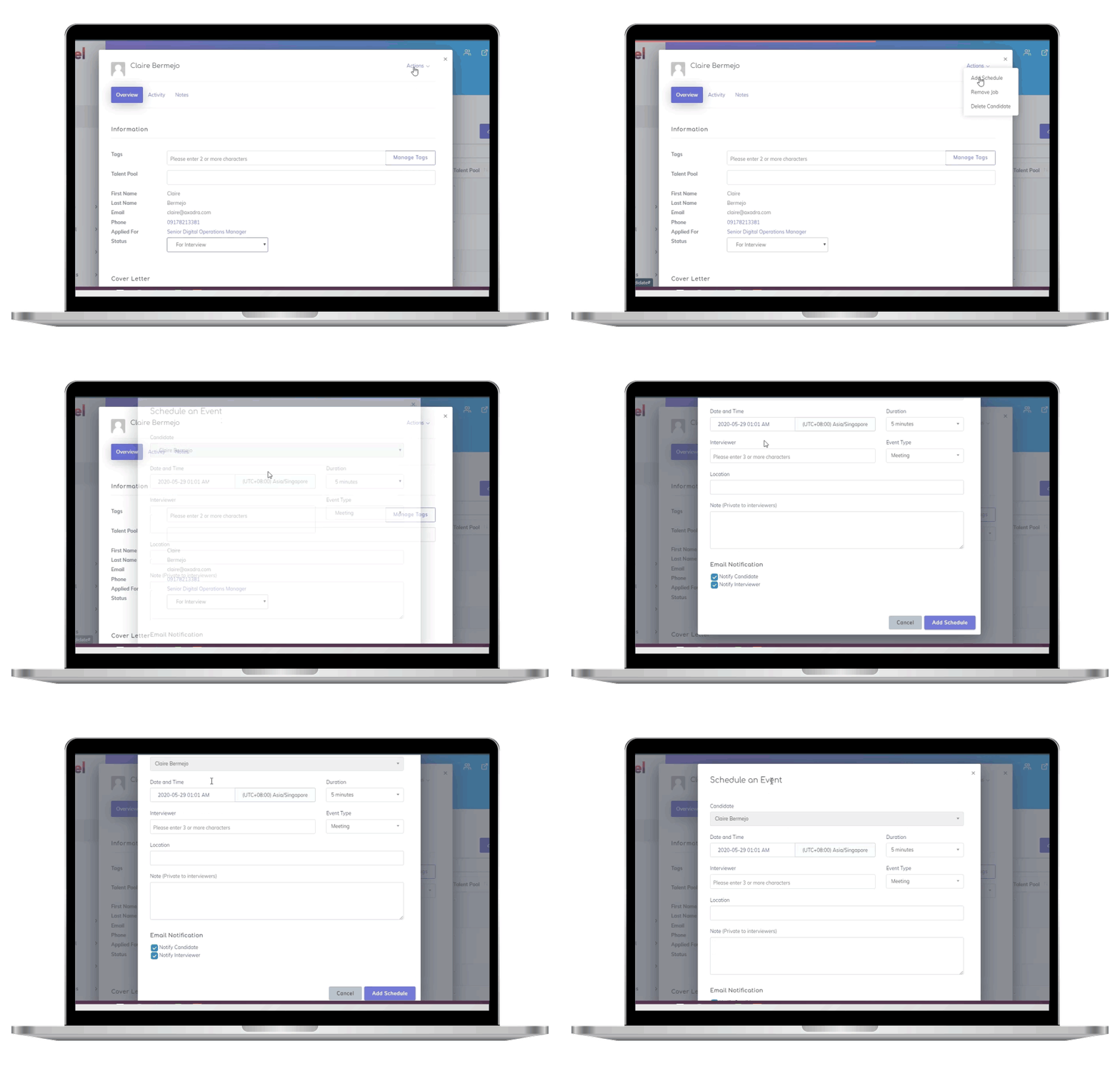

Effective interview feedback management ensures hiring decisions are based on clear, consistent, and objective evaluations. Here’s what you need to know:
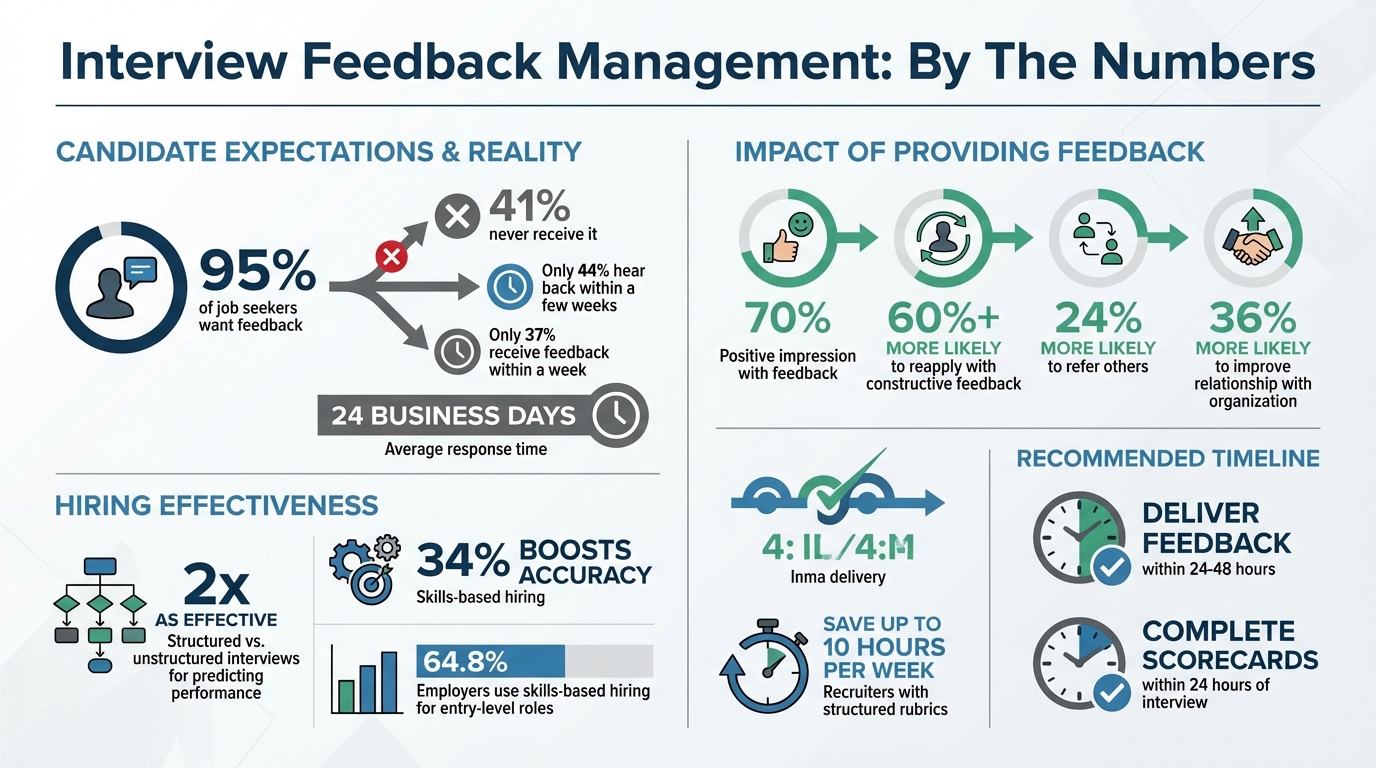
- Why It Matters: 95% of job seekers want feedback, yet 41% never receive it. Poor feedback practices can harm your company’s reputation and lose potential talent.
- Key Practices:
- Set Consistent Criteria: Use standardized rubrics and measurable outcomes to fairly assess candidates.
- Provide Specific Feedback: Avoid vague comments; back up evaluations with clear examples.
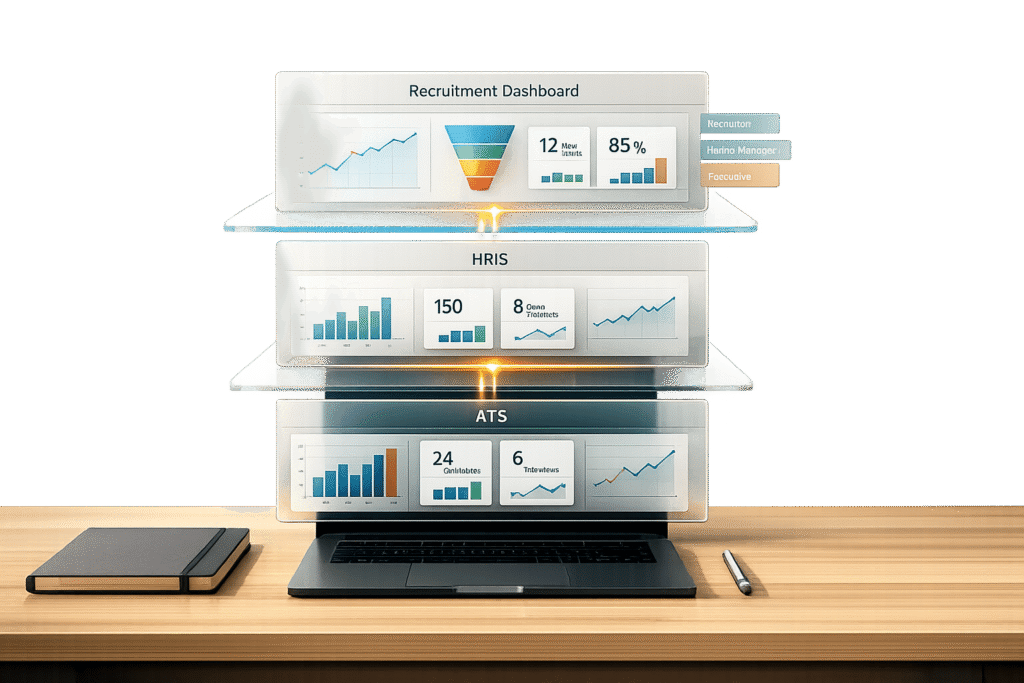
- Centralize Feedback: Use tools like Applicant Tracking Systems (ATS) to store and organize evaluations.
- Share Feedback Promptly: Deliver actionable, professional feedback within 24–48 hours.
- Improve Processes: Use feedback data to refine hiring strategies and address recurring issues.
Centralized systems and structured feedback not only streamline hiring but also enhance candidate experience, boosting referrals and company reputation.
Interview Feedback Management Statistics and Impact
Keys to Giving Perfect Candidate Feedback
1. Set Up Consistent Feedback Criteria
Standardized evaluation criteria ensure fair comparisons and support defensible hiring decisions. Research shows that structured interviews are twice as effective as unstructured ones at predicting job performance. This approach helps your team focus on the traits that truly matter for the role.
Start by identifying 5–7 measurable outcomes a candidate should achieve in their first year. Then, connect these outcomes to specific competencies, such as problem-solving or technical expertise. For example, a software engineer might need to "develop creative, efficient solutions requiring minimal optimization", while a sales representative might excel at "using effective questioning to understand complex client needs".
Using a structured rubric doesn’t just improve accuracy – it can also save recruiters up to 10 hours per week on tasks like interview debriefs and documentation. Here’s how to implement these criteria in a way that works.
1.1 Build Competency Frameworks for Each Role
To manage interview feedback effectively, define 5–8 key competencies that directly correlate to success in the role. Each competency should include clear behavioral examples. For instance, "strategic thinking" might mean "proactively identifies long-term challenges and crafts actionable plans", while "empathy" for a customer support role could be "diffuses high-conflict situations with exceptional understanding".
Not all competencies are equally important, so assign weights to reflect their relevance. "Must-have" skills should carry more weight than "nice-to-have" traits. To gather consistent data, prepare at least two behavior-based questions for each competency. Before interviews begin, hold a calibration session with your team to align on what different scores – like a "3" versus a "5" – look like for the role.
1.2 Use Standardized Feedback Templates
Feedback templates are essential for keeping evaluations consistent. Highlight 4–7 core competencies tied to job success and include clear definitions to ensure everyone evaluates candidates the same way. Use the rating scales and behavioral examples from your competency framework. For instance, a "1" might mean "no evidence of competency", while a "5" indicates "exceptional performance with detailed evidence".
Include sections for evidence-based notes, encouraging interviewers to document specific observations or candidate quotes rather than relying on subjective opinions. Ask interviewers to complete and submit scorecards immediately after each interview. Store these scorecards in a centralized system, making it easy for the hiring team to access and compare evaluations. Tools like Skillfuel can simplify this process with centralized dashboards.
1.3 Define Clear Success Metrics
Set measurable benchmarks that define success for each role. Before interviews, outline specific outcomes candidates should achieve within their first year, such as "increase product adoption by 10%" or "reduce customer response time by 15%". These benchmarks give evaluators a solid standard to measure against.
Develop behavioral anchors for your 1–5 scoring scale, where each score corresponds to observable behaviors. For example, a "5" in communication might mean "anticipates follow-up questions and elevates the conversation". Train your team to use the STAR method (Situation, Task, Action, Result) to evaluate responses consistently. To improve accuracy, compare interview scores with 3- and 6-month performance data from new hires and adjust your metrics as needed.
Currently, nearly two-thirds of employers (64.8%) rely on skills-based hiring for entry-level roles. This approach boosts hiring accuracy by 34%, shifting teams from gut instincts to data-driven decisions.
2. Collect Specific and Actionable Feedback
Once you’ve established consistent evaluation criteria, the next step is turning observations into specific, actionable feedback. Generic comments don’t help when it comes to making fair hiring decisions. Feedback should clearly outline a candidate’s performance and back up hiring recommendations. Without clear evidence, decisions based on instinct can stray from the actual job requirements.
The difference between vague and actionable feedback is huge. Instead of saying, "I don’t think they’d be a good fit", provide details like, "The candidate lacks experience with XYZ software, which is essential for this role". Similarly, replace subjective remarks such as "They seemed uninterested" with something concrete: "The candidate didn’t ask any questions about the role and gave one-word answers to technical questions". Shifting from impressions to observable behaviors creates a stronger, defensible record and ensures candidates receive a fair evaluation.
2.1 Cite Specific Examples and Behaviors
Every piece of feedback should be backed by specific examples from the interview. For instance, if you describe a candidate as "nervous", clarify this with observations like, "The candidate frequently interrupted the interviewer and struggled to maintain eye contact". Each rating or score should come with at least one clear example.
For technical roles, instead of a vague statement like "The candidate isn’t qualified", note something like, "The technical assignment showed they lack experience debugging in Python". When it comes to soft skills, use specific scenarios the candidate mentioned – such as a teamwork example – rather than making general comments. This level of detail makes the feedback more useful and ensures both hard and soft skills are properly documented.
2.2 Record Feedback Right After the Interview
Timing is everything when it comes to accurate feedback. Take notes during the interview to capture key details and finalize your documentation right after the interview while everything is still fresh. Experts suggest completing feedback within 24 hours – this allows time for reflection without losing clarity. Setting up automated reminders can help interviewers submit their scorecards promptly after the interview ends.
When documenting, include all the essentials: the names of participants, the date of the interview, the list of questions asked, the candidate’s responses, and notes on any tasks or tests they completed. Store this feedback securely and consistently as outlined in earlier steps.
2.3 Avoid Vague Comments
Vague feedback can lead to both legal and practical problems. Avoid statements like "not a good fit" and instead tie shortcomings to specific job requirements. This is especially important because, in some regions, candidates have the legal right to review their interview records. For example, instead of saying "seemed aloof", write, "The candidate didn’t provide specific examples of past leadership successes when asked".
Make sure to highlight both strengths and areas for improvement. When delivering feedback to candidates, consider using the "sandwich technique", where constructive points are placed between positive observations, making critiques easier to digest. Also, for any weaknesses identified, suggest actionable steps like a relevant course or certification. This matters – a study found that over 60% of candidates are more likely to reapply to a company if they receive constructive feedback.
3. Store Feedback in a Central System
Once you’ve gathered actionable feedback, the next step is to centralize it. Keeping feedback scattered across emails, handwritten notes, or spreadsheets slows down hiring decisions. A centralized system ensures all team members have access to the same information, reducing confusion and preventing data loss.
Currently, the average time it takes to respond to feedback is 24 business days. Only 44% of applicants hear back within a few weeks, and just 37% receive feedback within a week. These delays often happen because feedback is stored in multiple places – an inbox here, a notebook there, or even someone’s memory. By consolidating everything in one system, like a centralized dashboard, you can streamline decision-making and cut down on unnecessary delays.
3.1 Implement a Centralized Dashboard
A centralized dashboard acts as the backbone of an efficient hiring process. Modern Applicant Tracking Systems (ATS) are designed to store candidate information and feedback in one place. As Skillfuel explains:
"An applicant tracking system (ATS) is a software application or online platform designed to streamline the recruitment process for employers and recruiters. It serves as a centralized tool for managing job applications, tracking candidates’ progress, and automating various tasks that can be time-consuming yet essential".
Automation plays a big role here. For example, you can configure the dashboard to send out feedback forms or reminders to interviewers right after each interview. These systems also collect scorecards and organize evaluations, making it easier to compare candidates quickly and efficiently.
3.2 Enable Digital Access for All Team Members
Digital systems are essential for real-time collaboration. They allow your team to review candidate profiles, share notes, and compare evaluations no matter where they are – whether in the office, working remotely, or even traveling. Cloud-based platforms are particularly helpful for distributed teams, as they ensure everyone stays in sync.
Before rolling out a centralized system, take a close look at your current recruitment process. Identify any bottlenecks and make adjustments to align the software with your team’s needs. When migrating to a new system, clean up your data by removing duplicates and standardizing formats to maintain accuracy. Also, assign permission levels carefully – this way, sensitive candidate information is only accessible to the right stakeholders. Some systems even include features to reduce bias, such as hiding colleagues’ feedback until an interviewer has submitted their own evaluation.
3.3 Structure Feedback for Easy Comparison
The true power of a centralized system lies in how it organizes data. Structured feedback makes it much easier to compare candidates side by side. Instead of wading through unstructured notes, use digital templates with multiple-choice or ranking options to ensure consistent, comparable feedback. For different interview stages – like Phone Screens, Technical Interviews, or Final Rounds – attach specific scorecards that automatically appear as candidates progress through the process.
Granular ratings are another helpful feature. They allow interviewers to rate individual questions or specific skills, rather than just giving an overall impression. This approach helps pinpoint a candidate’s strengths and areas for improvement. Some systems even integrate AI tools to analyze feedback, focusing on competence and performance while reducing personal bias. By structuring feedback this way, you not only simplify comparisons but also make more informed, data-driven hiring decisions.
sbb-itb-e5b9d13
4. Share Constructive Feedback with Candidates
Gathering feedback is just one part of the equation; sharing it promptly is just as important. Using a centralized system can simplify both collecting and delivering feedback efficiently. Most candidates appreciate receiving timely and constructive feedback, and doing so can set your company apart in an industry where many neglect this step.
Providing thoughtful feedback not only helps candidates improve but also enhances your company’s reputation. Candidates who receive constructive feedback are more likely to recommend your company and leave positive reviews on platforms like Glassdoor. Even if a candidate isn’t selected, a respectful and timely response can turn rejection into a more positive experience.
Here’s how setting timelines, maintaining the right tone, and delivering feedback promptly can improve the candidate experience.
4.1 Set Clear Timelines for Feedback Delivery
A simple way to enhance the candidate experience is by managing expectations from the start. Before the interview ends, let the candidate know when they can expect feedback – whether it’s within 24–48 hours or up to a week. This small step provides closure and prevents candidates from feeling left in uncertainty.
Committing to a specific timeframe, such as delivering feedback within 24–48 hours, shows professionalism and respect for the candidate’s time. Following through on this promise demonstrates reliability and builds trust.
4.2 Maintain a Professional and Positive Tone
The way feedback is delivered is just as important as its content. Keep your tone neutral, professional, and constructive. Avoid using vague phrases like "not a good fit" or directly comparing candidates to one another. Instead, connect your feedback to the specific requirements of the role and offer 3–4 actionable suggestions for improvement. For instance, you could recommend pursuing a certification, learning a new software tool, or improving public speaking skills.
"Rejection without empathy simply won’t feel genuine, which is why it’s important to remain open and understanding when delivering negative feedback." – Ruth D’Alessandro
Balance honesty with kindness. For example, instead of saying someone "needs to work on teamwork", suggest they "practice presenting ideas to build confidence and enthusiasm." Using the "Sandwich Technique" – placing constructive criticism between two positive observations – can soften the impact while keeping the message clear. Highlighting what the candidate did well is not just polite; it helps them understand their strengths and continue building on them.
4.3 Deliver Feedback Promptly
Timing is critical. Aim to provide feedback within 24 hours of the interview. This window ensures the interview details are still fresh for both you and the candidate while giving you enough time to reflect and offer meaningful insights. To streamline this process, reserve 15 minutes immediately after the interview to jot down key observations.
Deliver feedback in a timely manner – ideally within 24 hours – through a personal phone call for added empathy, or via a concise email with an option for follow-up. Quick feedback not only benefits the candidate but also supports continuous improvement in your hiring process. Before sharing detailed feedback, confirm whether the candidate is open to receiving it, as some may prefer to move on without follow-up.
5. Use Feedback to Improve Decisions and Processes
Once feedback is collected and shared, the next step is to use those insights to enhance hiring decisions and fine-tune your recruitment process. Interview feedback not only helps evaluate candidates but also highlights trends that can guide better, data-informed decisions.
5.1 Review Feedback Before Making Hiring Decisions
Hiring decisions should be based on clear evidence, such as gaps in required skills or specific behavioral concerns. This ensures that decisions are rooted in facts, not subjective impressions.
"Written feedback gives you a detailed picture of how the candidate performed across different competencies, as well as if they seemed like a potential fit for the company culture." – Ruth D’Alessandro, Qualtrics
To make objective comparisons, use structured documentation. Tools like quantitative rating systems (e.g., a 1-5 scale) or qualitative labels ("Exceeds requirements" to "Doesn’t meet requirements") can simplify the process. Aim to review feedback within 24 hours of the interview – early enough for the details to remain fresh but with enough time to reflect without group bias. Consider the candidate’s performance across all stages, from technical tests to phone screenings and in-person interviews, for a more comprehensive evaluation.
5.2 Track Patterns to Refine Hiring Processes
Once individual decisions are evidence-based, take a step back to identify broader patterns. Regularly reviewing feedback can uncover trends that point to areas needing improvement in your hiring process. For instance, categorizing feedback into "Hard" and "Soft" skills can help spot recurring gaps.
"Feedback from the company’s hiring teams can shed light on any areas for improvement in the hiring process. It’s even more useful when it’s combined with constructive interview feedback from the candidates themselves." – Qualtrics
If late-stage candidates frequently fall short, it may signal that you’re evaluating the wrong attributes or missing critical requirements. Standardizing interview questions can help uncover consistent trends. Combining insights from internal teams with feedback from candidates can also reveal friction points in the recruitment process.
5.3 Document Lessons Learned
Post-interview debriefs are essential for identifying gaps in data and refining evaluation criteria. Assign clear decision-making roles to prevent dominant opinions from overshadowing others.
Encourage teams to move beyond vague comments like, "I just don’t think they’ll fit." Instead, require specific examples, such as, "Lacks experience in XYZ software, which is essential for this role." This approach ensures decisions are backed by concrete evidence, whether it’s insufficient technical expertise or observable behavioral issues. Regularly compare candidates’ performance against the original job description to determine if qualifications or soft skills need to be redefined for future roles. Tools like centralized dashboards (e.g., Skillfuel) can help consolidate feedback and drive ongoing improvements in your hiring process.
Conclusion
Managing interview feedback effectively revolves around five key practices: consistency, specificity, centralization, timely communication, and continuous improvement. By using standardized templates and competency frameworks, teams can minimize bias and ensure evaluations are based on uniform criteria.
Centralization, in particular, stands out as a critical element. A centralized system breaks down communication barriers and provides a single, accessible source of truth for all team members – whether they work remotely or across departments. This approach not only speeds up hiring decisions but also promotes fairness and consistency. It enables teams to share constructive feedback with all candidates, including those not selected, which can have a lasting impact on your employer brand. In fact, 70% of job seekers report that receiving feedback leaves them with a positive impression of the company.
Actionable feedback doesn’t just refine your hiring process – it also improves candidate engagement and boosts referrals. For instance, candidates who receive feedback are 24% more likely to refer others to your company and 36% more likely to improve their relationship with your organization. Structured feedback serves as the backbone of objective hiring decisions, while tracking patterns helps identify critical competencies and areas that need attention.
FAQs
How do standardized rubrics ensure fair and unbiased interview feedback?
Standardized rubrics play a crucial role in ensuring interview feedback is fair and impartial. They provide a consistent framework for evaluating candidates by outlining specific criteria and competencies. This approach helps reduce variations caused by personal biases or subjective judgments, ensuring every candidate is assessed using the same job-related benchmarks.
With predefined rating scales, rubrics encourage objective decision-making and limit the impact of factors like first impressions or unconscious biases. They also simplify the process of comparing candidates, making it easier to document feedback clearly and base hiring decisions on qualifications and merit. In short, rubrics are an essential tool for fostering fairness in the hiring process.
What are the advantages of using a centralized system to manage interview feedback?
Using a centralized system to manage interview feedback can greatly improve your hiring process. By storing all feedback in a single platform, it becomes much easier for recruiters and hiring managers to access, review, and compare candidate evaluations. This level of organization not only simplifies decision-making but also leads to more informed and impartial hiring choices.
Such a system also encourages stronger collaboration by gathering input from multiple interviewers in one place. This minimizes miscommunication and ensures that no important details are overlooked. Additionally, it can incorporate structured evaluation tools, like standardized scoring, which helps maintain fairness and limits bias. By streamlining workflows, a centralized system speeds up hiring decisions, cuts down on administrative work, and enhances the experience for both your team and the candidates.
Why is it crucial to provide candidates with feedback within 24–48 hours after an interview?
Providing feedback within 24–48 hours after an interview is key to creating a positive experience for candidates. Responding quickly shows that you value their time, minimizes uncertainty, and keeps them interested in the hiring process.
It also reflects well on your organization. Candidates are more likely to see your company as professional and responsive, which enhances your reputation as an employer. On top of that, prompt communication can help you secure top talent – many candidates make decisions faster when they feel engaged and valued.