
Recruitment is challenging in itself, and hiring for leadership roles is even more complex. Most HR professionals struggle to find good leaders who blend into their organization effortlessly. Besides cultural fits, getting the right skills and leadership abilities in one person is hard.
Recruiting for these specific roles is troubling for hiring managers, causing a major talent gap in the industry.
Luckily, technology is fast becoming an effective hiring tool and transforming leadership recruitment. We’ll explain how below.
Industry-Specific Concerns
The healthcare field is a prime example of how evolving technology changes how we source and administer care.
Technology isn’t only improving patient care – it’s also changing how hospitals and healthcare systems recruit and grow clinical leaders. It’s faster, more accessible, and a whole lot more efficient.
You can see the shift happening in nursing, where online programs empower the next wave of nurse leaders with the tools they need to step up and make a difference. Additionally, they address a big issue amid the projected nursing shortage. The Bureau of Labor Statistics claims the demand for nurses in leadership roles in the U.S. is expected to grow 28% by 2032.
Strong communication, compassion, and critical thinking skills are the makings of clinical nurse leaders (CNLs). These bastions of patient care are responsible for enhancing patient outcomes. Many of them earn their clinical nurse leader degree through an online clinical nurse leader programme.
Holy Family University highlights the initiatives being taken by the Pennsylvania government to address shortage in the state. Other states are also following the same, and online programs emerge as real saviors. The coursework fully prepares learners for the certification exam. The best part is that nurses can pursue the degree without taking a career break.
Dealing With Talent Shortages
Many recruiters face a talent shortage of qualified individuals to fill management positions.
Identifying the ideal combination of skills, experience, and leadership qualities can be challenging and time-intensive.
A recruitment advisory firm explains that modern leaders don’t only need technical skills but also the ability to adapt to change and develop innovative strategies.
Active sourcing is one way of headhunting individuals who might suit the role. Platforms like LinkedIn can be used to identify candidates. However, it requires going through tons of profiles and might not yield the desired results.
Here’s where modern technology takes the guesswork out of vetting applicants. AI tools and data-driven analysis work more efficiently and precisely.
Headhunters can identify candidates faster and optimize the selection process.
Automation
AI chatbots have seamlessly integrated into the world of HR, whereas before they took on the role of customer support agents.
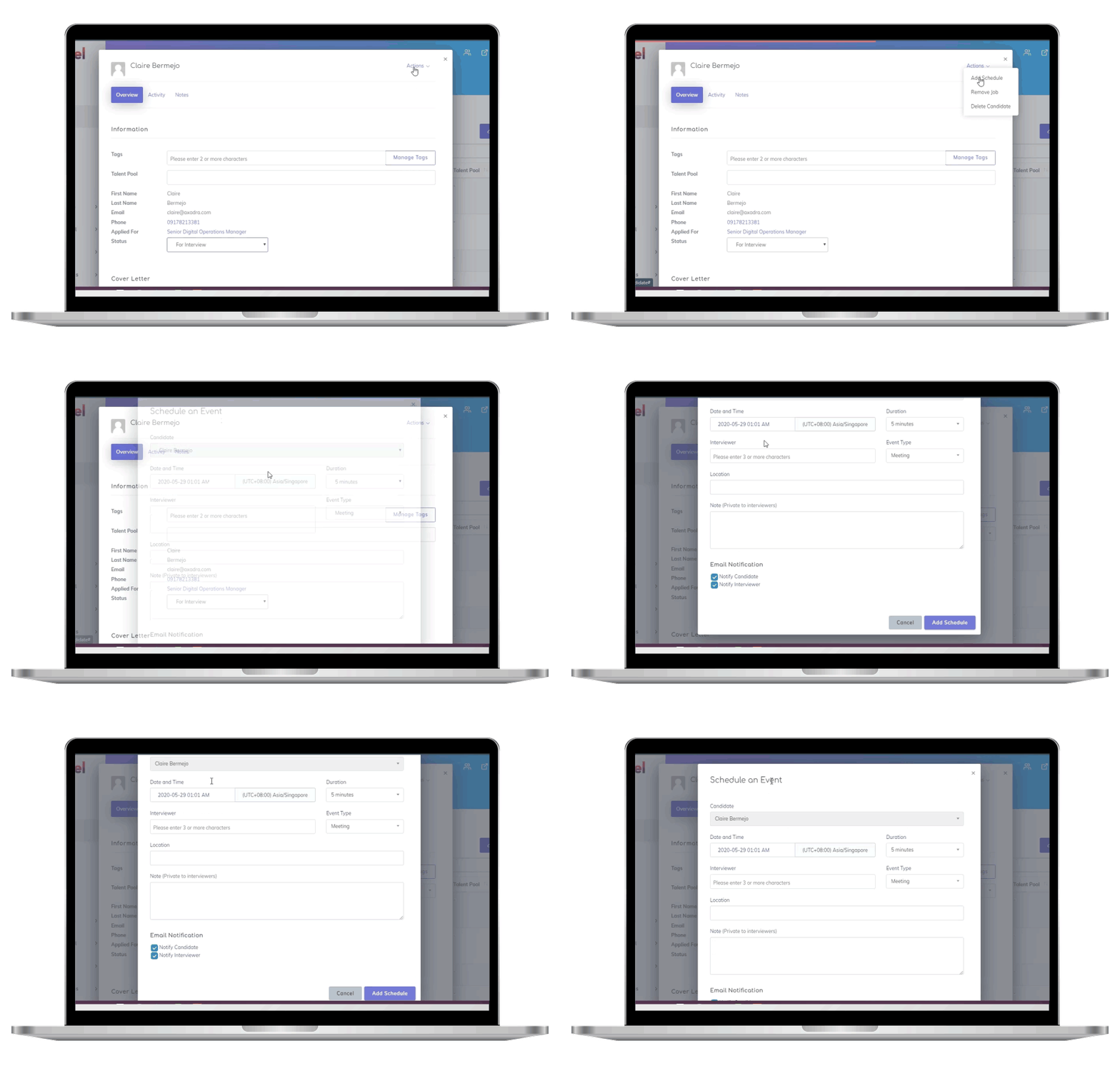
Automation deals with mundane activities human recruiters previously were encumbered with. Now automation allows chatbots to source candidates, administer assessments, and schedule interviews.
AI and machine learning (ML) empower recruiters to focus on the more complicated tasks.
A few years ago, McDonald’s utilised the social media platform Snapchat to attract more millennial job seekers. Dubbed ‘Snaplications,’ the campaign encouraged applicants to apply for a job at a McDonald’s restaurant through the Snapchat app.
It was a smart move on the fast-food giant’s part as it chose a popular social media platform to reach its target audience instead of taking the traditional route.
Scalability
A company’s success hinges on the capabilities of its workforce. Automation ensures the hiring process is fair and consistent, reducing the likelihood of human error.
Organizations can scale their recruitment efforts by leveraging AI tools to consolidate the tech stack to give a complete view of the recruiting process.
Here’s where data plays a role. Recruitment systems analyse data to offer insights on hiring metrics, candidate performance, and trends.
Automating these tasks from an administrative view frees up HR professionals to concentrate on strategic activities.
Closing the Gap on Gender Disparity
While there’s been progress, significant gender and racial disparities exist at the management level.
According to McKinsey, “inclusive workplaces” remain dominated by men. Women and people of colour are underrepresented in leadership positions. The tech landscape, especially, is guilty of gender parity.
Grant Thornton’s 2024 Women in Business data suggests that women hold 32% of senior management positions in the global tech sector. Half of women in leadership roles vacate their positions by age 35.
Many companies are now using inclusive recruitment practices to alleviate bias. AI-powered recruitment tools screen resumes, help mitigate unconscious bias and only identify qualified female candidates.
Another suggestion is to craft inclusive job descriptions that appeal to a larger audience; this can increase the applicant pool. Use gender-neutral language and focus on essential skills and qualifications.
Balancing Technology and the Human Touch
AI has transformed how companies source, evaluate, and engage with top talent. Yet, the balancing act is sometimes hard to maintain.
Hiring managers believe AI offers benefits like expanded candidate pools and predictive insights.
The human element of HR needs to be considered every time an application lands on your desk. Vetting applicants for leadership roles requires more than an automated message from an AI chatbot.
The latest data shows that about 82% of companies already use AI to review resumes. However, humans make the final hiring decisions.
A Pew Research Center survey stated that 44% of U.S. job seekers believe AI would miss the “human factor” in hiring.
Attracting the Right Fit
The best candidate can have buckets of talent, experience, and an impressive degree, but lacking soft skills is a major red flag.
Active listening, being a team player, problem-solving, and acute self-awareness are as important. These skills are the building blocks for a well-rounded individual with a winning spirit. Try not to discount them as unwarranted character traits.
Empathy goes a long way in maintaining a positive workplace culture. Without it, leaders are just managers when you need someone to motivate and inspire their team.
Yes, it’s complicated to find the right fit for your organisation. That’s why AI recruitment tools are crucial. Invest in features that streamline recruitment and use data-driven facts to make decisions.
AI tools cut out the noise and the bias, narrow down your candidate list and all you have to do is conduct interviews and make offers.
However, remembering to balance AI technology and the human aspect is half the HR battle won.
Author Bio: Writer by day, dream catcher by night. Marchelle Abrahams cut her teeth during the infancy of the internet when the dial sound of the modem was more than a soundbite at a rave. Not a Millennial and not a Boomer, Marchelle is an in-betweener, making her a special breed of human. As a qualified journalist, Marchelle believes her superpower is stringing a few words together and people reading them.