
Hong Kong law firm Johnson Stokes & Master deployed internal AI agents that generate employment-advisory drafts under a governance framework requiring qualified lawyers to review, refine, and approve all output before client delivery, according to Joe Choy, Employment & Benefits partner at JSM, in an August 20 interview with Human Resources Online.
TL;DR: JSM’s “Employment Legal Advice Copilot Agent” operates within predefined parameters with no autonomous decision-making, embedding AI directly into Outlook, Teams, and Word while maintaining lawyer accountability for every client-facing document.
The firm’s governance-first approach addresses a question facing regulated industries adopting recruitment automation and ATS software: how to unlock productivity gains without undermining accountability, said Choy in the interview. “AI should support professional judgment, not replace it,” Choy said.
Human-in-the-Loop Model Sets Deployment Boundaries
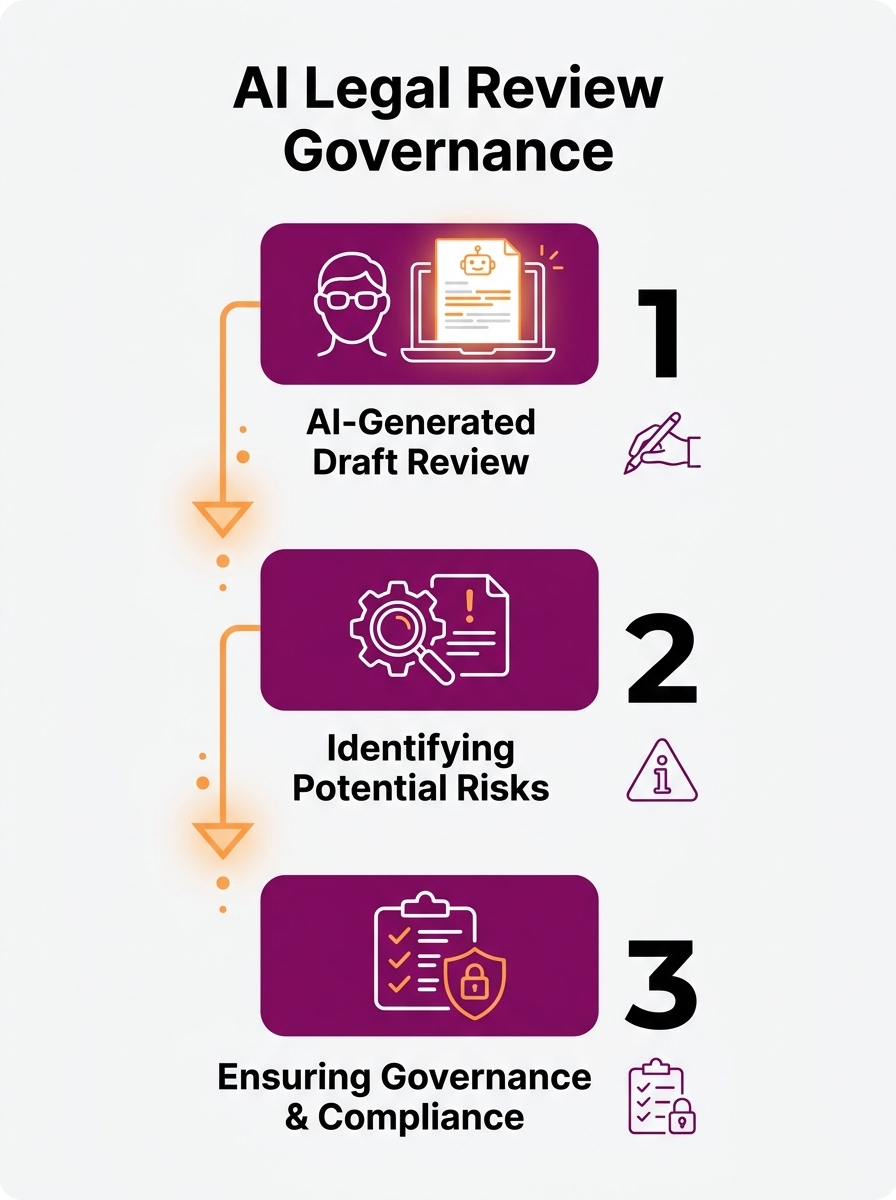
JSM’s AI agents operate within limited scope and controlled access to internal knowledge, do not provide autonomous legal advice, do not self-learn from client data, and do not bypass professional review, according to Choy. The firm formalized its AI policy before rolling out tools firm-wide, ran structured pilots, and consulted legal teams to establish boundaries.
The “Employment Legal Advice Copilot Agent” helps organize matter context, identify key issues, and generate structured first-pass drafts covering risks, options, and recommended next steps for high-volume employment advisory work, Choy said. Lawyers then review, refine, and finalize the advice before client delivery. “What stood out most was seeing the system perform in live matters,” Choy said. “The output provides a genuinely strong starting point, allowing our lawyers to spend more time on the strategic judgement and client counsel that matter most.”
The approach mirrors DoorLoop’s human-review gates at every AI screening stage, implemented to address bias risk in tenant screening, and reflects governance and data quality barriers that three CHROs identified as blocking HR tech scaling more than AI capability gaps.
Embedded Integration Drives Adoption Without Mandates
JSM embedded AI directly into platforms lawyers already use daily—Outlook, Teams, and Word—rather than introducing standalone tools, according to Choy. The firm’s Learning & Development team oversees AI training and adoption firm-wide, providing legal skills training programs focused on legal analysis, risk assessment, and critical thinking rather than reliance on AI-generated answers.
“Trust was earned, not mandated,” Choy said. The firm demonstrated practical value in day-to-day work and ensured tools could be applied responsibly without compromising professional standards, rather than requiring lawyers to use AI.
The integration strategy addresses culture and data foundations that HR Tech Europe leaders identified as primary AI adoption barriers, not technical capability. JSM’s model prioritizes equipping young lawyers with strong legal fundamentals as investment in cultivating critical thinking among the next generation, Choy said.
What This Means for In-House Recruiters
JSM’s governance framework offers a replicable model for HR teams managing ATS deployment and AI-driven screening tools. The three boundaries—no autonomous decision-making, no self-learning from candidate data, no bypassing human review—translate directly to recruitment automation, where AI-powered tools have drawn scrutiny for automated rejections and parsing blind spots.
Embedding AI into existing workflows (Outlook, Microsoft Teams, ATS platforms recruiters already use) rather than forcing adoption of standalone tools mirrors JSM’s integration approach. Talent acquisition leads implementing AI recruitment screening automation can apply the same principle: governance policy formalized before rollout, structured pilots with hiring managers, and clear human accountability for every candidate decision.
The emphasis on critical thinking over ready-made answers applies to recruiter training as AI handles more initial screening. Teams can focus L&D investment on judgment calls—assessing culture fit, interpreting nuanced candidate responses, weighing competing hiring priorities—rather than administrative resume review, positioning AI as a support layer that frees recruiters for higher-value work without replacing their role in final hiring decisions.