
Your job descriptions might be unintentionally turning away diverse candidates. Research shows that 39% of candidates avoid applying to companies that don’t prioritize inclusivity, and removing biased language can boost applications by over 30%. Tracking DEI (Diversity, Equity, and Inclusion) metrics helps you identify and fix these issues, ensuring your hiring process aligns with your diversity goals.
Key DEI metrics to monitor include:
- Applicant Diversity Rate: Tracks demographic representation in your candidate pool.
- Inclusive Language Score: Measures bias in job descriptions using tools like Textio or Gender Decoder.
- Application Volume by Channel: Identifies which platforms attract diverse talent.
- Diversity Conversion Rate: Analyzes how underrepresented candidates progress through hiring stages.
- Interviewer Diversity Percentage: Ensures interview panels reflect diverse perspectives.
Using tools like Skillfuel, you can automate data collection, analyze trends in real-time, and refine job descriptions for better outcomes. By consistently reviewing these metrics, you can remove hidden biases, attract top talent, and improve business performance – companies with diverse teams are 36% more profitable and 2.6 times likelier to hit financial targets.
What Gets Measured, Gets Done: Measuring the Effectiveness of Diversity, Equity, and Inclusion
sbb-itb-e5b9d13
Common Problems with DEI in Job Descriptions
Many job descriptions unintentionally include language that can exclude certain groups. For instance, gender-coded terms like "rockstar" may deter women from applying, while words like "supportive" might carry implicit expectations that align with specific stereotypes. Studies reveal that 64% of Black adults report experiencing racial bias during the application process, and men are 30% more likely to be considered for senior roles, partly due to biased phrasing in job ads. These biases highlight why accurate measurement is so critical in addressing inequities.
Age bias often creeps in through phrases like "digital native" or "recent graduate", which can alienate older, experienced candidates. On the flip side, requiring extensive experience may discourage younger applicants. Physical requirements, such as "must be able to lift 25 lbs" or "must sit for long periods", can inadvertently exclude people with disabilities, even when these tasks aren’t essential to the role. Reasonable accommodations could allow these candidates to excel. Similarly, terms like "native English speaker" or "strong cultural fit" may discourage applicants from diverse ethnic or linguistic backgrounds.
"It is illegal for an employer to publish a job advertisement that shows a preference for or discourages someone from applying for a job because of his or her race, color, religion, sex (including gender identity, sexual orientation, and pregnancy), national origin, age (40 or older), disability or genetic information." – U.S. Equal Employment Opportunity Commission
Another major issue is the lack of metrics to track how biases in job descriptions affect candidate progress. Without data on conversion rates at various hiring stages, identifying and addressing exclusionary language becomes difficult. For example, if 35% of applicants represent diverse groups but only 10% make it to final interviews, the language or requirements in the job ad may be a contributing factor. DEI initiatives that rely solely on anecdotal evidence risk being superficial rather than impactful. Data shows that gender-neutral job postings attract 67.75% more applications and lower the cost per application by 68.5%, but these benefits often go unnoticed without proper tracking.
When biased job descriptions remain unchecked, they can stay active for months or even years, delaying necessary corrections. This gap between diversity goals and the actual composition of the talent pool underscores the importance of using data-driven methods to refine job postings. By consistently monitoring and adjusting language, organizations can take meaningful steps toward inclusivity, ensuring their DEI efforts lead to real change.
Key DEI Metrics to Track in Job Descriptions
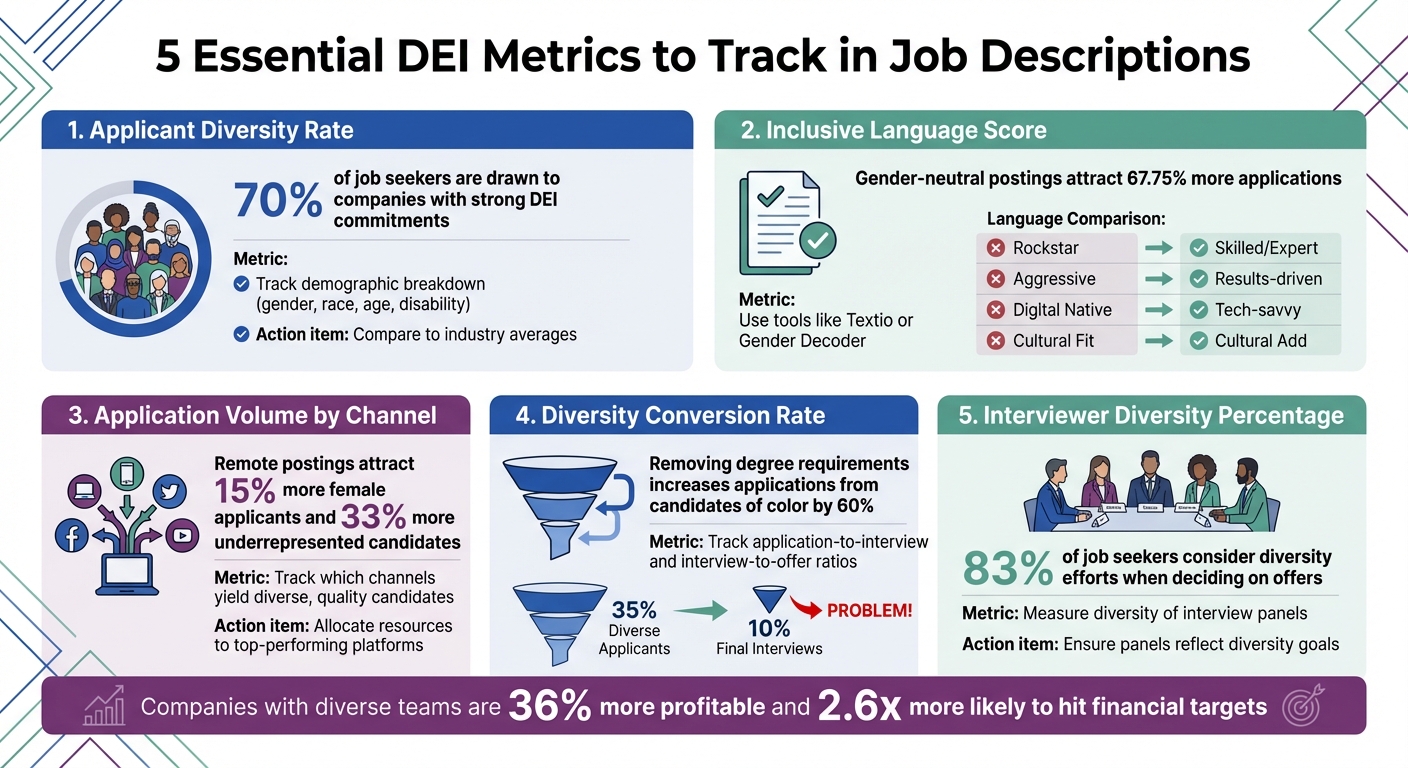
5 Essential DEI Metrics to Track in Job Descriptions
To truly measure the inclusiveness of your job descriptions, it’s essential to track metrics that reveal how language and requirements impact candidates. These data points can uncover hidden barriers and show whether your diversity, equity, and inclusion (DEI) efforts are making an impact. Below are the key metrics to watch and how they can guide improvements.
Applicant Diversity Rate
This metric looks at the demographic breakdown of your candidate pool, focusing on underrepresented groups such as gender, race, age, and disability status. It helps determine whether your job descriptions are drawing in a diverse range of applicants or unintentionally excluding certain groups.
For instance, if women make up just 12% of your applicants in a field where they represent 25% of the workforce, it’s a sign your job description may need adjustments. Language barriers or overly stringent requirements could be deterring qualified candidates. Studies show that 70% of job seekers are drawn to companies with strong DEI commitments, so a low diversity rate might signal your descriptions aren’t communicating inclusivity effectively.
To track this, compare your applicant demographics to local and national industry averages. Pay attention to "requirement inflation", as women are less likely to apply unless they meet 100% of the listed qualifications. Simplifying the list of required skills and focusing on inclusive language can help address this issue.
Inclusive Language Score
An inclusive language score evaluates whether your job descriptions use biased or gendered terms. Tools like Textio, Datapeople, or Gender Decoder analyze text for exclusionary language, identifying terms like "rockstar" or "dominant" that may discourage candidates from applying.
These tools provide a numeric score and suggest neutral alternatives. For example:
- Replace "rockstar" with "skilled" or "expert."
- Swap "aggressive" for "results-driven."
- Use "tech-savvy" instead of "digital native" to avoid age bias.
| Biased Term | Inclusive Alternative | Why Change? |
|---|---|---|
| Rockstar / Ninja | Skilled / Expert | Reduces gendered/informal bias |
| Aggressive | Results-driven | Avoids gender bias |
| Digital Native | Tech-savvy | Prevents age-related bias |
| Cultural Fit | Cultural Add | Encourages diversity of thought |
Optimizing your language not only enhances inclusivity but also broadens your applicant pool. Once your descriptions are refined, evaluate where your candidates are coming from with the next metric.
Application Volume by Channel
This metric tracks which recruitment channels – like job boards, university partnerships, or referrals – yield the most diverse and high-quality candidates. Knowing where your applicants come from helps you allocate resources to platforms that work best for attracting diverse talent.
For example, remote job postings attract 15% more female applicants and 33% more candidates from underrepresented groups. If your referral program results in a homogenous applicant pool, but partnerships with historically Black colleges produce a more balanced mix, you can adjust your sourcing strategy.
Focus on channels that deliver both quantity and quality. A smaller pool with higher interview rates often outperforms a large pool with low engagement. This insight can also reveal whether your job descriptions align with the audience on each platform.
Diversity Conversion Rate
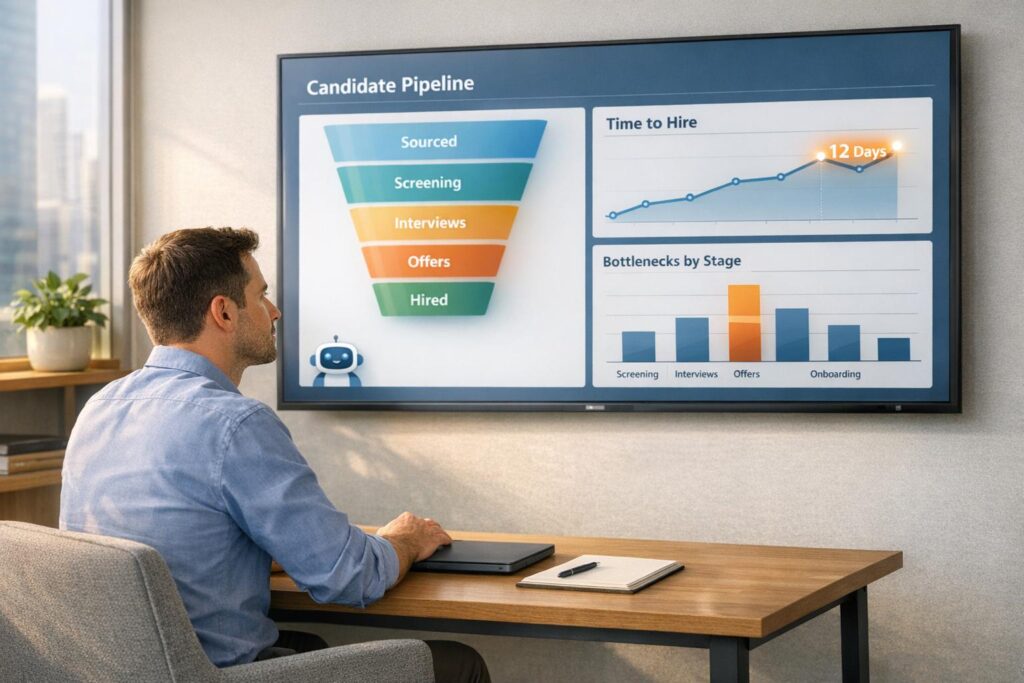
This metric examines how well diverse candidates progress through your hiring funnel. It tracks application-to-interview and interview-to-offer ratios, highlighting any barriers that disproportionately affect certain groups.
For instance, if 35% of your applicants are from underrepresented groups but only 10% make it to the final interview, something in your screening process may be filtering out qualified candidates. Removing unnecessary degree requirements for skill-based roles has been shown to increase applications from candidates of color by 60%.
Track each stage closely. A significant drop-off between application and interview might suggest your "required" skills list is too rigid or screening criteria are overly subjective. Companies monitoring diversity metrics report 70% more innovation and 35% better retention rates, underscoring the value of consistent conversion rates across demographics.
Interviewer Diversity Percentage
This metric measures the diversity of your interview panels. A varied panel not only reduces unconscious bias but also sends a strong message about your organization’s commitment to inclusion.
Research shows that 83% of job seekers consider a company’s diversity efforts when deciding on an offer. Seeing themselves reflected in the interview process helps candidates feel they belong and can thrive at your organization. On the other hand, a homogenous panel can undermine your inclusive messaging.
Aim for panels that reflect your diversity goals. For example, if you’re hiring for a leadership role and your interviewers all belong to the same demographic, it may contradict the inclusive tone of your job descriptions. Additionally, ensure timely feedback for all candidates to avoid losing diverse talent to competing offers.
How Skillfuel Supports DEI Metrics Tracking
Skillfuel simplifies the process of tracking DEI (Diversity, Equity, and Inclusion) metrics, helping organizations turn data into actionable change. Relying on spreadsheets or disconnected systems to track DEI data often leads to delays and inefficiencies. Skillfuel eliminates these issues by centralizing data collection and analysis, allowing you to measure key metrics without adding unnecessary administrative work.
Automating DEI Data Collection
Skillfuel automates the collection of candidate demographics and source data, cutting down manual data entry by as much as 70%. Whether candidates apply through your job portal, social media, or an employee referral program, the system tracks their source and collects voluntary demographic data – such as gender and race/ethnicity – in line with EEOC guidelines. This information is seamlessly integrated into a centralized dashboard, removing the need for manual input.
To ensure fairness, demographic data collection is optional and anonymized until later stages of the hiring process. The system also includes built-in audit trails, offering transparency and proof of equitable hiring practices. For example, if social media platforms account for 35% of your diverse candidates compared to 20% from traditional job boards, Skillfuel generates reports highlighting these trends. It even tracks how changes to job descriptions influence applications from underrepresented groups.
Real-Time Analytics for DEI Progress
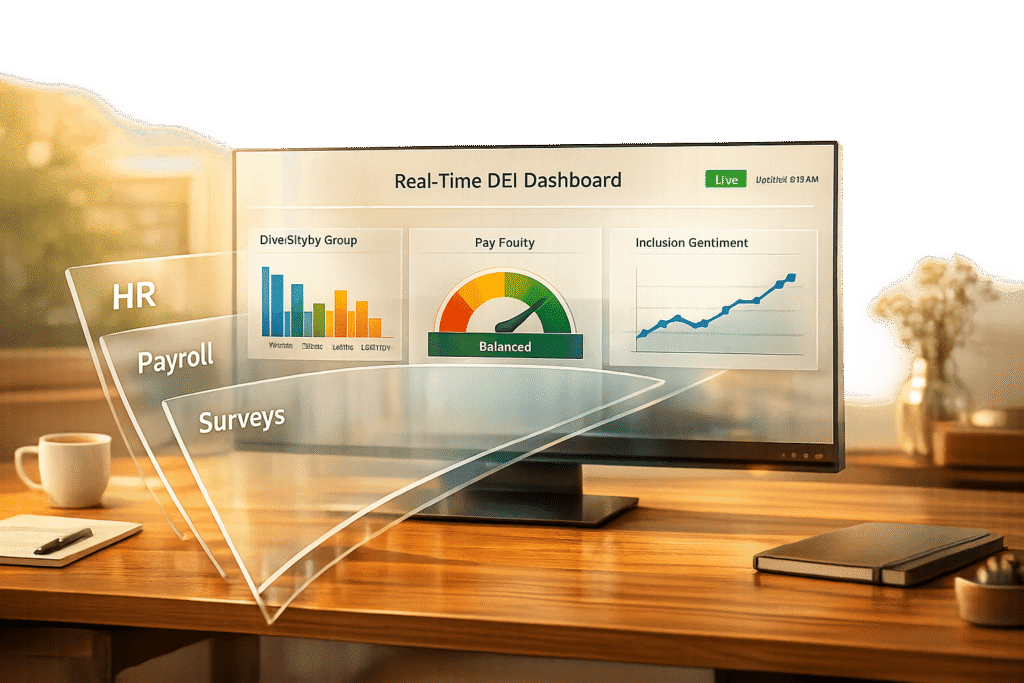
Skillfuel’s real-time dashboards transform raw data into meaningful insights. These live dashboards display key metrics like applicant diversity rates, diversity conversion rates (e.g., from application to interview), and the diversity percentage of interviewers. This real-time visibility allows you to identify trends and make immediate adjustments. For instance, if female candidates apply at expected rates but only 10% make it to final interviews, the dashboard flags this issue instantly.
You can also drill down into specific channels to see which ones are driving diverse applicants. If social media outperforms traditional job boards by delivering 35% more diverse candidates, you can reallocate resources accordingly. Alerts can be set for metrics falling below target levels – like a 15% drop in conversion rates for a particular demographic – enabling teams to quickly test changes to job descriptions or requirements. Visual Kanban boards help track candidates through every stage, making it easier to spot where diverse talent might be dropping out of the hiring process.
Customizable Job Pages for Inclusive Hiring
Skillfuel’s career pages are fully customizable, enabling teams to experiment with A/B testing and measure the impact of inclusive adjustments on diversity metrics. For instance, you can replace potentially biased terms (like swapping "aggressive" with "proactive"), add pronouns to job descriptions, and include DEI statements that align with your company’s values. The platform even flags exclusionary language to improve inclusivity.
"If sex and gender is not important to the job, keep your job posting gender-neutral and inclusive."
A/B testing tools let you compare how different job page versions perform across diverse demographics. In one example, a team updated their job page with gender-neutral pronouns and diverse imagery, then promoted it on social media – leading to a 28% increase in applications from underrepresented groups. You can also use these pages to highlight benefits like flexible work hours, extended parental leave, and family medical coverage. By removing rigid degree requirements and focusing on skills, you can attract candidates from a variety of educational and socioeconomic backgrounds. These customizable pages create opportunities for continuous improvement in your DEI efforts.
Implementing DEI Metrics for Continuous Improvement
Tracking DEI metrics is only the first step; the real value comes from using that data to drive meaningful changes. It’s not just about collecting numbers – it’s about uncovering obstacles in your hiring process and tackling them head-on. Start with a baseline audit, set achievable goals, and refine your job descriptions based on the insights your metrics provide.
Conducting a Baseline Audit
Begin by comparing your workforce demographics to the communities you’re aiming to engage. Dive into your historical pipeline data to identify where underrepresented candidates tend to drop out. Take a hard look at your job descriptions – phrases like "competitive" or "aggressive" can unintentionally discourage diverse applicants. Similarly, terms like "fast-paced" might exclude candidates with disabilities. Overly demanding requirements can also be a barrier; research shows women are less likely to apply unless they meet all listed qualifications, while men often apply if they meet just 60%.
"The benchmarks can guide us… They help us explain to the board and our other stakeholders that ‘low’ has to be relative to the market. We shouldn’t spend more effort on recruitment when the pool of people isn’t there." – Jason Thompson, VP of Diversity, Equity, and Inclusion at Western Governors University
To create a reliable baseline, capture demographic data at the application stage. You can do this through voluntary self-identification surveys, recruiter tagging, or even algorithmic inference based on names and census data, which can be about 80% accurate. Additionally, removing degree requirements can open doors for candidates from less privileged backgrounds. Blind resume reviews – where names and university affiliations are hidden – can also help reduce bias in the early stages of hiring.
Once you’ve established a baseline, the next step is to set realistic, actionable DEI goals.
Setting DEI Goals and Targets
Use your audit findings to create measurable, realistic targets that align with the talent pool. For example, if women make up 8% of the software developer workforce, aiming for a 50% hire rate overnight isn’t practical. Instead, focus on incremental improvements that reflect market realities. Analyze every stage of your recruitment funnel to pinpoint where diverse candidates are dropping off.
The SMARTIE framework can help ensure your goals are well-structured: Specific, Measurable, Attainable, Relevant, Timely, Inclusive, and Equitable. Frame your objectives positively – for instance, aim to "increase representation of underrepresented groups" rather than "reduce hiring of majority groups". The business case for diversity is compelling: organizations with racial and ethnic diversity are 35% more likely to outperform competitors, and diverse teams can generate 2.5 times higher cash flow. Gender-neutral job ads alone can attract nearly 68% more applications and significantly lower costs per application. To ensure accountability, tie DEI outcomes to leadership performance reviews – especially since 51% of leaders currently fail to take ownership of these efforts.
With clear goals in place, use your data to fine-tune job descriptions for better results.
Iterating Job Descriptions Based on Data
Leverage your metrics to make targeted updates to job descriptions. If your analysis highlights masculine-coded language, replace it with neutral phrases. For example, swap "drive results" for "achieve meaningful outcomes" or change "competitive environment" to "collaborative, high-performing team". Test these updates by running A/B tests on the original and revised versions, tracking changes in application rates and the diversity of applicants over 30 days.
Reevaluate where and how you’re promoting job postings. Focus on channels that attract a more diverse pool of candidates. Set a routine – dedicate one day each month to review your DEI metrics and adjust your strategies accordingly. Pay attention to what works and refine your approach as you go. This process is all about continuous improvement, guided by the data you’ve collected.
"Every step of your DEI efforts can help build an environment that is more inclusive and welcoming to underrepresented groups." – Katee Van Horn, Founder and CEO of Bar the Door
Conclusion
Tracking DEI metrics in job descriptions helps create a hiring process that works for everyone. By measuring applicant diversity rates, inclusive language scores, and conversion rates at every stage, you can identify exactly where underrepresented candidates drop out and what might discourage them from applying in the first place.
These insights aren’t just about fairness – they directly influence business performance. Companies with diverse teams outperform competitors in profitability by 36%, and organizations with inclusive hiring practices are 2.6 times more likely to meet financial goals. With 76% of job seekers prioritizing employers committed to DEI, these metrics play a crucial role in attracting top talent.
"Diversity hiring isn’t a feel-good initiative anymore, it’s a business-critical strategy backed by hard data, bottom-line results, and increasing accountability from boards, customers, and employees." – Roger Lopez, National Search Group
Skillfuel simplifies this process by offering real-time analytics through centralized dashboards. HR teams can track recruitment data, spot potential biases, and refine job descriptions with ease. Plus, its customizable career pages and applicant tracking tools ensure you’re collecting the right data from the very start.
The key is consistency: set baselines, define clear goals, and review metrics regularly. By treating DEI as an ongoing effort, you build a hiring process that not only welcomes diverse talent but also delivers measurable business results.
FAQs
How do I set DEI benchmarks for a job description?
When creating job descriptions, it’s important to make inclusivity a priority and track progress over time. Start by reviewing your job postings for biased language – text analysis tools can help identify problematic terms. From there, set measurable goals, such as increasing diversity in your applicant pool or reducing the presence of biased words. Regularly monitor these metrics to see how you’re doing.
Some key steps include:
- Using inclusive language: Ensure your job descriptions appeal to a broad range of candidates.
- Training recruiters: Equip hiring teams with the knowledge to recognize and eliminate bias.
- Ongoing reviews: Continuously evaluate and refine job postings to align with your DEI goals.
These actions can help create a fairer and more welcoming hiring process.
What hiring-funnel drop-offs should I track by demographic?
Tracking where candidates from various demographic groups disengage during the hiring process is crucial. Pay attention to key metrics like application-to-interview conversion rates and dropout rates at each stage – from application to interview, interview to offer, and offer to onboarding. By monitoring these drop-offs, you can uncover disparities or obstacles that might be affecting certain groups. This insight allows organizations to pinpoint and address issues tied to equity and inclusion, ultimately creating a more fair and welcoming hiring process.
How can I collect demographic data without creating bias?
To gather demographic data fairly and responsibly, it’s important to make participation optional and create an environment where individuals feel at ease sharing their information. Using anonymized processes – such as stripping identifying details from applications – can help reduce bias during the review process. Focus on tracking a range of factors, like gender, race, and disability status, while staying compliant with legal frameworks like EEOC guidelines. Striking a balance between privacy, comfort, and comprehensive data collection is key to supporting meaningful diversity and inclusion initiatives.