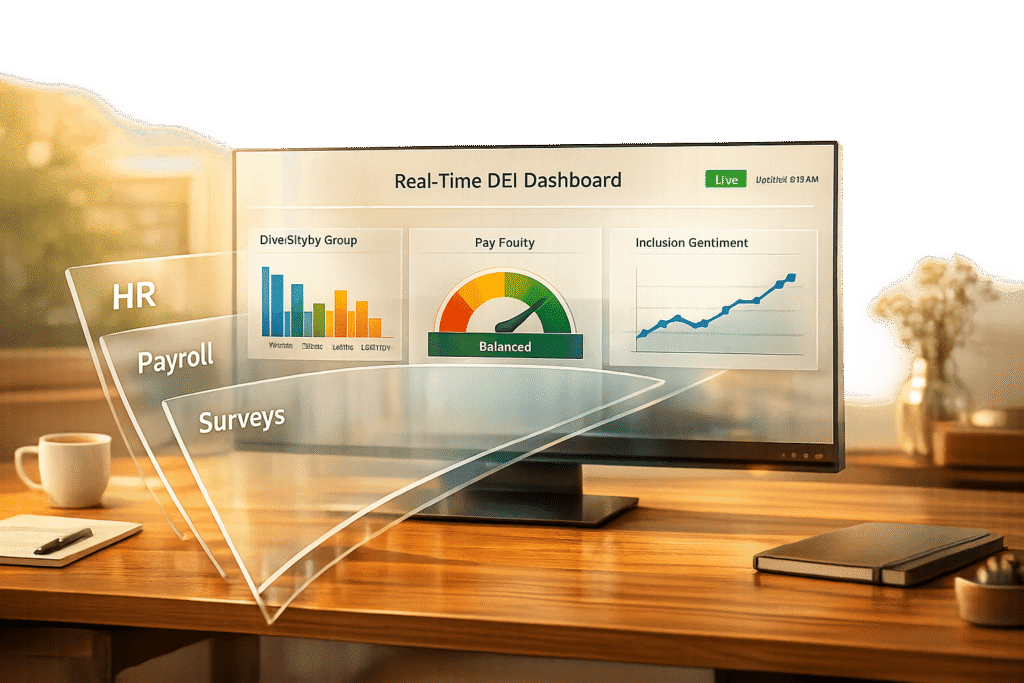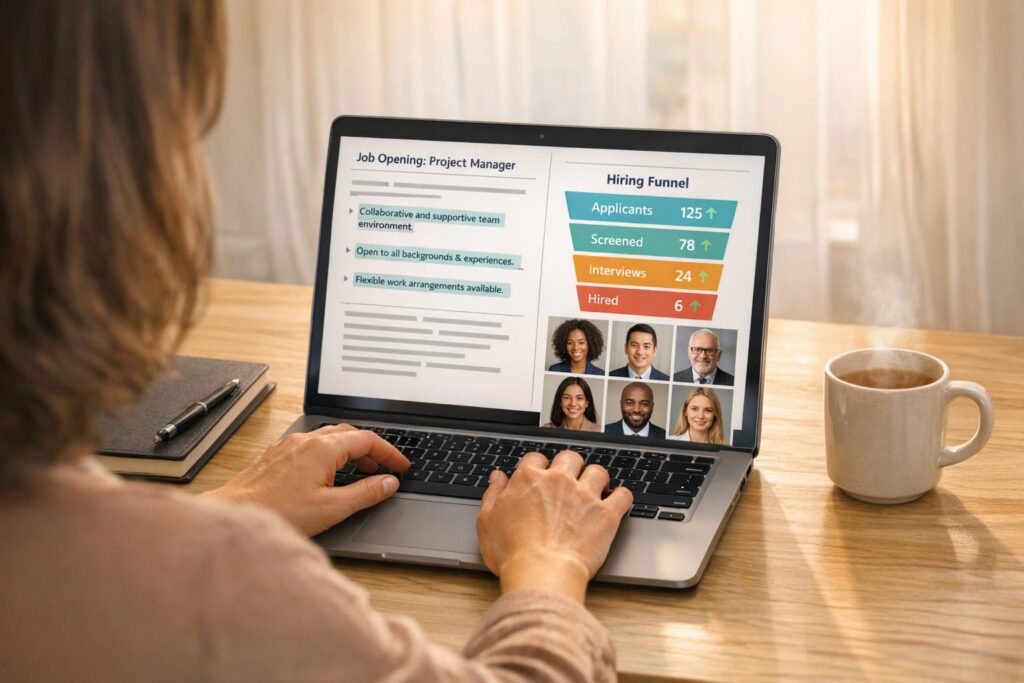
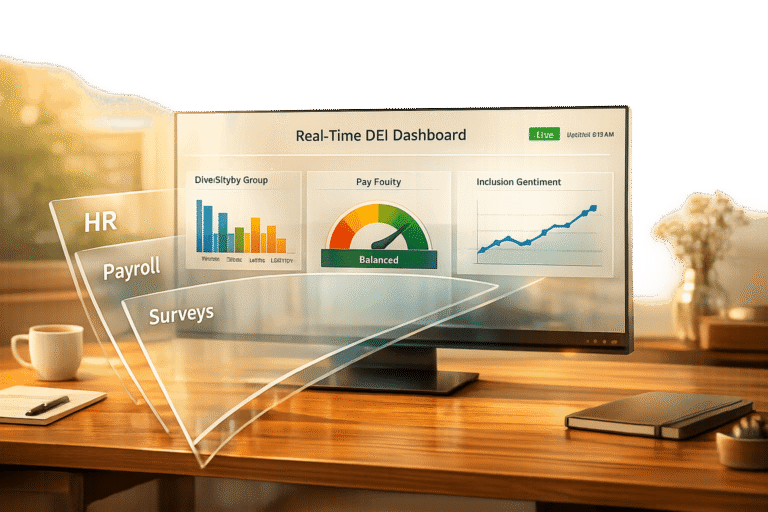
Real-time diversity analytics tools transform how organizations track and act on workforce data. By automating data collection and analysis, these tools eliminate delays caused by manual processes and fragmented systems, providing actionable insights within days instead of months. They focus on three core areas:
- Representation: Who is present in your workforce.
- Equity: Fairness in systems like pay and promotions.
- Inclusion: How employees feel about belonging and support.
Companies using these tools are 50% more likely to meet diversity hiring goals and can immediately address issues like turnover spikes or pay disparities. Key challenges include disconnected systems, unreliable data, and the time-consuming nature of manual analysis. Advanced platforms leverage AI to analyze survey responses and identify hidden trends, ensuring data accuracy and relevance.
To get started, organizations should integrate data sources like HRIS, payroll, and surveys into a unified dashboard. Focus on metrics like demographics by role, hiring trends, and employee sentiment. Tools like Skillfuel simplify this process, offering automated workflows, real-time updates, and customizable dashboards to track and improve diversity outcomes effectively.
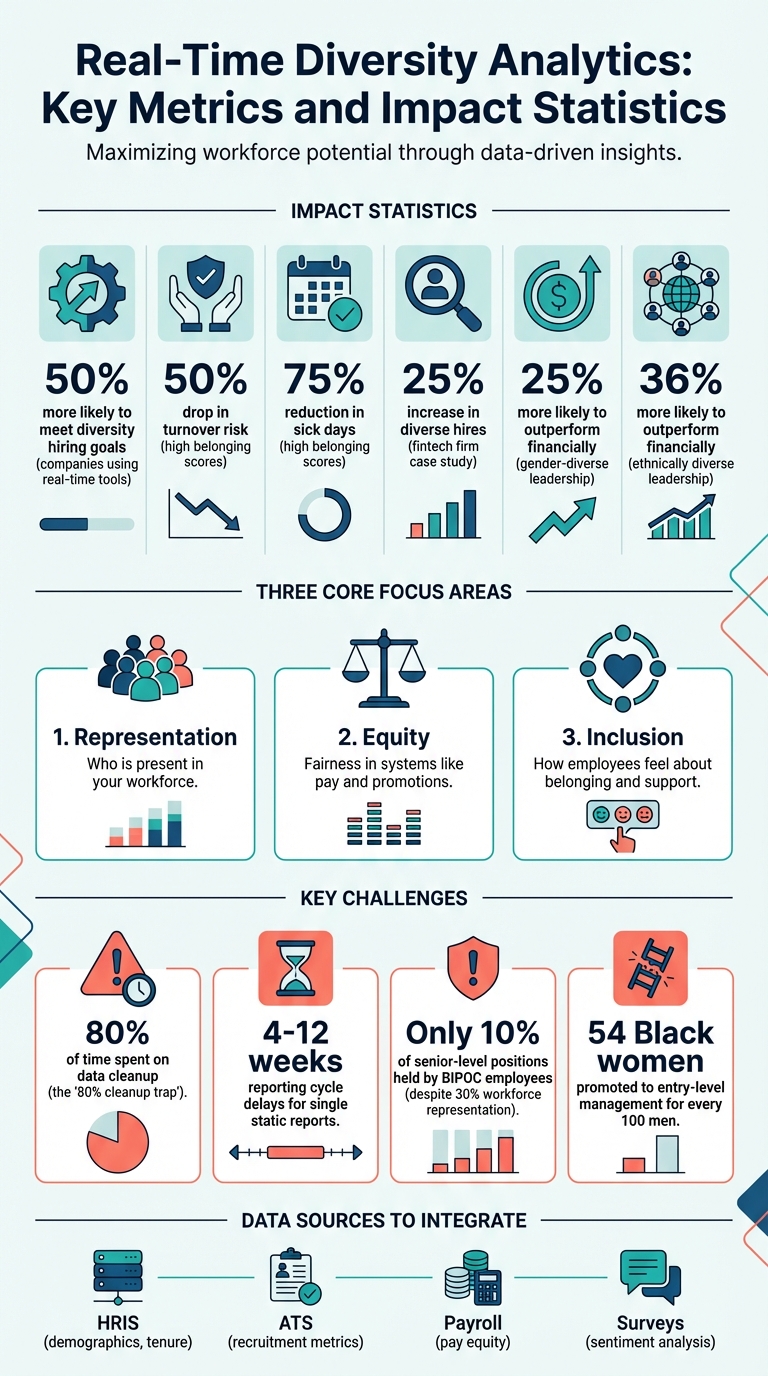
Real-Time Diversity Analytics: Key Metrics and Impact Statistics
Diversity & Inclusion KPI Dashboard in Power BI
sbb-itb-e5b9d13
Problems with Tracking Diversity Metrics
Measuring diversity accurately is no small feat for most HR teams. They face three primary challenges that turn what should be a straightforward process into a time-intensive effort, often yielding outdated and unreliable results.
Disconnected Systems and Reporting Delays
Diversity-related data is scattered across multiple platforms – HRIS, payroll systems, survey tools, and even spreadsheets . This fragmentation creates what’s often called the "80% cleanup trap", where HR teams spend the majority of their time cleaning up data, leaving only a fraction of their time for meaningful analysis .
The consequence? Reporting cycles that stretch anywhere from 4 to 12 weeks just to produce a single static report . These delays mean that critical issues – like sudden increases in negative employee sentiment – can go unnoticed for months. This lag can lead to preventable problems, such as higher attrition rates. As Unmesh Sheth, Founder & CEO of Sopact, puts it:
"The result is a dashboard that tells you what happened but never why it happened or what to do next".
And that’s just one piece of the puzzle. Data inaccuracies add another layer of complexity.
Wrong or Missing Data
Even when systems are connected, unreliable data can derail diversity tracking. Inconsistent or incomplete demographic information makes it difficult to integrate data effectively. For instance, while an organization’s overall retention rate might appear stable, missing data could hide the fact that turnover for certain groups is disproportionately high – potentially twice the organizational average.
This lack of clarity can lead to wasted resources, as DEI initiatives may end up targeting the wrong issues. Worse, when employees feel their experiences are misrepresented or overlooked, trust in the organization can erode.
Manual Work and Missing Context
On top of system fragmentation and data inaccuracies, manual processes further complicate diversity tracking. Traditional dashboards often focus on surface-level metrics – like headcount percentages – without diving into the "why" behind the numbers. For example, knowing that 22% of Black employees left an organization doesn’t provide much insight without understanding the themes from exit interviews.
Adding to the challenge, the most valuable data – like open-ended survey responses – frequently goes unused. Manually coding and analyzing these comments takes too long, leaving HR teams unable to act on employee feedback in a timely manner . This lack of context makes it harder to address the root causes behind diversity-related challenges.
What to Measure in Real-Time Diversity Analytics
Once you’ve tackled the technical hurdles of diversity data tracking, the next step is identifying the metrics that lead to real change. The right data doesn’t just sit in reports – it drives decisions that make a difference. These metrics help connect numbers to meaningful Diversity, Equity, and Inclusion (DEI) actions.
Employee Demographics by Role and Location
Looking at workforce data as a whole can sometimes hide critical gaps, especially in senior roles or specific departments. For instance, while nearly 30% of the U.S. workforce in 2021 was made up of BIPOC employees, they held only 10% of senior-level positions. This is why breaking down demographic data by job level, department, and location is so important.
Microsegmentation is key here. It helps uncover disparities in career advancement that might otherwise go unnoticed. For example, the "broken rung" issue – where underrepresented groups face barriers at early management levels – becomes apparent through this approach. The numbers are telling: for every 100 men promoted to entry-level management, only 54 Black women receive the same opportunity. Tracking by function can also reveal imbalances, such as stark gender gaps in Engineering compared to more balanced departments like Marketing.
Location data adds another layer of insight. By comparing your internal diversity to the demographics of the regions you operate in, you can identify gaps. It also highlights whether remote employees are being overlooked for promotions or feel less included. Marianne David explains the importance of this approach:
"A workforce that appears balanced overall may have a leadership pipeline dominated by one demographic – microsegmentation surfaces those bottlenecks".
Diversity in Hiring and Promotions
Tracking diversity trends in hiring and promotions over time offers valuable insights. Companies with gender-diverse leadership teams are 25% more likely to outperform financially, and those with ethnically diverse leadership see that likelihood jump to 36%.
Automated alerts can flag issues like selection ratios falling below the four-fifths rule (0.8) or significant pay gaps in specific locations. Monitoring hiring cohorts also helps identify patterns of attrition within the first 12–24 months. This data can reveal why certain groups leave early, allowing you to adjust onboarding processes or offer better support systems.
Employee Sentiment and Belonging Scores
Headcount numbers alone can’t tell you how employees feel about their workplace. Sentiment and belonging metrics dig deeper, showing whether employees feel valued, respected, and supported. And these feelings matter: high belonging scores are linked to a 50% drop in turnover risk and a 75% reduction in sick days. Maeve Ginsberg, Senior Copywriter at Workhuman, emphasizes this point:
"Belonging is so important that it has a tangible impact on workers’ performance. It increases job performance, lowers turnover risk by 50%, and even decreases sick days by 75%".
To measure this, create an inclusion index that covers areas like belonging, fairness, manager support, psychological safety, and career opportunities. Segment the data by department, role, and demographics to identify barriers that broader metrics might miss. Tools like the Employee Net Promoter Score (eNPS) can also be useful. This score measures how likely employees are to recommend your workplace, which often correlates with retention risks. Just remember to ensure anonymity – employees need to feel safe providing honest feedback on sensitive issues like discrimination.
Next, we’ll explore how to put these metrics into action using real-time analytics.
How to Set Up Real-Time Diversity Analytics
To implement real-time diversity analytics, start by automating data integration processes to save time and improve accuracy.
Connecting and Organizing Data Sources
The first step is consolidating all relevant data into a single system. Link your HRIS (for demographics and tenure), ATS (for recruitment metrics), payroll systems (to assess pay equity), and engagement platforms (for sentiment analysis). By automating this integration, you can avoid the hassle of exporting and reconciling CSV files quarterly. Instead, data is organized automatically as it’s entered. Assign unique IDs to employees to connect demographic details with qualitative feedback across all sources.
| Data Source | Information Provided | Best Use |
|---|---|---|
| HRIS | Demographics, tenure, pay, department | Monitoring representation and pay equity |
| ATS | Applicant flow, interview stages | Spotting bias in the hiring process |
| Surveys/eNPS | Sentiment, belonging scores | Assessing inclusion and psychological safety |
| Exit Interviews | Attrition reasons, feedback | Identifying cultural challenges by group |
Organize this data into four categories: Representation (workforce makeup), Equity (fair outcomes), Inclusion (sentiment and belonging), and Trends (changes over time). This framework makes it easier to identify actionable patterns.
Once your data is consolidated, the next step is to visualize it effectively.
Building Clear Dashboards
Dashboards are essential for presenting your diversity insights in a way that drives action. Begin by considering your audience: executives need high-level KPIs, while HR teams require detailed, department-specific data. Keep dashboards focused by showcasing 5–7 key indicators on the main page to avoid overwhelming users. Make sure the dashboard allows breakdowns by department, job level, and location, as organization-wide averages can obscure important disparities. For instance, while overall metrics might seem balanced, deeper analysis could reveal challenges faced by specific underrepresented groups in certain areas.
Use visual elements like bar charts with zero-based scales, diverging charts to highlight differences, and rolling averages to maintain privacy. As Gauri Manglik, CEO of Instrumentl, notes:
"Now we can look at our DEI dashboard every week and see if there are any trends over time – are people more satisfied with their work now than they were before?"
This approach eliminates delays caused by fragmented data, providing immediate and actionable insights.
Once you’ve built dashboards that deliver clarity, the next step is leveraging automation to enhance analysis.
Using AI and Automated Analysis
AI tools can dramatically reduce the manual workload in diversity analytics. For example, Natural Language Processing (NLP) can analyze thousands of open-ended survey responses to identify recurring themes like "lack of mentorship" or "microaggressions." Similarly, machine learning can uncover hidden biases in areas like recruitment funnels, performance reviews, and pay equity.
Dashboards that update continuously ensure your insights remain current. As Unmesh Sheth, Founder & CEO of Sopact, highlights:
"A DEI dashboard transforms scattered diversity data into a unified visual system that enables real-time monitoring and faster decision-making."
Focus first on high-impact areas like hiring funnel drop-offs or pay equity gaps, and then expand analytics across the organization. While AI is excellent at detecting patterns, human input is essential to interpret these findings within the broader context of your organization’s goals and values.
How Skillfuel Supports Real-Time Diversity Analytics
Skillfuel tackles the challenge of fragmented and outdated diversity data by offering a centralized solution that streamlines tracking efforts. Instead of juggling manual spreadsheets and scattered information, HR teams gain access to a unified dashboard that provides a complete view of recruitment metrics – from the initial applicant flow to final hiring decisions. With automatic updates, this system ensures that diversity data is always current, addressing the inefficiencies mentioned earlier.
Skillfuel’s Dashboard and Reporting Tools
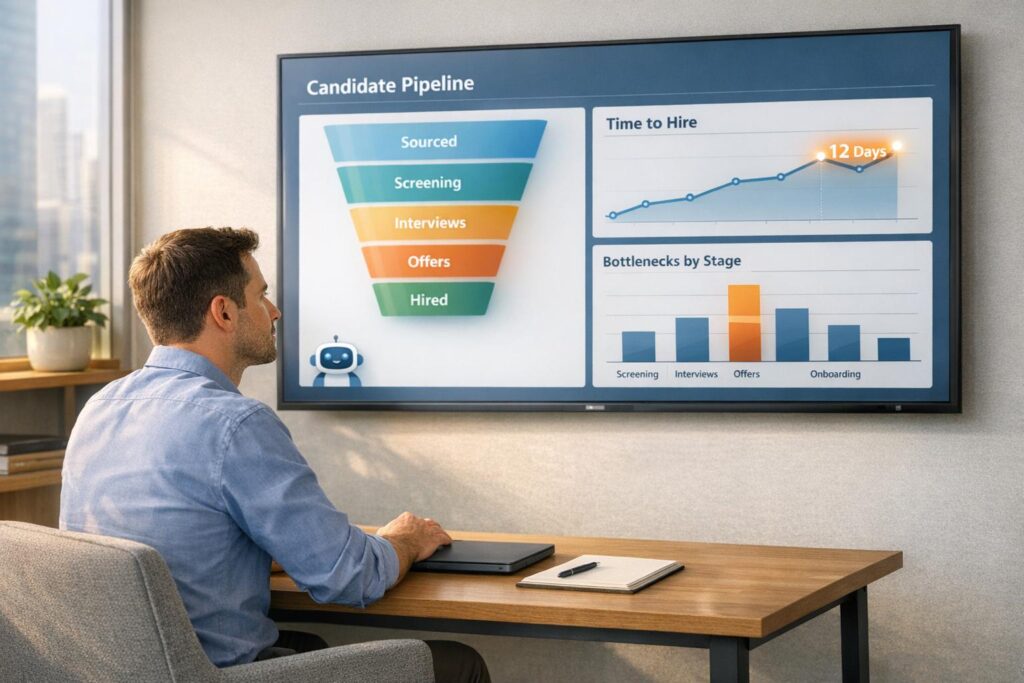
Skillfuel features a Kanban-style visual workflow with drag-and-drop functionality, allowing recruiters to track candidate progress in real time. The platform’s ATS (Applicant Tracking System) automates candidate ranking and tracking across all hiring stages, ensuring diversity metrics are always up to date. This setup helps HR teams quickly identify bottlenecks and streamline processes. The dashboard is fully customizable, enabling organizations to focus on the diversity metrics that matter most – whether it’s gender representation during interviews, demographic breakdowns by location, or department-level diversity. These tools create a dynamic and adaptable environment for tracking diversity goals effectively.
Flexible Features for Different DEI Goals
Skillfuel supports a variety of diversity, equity, and inclusion (DEI) priorities through features designed to attract and engage diverse talent. Customizable career portals automatically route applicants to the right pipelines based on role and location. These branded pages can highlight inclusive workplace benefits, such as flexible scheduling or extended parental leave, to appeal to a broader range of candidates. Additionally, Skillfuel integrates with social media platforms and niche job boards, helping companies connect with underrepresented groups.
For those aiming to reduce hiring bias, the platform offers blind recruitment tools. Recruiters can review resumes based solely on skills and experience, with details like graduation dates or school names hidden. Automated communication features ensure candidates stay informed throughout the hiring process, minimizing drop-offs and maintaining engagement.
Skillfuel Plan Options for Diversity Tracking
Skillfuel provides three plan options tailored to different diversity tracking needs:
| Plan | Price | Key Features for Diversity Analytics | Best For |
|---|---|---|---|
| Free Plan | $0/month | Basic ATS, centralized dashboard, Kanban workflow, career portal development | Small teams beginning to track diversity metrics |
| Premium Plan | Custom pricing | Advanced analytics, custom reporting, enhanced workflow automation, team collaboration tools | Growing businesses with evolving DEI goals |
| Enterprise Plan | Custom pricing | Full dashboard customization, real-time DEI insights, dedicated support, custom integrations | Large organizations requiring comprehensive diversity tracking |
Each plan includes mobile accessibility, enabling HR teams to monitor recruitment and diversity metrics from anywhere. Skillfuel also ensures compliance with hiring regulations, helping organizations maintain fair and equitable hiring practices as standards evolve.
Conclusion
Skillfuel, combined with the best practices we’ve discussed, makes managing real-time diversity analytics more efficient by reducing manual work and streamlining data flow. This instant access to up-to-date data empowers HR teams to respond to trends and adapt strategies on the fly.
"Having this data available in real-time allows organizations to make decisions based on the current reality of what they’re seeing, rather than creating a strategy based on data from 6 months ago." – Annie Lin, VP, People, Lever
Using centralized data, intuitive dashboards, and AI-driven insights, organizations can align their strategies with live metrics. Here’s a compelling stat: companies that consistently monitor DEI metrics are 50% more likely to hit their diversity hiring goals. For example, a major fintech firm achieved a 25% increase in diverse hires after adopting a real-time diversity dashboard to address hiring biases.
Skillfuel’s platform stands out by offering tools that make these insights actionable. Whether you’re a small business testing the waters with their free plan or a large enterprise needing advanced analytics, Skillfuel provides the flexibility to meet your needs. With real-time views into your hiring processes, pay equity, and candidate experiences, you can catch issues early and focus on creating a more inclusive workplace.
FAQs
How do we keep DEI data accurate across systems?
To keep DEI data accurate, focus on maintaining clean and organized records. Regularly audit your data to identify and fix errors, remove duplicates, and ensure consistency in how information is collected. Automated tools, such as AI-driven dashboards, can help provide real-time insights while minimizing manual mistakes. It’s also essential to adhere to legal requirements and follow best practices in data science to handle this information responsibly and maintain its reliability.
What real-time DEI metrics matter most to start?
To build a more inclusive workplace, tracking real-time DEI metrics is essential. Start with these key areas:
- Workforce demographics: Look at factors like gender and ethnicity to understand representation across your organization.
- Recruitment metrics: Pay attention to application and interview conversion rates to spot potential barriers in your hiring process.
- Retention rates: Focus on underrepresented groups to identify trends and areas needing improvement.
For deeper insights, consider metrics like pay equity to ensure fair compensation and employee engagement to gauge inclusivity and satisfaction. These data points not only highlight gaps but also guide informed, actionable decisions for fostering a truly inclusive environment.
How can we protect employee anonymity in DEI surveys?
Protecting employee anonymity in DEI (Diversity, Equity, and Inclusion) surveys is key to earning trust and fostering honest responses. To achieve this, ensure that the survey process is either truly confidential or completely anonymous – and make this crystal clear to your team.
Here are some practical steps to maintain anonymity:
- Use anonymous survey tools: Choose platforms that don’t collect identifiable information like names, email addresses, or IP addresses.
- Limit personal questions: Avoid asking for unnecessary details that could inadvertently reveal someone’s identity.
- Aggregate data: Combine responses into larger groups before analysis to prevent individual answers from being traced back to specific employees.
Additionally, be transparent about how the data will be handled. Explain who will have access to the information and how it will be used. Implement strict access controls to ensure that only authorized personnel can review the data. Taking these steps not only protects anonymity but also creates an environment where employees feel safe sharing their honest perspectives.