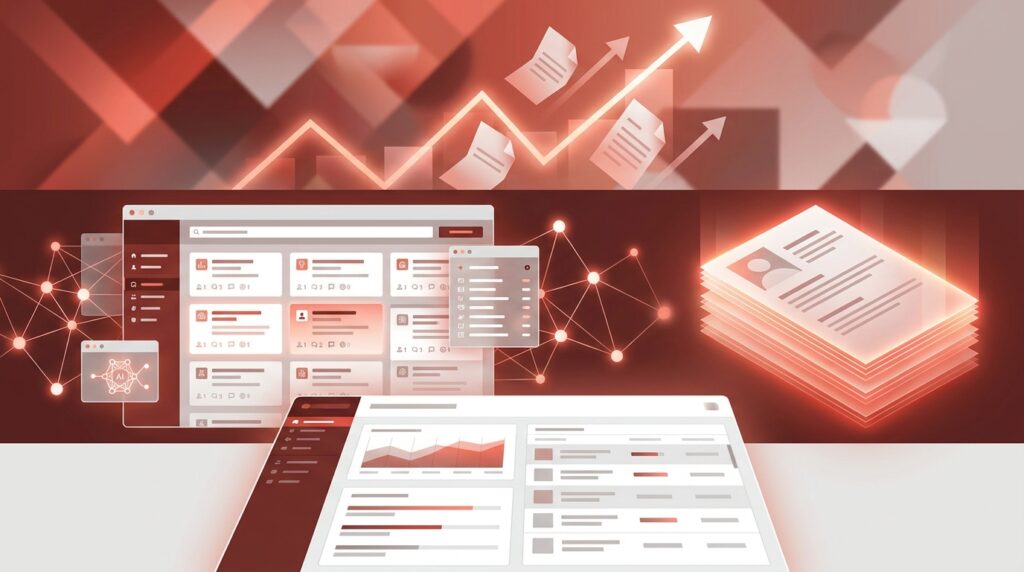

Job seekers are submitting 30 percent more applications than they did before the pandemic as AI-powered resume and cover-letter tools enable mass application strategies, LinkedIn CEO Dan Shapero told the Wall Street Journal September 30, creating what he described as a growing challenge for employers trying to identify qualified candidates in applicant pools now numbering hundreds or thousands per role.
TL;DR: LinkedIn’s CEO says job seekers send 30% more applications than pre-pandemic, forcing 99% of hiring managers to deploy AI screening tools to manage the surge, according to Fortune reporting.
Falling Job Openings Drive Application Volume
Available job openings in the United States fell to 7.08 million in August 2026, a five-month low and hundreds of thousands fewer than the previous month, according to Fortune. Monthly hiring levels excluding the pandemic period are also nearing a 10-year low. The contraction in available roles has pushed candidates to apply more aggressively when openings do appear.
Data from employment platform Simplify shows job hunters sent an average of 45 applications per month in May 2025, more than double the 22-application average from 2024. Master’s degree holders submitted between 32 and 60 applications monthly, while bachelor’s students applied to 15 to 38 open roles. Nearly two-thirds of job seekers now use AI for resume writing, cover letter customization, interview practice, and career guidance.
“It’s gotten harder and harder for employers to know who can actually do the job anymore,” Shapero said in the Wall Street Journal interview.
Hiring Managers Deploy AI to Filter Application Surge
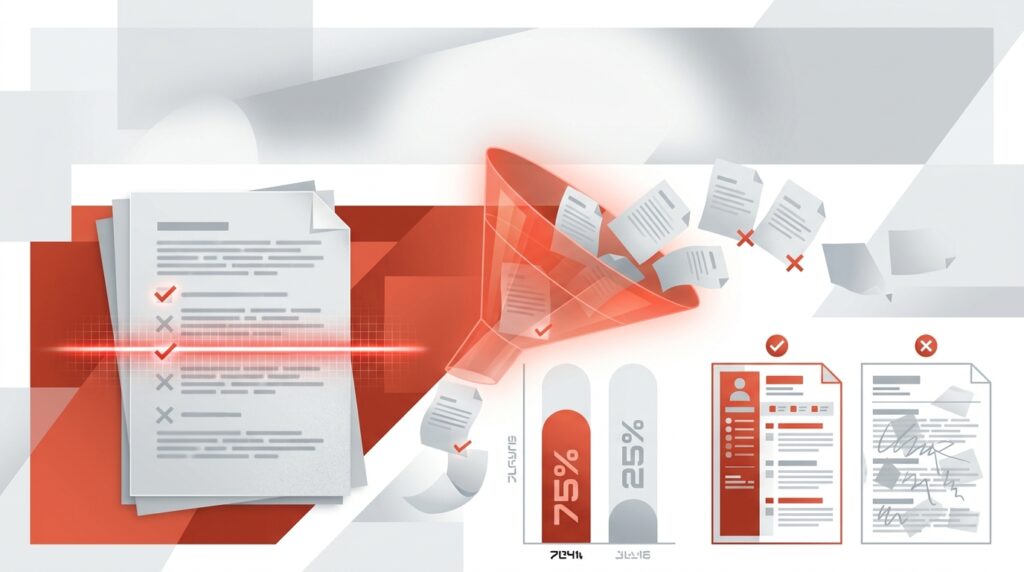
Ninety-nine percent of hiring managers now use AI in the hiring process, according to a 2025 report from consulting firm Insight Global, with 98 percent reporting improvements in interview scheduling, resume screening, and skills assessment. LinkedIn launched its own AI Hiring Assistant to help recruiters identify talent matches and filter incoming applications, though Shapero confirmed the tool does not automatically reject candidates.
The volume challenge has created what Shapero called a “sea of applicants” that “look pretty similar” because candidates use AI tools to “put their best foot forward, based on what they think you want,” he said at LinkedIn’s Talent Connect conference. Recruiters now face the task of distinguishing between hundreds of AI-optimized applications for each opening.
Sixty-three percent of U.S. job seekers have been interviewed by AI, according to a Greenhouse report published earlier in 2026, up 13 percentage points from six months prior. Sharawn Tipton, chief people officer at Greenhouse, told Fortune that HR professionals deploy AI interviewers to “filter the flood” of applications in an intensely competitive labor market.
The recruitment automation arms race mirrors patterns documented in recent analysis of AI hiring pipelines, where some recruiters now actively seek friction in application processes to reduce volume. The LinkedIn CEO’s comments suggest the volume problem has reached a scale where even sophisticated ATS platforms struggle to surface qualified candidates efficiently.
Two-Sided AI Use Creates Feedback Loop
Shapero acknowledged at the Talent Connect conference that workers “everywhere” are using AI to “get a leg up” by applying to numerous jobs simultaneously. The practice spans experience levels—not just recent graduates but professionals across career stages deploy AI tools to maximize application volume in a contracted job market.
The dynamic has created a feedback loop: candidates use AI to apply at scale, employers use AI to manage the resulting deluge, and both sides escalate their technology use in response to the other’s tactics. Tipton characterized the cost distribution as asymmetric. “Recruiters are inundated, and they’re worried about being replaced. There’s a trust gap on both sides, and technology is outpacing change management,” she told Fortune. “The cost of all of this falls hardest on candidates.”
The trust gap extends to screening accuracy. A Manchester recruitment agency audit found 7 percent of AI-rejected candidates were qualified for warehouse roles, highlighting precision challenges when screening tools process high volumes.
What This Means for In-House Recruiters
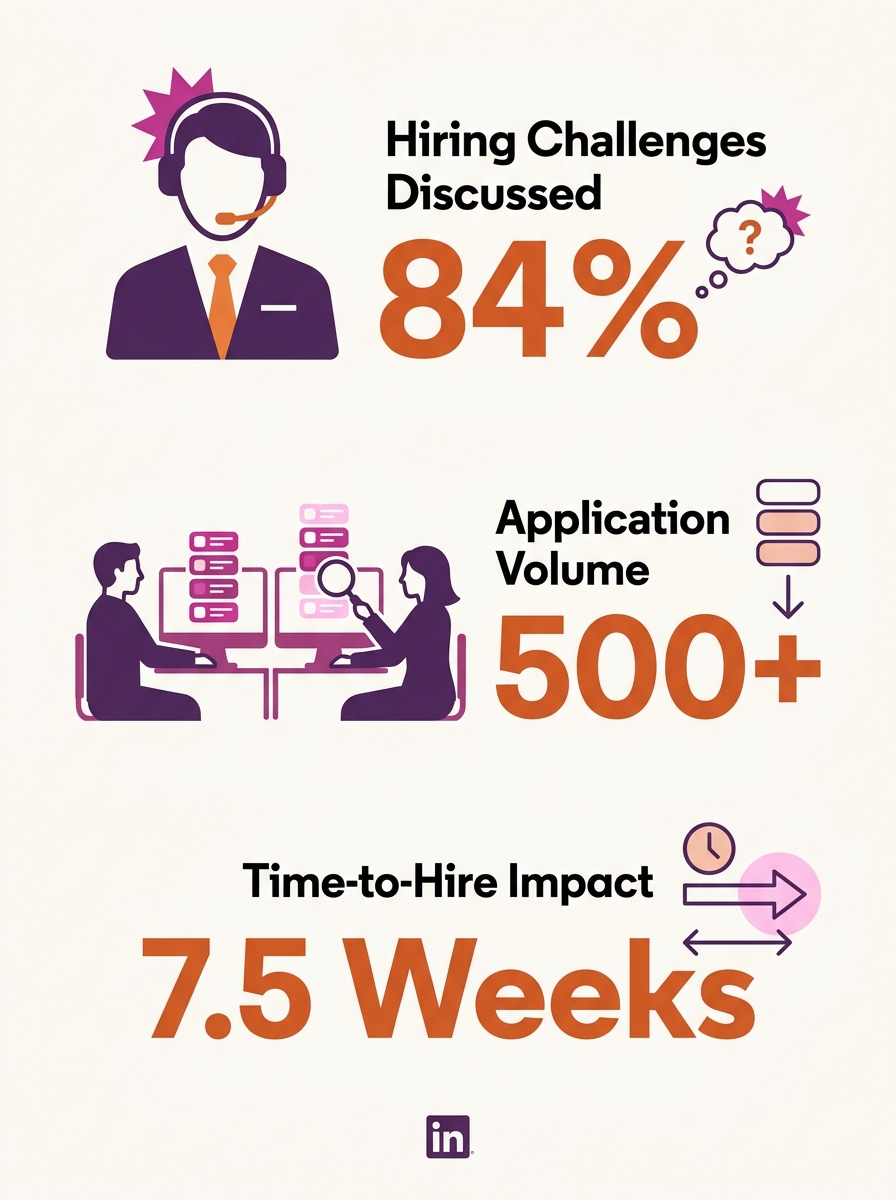
The 30 percent application volume increase LinkedIn’s CEO describes is not a future scenario—it is the current baseline for most recruiting teams in 2026. Applicant tracking systems that performed adequately at 2019 application volumes now face triple-digit applicant counts per opening, and the LinkedIN data confirms the surge is structural rather than temporary. Teams still evaluating recruitment software for small businesses or considering free recruitment software options should prioritize parsing accuracy and screening speed over feature breadth, as the cost of manual review at current volumes becomes prohibitive.
The AI feedback loop Shapero identifies—where candidates use AI to apply faster and recruiters use AI to screen faster—suggests that recruiter differentiation will increasingly depend on post-screen engagement rather than top-of-funnel volume management. Greenhouse’s finding that 63 percent of candidates now encounter AI interviewers indicates that human touchpoints later in the hiring process may carry disproportionate weight in candidate experience and offer acceptance rates.
ATS selection decisions made in the next 12 months will lock teams into platforms that either scale effectively with AI-driven application surges or create manual bottlenecks that compound as volume grows. The LinkedIn CEO’s framing of the challenge—”harder to know who can actually do the job”—points to qualification verification rather than resume parsing as the next chokepoint in high-volume recruiting workflows.