
Scion Technical published a process optimization framework September 9 identifying pre-hire stakeholder alignment, three-stage interview design, and same-day feedback submission as core mechanisms for reducing time-to-hire in technical recruitment, according to the staffing firm’s website. The guide positions hiring delays as preventable friction rather than necessary diligence, citing scenarios where qualified candidates exit processes between days 18 and 47 due to coordination failures rather than talent scarcity.
TL;DR: Scion Technical’s September 9 framework recommends stakeholder alignment before job posting, three-stage interview processes with defined assessment criteria, and 24-hour debrief timelines to prevent candidate drop-off in technical hiring markets.
The framework addresses a persistent tension in talent acquisition: pressure to fill roles faster while maintaining quality standards in competitive technical hiring markets. Scion Technical’s recommendations center on eliminating process ambiguity and coordination delays that extend timelines without improving hiring decisions.
Pre-Hire Alignment Identified as Primary Speed Lever
The guide recommends settling non-negotiable requirements before outreach begins, rather than refining criteria mid-search. According to the framework, hiring managers and stakeholders should align on business outcomes the role must deliver, technical capabilities, compensation range, location expectations, interview team composition, and final decision authority before candidate conversations start.
Scion Technical distinguishes between essential qualifications and flexible preferences, noting that treating every skill as mandatory narrows candidate pools to “theoretical” profiles unavailable on required timelines. The firm recommends identifying where organizations can flex on secondary criteria to expand access to qualified talent without compromising core requirements.
For specialized markets such as cybersecurity, cloud infrastructure, and AI engineering, the framework positions early flexibility decisions as critical to balancing speed and selectivity.
Three-Stage Interview Structure Replaces Loosely Defined Sequences
Scion Technical recommends three purposeful stages for most technical roles: initial qualification, technical or functional assessment, and final discussion focused on collaboration and fit. The framework contrasts this structure with five or more loosely defined interviews that repeat assessment areas without increasing hiring confidence.
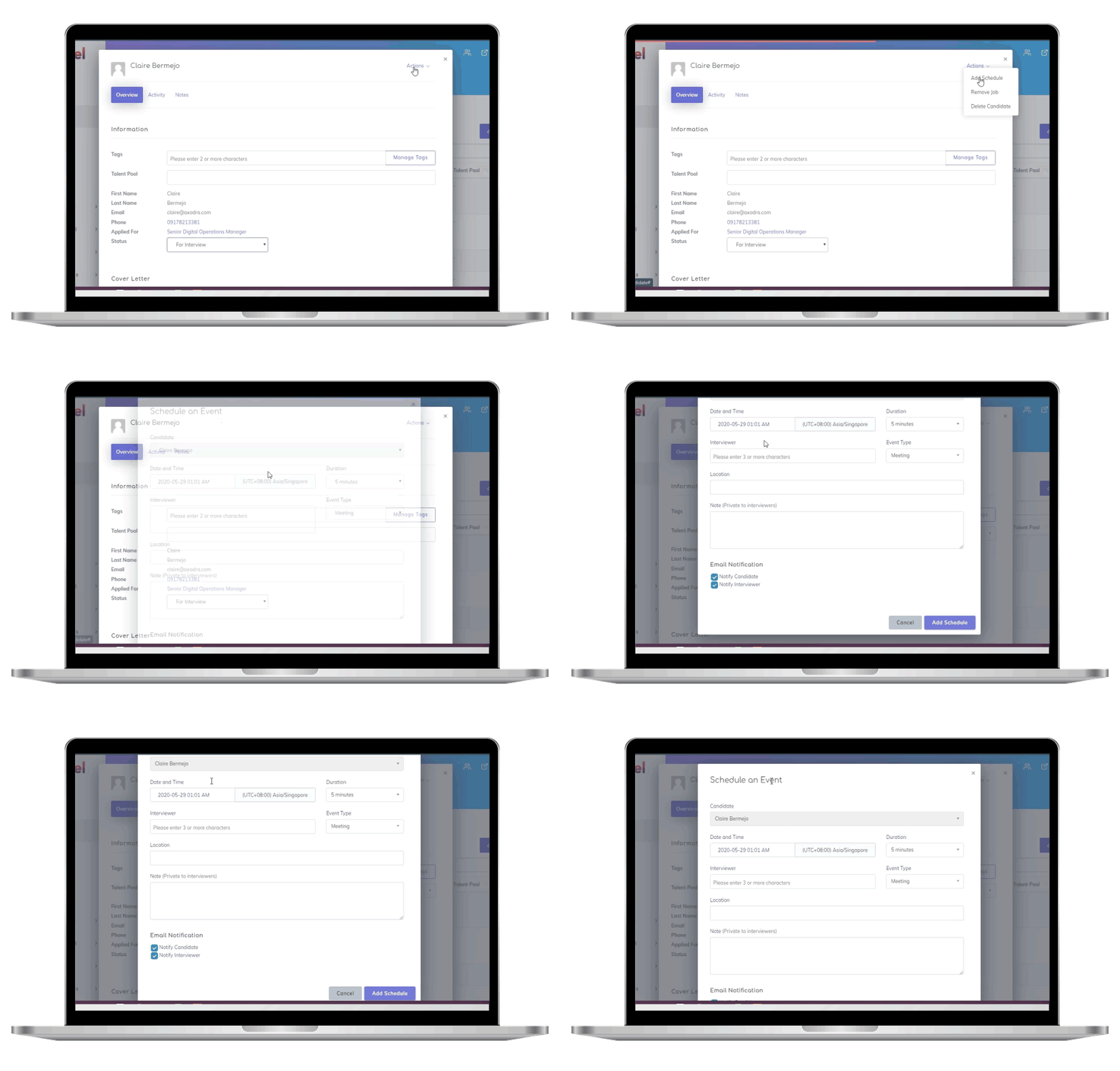
The guide specifies that interview feedback should be submitted the same day and debriefs should occur within 24 hours of final interviews. According to the framework, candidates should not wait through week-long calendar coordination while competing employers advance offers. For urgent roles, Scion Technical recommends reserving interview blocks on stakeholder calendars at search launch rather than scheduling reactively after finalists emerge.
The firm calls for scorecards defining specific competencies each interviewer will assess, positioned as a mechanism to limit subjective debate and accelerate post-interview decisions. A platform engineering candidate example in the guide lists architecture depth, operational judgment, stakeholder communication, and system scalability as discrete assessment areas that reduce general-impression feedback, a common approach in effective interview techniques.
Communication Discipline and Compensation Clarity Highlighted as Candidate-Facing Factors
The framework identifies silence, rescheduling, and unclear expectations as moments that create candidate doubt, particularly for passive talent not actively job-seeking. Scion Technical recommends setting timing expectations at every stage, following up when timelines change, and providing preparation context candidates need for intelligent participation.
Compensation ambiguity is flagged as a preventable delay source. The guide states salary range, equity structure, work model, and reporting relationships should be clear enough early in the process for candidates to determine whether continued participation merits their time investment.
For distributed teams across multiple time zones, the framework recommends priority scheduling windows that accommodate candidates within several business days. The firm positions scheduling coordination as a tactical bottleneck that signals organizational competence to senior engineers and technology executives evaluating employers during the interview process, similar to workflow improvements discussed in four-stage screening frameworks.
Technology Positioned as Coordination Tool, Not Additional Gatekeeper
Scion Technical distinguishes between technology that reduces manual work and technology that adds approval layers or data-entry requirements. The framework recommends auditing processes from the candidate perspective to identify whether applicant tracking systems, scheduling tools, and assessment platforms accelerate or slow progression.
The guide does not specify vendors or platforms, focusing instead on operational principles: technology should improve visibility for hiring teams and reduce coordination friction for candidates. Tools that create additional hurdles without improving decision quality are flagged as time-to-hire liabilities.
What This Means for In-House Recruiters
Talent acquisition teams facing pressure to fill technical roles faster now have a structured alternative to the speed-versus-quality binary. Scion Technical’s framework shifts the conversation from “how quickly can we decide” to “what prevents a well-defined process from moving at its natural pace,” positioning most time-to-hire delays as coordination and clarity failures rather than necessary diligence.
The same-day feedback and 24-hour debrief recommendations require hiring manager discipline and stakeholder availability that many organizations lack. Recruiters implementing this framework will need executive sponsorship to enforce calendar prioritization for urgent searches, particularly in technical hiring where passive candidates often hold competing offers. The three-stage interview structure may face resistance in organizations accustomed to consensus-building through extensive panel participation.
The pre-hire alignment emphasis is immediately actionable. Recruiters who clarify non-negotiable requirements and flexible criteria before launching searches can reduce mid-process scope changes that restart candidate evaluation and extend timelines, a dynamic particularly acute in specialized markets where qualified talent is scarce but not nonexistent.