
Diversity benchmarking in recruitment helps companies assess their hiring processes, identify biases, and set measurable goals to improve representation and equity. By tracking metrics like candidate conversion rates, hiring outcomes, and retention, businesses can pinpoint where underrepresented groups face barriers and take corrective action. With 78% of employees valuing workplace diversity, but only 22% of companies actively addressing it, benchmarking is now a necessity for both compliance and attracting top talent.
Key takeaways:
- Why it matters: Beyond legal requirements, diversity benchmarking enhances decision-making, reduces biases, and aligns with workforce expectations.
- Metrics to track: Pipeline diversity, hiring rates, retention, and promotion speeds.
- Steps to audit: Analyze workforce demographics, review recruitment funnels, and set clear, measurable goals.
- Tools: Use analytics platforms, structured interviews, and diverse sourcing channels to track and improve results.
Data-backed strategies not only improve hiring outcomes but also drive business success, with companies in the top quartile for diversity outperforming their peers by up to 36% in profitability.
How to Benchmark DEI in the Workplace
sbb-itb-e5b9d13
Why Diversity Benchmarking Matters in 2026
By 2026, diversity benchmarking has shifted from being a "nice-to-have" to an absolute necessity. With strict mandates from entities like UK financial services regulators, the U.S. Equal Employment Opportunity Commission (EEO) and Office of Federal Contract Compliance Programs (OFCCP), and the EU AI Act, organizations are now required to conduct bias audits and address misconduct such as bullying, harassment, and discrimination. Emily Shepperd, Chief Operating Officer at the FCA, emphasized the stakes:
"The risk-taking required for long-term growth will be reliant on a foundation of healthy firm cultures. Strong, inclusive cultures where diverse perspectives prevent groupthink and support better decision-making".
This regulatory evolution makes diversity benchmarking a critical tool – not just for compliance but also for fostering competitive, forward-thinking workplaces. Later in this guide, we’ll explore how organizations can use audits and goal-setting to meet these challenges.
Beyond meeting legal requirements, diversity benchmarking aligns with shifting workforce expectations. In the U.S., 76% of employees say diversity is essential, but today’s job seekers aren’t satisfied with vague mission statements. They want hard data – proof of representation, pay equity, and career advancement opportunities. To meet these expectations, 70% of talent leaders now track demographic metrics at every stage of hiring. Without this transparency, companies risk losing credibility with candidates.
Benchmarking also helps uncover biases that often go unnoticed. For example, resumes with "White-sounding" names receive 50% more callbacks than those with "Black-sounding" names. Without proper tracking, these disparities remain hidden, potentially exposing companies to legal and reputational risks. Through diversity benchmarking, organizations can conduct adverse impact analyses to identify and address these biases before they escalate.
A powerful example of benchmarking’s impact comes from the British Transport Police. Facing challenges in filling 550 vacancies and attracting minority candidates, they implemented a data-driven recruiting platform. The result? Minority applicant numbers doubled. This demonstrates how benchmarking can transform ambitious diversity goals into measurable, sustainable outcomes.
Key Diversity Metrics to Track
When it comes to addressing bias and fostering inclusivity, tracking the right metrics is essential. By focusing on conversion, progression, and equity, organizations can identify potential barriers in their recruitment and retention processes. Below, we break down the critical metrics to monitor, from the candidate pipeline to long-term retention.
Pipeline Diversity
Pipeline diversity examines the demographic composition of candidates at every stage of recruitment, starting from sourcing and application to shortlisting, interviews, and final hiring. One of the most telling indicators is the conversion rate between these stages. For instance, if underrepresented candidates consistently drop off at a particular stage, it could point to a screening or evaluation issue.
Other key metrics include outreach response rates and time-to-hire disparities. These help ensure that diverse candidates are not only engaged promptly but also fairly considered throughout the process.
Lauren Shufran, Content Strategist at Gem, highlights the importance of this comprehensive approach:
"A true measure of diversity hiring takes into account everything that happens from first outreach to offer-accept… as well as what happens after onboarding and beyond".
Once candidate progression is analyzed, attention should shift to the final hiring outcomes.
Hiring and Selection Rates
This metric focuses on the decisions made during the offer and acceptance stages. It’s essential to calculate the percentage of diverse candidates hired in relation to the total applicant pool and assess offer acceptance rates across different demographics.
If diverse candidates are accepting offers at lower rates, it could be a red flag that the company’s culture, compensation, or benefits aren’t competitive. Additionally, applying the 4/5ths Rule can help identify potential biases. If the selection rate for a protected group is less than 80% of the rate for the most favored group, it may indicate an adverse impact.
Retention and Advancement Metrics
Hiring diverse talent isn’t enough – ensuring they stay and thrive is just as important. Monitoring turnover rates by demographic group, tracking promotion speeds, and analyzing leadership representation can uncover retention and advancement challenges.
For instance, if women are well-represented in entry-level roles but significantly underrepresented in senior leadership, this "broken rung" in the career ladder may need immediate attention. Addressing these gaps not only improves retention by up to 35% but also enhances innovation by 70%.
How to Conduct a Diversity Benchmarking Audit
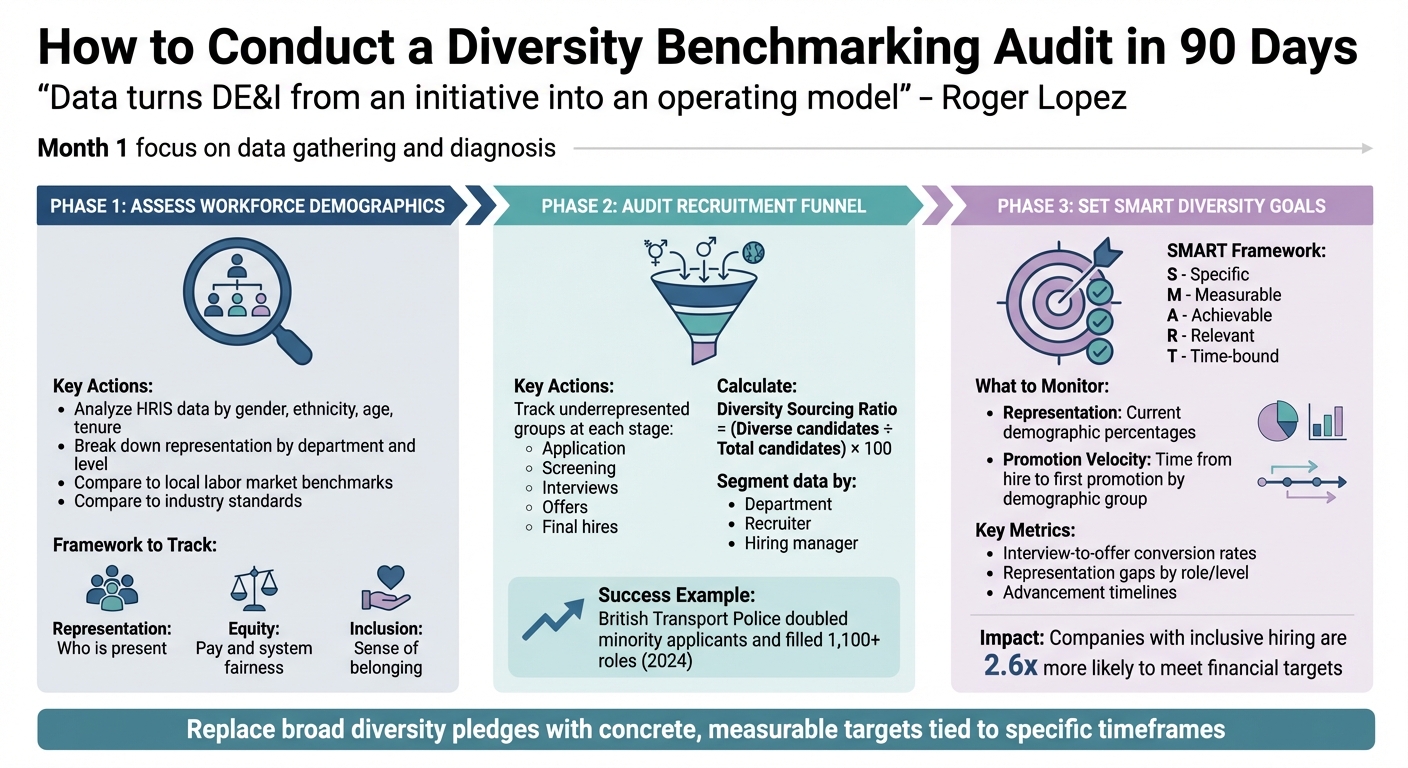
3-Phase Diversity Benchmarking Audit Process with Key Metrics
Tackling a diversity audit might seem daunting, but breaking it into three clear phases – evaluating your current workforce, reviewing your recruitment process, and setting actionable goals – can make it manageable. Many organizations complete the entire process in about 90 days, dedicating the first month to gathering data and diagnosing issues.
Roger Lopez from National Search Group emphasizes this approach:
"Data turns DE&I from an initiative into an operating model".
This mindset shifts diversity efforts from abstract ideals to measurable progress, starting with an honest assessment of where your organization stands today.
Assess Workforce Demographics
Begin by analyzing your workforce data. Use your HRIS system to gather demographic information, breaking it down by gender, ethnicity, age, and tenure. The goal is more than just counting numbers – it’s about uncovering patterns within various roles and departments.
Look at representation across all levels, from entry-level roles to the C-suite. For instance, you might find that while women are well-represented in junior positions, they are noticeably absent in senior leadership roles.
To deepen your analysis, compare your internal data to benchmarks from your local labor market and industry. A helpful framework involves tracking three types of metrics: Representation (who is present), Equity (how fair pay and systems are), and Inclusion (whether employees feel a sense of belonging). These insights will prepare you for the next step: auditing your recruitment pipeline.
Audit Recruitment Funnel Performance
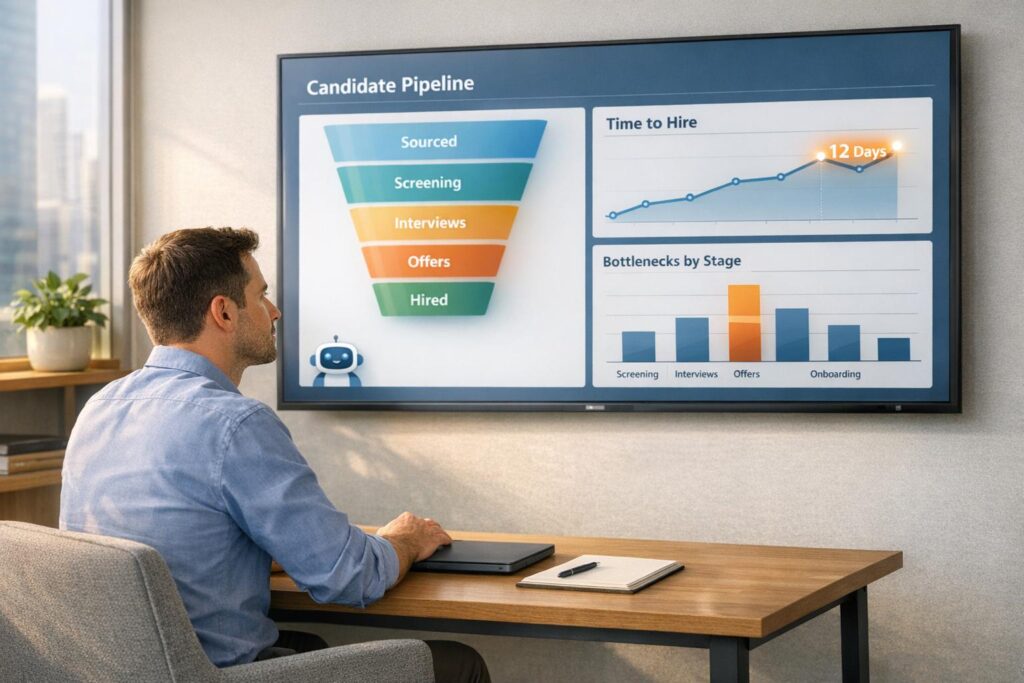
Once you’ve mapped out your workforce demographics, it’s time to examine how candidates move through your hiring process. Track the percentage of underrepresented groups at each stage – from application to screening, interviews, offers, and final hires.
Calculate your Diversity Sourcing Ratio by dividing the number of diverse candidates by the total candidate pool, then multiplying by 100. This metric can reveal whether your team is actively sourcing diverse talent or passively relying on inbound applications. If diverse candidates are applying but dropping out during the screening phase, it could point to biases in resume reviews or overly restrictive qualifications.
Take, for example, the British Transport Police. In July 2024, they partnered with Oleeo to address challenges in attracting minority candidates for their 550 annual vacancies. By refining their application process and utilizing government positive action provisions, they doubled minority applicants and filled over 1,100 roles.
Dig deeper into your data by segmenting it by department, recruiter, or hiring manager. This can help identify specific points where bias might be influencing decisions. Once you’ve pinpointed these areas, you’ll be ready to set clear diversity goals.
Set SMART Diversity Goals
With a clear understanding of your current state, it’s time to set specific, achievable goals using the SMART framework – Specific, Measurable, Achievable, Relevant, and Time-bound. Replace broad diversity pledges with concrete targets, such as increasing the representation of underrepresented groups in technical roles within a set timeframe.
Start by establishing a baseline with your current metrics. For example, if the interview-to-offer conversion rate for diverse candidates is significantly lower than the overall rate, you might set a goal to close that gap within a specific period.
It’s also important to monitor both representation and promotion velocity – the average time it takes for employees to advance from hire to their first promotion, broken down by demographic group. This ensures you’re not only hiring diverse talent but also fostering their growth within your organization. Companies that prioritize inclusive hiring practices are 2.6 times more likely to meet their financial targets, making these efforts a smart business move in addition to being ethically sound.
Tools and Methods for Diversity Benchmarking
Once you’ve completed your audit and set clear goals, the next step is using the right tools to track progress and address bias. Building on the insights from your audit, these methods help you monitor and improve diversity outcomes effectively. The key lies in combining analytics tools for real-time data, structured hiring processes to reduce bias, and diverse sourcing strategies to expand your talent pool.
Using Analytics Platforms for Diversity KPIs
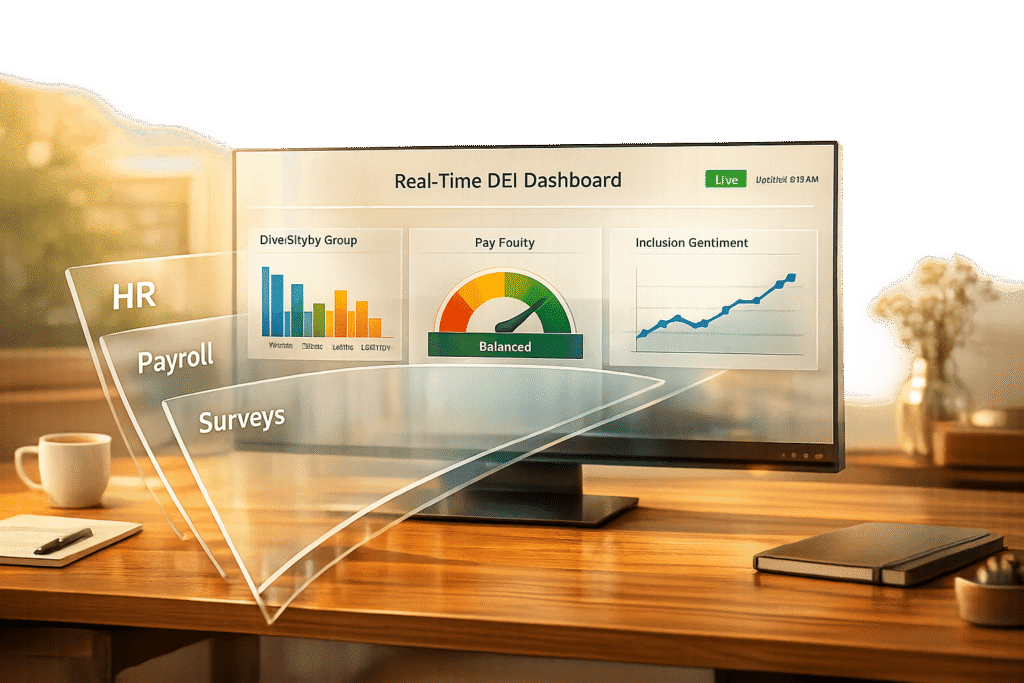
Modern analytics platforms, like Skillfuel, provide real-time dashboards to track applicant demographics and recruitment funnel performance. Some tools even offer detailed analyses by location and team, allowing you to benchmark applicant data against local census figures. For example, these platforms can reveal where diverse candidates drop out – whether during resume reviews, phone screens, or final interviews.
This level of detail can show if specific team members are advancing less diverse candidate pools, highlighting areas for training. In fact, over 60% of police forces in England and Wales use such platforms to ensure their workforce reflects the communities they serve.
For external benchmarking, platforms compare your applicant data to census figures – like the 2021 UK Census, which included 37.5 million working-age individuals – to identify underrepresented groups in your area. As noted by Hireful:
"The benchmark for being known as a welcoming employer is ensuring that your applicant diversity profile aligns with the community demographics where your workforce resides".
But data alone isn’t enough. Standardizing assessments is another critical step in reducing bias.
Implementing Structured Interviews and Skills-Based Hiring
Unstructured interviews can unintentionally allow unconscious bias to influence decisions. Structured interviews, on the other hand, use the same set of questions and evaluation criteria for every candidate, ensuring consistency across demographic groups. This approach creates a fairer process by holding all candidates to the same standards.
Research shows that hiring based on skills is five times more predictive of performance than relying on traditional credentials like degrees. For this reason, many organizations are moving away from degree requirements and focusing on candidates’ actual abilities. Skills-based assessments provide measurable results that can be tracked in diversity dashboards, helping you identify if certain groups are being unfairly screened out despite meeting the necessary qualifications.
Behavioral interview questions that simulate real-world scenarios also offer concrete evidence of a candidate’s capabilities, making them more reliable than abstract questions. Automated scoring tools can further reduce subjectivity in early evaluations. Regularly reviewing pass-through rates – the percentage of underrepresented candidates advancing through each stage – can pinpoint where diverse talent is being lost.
After refining your internal processes, the next step is to widen your search for candidates.
Expanding Sourcing Channels
If your diversity metrics remain stagnant, the issue might not be your pipeline but rather where you’re sourcing candidates. Relying on inbound applications or employee referrals often leads to homogenous candidate pools. To improve representation, active outbound sourcing is critical.
Start by exploring platforms that connect with underrepresented groups, such as Diversity Working, Black Career Network, Hire Autism, and 70 Million Jobs. Measure your Diversity Sourcing Ratio – the percentage of candidates coming from diversity-focused channels – to evaluate the success of these efforts.
Additionally, build partnerships with historically Black colleges and universities (HBCUs), minority-focused organizations, and events centered on diversity. Revamp job descriptions to include inclusive language, such as "you" or "they", and highlight benefits that appeal to diverse candidates. Examples include flexible remote work options, extended parental leave, and comprehensive healthcare coverage. These changes demonstrate your commitment to inclusion, attracting a broader range of applicants before they even hit "apply."
Setting and Monitoring Diversity Benchmarks
Defining Target Metrics
Start by documenting your current diversity metrics – things like your Diversity Sourcing Ratio, Diversity Interview Ratio, or retention rates. These numbers give you a baseline to build from and help you focus your efforts where they’re needed most. Using the insights from your diversity audit, set specific, measurable goals. For example, you might aim to increase the percentage of women in leadership roles by 15% over the next two years.
When setting benchmarks, keep two key factors in mind: your local recruitment pool and your industry standards. For instance, compare your workforce demographics to local population data or industry averages. This can highlight gaps, such as women making up 44.6% of accounting roles versus less than 30% in manufacturing.
To ensure accountability, tie these diversity goals to leadership performance. Incorporate them into senior leaders’ evaluations so that DEI initiatives don’t become optional or sidelined as “extra tasks”. Raena Saddler, VP of People at the Sheryl Sandberg & Dave Goldberg Family Foundation, emphasizes this point:
"When senior leaders prioritize diversity and encourage DEI, fewer employees think about leaving – and employee happiness increases".
Once your goals are set, regular monitoring through audits will help you stay on track and respond quickly to any shifts.
Regular Audits and Adjustments
Setting goals is just the beginning – regular audits are essential to track progress. Relying on annual reports can leave you playing catch-up. Instead, conduct quarterly reviews to identify trends early, such as a sudden increase in turnover among a specific demographic. In fast-paced recruitment areas, weekly tracking of demographic data can help pinpoint where diverse candidates might be dropping out of the hiring funnel.
These audits should break down conversion rates at each hiring stage – from applications to interviews to offers. If you notice underrepresented candidates advancing at lower rates, it may be time to revisit your screening criteria or implement bias training for interviewers. Pay attention to both leading indicators (like the diversity of your applicant pool, which predicts future outcomes) and lagging indicators (such as retention rates, which reflect past progress).
As your organization evolves, adjust your benchmarks to reflect your growing DEI capabilities and maintain momentum. Data-driven strategies are critical for addressing bias, and setting clear benchmarks amplifies their impact. Sopact‘s CEO Unmesh Sheth puts it well:
"Success is a trajectory, not a score".
Overcoming Challenges in Diversity Benchmarking
Addressing Bias in Recruitment Processes
Even with the best intentions, unconscious bias can influence hiring decisions, especially when resume reviews are subjective or interviews lack structure. A key solution is to introduce standardized processes. For example, using scoring rubrics with predefined criteria ensures that evaluations are based on objective measures rather than personal judgments, which often disadvantage underrepresented groups. Another effective approach is blind screening, where names and photos are removed from resumes. Organizations that use this method have reported up to 46% more diverse candidates advancing to interview stages.
The language in job descriptions also plays a significant role. Terms like "aggressive" or "ninja" can subtly signal exclusivity. Studies show that women are less likely to apply unless they meet 100% of the listed qualifications, while men tend to apply after meeting just 60%. To counter this, focus on core competencies rather than an exhaustive list of credentials, making the application process more inclusive and transparent.
"If your application pool is diverse but your interview pool isn’t, the problem is in your screening process." – Dropboard
Diverse interview panels can also make a big difference. Teams with members from various backgrounds are 37% more likely to hire diverse candidates. Including individuals from different departments and perspectives helps reduce affinity bias, ensuring a fairer evaluation process. With these strategies in place, organizations can then turn their attention to analyzing and improving metrics throughout the hiring funnel.
Improving Declining Metrics
To refine hiring practices further, funnel analysis is essential for identifying where underrepresented candidates are being lost in the process. By tracking conversion rates at each stage – from application to phone screen, and from interview to offer – you can pinpoint specific barriers. A survey conducted in 2025 revealed that 44% of recruiting professionals named diversity hiring as their top challenge, while 65% of talent teams saw ineffective use of technology and analytics as a major organizational weakness.
Many staffing teams rely on multiple tools (often 4–7), which complicates tracking and analyzing candidate drop-off points. Tools like Skillfuel (https://skillfuel.com) simplify this process by consolidating applicant tracking and analytics into one platform. With centralized, real-time visibility into demographic data, hiring teams can make informed decisions to address gaps.
Instead of waiting for exit interviews to uncover issues, consider conducting stay interviews. These can provide valuable insights into why diverse talent stays and help identify potential problems early. When metrics show a decline, it’s also time to expand your sourcing efforts. Go beyond internal referrals and standard job boards by partnering with organizations like HBCUs, the Black Career Network, or Women in Tech to reach a broader pool of candidates.
Conclusion
Diversity benchmarking goes beyond simply gathering data – it’s about leveraging that data to create meaningful change. Companies that consistently track diversity metrics report 35% better retention rates and 70% more innovation compared to those that don’t. The key lies in extracting clear, actionable insights at every stage of the hiring process. By measuring representation throughout the hiring funnel, organizations can identify where biases may arise and address them before they escalate.
Real-time analytics are reshaping how HR teams operate, allowing for faster, more informed decisions. In 2026, the shift to real-time analytics eliminates the need to wait months for annual reports. Tools like Skillfuel streamline applicant tracking and demographic analysis, consolidating data into a single dashboard. This automation has slashed manual analysis time by up to 80%. With these tools, HR teams can quickly spot drop-off points and take immediate action, whether by rewriting job descriptions, diversifying sourcing strategies, or rethinking interview panel structures.
"Data turns DE&I from an initiative into an operating model." – Roger Lopez, National Search Group
Tracking metrics like promotion velocity and retention rates across demographic groups provides a clearer picture of whether diversity efforts are fostering lasting inclusion or just temporary representation. Companies in the top quartile for ethnic and cultural diversity are 36% more likely to outperform their competitors in profitability, proving that these efforts directly contribute to business success.
These advancements not only help meet regulatory requirements but also lay the groundwork for sustainable, inclusive growth. The organizations that will thrive are those embedding DE&I metrics into their core strategies, rather than treating them as optional add-ons. As discussed earlier, using SMART goals and conducting regular audits ensures that inclusion translates into measurable progress. By setting clear objectives, auditing recruitment processes, and utilizing automated analytics, companies can turn their commitment to inclusion into tangible innovation and growth.
FAQs
What demographics should we track in hiring?
To create fair and inclusive recruitment processes, it’s important to track demographic information such as race, ethnicity, gender, age, and disability status. This data helps uncover representation gaps, assess progress in building a diverse workforce, and refine strategies to ensure everyone feels included.
Beyond hiring, you can also monitor other metrics like leadership demographics, retention rates across different groups, and participation in Employee Resource Groups (ERGs). These insights provide a broader picture of how well your organization supports diversity at all levels.
When collecting this data, always prioritize privacy and compliance with legal standards. Thoughtful and respectful data collection is key to crafting hiring strategies that genuinely promote diversity and inclusion.
How can we conduct a bias audit without violating privacy rules?
To perform a bias audit while safeguarding privacy, prioritize aggregated and anonymized data over any personally identifiable information. Make sure your practices align with data protection laws, such as EEO regulations, and adhere to global standards by following ethical guidelines. Utilize diversity analytics tools carefully, collecting only the data you absolutely need. Be transparent with stakeholders about how the data will be used – this helps identify potential biases while ensuring privacy remains intact.
How often should we update diversity benchmarks?
Diversity benchmarks need regular reviews and updates – ideally, once a year. This practice allows you to monitor progress, pinpoint areas needing attention, and adjust strategies to stay on track with your objectives. Frequent updates also ensure your benchmarks stay in sync with shifting organizational goals and industry trends.