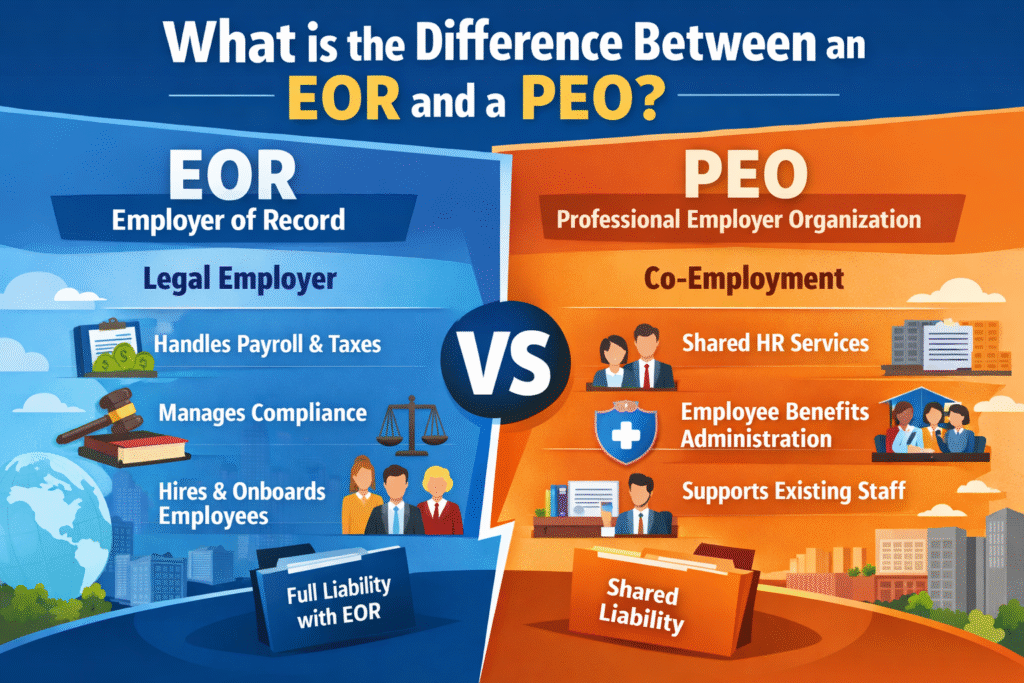
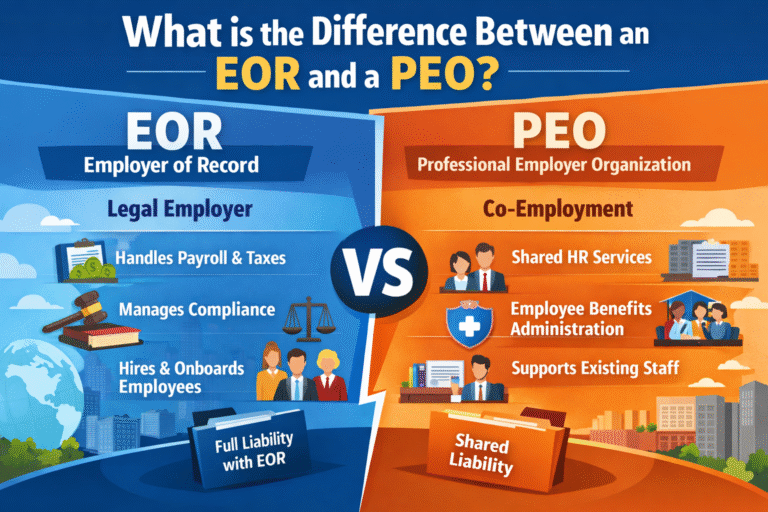
Want to hire talent worldwide? You might hear terms like EOR and PEO a lot. I wouldn’t lie, They sound almost the same. Both deal with payroll, HR, and employee management. I get the confusion. Many business owners assume they are interchangeable but they aren’t. I’ll try to explain the difference in the simplest way possible so you don’t have to make any costly errors.
What an Employer of Record Does
An employer of record is a company that legally hires employees on your behalf. The employee will work for you. However, the EOR is the official employer on paper. They handle contracts, payroll, taxes, benefits, and legal compliance. This is especially useful when hiring in another country. You do not need to open a local company there. The employer of record takes care of all legal responsibilities while you manage the employee’s daily work.
When an EOR Is Most Helpful
An employer of record is ideal for global hiring. If you want to hire someone overseas, local laws can be complicated. Setting up a business entity can take months and cost a lot. An EOR already operates in that country. This allows you to hire quickly and legally. It is a simple way to test new markets without long term commitments. Many startups rely on this option when expanding internationally.
What a PEO Actually Is
A PEO, or Professional Employer Organization, works differently. Instead of becoming the sole legal employer, a PEO shares employment responsibilities with you. This arrangement is called co employment. You still own the legal entity in that country. The PEO helps manage HR tasks like payroll, benefits, and compliance. Think of it as getting HR support without handing over full control. It is more like a partnership than a replacement.
When a PEO Makes Sense
A PEO is usually used when you already have a registered business in the country. You have employees on your payroll, but you want help managing them. Handling HR internally can be time consuming and stressful. A PEO takes over administrative tasks so you can focus on operations. It is popular among growing companies that want support without giving up their legal role as employer.
Legal Responsibility Is the Biggest Difference
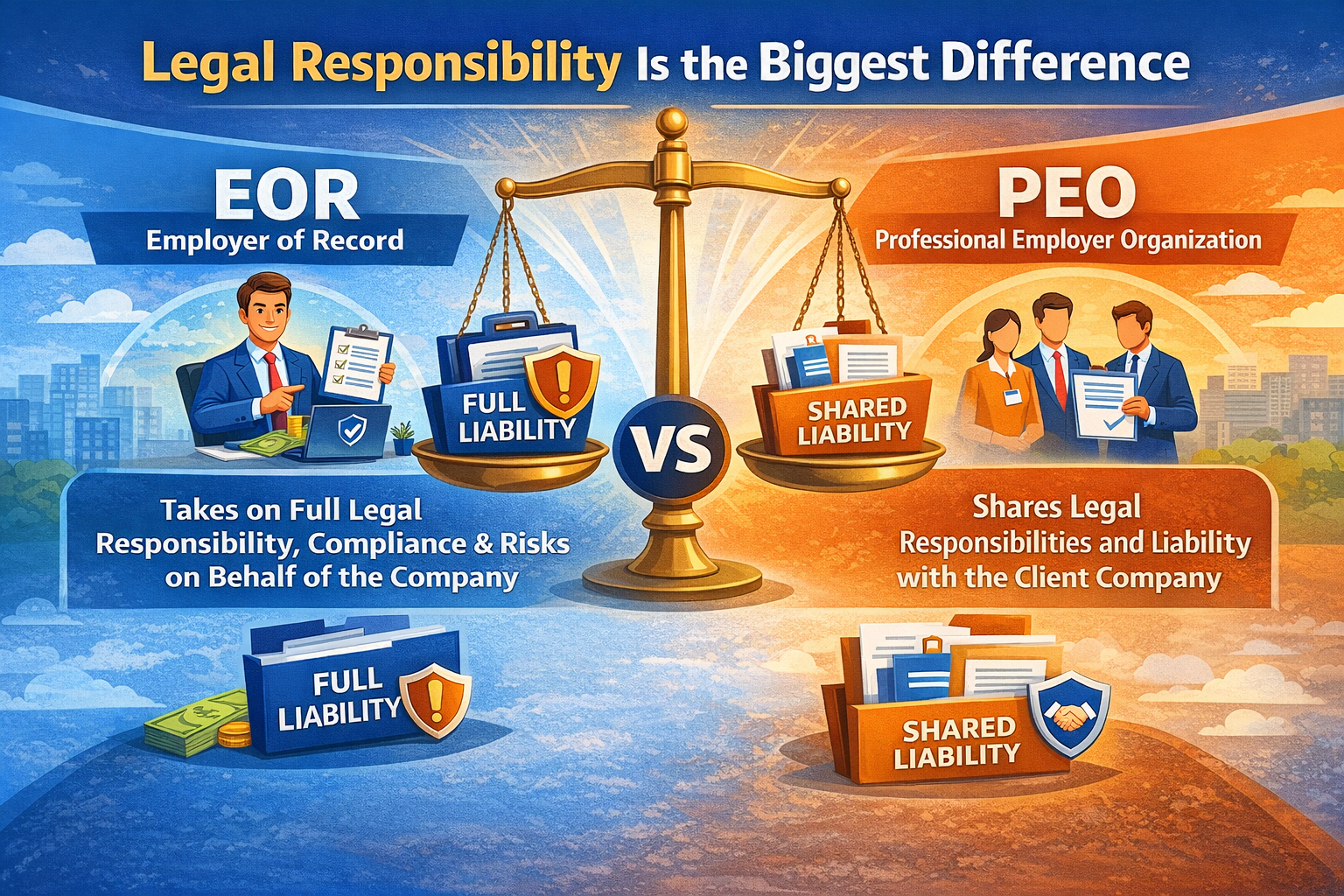
The main difference between an EOR and a PEO is who becomes the legal employer. With an employer of record, the EOR is the official employer. They carry the legal responsibility. With a PEO, you remain the employer while they assist with HR tasks. This distinction matters a lot. It affects liability, compliance, and how employees are registered. Choosing the wrong option can create complications.
Setup Requirements Are Very Different
An employer of record does not require you to set up a company in the employee’s location. That is a huge advantage for international hiring. A PEO, on the other hand, requires you to have a legal entity already. Without that, a PEO cannot operate. This makes EOR services more flexible for businesses entering new markets. PEOs are better suited for companies that already have a presence there.
Speed of Hiring Is Another Key Factor
Hiring through an employer of record is usually faster. Since the EOR already has the legal structure in place, onboarding can happen quickly. Sometimes within days. With a PEO, you must first establish your business entity. That process alone can take months. If you need talent urgently, an EOR can save a lot of time. Speed can be a major advantage in competitive industries.
Control Feels Slightly Different Too
Both options allow you to manage employees day to day. However, the structure feels different. With an employer of record, the employee is technically employed by the EOR. Some owners feel uneasy about that at first. With a PEO, you remain the direct employer, which can feel more familiar. It really comes down to comfort level and business goals.
Costs Can Vary
Both EOR and PEO services involve fees. An employer of record often charges more because they assume full legal responsibility. A PEO may be less expensive since you share that responsibility. However, the cost of setting up your own entity for a PEO can be high. When you factor in everything, the price difference may not be as simple as it seems. Businesses should look at the full picture before deciding.
Which Option Is Better
There is no single right answer. An employer of record is usually better for international hiring and quick expansion. A PEO works well for companies that already have a local presence and want HR support. Your situation will determine the best choice. Think about your growth plans, budget, and timeline. What works for one company may not work for another.
Final Thoughts
Both EORs and PEOs help businesses manage employees more easily. They reduce administrative stress and keep things compliant. The key difference is legal responsibility and setup requirements. If you want to hire abroad without opening a company, an employer of record is the simpler option. If you already have a local entity, a PEO can provide valuable support. Understanding these differences helps you make smarter decisions. And honestly, it prevents a lot of headaches later on.