
You have worked hard for your advanced degree. You have spent your precious time and money on that degree. Now you want to reap some benefits from your hard work. You want to get some better opportunities, build your confidence, and grow. All these are perfectly normal.
It’s true that your degree does not guarantee your success. The thing that you need to understand here is how to use your tools properly.
There are many people who have earned advanced degrees and are stuck. But there are also many who have used their degree as a stepping stone to success. The key to your success lies not in your degree, but in your strategy and mindset.
You need to think beyond your degree. You need to think about your degree as a long-term investment. If you use your degree properly, you will be able to get some doors opened that you could not imagine.
This article will help you understand how you can use your advanced degree in your career.
Aligning Your Degree with Real Goals
It seems that landing a job is becoming harder by the day. In fact, in the US, unemployment is now at a four-year high of more than 4.5 percent as of November 2025. Even Americans with college degrees are now part of a record 25 percent of unemployed workers. And do you know why? Because a lot of these unemployed graduates fail to align their degrees with real-life goals.
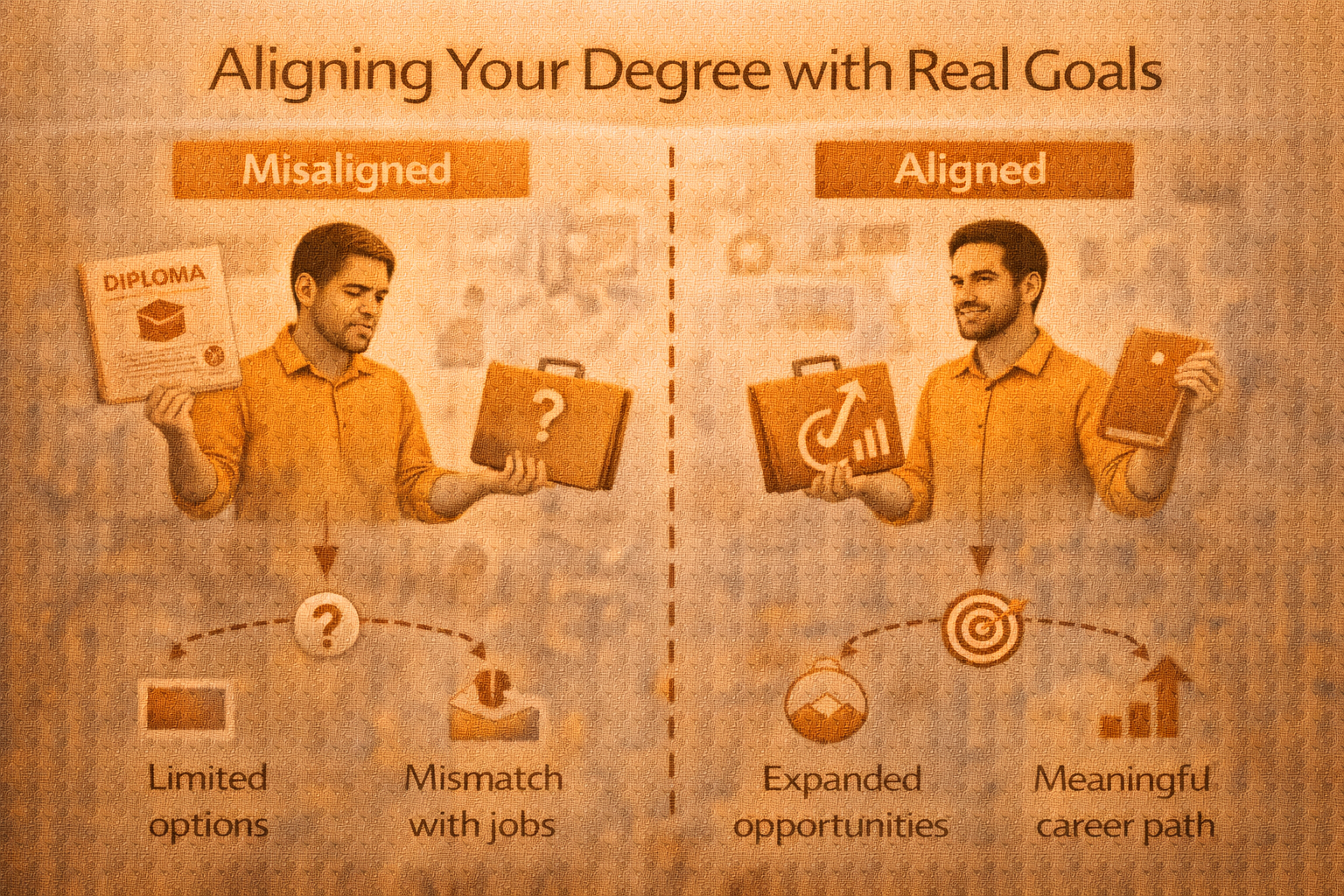
Hence, before you rush into job applications, pause and think about your direction and what a master’s or doctorate can do for you. Ask yourself what kind of life you actually want. Do you want leadership roles, creative freedom, stability, or global exposure?
Your degree should support that vision. Without clear goals, you may accept roles that limit your growth.
- For a more effective approach, do the following:
- Take time to research industries and career paths related to your field.
- Learn what skills and experiences helped them succeed and compare those requirements with your current profile. Then, identify gaps and plan how to fill them.
Apart from making your CV look better, an advanced degree also gives you credibility. However, employers want more than theory. They want problem solvers and adaptable thinkers. Use your coursework to build real expertise. Choose projects that reflect your career goals. When your degree and ambitions align, progress becomes much faster.
Pursuing an Online Degree While Working
Many professionals today choose to study while continuing their jobs. This approach lets you earn, learn, and grow at the same time. It reduces financial pressure and keeps you connected to the industry.
Studying online also builds strong time management skills. You learn how to balance deadlines, meetings, and personal responsibilities. This discipline becomes valuable in leadership roles later. Employers often respect candidates who manage work and education together. It shows commitment and resilience.
For example, many healthcare professionals now pursue an advanced pharma qualification online. A doctorate in pharmacy can now be earned through flexible platforms. Some students choose a pharmacist degree online while working in clinics or hospitals. Others enroll in a recognized pharmacist degree through blended learning models.
According to the University of Findlay, a distance doctor of pharmacy program allows professionals to gain expertise without quitting jobs. These options make advanced education more accessible. They also help students apply lessons immediately at work. This real-time practice strengthens confidence and competence. Over time, this combination creates strong career momentum.
Such a path of working and online learning, of course, requires planning and honesty with yourself. You must protect study time and avoid burnout. Setting boundaries becomes essential. When done right, working while studying can accelerate your career faster than traditional routes.
Building Skills and Networks Beyond the Classroom
Your degree program teaches knowledge, but your career needs much more. Communication, leadership, and adaptability matter just as much as technical expertise. You should actively work on these skills. Volunteer for team projects.
Present ideas in meetings. Offer solutions instead of complaints. These habits make you visible and valuable. At the same time, focus on building professional relationships. Networking is not about using people. It is about learning, sharing, and growing together.
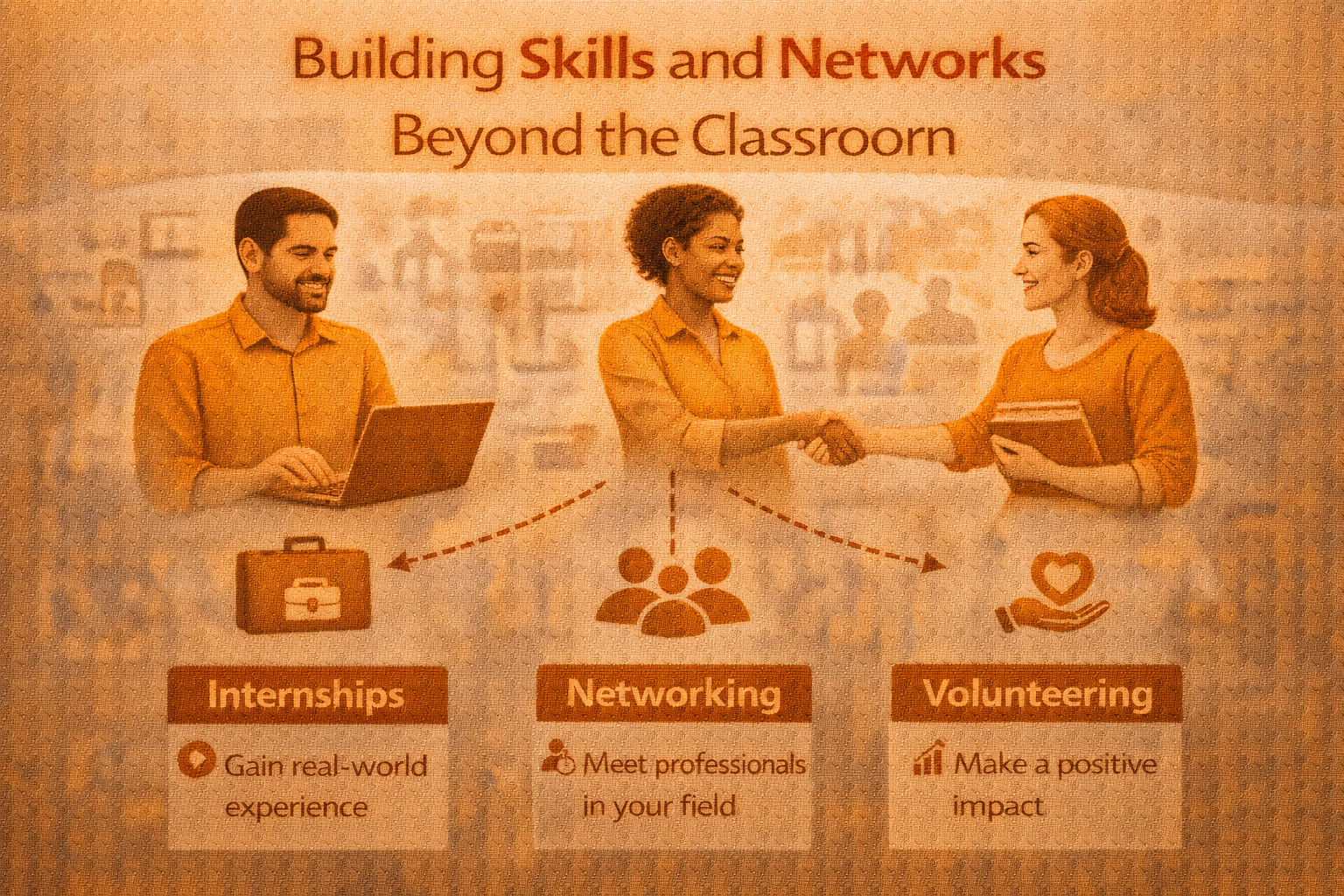
Stay connected with classmates, professors, and alumni. Attend industry events when possible. Join online communities related to your field. Sometimes, one conversation can change your career direction.
Mentors can also play a huge role. Find someone who understands your goals. Learn from their mistakes and successes. Strong skills and networks multiply the power of your degree.
Many people see an advanced degree as a finish line, but it’s not. See it as another starting point in your life, but this time for long-term growth. What you do after graduation matters more than the certificate itself.
When you set clear goals, choose flexible learning paths, and build strong skills, progress follows. Treat your degree as a living asset. Update it with experience, insight, and confidence. When you do that, your career will thrive in ways you once only imagined.
Author: Faisal Bin Iqbal
The author is a journalist based in Dhaka, Bangladesh. His field of expertise comprises education, career and skills development, society, and geopolitics.